






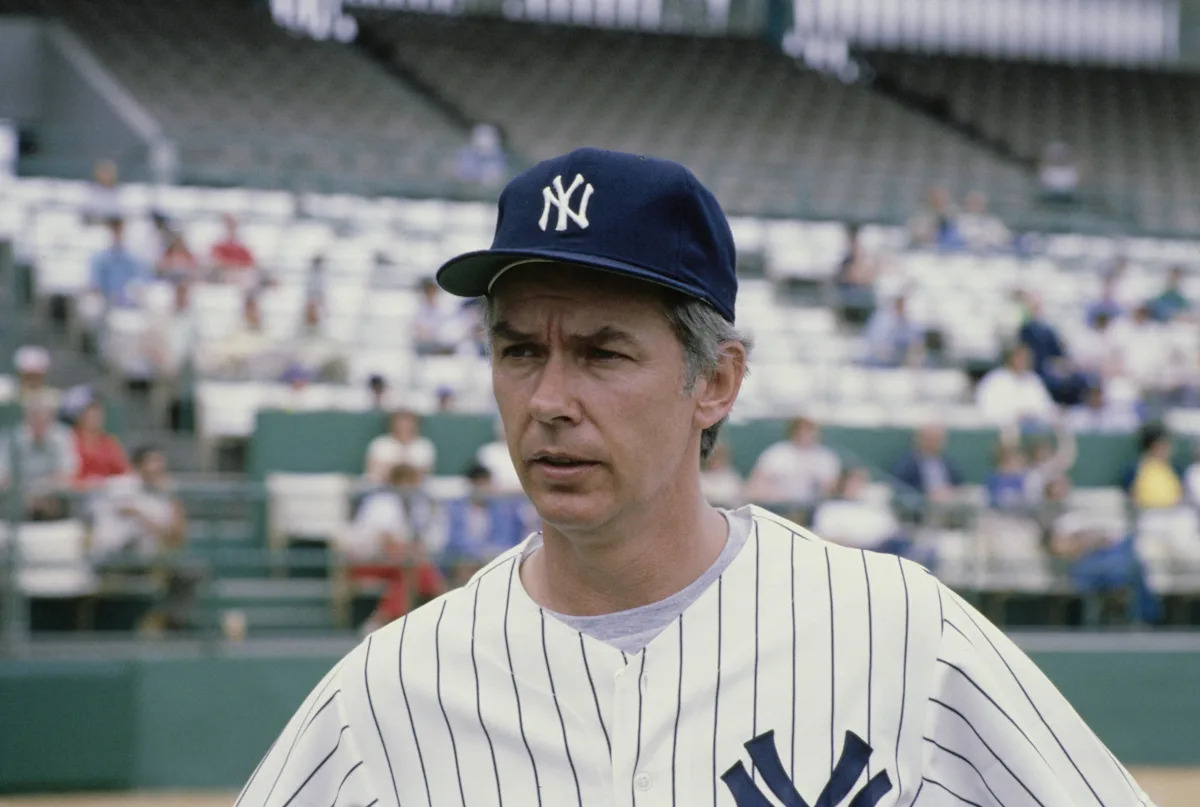
One of the more challenging problems in professional sports is that of determining who will make a proper coach or manager. Some of those who are the greatest to play the game aren’t good coaches, and some who are below average just so turn out to be constructors or leaders of the best teams to ever grace a diamond, field, or other playing surfaces.
While Gene Michael didn’t finish his playing career with anything close to Hall of Fame numbers, “Stick” is known as a constructor of not just the best MLB team to play a full season (record-wise), but the creator of arguably the greatest dynasty in baseball history.
Advertisement
Eugene Richard “Stick” Michael
Born: June 2, 1938 (Kent, OH)
Died: September 7, 2017 (Oldsmar, FL)
Yankees Tenure: 1968-74 (player); 1977-78, 1984-85 (coach); 1981, 1982 (manager); 1980-81, 1991-95 (GM); 1996-2017 (VP)
Born in Ohio just outside of Akron, Michael stayed local through his upbringing, playing baseball throughout his childhood and attending school at Akron East High School, where he also played basketball. In fact, he excelled so much in both sports that he played both when he attended Kent State University in his college days, receiving a scholarship from the same school where future teammate Thurman Munson would star in a few years. While playing for the Golden Flashes, he was selected as their outstanding sophomore basketball player in 1958 when he led the team in scoring and field goal percentage. And while he did play one season of professional basketball in 1966-67 with the Columbus Comets of North American Basketball League, baseball was the route he chose for his future.
Michael’s best season on the college hardwood coincided with an excellent season on the diamond, and because of his work on the field, the Pittsburgh Pirates took an interest in the 6-foot-3 athlete. After being invited to Forbes Field in Pittsburgh to tryout in front of Pirates general manager Joe L. Brown, manager Danny Murtaugh, and coach/Hall of Famer George Sisler, Michael showcased his defensive skills in the middle infield and enough of what he could do at the plate to warrant a contract offer that brought in a $25,000 signing bonus as well.
Advertisement
After signing the contract early in September of 1958, Michael began what would be an eight-year journey through the minor leagues. He played two seasons with the Grand Forks Chiefs of the Northern League, three games with the Savannah Pirates in Single-A, the Class-D Hobbs Pirates, the Class-B and Class-A Kinston Eagles, and the three seasons with the Triple-A Columbus Jets of the International League.
Following his long stint in the minors, Michael finally made his debut as a pinch-hitter in 1966 with the Pirates against the Chicago Cubs, and that trend continued through his first season. In 30 games played, Michael had 33 at-bats and had only five hits with zero walks for a batting average and on-base percentage of .152 each. He then requested a trade from the Pirates, which was granted despite concerns that Pittsburgh wouldn’t get anything worth much value in the trade, the Pirates sending him to the Dodgers in December of ‘66.
And while Michael received more playing time in Los Angeles, he was benched for a significant period of time, which made him unhappy. In 98 games, the 29-year-old batted .202 and finished with an OPS under .500 for an OPS+ of 41. Following his one season with the Dodgers, the Yankees purchased his contract, and he would call New York home for the next seven seasons.
Michael’s seven seasons with the Yankees were uneventful at the plate, with an average of a 72 OPS+ through the course of them. His best OPS+ came in 1969, when he posted a 101 OPS+, along with a slashline of .272/.341/.364 and a career-high 2.5 bWAR. His career high in RBI’s in 1973 came at 35 years old. However, considering his age (36) and his overall production at the plate (an 81 OPS as a backup first baseman and shortstop) under new owner George Steinbrenner, a person who Michael became very familiar with following his playing days, the Yankees gave him an unconditional release, granting him the opportunity to be signed as a backup for the Tigers. Michael played 56 games at age-37 there before eventually hanging up the spikes.
Advertisement
It wasn’t long after his retirement that the Yankees picked up Michael. Hired initially as a coach and instructor, he bounced around many different staff positions, including scout, manager, vice president, and general manager as well. Stick did it all in the Bronx.
Michael was a rising star in the organization after managing the Triple-A team to a title in 1979. Steinbrenner named him GM of the 1980 club, which saw Dick Howser lead the Yanks to 103 wins and a division title. Following an ALCS sweep at the hands of the Royals though, Howser refused to fire coaches who Steinbrenner wanted to let go, so he left his post. Rather than picking a new skipper, the Boss simply told Michael that the job was his for 1981, no small feat given the expectations and the addition of star free-agent Dave Winfield.

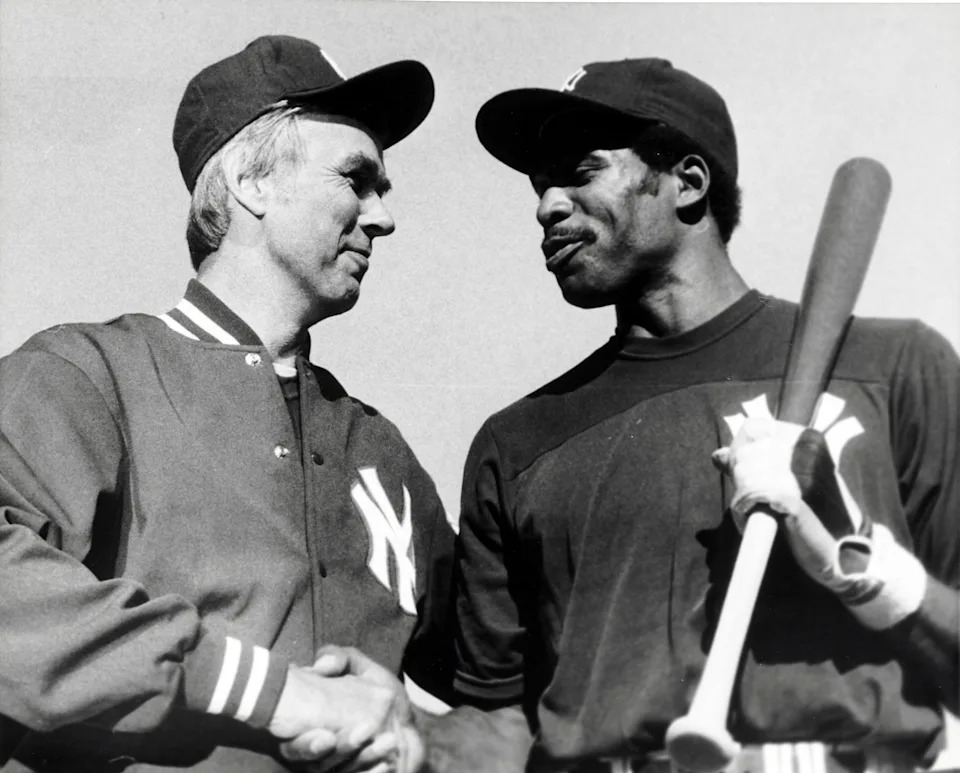
The 1981 campaign was full of ups and downs, as the player’s strike lasted for over a month from June 12th to July 31st, and Steinbrenner continued to interfere with the day-to-day decisions of the team. That would’ve frustrated Michael regardless, but he had also already clinched a playoff spot by virtue of the Yankees leading the AL East at the beginning of the strike. Michael stood his ground, challenging Steinbrenner in September to fire him. He did, and instead of Michael, it was Bob Lemon managing the team to an AL pennant and World Series defeat at the hands of the Dodgers.
Advertisement
In 1982, Steinbrenner’s managerial carousel continued, canning Lemon after a 6-8 start and re-hiring Michael. The “Bronx Burners” that the Boss promoted flopped, and though Michael still had them over .500 under his watch, he was dismissed as well near the beginning of August in favor of Clyde King. Stick had publicly criticized Steinbrenner and his interference with the team, once again showing his mettle. This was not a man who was ever going to be intimated by the owner’s tactics. Michael’s final record as manager during his separate stints in 1981 and ’82 was 92-76.
After coaching on Yogi Berra, Billy Martin, and Lou Piniella’s staffs from 1984-86, another team gave Michael a shot as skipper. Hired as the Cubs’ manager, he went 114-124 from 1986-87 before being let go. The Yankees made sure he wasn’t unemployed for long, as he rejoined the organization as a scout.
When Steinbrenner was on the verge of being suspended from baseball in 1990, he picked Michael to lead the time once more as GM — and an especially powerful one since his owner would be mostly unable to overrule him from the sidelines. That’s when Stick began constructing the roster that made the late ’90s excellent for Yankees fans around the nation. And he did that not just by scouting and drafting extremely well, but he did it with his approach to building a roster, as Buster Olney says in his piece titled “Gene ‘Stick’ Michael’s stubbornness was the heart of Yankees’ Core Four”. More than a decade before “Moneyball” highlighted the Oakland A’s focus on on-base percentage, Michael rebuilt the Yankees by emphasizing OBP and acquiring left-handed power hitters to take advantage of Yankee Stadium’s dimensions.“
Michael approached his building of his Yankees teams with an analytical mind, just as he approached his coaching and scouting careers. He would take physical notes on players and games as a manager, and he used that in every aspect of his baseball life. He also found a good partner-in-crime on the field in manager Buck Showalter, who he hired at age-35 in 1992 and worked with closely to get the Yankees back on track.
Advertisement
While Michael found the Core Four via the draft and amateur free agency, he also made trades for capable, hard-nosed players like Paul O’Neill and David Cone, signed productive veterans like Jimmy Key and Wade Boggs, and—arguably biggest of all—he outright refused to trade Bernie Williams early in the center fielder’s career. Steinbrenner was reinstated in 1993, and he often pushed for Michael to trade Bernie due to the up-and-comer’s occasionally slow development at the plate and in the field. In fact, according to Olney and a Forbes article, Michael made calls to teams, didn’t talk about Williams at all, and then went to Steinbrenner saying no one made an offer for him.

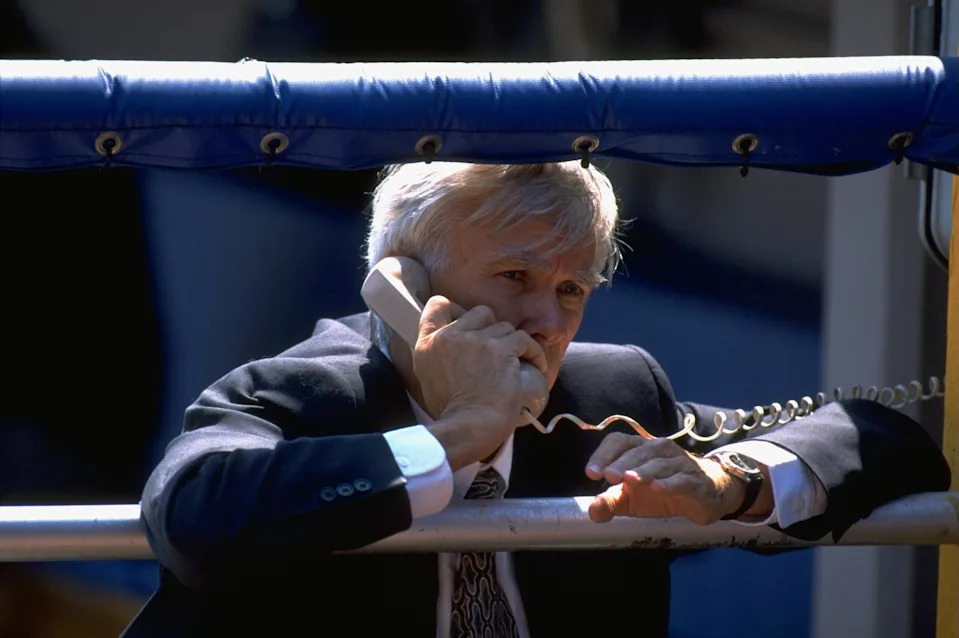
Michael’s Yankees were the best team in the American League in 1994, when a strike again interfered with his promising team’s momentum. The World Series was cancelled, and the Yankees had to make a furious run in September the following year to at last snap their 14-year playoff drought.
Michael’s general managing career with the Yankees came to an end in the wake of the heartbreaking 1995 ALDS loss to Seattle, as he was burned out by years of butting heads with Steinbrenner. He stayed on with the organization but stuck with his roots and led big-league scouting as director and vice president. So, he was not the GM for the dynasty years, but those who followed the team knew he was largely responsible for assembling the core that would lead the Yankees back to glory. Longtime GM Brian Cashman—an assistant general manager under Michael—has always credited Michael as his mentor and someone whose philosophies he still values. As Michael reached his later years, he was named vice president and a senior advisor, a role he would fill until his death at the age of 79 in 2017. Whenever he had a tip on anything during that time, the Yankees all knew to listen. Few have ever understood the subtleties of this game as well as Stick.
Advertisement
Michael was known as an impressive athlete during his playing days. He had the chance to go pro in either baseball or basketball. Stick recalled later in his life that sometimes he wished he went the basketball route. But baseball was his calling, and while his playing days were not as fruitful as his days behind the scenes, he still left a lasting legacy on the game, constructing a dynasty and shaping the way the baseball teams scout and manage their rosters. If we’re being frank, that near-lifetime of service and longstanding impact on a truly outstanding era of Yankees baseball is a legacy worthy of Monument Park.
Happy birthday, Stick. You were one of a kind.
See more of the “Yankees Birthday of the Day” series here.
Read the full article here


