





Introduction
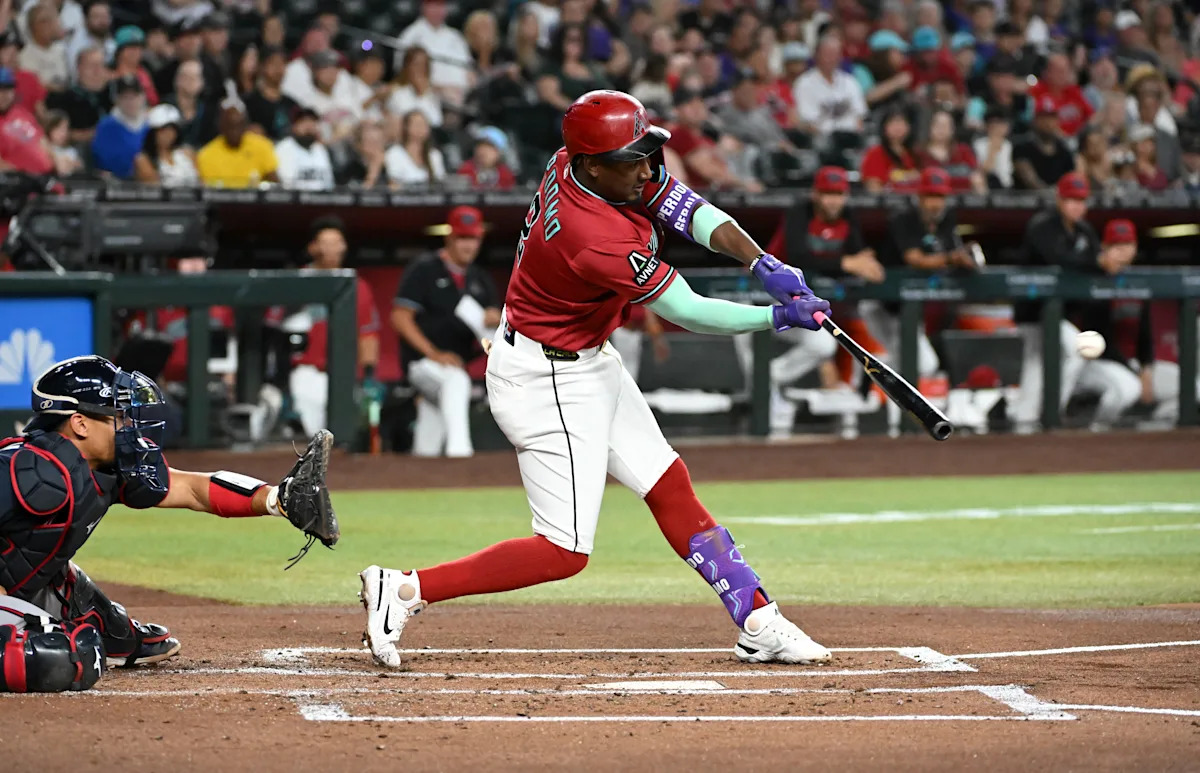
I struggle with failure. It’s one of many, many, many reasons I was never going to be a professional athlete – particularly a baseball player given the sport’s inherent propensity for failure. No matter how many times someone told me, “Even the best ballplayers fail seven out of ten times” I was always too scared of failing to be successful. But professional baseball players, especially playing at the highest levels, are so accustomed to failure that cold stretches mean very little to them. Which is why I’m sure Geraldo Perdomo isn’t sweating (if he even could through this current cold snap) a pretty rough start to this season. Through the first two weeks of the season, Perdomo is the owner of a pitiful .179/.277/.308 slash line – a far cry from the .293/.347/.415 slash line he had at this point last year. Perdomo has still found ways to contribute, especially on the field, but his offensive contributions are a key to the team’s success this season. I don’t want to overstate anything. I’m not even at the “concerned” stage yet and we’re not yet even 10% of the way through the season. But I am slightly puzzled and if you’ll forgive a baseball writer looking for subjects to write about, I’d like to dig in to see if there are any patterns leading to his scuffling start.
Advertisement
Bat Speed
Unsurprisingly, there is a direct, linear relationship between bat speed (how fast the bat is moving through the strike zone) and exit velocity (the speed of the ball when it leaves the bat). In turn, there’s a strong relationship between exit velocity and the expected outcome of a particular batted ball not being converted into an out. Perdomo’s lack of power was one of the consistent criticisms levelled against him by evaluators and was likely at least partially based on his relatively poor bat speed. To this point in his career, Perdomo has only topped out at an average of 68 miles per hour last year, which clocked in at the seventh percentile in the league that season. So far this year, it’s gone down a few ticks to 65 MPH, which likely in turn has led to decreases in his expected batting average and slugging from .278 and .424 last season to .237 and .342 respectively. There are a myriad of explanations for the dip from cool weather to mechanical issues, but he’ll need to regain that speed if he wants to return to the form he had last year.
Overly Aggressive
I’ve always loved watching Perdomo’s at bats even before his breakout last year. He has an excellent approach at the plate and has earned a reputation for being a pesky at bat – on display during tonight’s game in New York when he worked two walks after falling behind in the count. That approach hasn’t dramatically changed so far this year as his swing percentage hasn’t changed year over year, he’s in the 94th percentile for chase percentage and 99th percentile for whiff rate. Cumulatively, that all screams to me an excellent approach to his plate appearances. What has changed is his swing decision on first pitches, spiking from ~15% last year to ~21% this season. That kind of percentage limits the number of pitches he’ll get to see when he’s at the plate and indeed he’s only seeing around four pitches per plate appearance, which is close to league average so far. When he does swing at those first pitches, he’s struggled to turn them into hits with substantially different results from last year in the same situations.
Advertisement
Missing Meatballs
Related to his (slightly) more aggressive approach at the plate, Perdomo has looked a little weaker against meatballs – so-called because of the relative ease for hitting them. He hasn’t seen as many of them so far, falling from 9% to 7.4% in the early going of the season and failing to swing at them when he does see them, dropping from 70% to 64% in his meatball swing percentage year-over-year. Some of that might be due to the relative quality of pitching the team has seen so far as only the Tigers have a below-average pitching staff by ERA so far this year. Those numbers might stabilize as the team faces off against weaker opponents in the league, but it could also indicate a changed approach by the league. It’s possible pitchers are pitching more carefully to him as a result of his performance last season than they might have previously.
Again, I’m neither worried nor even concerned at this point. It’s far too early to try and extrapolate or make any kinds of conclusions about where Perdomo is. There are plenty of superstars who have seriously struggled out of the gate – including Perdomo’s opposite number this series in Francisco Lindor who owns a .157/.306/.255 slash line and has yet to drive in a run on the young season. But the sooner both his and Ketel Marte’s bats wake up, the better I’ll sleep at night.
Read the full article here