




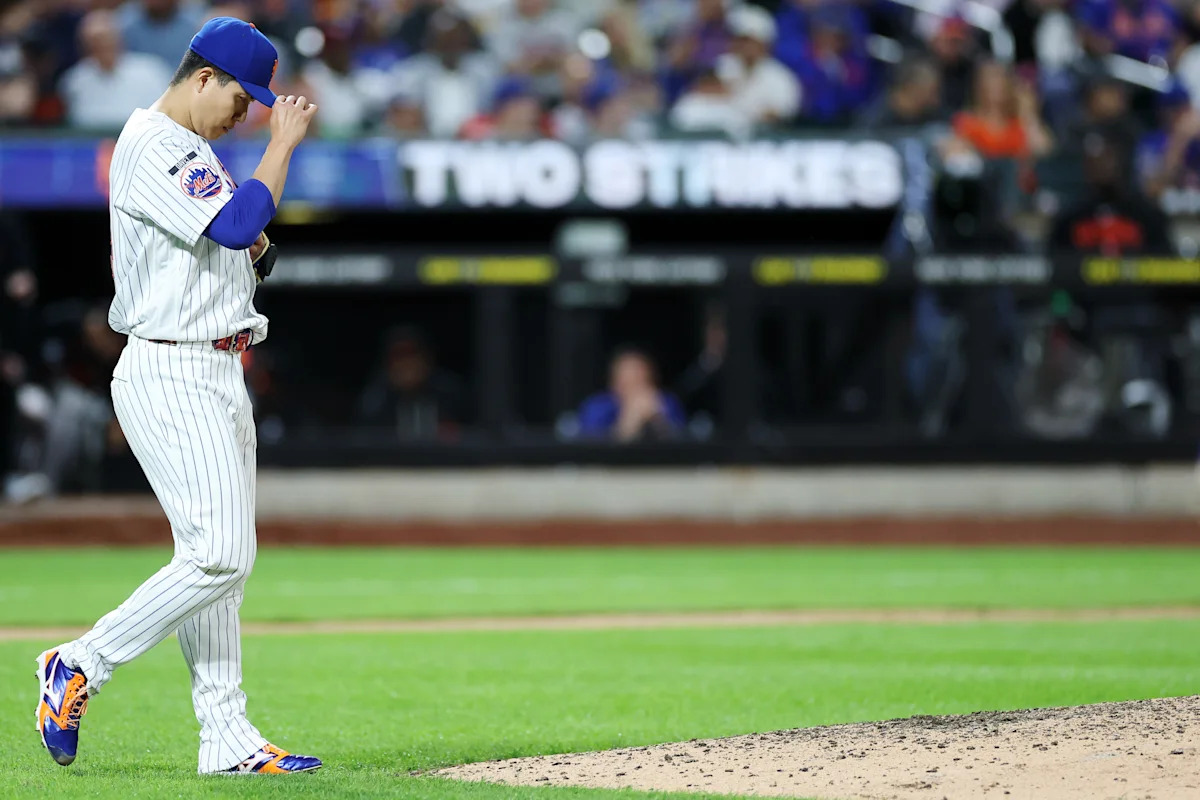
It was appropriate, in an unfortunate way, that Pete Alonso was on hand to witness the official end of this most woeful Mets season.
The franchise’s all-time home run leader departed via free agency last winter as part of a dramatic roster overhaul undertaken by Mets president of baseball operations David Stearns. But on Monday, the Polar Bear was back at Citi Field with the Baltimore Orioles, who, with a 2-1 win, hammered the final statistical nail in his old team’s coffin.
Advertisement
Retaining Alonso on its own would not have made this pretender a contender. The 2026 Mets were sunk by a cornucopia of insufficiencies and misfortunes on both sides of the baseball. But the ruthless, calculated severing of ties between Alonso and the Mets represents a larger theme that plagued this team all season. Stearns and Co.’s eagerness to reshape the roster and coaching staff overlooked the value of cultural continuity within a clubhouse.
That’s not an argument for total stasis, but a few more familiar faces might have helped matters. They definitely wouldn’t have made things worse.
Join or create a Yahoo Fantasy Football league for the 2026 NFL season
Advertisement
Things got ugly early for the 2026 Mets. Juan Soto hit the IL due to a calf strain on April 6. Soon after, the team rattled off a gut-wrenching 12-game losing streak from which it never truly recovered. Headline offseason trade addition Freddy Peralta stumbled out of the gate. Then, Francisco Lindor’s calf gave out, too, pushing him to the shelf on April 23. The Mets then lost five of six to the Rockies and Nationals and finished April with the single worst record in MLB. New faces Bo Bichette, Jorge Polanco, Luis Robert Jr. and Marcus Semien — paid a combined $105 million — hit a combined .218/.282/.308 from Opening Day until May 1.
Through it all, Stearns remained adamant that skipper Carlos Mendoza was the man for the job, even as other struggling outfits in Boston and Philadelphia canned their managers. For a moment, that faith looked as if it would pay off. It’s easy to forget now, but the Mets went 16-12 in May. They finished the month just seven games under .500, with playoff odds over 20%.
Then the calendar turned, and the bottom dropped out. New York lost six straight in late June, including four at home to the Chicago Cubs. Reeling and unraveling at 13 games under, Stearns bit the bullet and fired Mendoza on June 26.
“We haven’t been able to get this going this year. I take responsibility for that,” the maligned exec told reporters. Asked why things had gone so wrong, so quickly, Stearns was characteristically unrevealing.
Advertisement
“That evaluation is ongoing and will continue to be ongoing.”
Subscribe to Yahoo! Sports MLB on YouTube for videos, podcasts and more
Into the fray stepped Andy Green, previously the team’s head of player development and formerly a manager with the San Diego Padres. But despite Green’s calm presence and steady hand, the Mets continued tumbling into the abyss. There would be no heroic comeback like the ones authored in Philadelphia and Boston. Predictably, the trade deadline saw a full sell-off, with Peralta, Clay Holmes, Luke Weaver, Tyrone Taylor, Huascar Brazobán and AJ Minter dealt away.
Advertisement
Since then, the Mets have shown more life, as evidenced by a 22-15 record that ranks sixth in MLB dating to deadline day. Encouraging bounce-backs from Bichette, Carson Benge and Brett Baty have rejuvenated the offense despite continued mediocrity from Soto and Lindor. Jared Young has raked, earning himself a role on the 2027 team. Rookies Nolan McLean and Zack Thornton have impressed. Kodai Senga has emerged out of total irrelevance to become a magnificent late-inning reliever. Somebody named Nate Lavender has a 1.76 ERA. These are sources for legitimate optimism, silver linings of a lost season from which Stearns must rebound.
The upcoming offseason, therefore, is a critical one for Stearns, whose reputation as a front-office wizard has taken a massive hit over the past 16 months. First, he’ll need to hire a new manager. Green has been open about not wanting the job long-term. Potential candidates include former Twins skipper Rocco Baldelli, former Cubs skipper David Ross and Hall of Famer Carlos Beltran. Stearns hired a first-timer in Mendoza last time; will he do the same again?
Then Stearns, likely with some input from owner Steve Cohen, will need to separate the expensive dead ends from the second chances. Semien, Polanco and starter Sean Manaea are each set to make more than $20 million next season. The trio combined for -1.2 bWAR this season. Money isn’t the problem — the Mets are fine in that regard — but Semien, Polanco and Manaea are taking up roster spots and playing time that could be allocated elsewhere.
Advertisement
Lastly, the Mets will need to identify reinforcements. The outfield looks set with Benge, Soto and rookie A.J. Ewing. Bichette, barring an unforeseen opt-out from the remaining $84 million on his deal, will be the third baseman. Lindor will play short. McLean, Thornton and Christian Scott have earned rotation spots. The rest is up for debate.
Come free agency, how aggressive will the Mets be on Tarik Skubal? They could use an established character at the front of the rotation, but the consensus second-best free-agent candidate for that role is Peralta. Padres hurler Michael King would also make some sense. Perhaps the Mets cut bait on Semien in favor of any of the four established free-agent second basemen: Luis Arraez, Jazz Chisholm Jr., Brandon Lowe and Gleyber Torres.
Advertisement
Whatever the path forward, it will be highly scrutinized. Cohen seems to still believe in Stearns. The same cannot be said of most Mets fans. Even so, this roster, despite unfurling a season to banish to the dustbin, has the bones of a contender. Soto, Lindor, Bichette, Benge and McLean is a strong place to start.
Can Stearns fill in the gaps? He certainly didn’t this year.
Read the full article here


