





ATLANTA — There were far more losers than winners from this final U.S. training camp before the World Cup squad is unveiled in eight weeks.
No one expected victories over both Belgium and Portugal. In fact, only the most hopeful would have expected one win against the European titans. But was it asking too much to see continued gains after a stirring autumn campaign and at least one performance to stir excitement and fuel optimism about a deep World Cup run on home soil?
Advertisement
Perhaps it was.
Look, these were just friendlies. The real stuff doesn’t begin until June 12. But as things stand, inadequacies remain unresolved and the outlook no clearer than it was when camp commenced nine days ago.
Mauricio Pochettino and his players kept their chins up after both defeats; they repeated their belief that the process is working, they’re getting closer, only small details need to be resolved, they’ll hit their stride this summer and so on …
That optimism is almost certainly not shared by loyal supporters and a casual audience beginning to turn its attention to soccer’s premier competition.
Advertisement
With that glum assessment, here are the winners and losers from the March assembly:
WINNERS
Matt Freese
The New York City FC netminder arrived at camp as the clear No. 1 on the depth chart, but then Pochettino started Matt Turner in the first match and later said the job for the World Cup opener against Paraguay was an “open competition.”
More likely, after starting Freese 12 straight matches, Pochettino wanted to test Turner against a strong opponent, in case he is needed at the World Cup.
If there were any doubts who will start June 12, there shouldn’t anymore. Turner conceded five goals against Belgium, though in fairness, he was let down by the collective defense in front of him. He didn’t rise to the occasion, either.
Matt Freese looked like the USMNT’s best option in net during the March camp.
(Icon Sportswire via Getty Images)
Freese made multiple high-quality saves against Portugal. On the first goal, he was left in an almost impossible situation when Bruno Fernandes back-heeled to the unmarked Francisco Trincão. On the second goal, Freese was screened as João Felix, forgotten by U.S. defenders at the top of the box, half-volleyed the ball between a tangle of bodies.
Advertisement
Barring injuries or change in form, the pecking order seems clear: Freese, Turner and Chris Brady. Roman Celentano was in position to compete with Brady for the No. 3 slot but didn’t report to camp because of an injury and yielded to Patrick Schulte.
Players not in camp
It’s a bit odd elevating those who weren’t here because of current or recent injury, but given so few campers left an impression, Tyler Adams, Sergiño Dest, Haji Wright and Diego Luna are looking better right now.
The U.S. missed Adams’ ball-winning tenacity, experience and smarts in defensive midfield, Dest’s speed and cleverness at right back, Wright’s season-long form on the Coventry City frontline and Luna’s attacking fervor.
Advertisement
Would it have changed the outcomes? It’s silly to speculate — Portugal, after all, was missing Cristiano Ronaldo — but for the purposes of strengthening bonds and providing additional options, they were truly missed.
Atlanta
The U.S. Soccer Federation’s decision to play two friendlies four days apart at the same venue seemed wildly ambitious on the ticket-selling front. In this big country, it’s just not done in an international window.
Atlanta, though, turned out. The combined attendance was 139,164 for an average of 69,582. For friendlies (albeit high-end friendlies). Including one on a weeknight. Bravo, ATL.
Advertisement
Yes, many fans arrived from outside the area, jumping at the opportunity to see World Cup teams without World Cup prices. But the turnouts demonstrated the building excitement for this summer and Atlanta’s certified place as not just a big-event city but a soccer city.
Trey Daniels
Perhaps the finest performance by an American this camp was not from any player but the acclaimed saxophonist, who gave a soaring rendition of “The Star-Spangled Banner” before the Portugal match.
If only he could score goals, too.
LOSERS
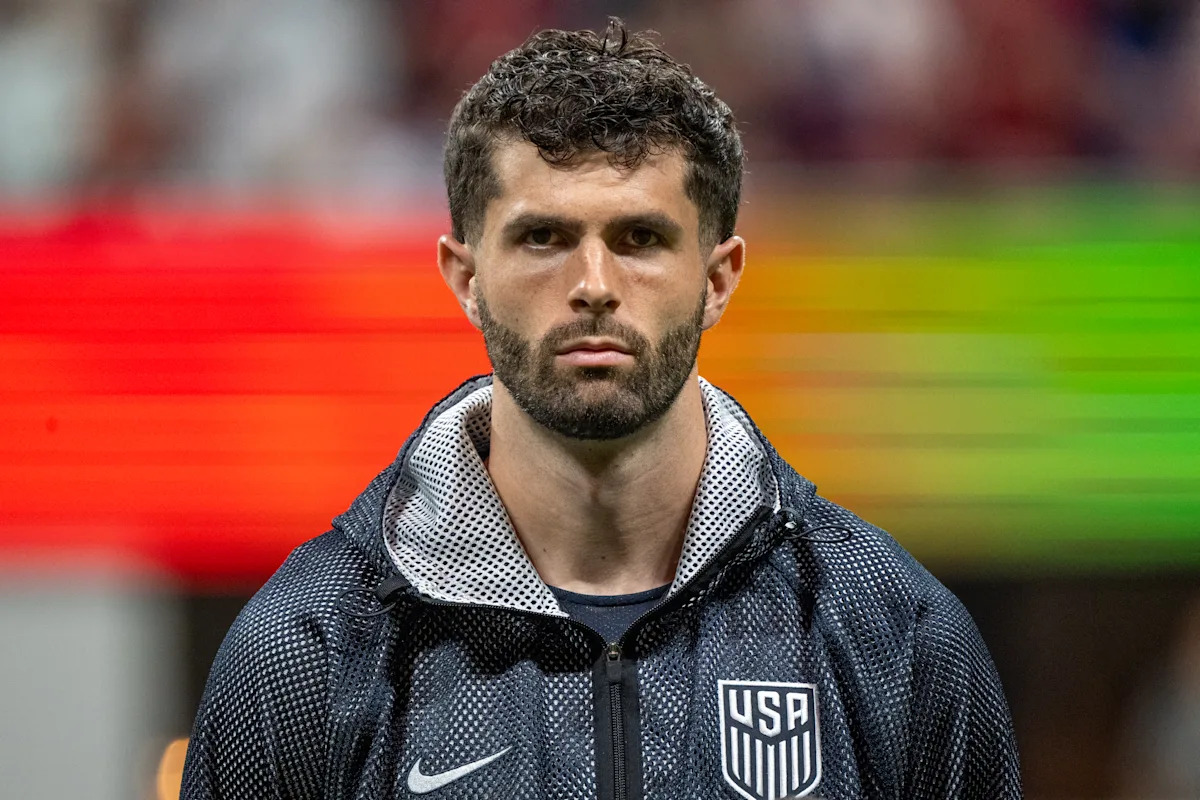
Christian Pulisic
The U.S. superstar’s terrible scoring rut at AC Milan carried over to the national team with countless missed opportunities over the two matches.
Advertisement
His body language did not exude confidence and his shooting accuracy was cockeyed. Frustration swelled against Portugal, culminating with a late challenge that resulted in a warning and a petulant kicking that produced a yellow card.
Aside from the 12-game scoreless streak for Milan over three months, he has gone eight straight without a goal for the national team since late 2024.
The U.S. is going to need Pulisic at his best at the World Cup. Right now, he is far from it.
Mauricio Pochettino
The U.S. Soccer Federation did not pay the Argentine a program-record $6 million a year — one of the largest coaching salaries at the World Cup — to win every friendly.
Advertisement
They hired him, with help from outside donors, to prepare the team for success in a summer when the U.S. has a special opportunity to grow the sport like no time since the 1994 World Cup was held in this country. Pochettino’s team will play a large part in driving that effort.
The performances in these friendlies, though, could very well foretell what lies ahead. Instead of coalescing around a firm plan, Pochettino continued experimenting with the formation and players’ roles.
The intensity and commitment that he has demanded during his tenure was woefully absent in the second half of the Belgium howler. To his credit, his team played good attacking soccer in the first half of each match. Players were in position to score but didn’t; that’s not his fault.
Ultimately, though, he is responsible. And while the U.S. is fundamentally better than it was a year ago, Pochettino still needs to resolve issues that, if left unchecked, could spell doom at the World Cup.
Advertisement
World Cup prospects who fell short
With one last opportunity to make a first-hand impression on Pochettino, a group of invitees fell short.
Johnny Cardoso, a midfielder whose club career has exceeded his national team showings, starting against Belgium and, by setting a pick on a corner kick, freed Weston McKennie for the opening goal. Because of a leg ailment in camp, though, his time was restricted to one half. The injury did not improve and he returned to Atlético Madrid before the Portugal game.
Center back Miles Robinson figured to start at least once after serving in the lineup in three of the last four matches in the fall. However, a groin injury sidelined him for both friendlies.
Advertisement
Because of his lack of Bundesliga minutes, midfielder Gio Reyna was never going to feature prominently in this camp. He ended up logging 31 quiet minutes overall. Just by inviting Reyna, Pochettino showed he plans to take him to the World Cup. But unless his minutes increase the next six weeks, Reyna would have a hard time getting on the field.
With three strikers in camp, Ricardo Pepi figured to receive a decent amount of playing time and maybe even start once. Instead, he played 19 minutes against Belgium and none against Portugal.
Midfielder Brenden Aaronson, who is coming off a good winter at Leeds, remained on the bench against Belgium and didn’t enter against Portugal until the 79th minute.
Hydration breaks
In a temperature-controlled indoor stadium, the matches were stopped for three minutes midway through each half. Why? Hydration breaks, which FIFA will implement at the World Cup.
Advertisement
Yes, in searing summer conditions, a player’s health must be prioritized. Last summer, players involved in the Club World Cup hosted by the U.S. complained about the intense heat and the impact on their bodies.
About a third of World Cup matches are going to be played indoors, though. The rule must be implemented across the board.
This is also about FIFA creating in-game commercial breaks for TV rights holders. It’s not exactly turning a sport of two halves into four quarters, but it’s getting closer.
Soccer’s beauty and identity is rooted in a free-flowing game and in its free thinking, forcing players to use their brains as much as their bodies.
This summer, prepare for the scheduled stoppages — and the extra ads.
Read the full article here