




Toyota has too many models—and it’s not just me who’s saying it. Newly appointed CEO Kenta Kon recently came out and said that the Japanese automaker’s lineup is too crowded. Looking at the number of vehicle offerings, both locally and abroad, it’s easy to see how one might come to that conclusion.
In the US alone, Toyota has 21 unique nameplates. That doesn’t even include a handful of plug-in-hybrid, off-road, or performance variants. In Europe, depending on the country or region, that number is anywhere from 15 to 20 unique nameplates. Factor in Japan, Australia, and a handful of other continents, and there are nearly 80 unique Toyota models worldwide.
Looking specifically at the US for this exercise, I played a bit of backseat product planner in an effort to help Toyota trim its lineup. Of the 21 models the company offers here in America, these are the ones worth keeping—and the ones that can probably exit stage left.
Toyota Tacoma Trailhunter
Photo by: Andrew Link | Motor1
4Runner: Keep
The Toyota 4Runner has been around for 42 years; it ain’t going anywhere. Even in the midst of a changeover year, in which Toyota got rid of 2025 models to make room for new 2026 models, the 4Runner remained one of the brand’s top-selling SUVs last year.
Toyota sold 136,801 examples of the 4Runner in 2025, narrowing in on the Jeep Wrangler’s lead (167,322 units) and nearly catching the Ford Bronco (146,007 units). Through April, 4Runner sales were already up 294 percent year over year, which means it could set a new record in 2026.
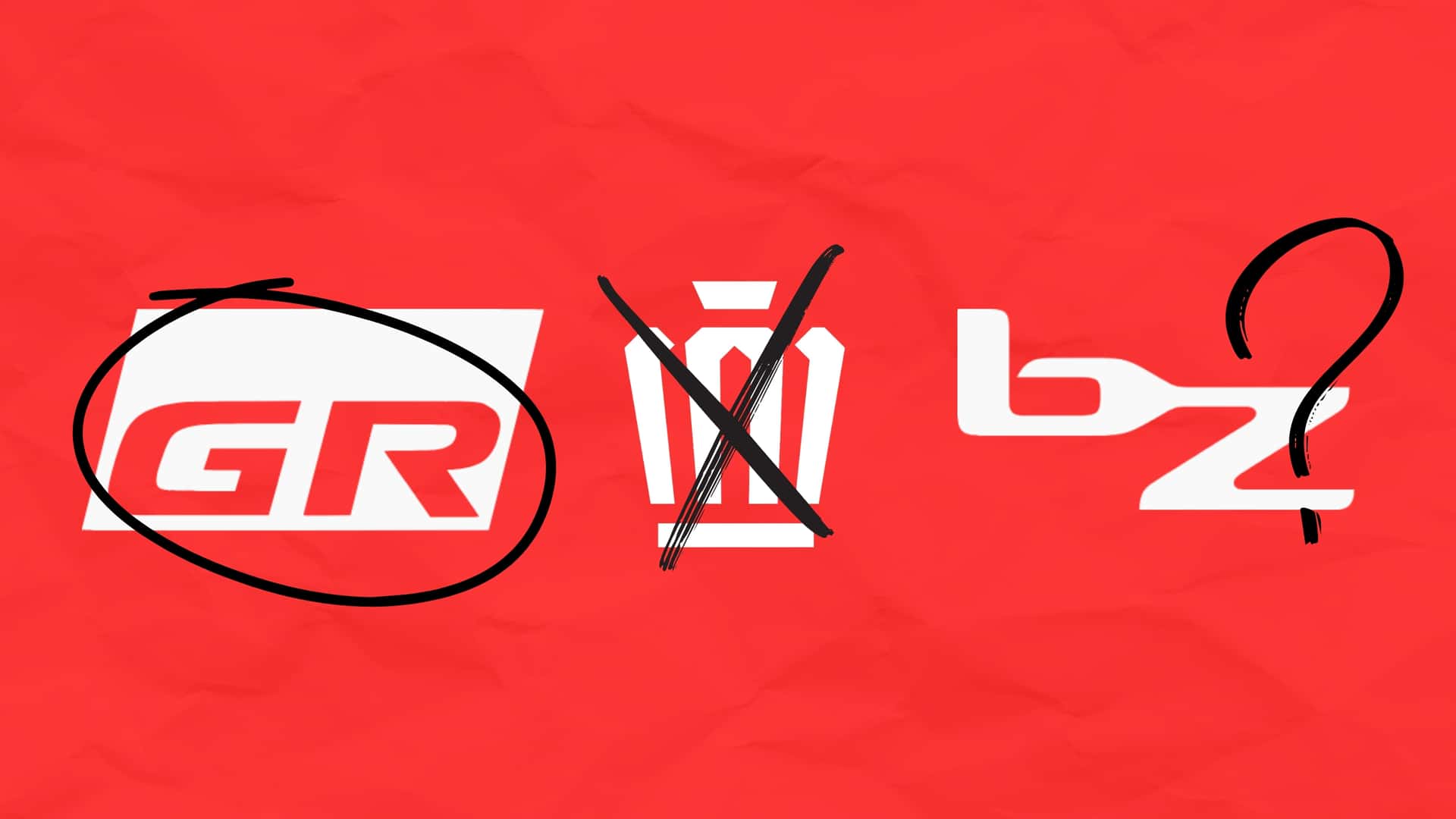
bZ: Merge With C-HR
Toyota only sold 15,609 bZ electric SUVs in 2025, a number that won’t shatter any sales records. But arguably more so than the revived C-HR, there’s reason for Toyota to keep its compact electric crossover around.
A name change (goodbye, bZ4X) and range improvements keep the bZ relevant in the ever-changing EV market in 2026. Sales are already showing signs of improvement this year. Toyota needs to take the best of the C-HR (styling) and blend it with the best of the bZ (everything else) to create one focused, cohesive electric SUV.
C-HR: Merge With bZ
It’s still not entirely clear why Toyota decided to bring the C-HR back to America. The previous C-HR was a relative sales dud, surviving just five years in the US. So Toyota’s decision to revive the nameplate in the form of a funky electric crossover is a confusing one, to say the least.
The C-HR probably isn’t going anywhere for a few years, given that Toyota just rolled out the new version for 2026. But I can’t imagine this model will stick around for very long (or needs to), given that the bZ still exists.
Camry: Keep
This is a no-brainer. With over 316,000 units sold in 2025, the Camry is still the best-selling sedan in America. Even though it has to fend off more crossovers than ever before, it even landed in the top 10 in overall sales in the US and came second only in the Toyota lineup to the RAV4.
Corolla: Keep
Another no-brainer: Toyota has no reason to kill off the Corolla—at least, the normal, no-nonsense sedan version. More on the other variants in a minute. With more than 248,000 units moved in the US last year, it’s still the most popular option in its segment.
Corolla Hatchback / GR Corolla: Keep… For Now
Toyota doesn’t break out sales for specific Corolla trims like the hatchback or GR model, and I suspect there’s a reason for that. While the GR version will always be a niche, love-volume trim, there isn’t a ton of evidence showing that the hatchback is a big hit among consumers.
The sad reality is that Americans don’t want hatchbacks. Credit to Toyota for trying—and it really is a fantastic little five-door—but the only reason to keep the Corolla hatch around for the next few years would be to supplement the GR Corolla, which deserves another half-decade or more in production.
Corolla Cross: Keep (But Change The Name)
The Corolla Cross is no slouch on the sales side, with nearly 100,000 examples sold in 2025. With the RAV4 now starting at $33,320, believe it or not, Toyota needs an affordable entry-level SUV. The Corolla Cross is that vehicle.
Here’s the one issue I see with the Corolla Cross: The name. A name change could theoretically spell even more success for Toyota’s $26,610 SUV, given that some customers might be confused by the Corolla branding. But that’s nitpicking.
Crown: Cancel
America clearly wasn’t ready for a high-riding, quasi-luxury sedan—as evidenced by the many that have failed before it. With just over 12,000 Crown models finding new homes in 2025, there’s little reason for Toyota to keep this awkward vehicle around for much longer. Of all the Toyota models still on sale, the Crown was the third-worst-selling. I’ll get to the other two in a minute.
Crown Signia: Cancel
The Crown Signia SUV fared slightly better than its sedan counterpart in 2025, with just over 20,000 examples finding new homes. But for a Toyota, that still puts it in the bottom five for sales, a far cry from the nearly half a million RAV4s the company sold over that same period.
There are rumors that Toyota wants to spin off Crown as its own sub-brand, which could be interesting. But given its positioning as an awkward middle offering between Toyota and Lexus, I’m not so sure that’s a good idea either.
GR86: Cancel
Look, this is going to be a tough pill to swallow. Of course, we all love the Toyota GR86. But with fewer than 10,000 sold last year, with sales slipping every month, it’s getting harder and harder for Toyota to justify the GR86.
The good news here is that this platform has been around for nearly 15 years, virtually unchanged. It’s still the same great sports sedan that debuted with a Scion badge way back in 2012. The bad news is that we’re unlikely to see a second generation. But, more and better sports cars are reportedly on the way.


Photo by: Toyota
GR Supra: Already Cancelled
Everyone knew the Toyota GR Supra was already on the way out, but I figured it was worth including on this list nonetheless. With fewer than 3,000 units finding new homes in 2025, due in part to a shortened year, it’s sad to see the Supra go—but not entirely shocking.
Grand Highlander: Keep
The Grand Highlander is an easy one. Toyota sold a healthy 136,801 examples of the three-row SUV last year, and there’s no reason to quit now.
Highlander: Keep (New Model Coming)
The Highlander finds itself in a more interesting position than its big brother. The three-row, mid-size SUV hasn’t really been the top option in its class the last few years; that’s why Toyota is taking the nameplate in an entirely new direction for 2027.
Toyota recently introduced the 2027 Highlander EV—the brand’s first electric three-row in the US. Even with EV enthusiasm waning over the last few months, three-row SUVs are still big sellers, and there’s no reason to believe that the next Highlander shouldn’t be a popular option as well.
Land Cruiser: Keep
Frankly, this one could have gone either way. I know that the Land Cruiser returning to the US is a big deal and the nameplate is hugely important in the off-roading community—I get it. But when you have two other off-road SUVs plus two trucks with rugged off-road trims, it’s harder to justify an off-roader that starts at nearly $60,000. For now, though, the Land Cruiser gets to stay in my imaginary lineup.
Mirai: Cancel
There’s no reason the Mirai needs to exist. I know Toyota is still bullish on hydrogen (as am I), but the abysmal sales simply aren’t enough to keep the funky sedan around in the US for much longer. Time to pull the plug.
Prius: Keep
With hybrids back on the rise and EVs taking the backseat, there’s no reason for the Toyota Prius to go anywhere. Recently updated for the 2023 model year, Toyota sold a healthy 56,488 examples last year. That includes both the standard hybrid and the plug-in—both of which should remain a fixture in the Toyota lineup for years to come.
RAV4: Keep
The RAV4 is Toyota’s best-selling model and the best-selling SUV in America. It isn’t going anywhere.
Sequoia: Cancel
Here’s where it gets tricky. With the arrival of the electric Highlander later this year, that means Toyota will have three three-row SUVs in its lineup. Obviously, the Highlander, Grand Highlander, and Sequoia all do different things, and the Sequoia’s body-on-frame platform is a draw for people potentially coming from something like the Chevrolet Tahoe or Ford Expedition.
Unfortunately, Toyota’s body-on-frame three-row isn’t nearly as good as its rivals. It lacks the space and comfort of some of those alternatives, and even though you can get it in a rugged TRD Pro trim (which is awesome), that’s about where the highlights end. Combine that with recent reliability issues, and it’s hard to justify the Sequoia.
Sienna: Keep
Vans are cool, and the Sienna is worth keeping. With Toyota selling a solid 101,486 units last year (sure, fleet sales are part of it), the longstanding minivan is worth keeping around. It has an efficient hybrid powertrain and lots of room for the whole family. Heck, you can even get it in a slightly ruggedized Woodland Edition trim.
Tacoma: Keep
The Tacoma saw a slight sales dip in 2025, due largely to the model changeover that happened last year—but that isn’t stopping the brand’s beloved compact pickup. It keeps on truckin’.
Tundra: Keep
The Toyota Tundra has had its fair share of issues recently, largely stemming from its twin-turbocharged V6 engine. Yet, it’s still a big seller for Toyota, with more than 147,000 examples finding new homes in 2025. Assuming Toyota can get many of those issues resolved, there’s no reason for the company to nix its otherwise excellent F-150 and Silverado rival.
Would This Work?
Pretending that this little list has any bearing on reality, Toyota trimming seven models and refocusing on its core products would bring the total model count to below 15 in the US. That’s more reasonable than the current amalgamation of vehicles that customers clearly have no interest in.
Read the full article here


