




1976
White Sox pitcher Wilbur Wood’s career essentially was ended after his left kneecap was shattered by a sixth-inning line drive off the bat of future South Sider Ron LeFlore in Detroit. Wood had gotten off to a fine 4-3 start, with five complete games and a 2.49 ERA, when the injury took place.
He got credit for a 4-2 win, but Wood missed the rest of the 1976 season. Although he came back the following year, Wood was never quite the same.
1984
Harold Baines ended the longest game, innings-wise, in American League history when he blasted a home run off of Milwaukee’s Chuck Porter with one out in the 25th inning to give the Sox a 7-6 win over Milwaukee. The game ended one inning shy of the major league record. An astounding 753 pitches were thrown in the game.
Advertisement
The 8:06 length of the game also set a major league record. Tom Seaver got the win in one inning of relief in the marathon contest, which had started on May 8 and was suspended after 17 innings.
The Brewers thought they had a good chance to put the game away after scoring three runs in the 21st inning, but the White Sox came back with three of their own to extend the game further (pitcher Richard Dotson, pinch-running for the less fleet Marc Hill, scored the tying run in the 21st).
It was the second time the White Sox had tied it up with their backs against the wall, as in the bottom of the ninth a Tom Paciorek two-base error, Julio Cruz double and Rudy Law single forced extras.
Through the many maneuvers of the game, the White Sox lost their DH after the 21st, with Ron Reed and Floyd Bannister forced to hit for themselves, ending the 22nd and 24th innings on ground outs.
Advertisement
The White Sox also missed out on a chance to win in the 23rd inning, as Dave Stegman (whose move from DH to LF in fact was how the White Sox lost the DH in the game) was ruled to have been touched by third base coach Jim Leyland while advancing from first to third on a Paciorek single; Vance Law next singled, which would have driven in the game-winner.
Paciorek set a major league record in the game, replacing Ron Kittle in left field in the fourth inning and proceeding to get nine at-bats as a sub.
Amazingly, after Seaver’s relief win, he came back out for the regularly-scheduled game later that same evening, winning, 5-4.
For the night, Seaver threw a little more than nine innings, allowing only four hits.
1987
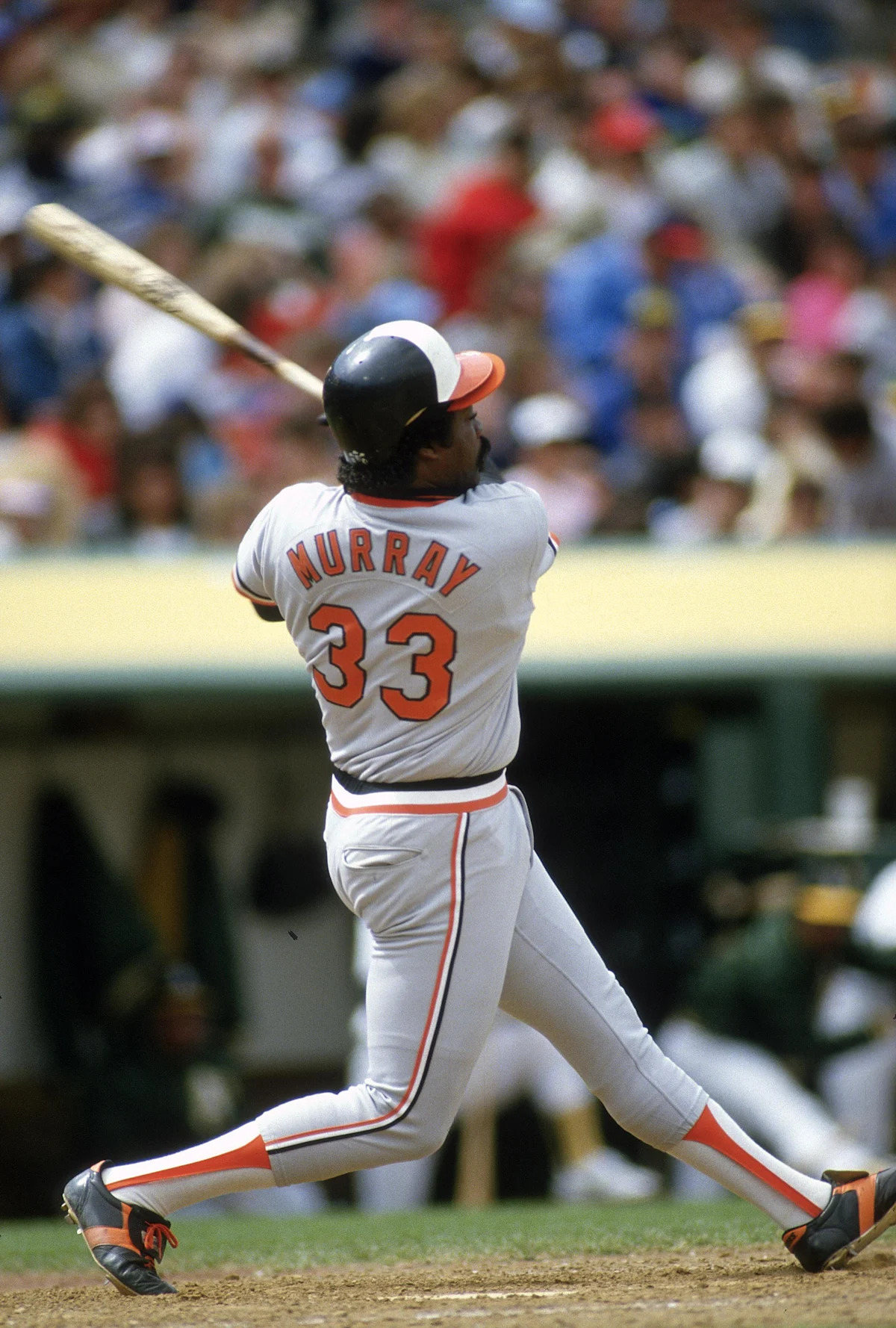
Eddie Murray switch-hit home runs in consecutive games, becoming the first player ever to do so. Both games came in wins vs. the White Sox at Comiskey Park.
Advertisement
On May 8, Murray connected from the left side vs. righty José DeLeón in the fourth inning and from the right side vs. southpaw Ray Searage in the ninth inning. That clout came with Chicago one out from victory, turning a 6-5 Baltimore deficit into an eventual 7-6 O’s win.
On this day, Murray’s first homer came from the right side, in the fourth inning vs. southpaw Joel McKeon, while Murray’s second came from the left side, in the sixth inning vs. righty Bob James. Thus Murray achieved his back-to-back games record on back-to-back at-bats.
The future Hall-of-Famer had quite a two-game set in establishing the record, going 6-for-10 with five runs, four homers, a double and seven RBIs.
Also in today’s game, leading the White Sox, 10-6, in the seventh inning of an eventual 15-6 win, Orioles left fielder Larry Sheets blasted a home run off of James onto the right-field roof at Comiskey Park.
Nine years to the day later, Larry’s son and future White Sox slugger Gavin Sheets was born.
Read the full article here


