




41 Years Ago
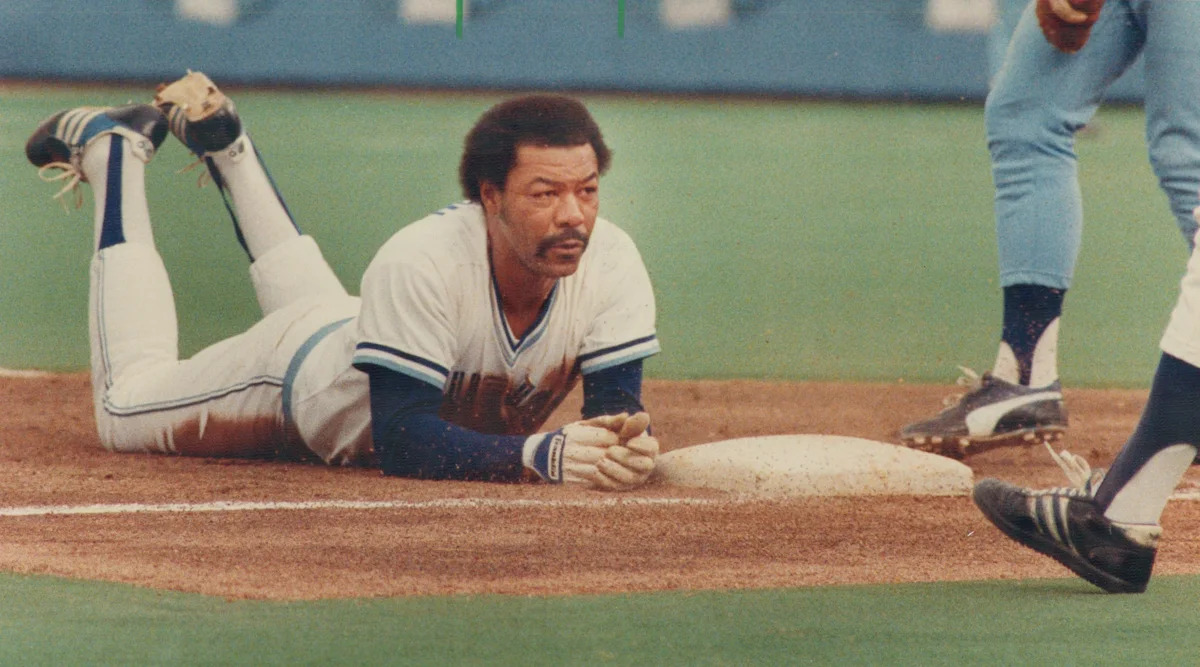
On August 29, 1985, the Blue Jays traded three minor leaguers—Matt Williams (not that Matt Williams), Jeff Mays, and Greg Ferlanda—to the Texas Rangers in exchange for Cliff Johnson.
At the time of the trade, the Blue Jays were in first place, 4.5 games ahead of the second-place Yankees, but they were platooning Al Oliver and Jeff Burroughs at designated hitter. The results weren’t ideal, though Burroughs (the right-handed half) was hitting .261/.375/.422, which wasn’t bad. Oliver, however, was hitting just .257/.298/.376, yet the Jays decided to replace Burroughs, not Oliver. After the trade, Burroughs was used only as a pinch hitter for the remainder of the season.
Advertisement
The Jays didn’t give up much for Johnson. Of the three prospects, only Williams made it to the majors, pitching just five games for the Rangers in the final month of the 1985 season before fading into obscurity. The Jays already knew Johnson well; he had played for them in 1983 and 1984, departing as a free agent after the 1984 season.
Although Johnson didn’t hit much for the Jays in the final month—just .274/.343/.315, with only one extra-base hit (a home run) in 24 games—the team still made it to the playoffs, ultimately losing to the Royals in seven games. In that series, Cliff hit an impressive .368/.400/.474.
The Jays utilized platoons at several positions during that era:
-
Catcher: Ernie Whitt and Buck Martinez (I wonder what happened to him).
-
Third base: Rance Mulliniks and Garth Iorg.
-
And, of course, designated hitter.
The Jays won three of the first five games of the series. Beginning with game six, however, the Royals developed a strategy to neutralize Toronto’s platoons: they would start a right-hander and then bring in a lefty early (Bud Black in game 6 and Charlie Leibrandt in game 7). The Jays would counter by swapping their left-handed platoon hitters for their right-handed counterparts. Later in the game, the Royals would turn to their right-handed closer, Dan Quisenberry.
Advertisement
Quisenberry, an excellent closer and a right-handed submarine pitcher, struggled more against left-handed batters than right-handers. With the Jays’ lefties out of the lineup, he faced fewer challenges. Notably, Quisenberry had blown saves in the second and fourth games of the series.
The Royals’ plan proved effective in the short series.
However, that’s not the main reason I wanted to reflect on the trade’s anniversary.
As mentioned, Johnson played for the Jays in 1984, then signed with the Rangers as a free agent in the offseason. Back in the 1980s, free agent compensation worked very differently than it does today. In the early ’80s, MLB owners wanted to compensate teams that lost star players to free agency—and, more importantly, slow the pace of salary inflation. Free-agent compensation was a major issue in the 1981 player strike, as players wanted to maintain salary growth.
Advertisement
The result was a complicated system. Baseball Reference explains it best:
The compromise that was reached following the strike was to set up a free agent compensation draft, through which a team losing a top-notch free agent would get to pick a player from a pool of players made available by the other Major League teams. Free agents were divided into three classes, based on playing time and performance over the previous two seasons: in descending order, these were Type A, Type B and Type C. Only losing a Type A player would activate the compensation draft; Type B players would continue to be compensated with draft choices, and Type C’s would not trigger any compensation.
All teams could protect 26 players in their organization from the draft, except for teams who signed a Type A free agent that year, who would protect 24 players. Teams could opt out of the right to sign Type A free agents and, therefore, not have to place any names into the pool. As a result, the team losing a player could be sure to pick a player who would help immediately if that was their wish (although some lower-level prospects would also be available). The draft occurred once a year, in January or February, between the end of the free agent signing season and the opening of spring training.
Cliff Johnson was considered a Type A free agent, so the Blue Jays were able to select reliever Tom Henke from the Rangers as compensation. Henke became the best closer in team history (though Duane Ward might disagree), saving 217 games for Toronto over eight seasons. The Jays got a remarkable return for ‘renting’ Johnson for just five months. Without that deal, there would be no Henke—and without Henke, would the Jays have won the 1992 World Series?
28 Years Ago
Dave Stieb earned his final MLB victory—his 176th overall, with 175 coming as a Blue Jay.
Advertisement
Stieb ‘retired’ in 1993 at age 35, after pitching four games with the White Sox, who had signed him as a free agent. Stieb earned his World Series ring in 1992, though his performance that season was underwhelming—a 5.04 ERA in 96.1 innings. His last strong campaign came in 1990, when he posted a 2.93 ERA over 33 starts and 208.2 innings at age 32. The heavy workload earlier in his career caught up with him in his early thirties.
In 1998, Stieb returned to spring training as a pitching instructor and threw so well—better than before his four-year hiatus—that players took notice and spoke with the coaches. One thing led to another, and he began the season in the minors (where he posted a 2.78 ERA in 12 starts), earning a call-up in June.
Stieb appeared in 19 games, making three starts. He went 1-2 with two saves and a 4.83 ERA. In 50.1 innings, he allowed 58 hits, 17 walks, and 27 strikeouts. At the end of the season, at age 41, he retired for good. He and Roy Halladay remain 1 and 1a atop the list of best starting pitchers in Jays’ history—my view on who comes first changes all the time.
Stieb’s final win came in a 14-7 victory over the Twins. The Jays scored in every inning except the second. Stieb pitched five innings, allowing seven hits, four earned runs, two walks, and recording four strikeouts.
Read the full article here


