





The Dallas Cowboys have spent the 2026 offseason performing a high-stakes financial dance, aggressively reshaping their salary cap through a series of renegotiated contracts that favor immediate flexibility over long-term stability. Unlike standard restructures that simply convert salary to bonuses, the front office has successfully finessed deals where veterans accepted genuine pay cuts in exchange for newfound financial security. By dropping the asking price and pairing those moves with a heavy use of void years, the Cowboys have effectively hollowed out a good chunk of their 2026 financial obligations and kicked those cans down the road into future seasons.
Since the Cowboys have been busy financial beavers, we thought it would be good to run through these restructures and understand why they happened and what each side gained in the process.
Advertisement
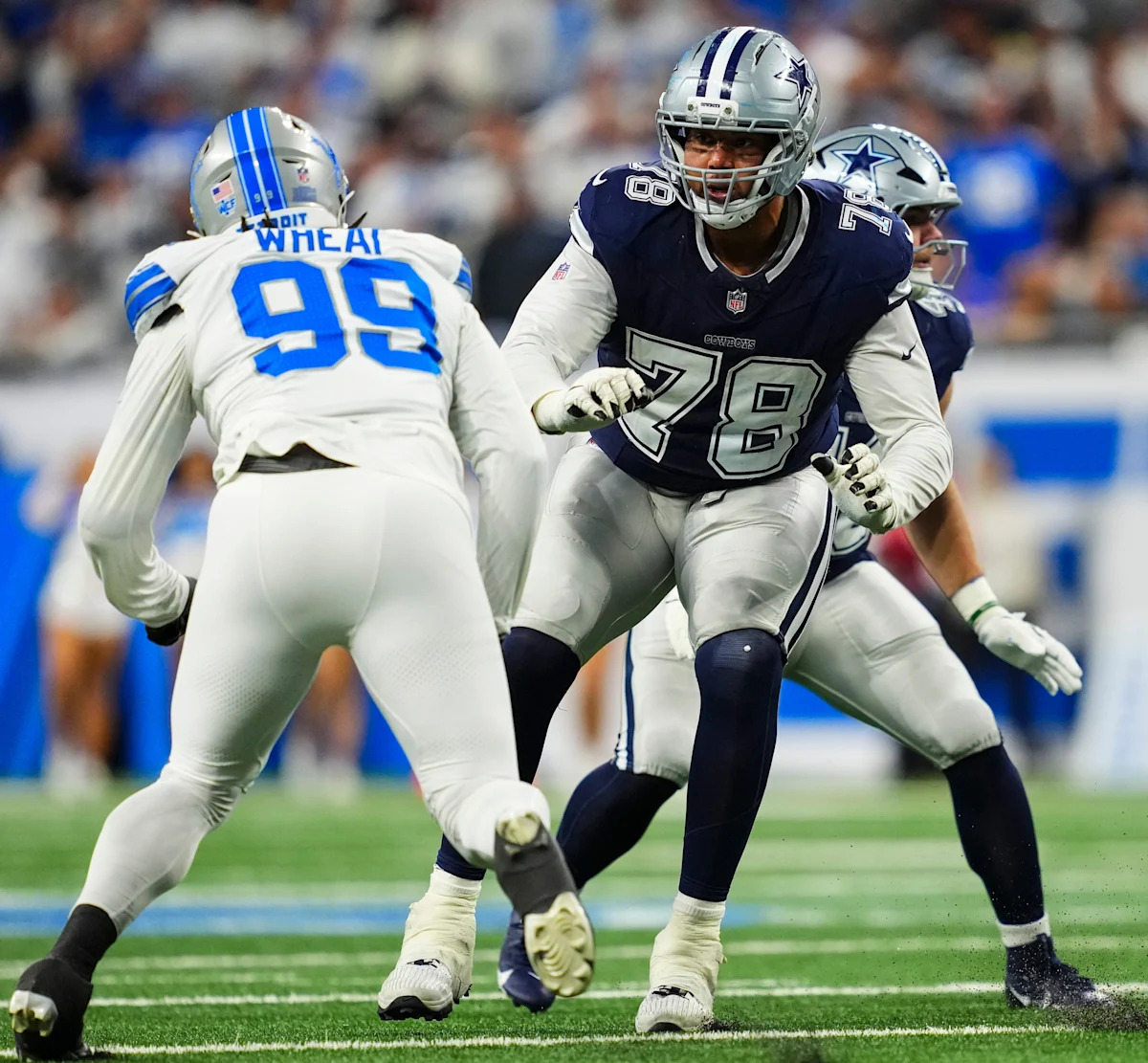
Terence Steele
The debate of whether or not Steele was worth his cost has been an annual thing, but this season was the first time the team could get out from under his contract without a huge dead money hit. Many expected this would make him a cap casualty, but then also leave the team with a hole along the offensive line. The front office killed two birds with one restructure, lowering its overall cost while keeping the veteran right tackle employed in Dallas for the foreseeable future.
Key impacts of the deal
For the Cowboys: The front office accomplished two things with this restructure. First, they dropped his average annual cost from $17 million to $11 million, making him more reasonably priced. Additionally, the move created $9.3 million in immediate cap space for the 2026 season by reducing his base salary to the league minimum and converting the rest into a signing bonus that the team is able to spread out over five years, with the last two being added void years. This allowed them to drop his cap hit for the upcoming season from $18 million to $8.7 million.
Advertisement
For Terence Steele: While he accepted a total pay cut, he gained $22 million in new full guarantees, where previously he had none. This effectively locks him in as the team’s starting right tackle for at least the next two seasons, whereas he previously could have been cut with zero financial penalty to the team.
Roster Stability: This restructure confirms Steele will likely return for a seventh season in Dallas, solidifying the right side of an offensive line that has seen him start every game over the last three years.
Rashan Gary
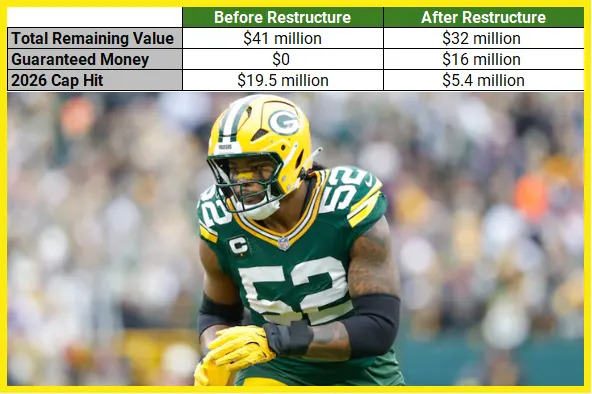
The draft cost of acquiring Gary from the Green Bay Packers was just a measly 2027 fourth-round draft pick, but the real cost showed up on the payroll. His cap hit for the upcoming season was nearly $20 million, which is why he was destined to be a cap casualty had the Cowboys not stepped in and worked a deal to secure his services.
Key changes and financial impact
Massive Cap Savings: Similar to Steele, the Cowboys accomplished two things by lowering his overall cost and pushing off money into future seasons. The new deal lowered his 2026 cap hit from $19.5 million to roughly $5.4 million, creating $14.1 million in cap space for the current 2026 season.
Advertisement
The Void Year Strategy: The Cowboys added three void years (stretching the deal on paper through 2030). This allowed them to prorate his $13.2 million signing bonus over five years, charging only $2.64 million per year against the cap.
Pay Cut for Security: Gary accepted a pay cut that will ultimately drop his total earnings by $10 million over the next two seasons. In exchange, his modified deal provides him with $16 million in full guarantees, including a $13.2 million signing bonus and his $2.8 million 2026 salary. Previously, Gary was promised nothing.
Kenny Clark
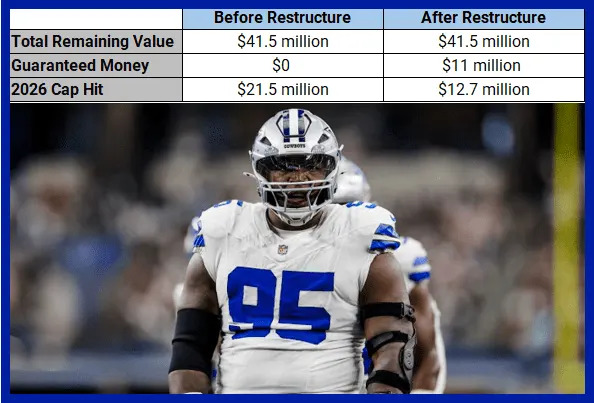
The Cowboys were previously awarded a low-cost trial period for Clark’s services, as his cap hit was only $2.3 million for the 2025 season. Many debated that he was essentially a rental last year because his base salary would balloon over the next two seasons, with some claiming he would be outright released, especially after the team traded for Quinnen Williams last year. However, the Cowboys had different plans, and those plans included keeping him in Dallas, and they tied a bow on that decision when they restructured his contract last week.
Key financial adjustments
Bonus Conversion: Dallas converted his $11 million roster bonus into a signing bonus. This allowed the team to spread that $11 million charge across the current year and future seasons rather than having it count entirely against the 2026 cap.
Advertisement
Void Year Addition: To maximize the cap relief, the Cowboys added three void years (2028–2030) to the deal. While Clark is only under contract to play through 2027, these ghost years allow the bonus money to be stretched over a five-year accounting period.
Player Security: Unlike the pay cuts of Steele and Gary, this move does not change the actual cash Clark is scheduled to receive. He still earns his $21.5 million in 2026 cash, but receives the $11 million portion earlier as a lump-sum bonus, solidifying the team’s commitment towards him this season. Next year remains TBD, so the Cowboys can assess if they want to invest in him further next offseason.
The Cowboys’ recent contract wizardry shows the team’s commitment to winning now despite the financial repercussions that will eventually come to roost. By securing pay cuts and restructuring deals, the team has managed to keep key pieces of the roster intact. Time will tell if these moves come back to bite them, but for now, they’re doing what they can to field a competitive roster.
Read the full article here