



It’s no longer a whisper; the NBA has a brazen and embarrassing tanking problem.
The Utah Jazz closed the third quarter Monday, Feb. 9 against the Miami Heat up by three. They had been dominating Miami in the paint on both ends. Their size was the big reason why.
Advertisement
Forward Jaren Jackson Jr., the prized acquisition Utah made just one week prior, was at 22 points through 25 minutes. Star forward Lauri Markkanen added 17 in 24:38. Veteran center Jusuf Nurkić was a problem all night to the tune of 10 points and 16 rebounds.
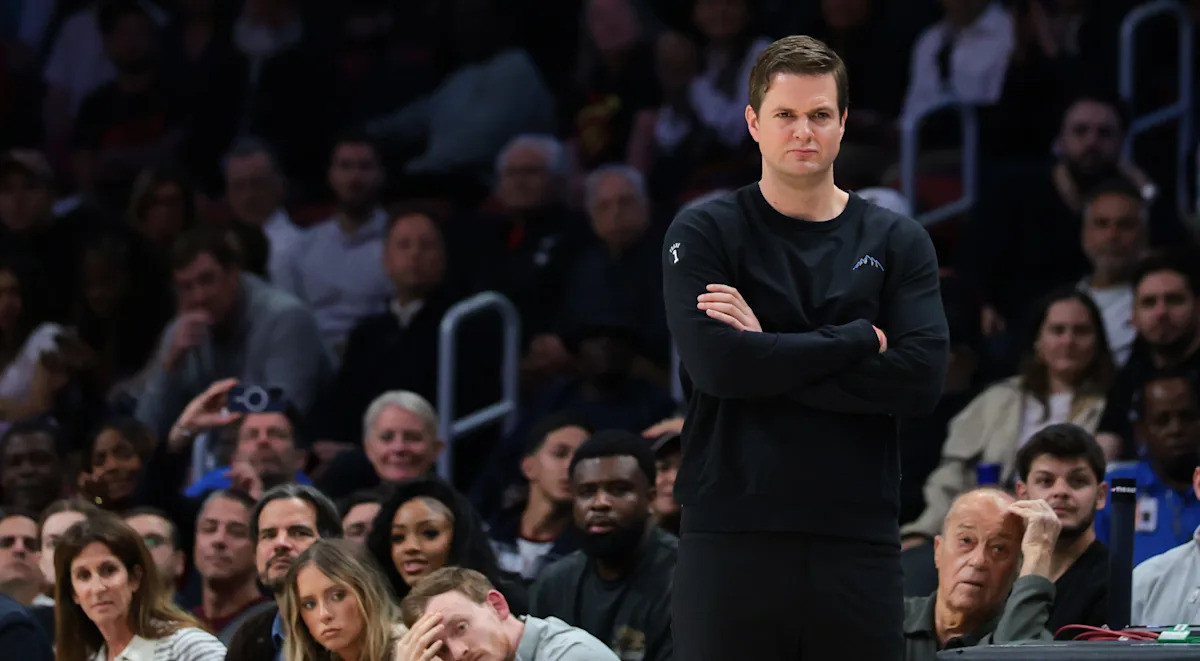
Yet, with a victory in sight, Jazz coach Will Hardy took self-sabotage and shameless tanking to a new level, sitting the trio for the entire fourth quarter.
In a twist of karmic justice, Miami was so poor down the stretch that the Jazz somehow overcame a late five-point deficit to win, 115-111.
This was the second consecutive game that Hardy had pulled the stunt. Even worse: it appears this will be Utah’s standard operating procedure moving forward.
Advertisement
After the game, a reporter asked Hardy how close he was to subbing Jackson or Markkanen back in.
“I wasn’t,” Hardy responded, plainly and without elaboration.


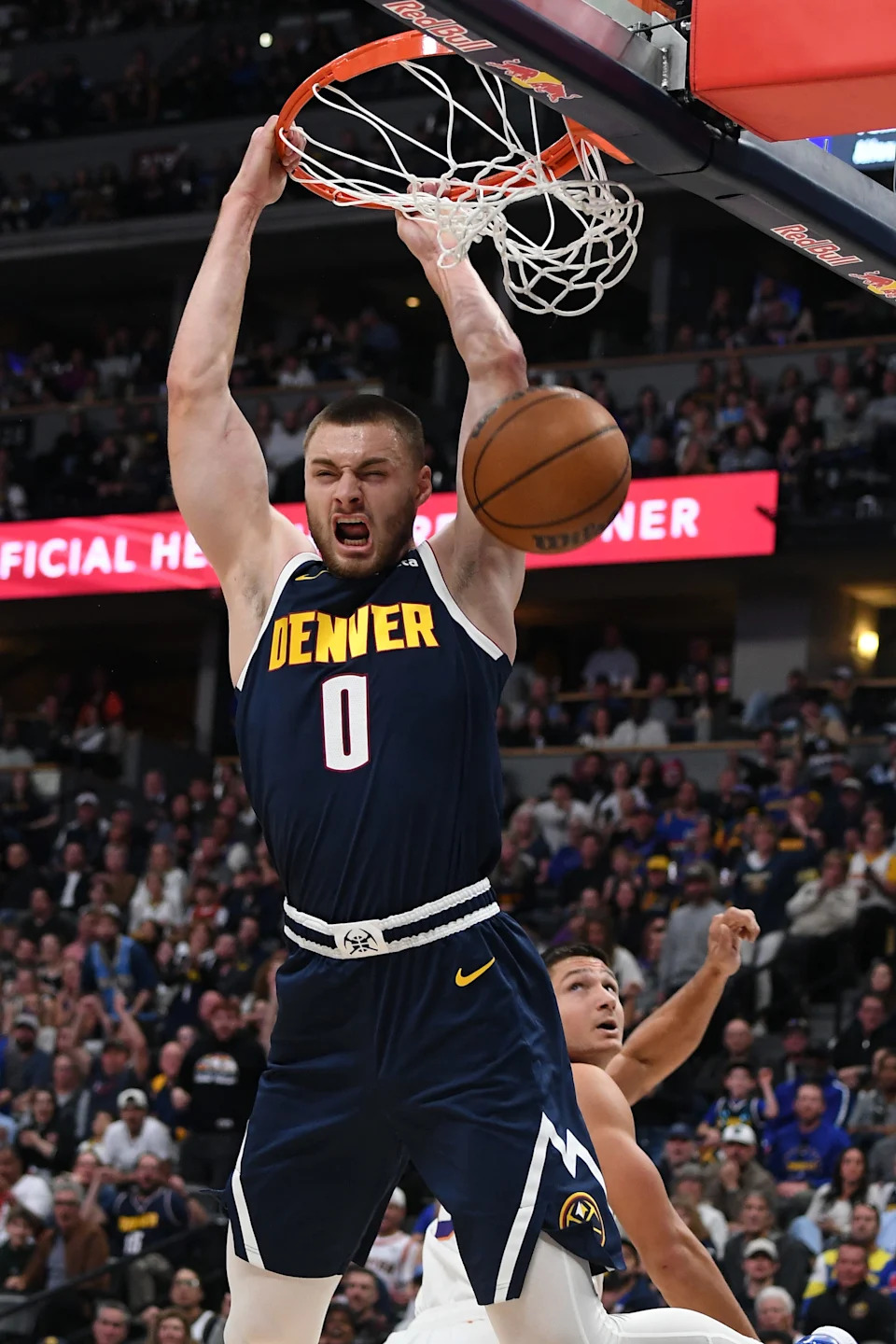
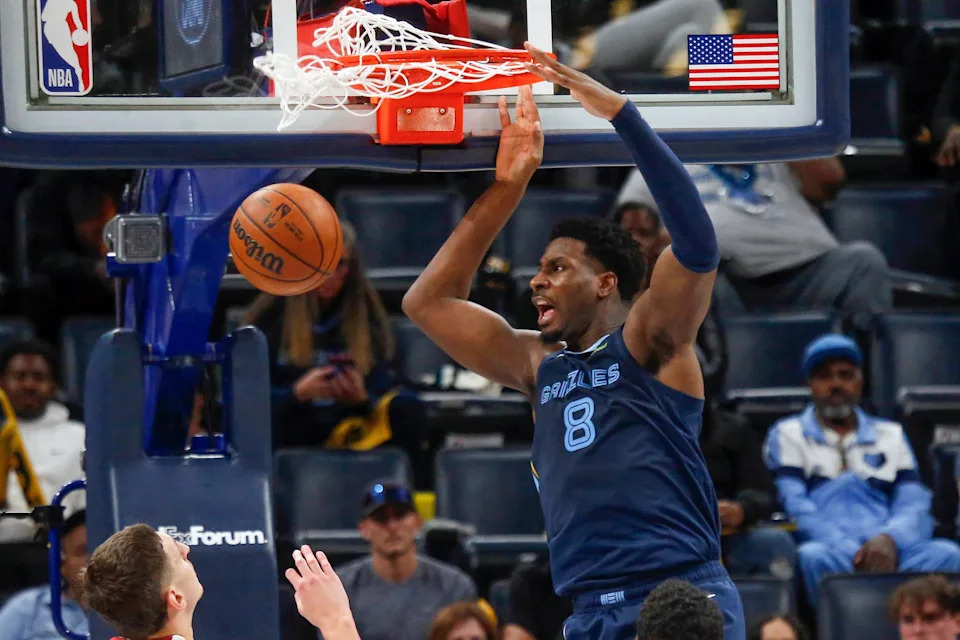
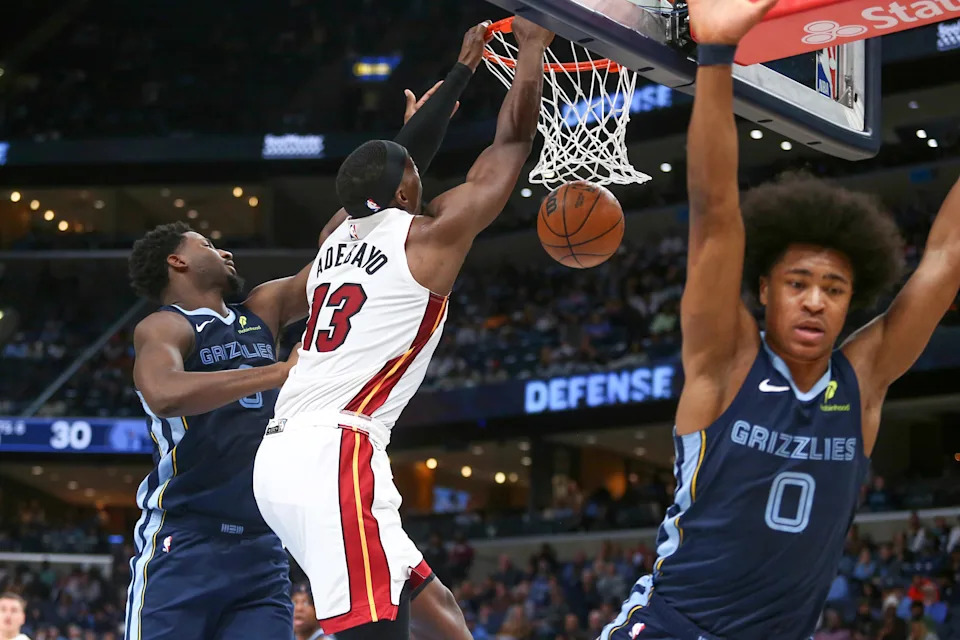


This is an existential problem, one NBA commissioner Adam Silver and the Board of Governors must fix. Yes, the draft is expected to feature at least three elite-level players, but if the NBA doesn’t take prompt action, anti-competitive behavior will spread to other teams also looking to manipulate outcomes.
It’s out in the open now, and this will come to stain the last quarter of the season. The product will suffer. And fans, as they should, will flee. As such, the NBA is compromised.
Advertisement
And with the explosive growth of online sports gambling and prediction markets, these actions only invite further cracks in the integrity and competitive balance of the sport.
The NBA’s player participation policy is designed to foil tanks by mandating that teams play their stars with regularity. But the Jazz have found a workaround to the rule. Their impact players start games, they just don’t finish them. And thus, they make a mockery of the policy.
“We’ve got to find a way to win against teams that are, I guess you can say, trying to lose,” Heat center Bam Adebayo told reporters after the game.
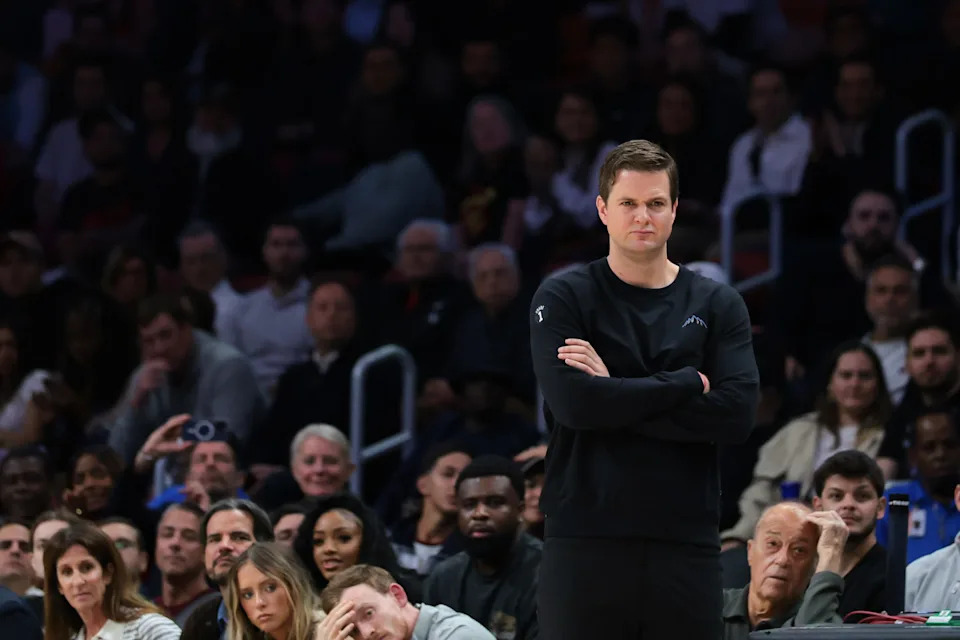
Utah Jazz head coach Will Hardy watches from the sideline during his team’s game against the Miami Heat at Kaseya Center on Feb. 9, 2026.
Frankly, though Hardy will never admit this publicly, the directive to tank is almost certainly coming from his bosses.
Advertisement
Utah’s 2026 first-round pick is top-eight protected, which means that if the lottery places its selection anywhere from Nos. 1 through 8, the pick stays with the team. If it drops to No. 9 or below, that pick is conveyed to the Oklahoma City Thunder.
And while it makes total economic sense — the good fortune of drafting a franchise-altering player instantly pumps millions in value — the flagrant tanking debases the sport and insults the fan who invests time and capital.
Utah (17-37) isn’t alone. The Washington Wizards (14-38) traded for a pair of veterans, Anthony Davis and Trae Young, who have 14 combined All-Star appearances. They were curious win-now moves for a team that’s currently second-to-last in the East.
Davis and Young were both hurt when they were acquired, and it’s unclear when they’ll make their return — if they do at all.
Advertisement
A recent NBA TV report indicated that Davis was not expected to return the rest of the season with left hand and groin injuries.
Young has been dealing with a sprained knee. The timeline for both is nebulous, at best.
Wizards general manager Will Dawkins recently responded to the report and said Davis would return to Dallas to finish his rehab and that he would be reevaluated over the NBA All-Star break.
Davis’ original timeline for a return was four-to-six weeks; Dawkins, though, put it closer to 10.
The Wizards, similar to Utah, have also cycled through young lineups, particularly when facing some of the NBA’s weaker teams.
Advertisement
And also like Utah, Washington’s 2026 first-round pick is top-eight protected.
The Indiana Pacers (13-40) traded for Ivica Zubac, who was away from the Clippers, his former team, for the birth of his first child. Zubac had played in the previous nine games before the trade. Yet, Pacers coach Rick Carlisle said Zubac’s debut with Indiana would be delayed because of a sprained ankle that hadn’t been listed on prior injury reports.
Indiana’s 2026 first-round pick? If you guessed that it was protected, you would be correct, for Nos. 1-4 and 10-30.
The young Brooklyn Nets (15-37) waived Cam Thomas after they couldn’t find a trade partner. They, too, appear to be in tank mode.
Advertisement
The Milwaukee Bucks (21-30) might convince Giannis Antetokounmpo to take his time from his calf strain to preserve their draft positioning.
Same for the Dallas Mavericks (19-33) with Kyrie Irving and his torn anterior cruciate ligament.
The Sacramento Kings (12-43) are simply without direction.
The tanking feels like it will get worse. And while the temptation might be to say it’s harmless jockeying, the flip side is that it impacts seeding for the teams actually competing and vying for spots in the playoffs.
In some ways, the timing of the All-Star break is convenient; it provides a respite for Silver and league executives to brainstorm ways to eradicate this from the league.
Advertisement
If they don’t come out strong with precise and targeted measures, then why even play the games? And, if you’re a fan, why even watch?
This article originally appeared on USA TODAY: The NBA’s tanking crisis is Adam Silver’s biggest test yet
Read the full article here