




When the USGA and R&A released their Distance Insights Report in February 2020, they weren’t announcing a golf ball rollback. They weren’t even proposing one.
But what they did was make a declaration that would set golf on a path toward one of the most significant equipment changes in modern history.
Advertisement
After studying data from dozens of research projects, the governing bodies concluded that the trend of increasing distance was placing the game on what they called an “unsustainable path.” Golf courses were getting longer. Maintenance costs were rising. Historic venues were being stretched beyond their original design intentions, and their strategic challenges were being compromised. Water usage, land requirements and environmental pressures were all increasing.
More: PGA Tour surveys players on golf ball rollback
USGA president Fred Perpall, USGA Ceo Mike Whan and USGA Chief Championships Officer John Bodenhamer speak to the media prior to the 125th U.S. Open at Oakmont Country Club.
Not everyone agreed.
Some players argued that distance was simply another skill and should be rewarded. Others questioned whether equipment was really the cause, pointing instead to better athletes, improved training methods and advances in launch-monitor technology and teaching. Manufacturers pushed back against proposed changes, while tours and organizations that run major championships took varying positions.
Advertisement
What followed was a years-long debate that evolved from a discussion about distance into a broader argument about equipment regulation, bifurcation, governance and the future of the game.
Eventually, the USGA and R&A chose to change how golf balls are tested for conformity, a decision that will require manufacturers to create balls that fly shorter distances beginning in 2028. We think.
Regardless, the story of how golf got here is far more complicated than a simple decision to roll back golf ball performance.
Feb. 4, 2020: The Distance Insights Report changes the conversation

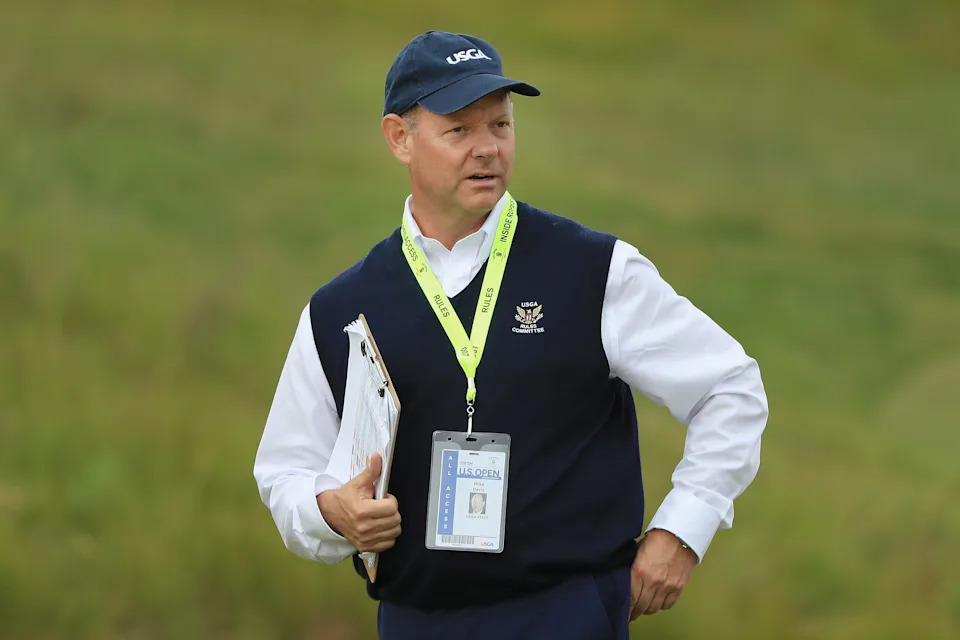
Mike Davis, the USGA’s Executive Director of the USGA from 2011 until his retirement in 2021, was a vocal advocate for reducing distance and was instrumental in the creation of the Distance Insights Report.
The modern rollback debate effectively began when the USGA and R&A released the 102-page Distance Insights Report in 2020.
Advertisement
The report concluded that distance gains were affecting every level of golf and creating long-term challenges for the sport. According to the governing bodies, increasing distance was contributing to a cycle in which courses felt pressure to become longer, which in turn made them more expensive to maintain and increasingly resource-intensive.
The report cited data showing that elite players had been gaining distance for decades and that many modern championship venues were struggling to preserve their intended strategic challenges. The governing bodies also introduced the concept of exploring a Model Local Rule that could someday allow tournaments to use equipment with reduced performance. Importantly, the report did not recommend any immediate equipment changes. Instead, it laid the factual foundation for what would become years of additional research.
Looking back, this was the moment the governing bodies formally moved the distance debate from opinion to policy.
Feb. 4, 2020: Players immediately split on the issue
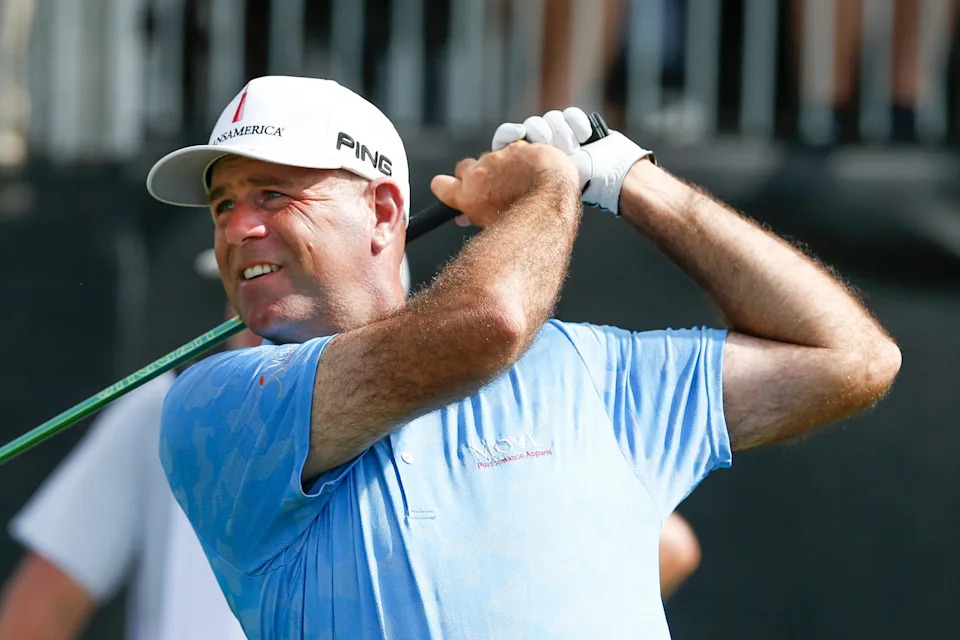
Stewart Cink, the 2009 British Open champion, was among the pros who voiced concern upon learning the USGA and R&A wanted to explore a Model Local Rule that would mandate pros use distance-reducing equipment.
Within hours of the Distance Insights Report’s release, talking to players made it clear there would be no consensus.
Advertisement
Padraig Harrington publicly supported a rollback, arguing that the issue was fundamentally about protecting golf courses and controlling escalating maintenance costs. He believed a reduction in distance would help preserve classic venues and reduce pressure on facilities around the world.
Others strongly disagreed.
Harold Varner III argued that distance was a talent that should be rewarded, comparing long hitters to naturally gifted athletes in other sports. Stewart Cink warned against creating different rules for professionals and amateurs, while Patrick Cantlay questioned whether distance represented a meaningful problem for recreational golfers.
Those early reactions revealed many of the fault lines that would define the coming debate: sustainability versus athleticism, architecture versus technology and whether golf should continue operating under one set of equipment rules.
Advertisement
March 16, 2022: The governing bodies reveal their roadmap
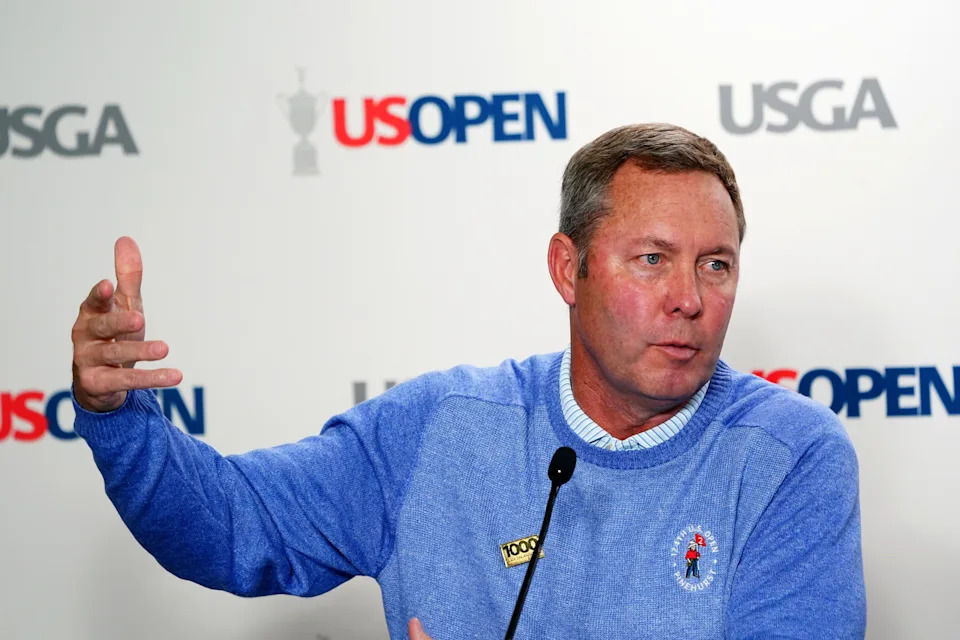
Mike Whan, the chief executive officer of the USGA, announced the governing bodies’ wanted feedback and input from stakeholders regarding different paths to reduce distance in 2022.
The COVID-19 pandemic delayed some of the research and findings the USGA and R&A had planned to gather, but two years after the Distance Insights Report, golf’s governing bodies provided their clearest indication yet of how they might address distance.
In an Areas of Interest letter sent to manufacturers, the USGA and R&A outlined several concepts they wanted to explore, including changes to how golf balls are tested and the possibility of Model Local Rules that could reduce driver performance for elite players.
The most significant proposal involved changing the conditions used to test golf balls. The USGA and R&A suggested increasing the test robot’s swing speed from 120 mph to 125 mph and altering launch and spin conditions to better reflect modern elite players.
Advertisement
For the first time, the golf ball emerged as the most likely target of future regulation.
The letter also revealed another important development: the growing possibility that elite golfers could someday be required to use different equipment than recreational players.
March 14, 2023: ‘Bifurcation’ is proposed

The USGA and R&A announced their intentions to change how golf balls are tested in 2023.
After years of study, the USGA and R&A unveiled their proposed solution. The governing bodies announced a proposed Model Local Rule that would allow tournaments to require elite players to use golf balls tested under a new, more demanding standard. The proposal was designed to reduce distance at the highest levels of the game while leaving recreational golfers unaffected.
Advertisement
Under the proposal, professional tours and elite competitions could mandate the use of distance-reducing balls while everyday golfers could continue playing current models.
The governing bodies viewed the plan as a way to solve the distance problem without impacting the recreational game, but many others saw it differently.
Manufacturers warned that virtually every modern golf ball would fail the proposed test. Players questioned whether separate equipment rules would undermine one of golf’s defining characteristics. Critics argued that bifurcation was becoming reality, even if the USGA and R&A used different terminology.
The proposal ignited one of the fiercest debates in modern golf.
Advertisement
Dec. 6, 2023: The rollback becomes official
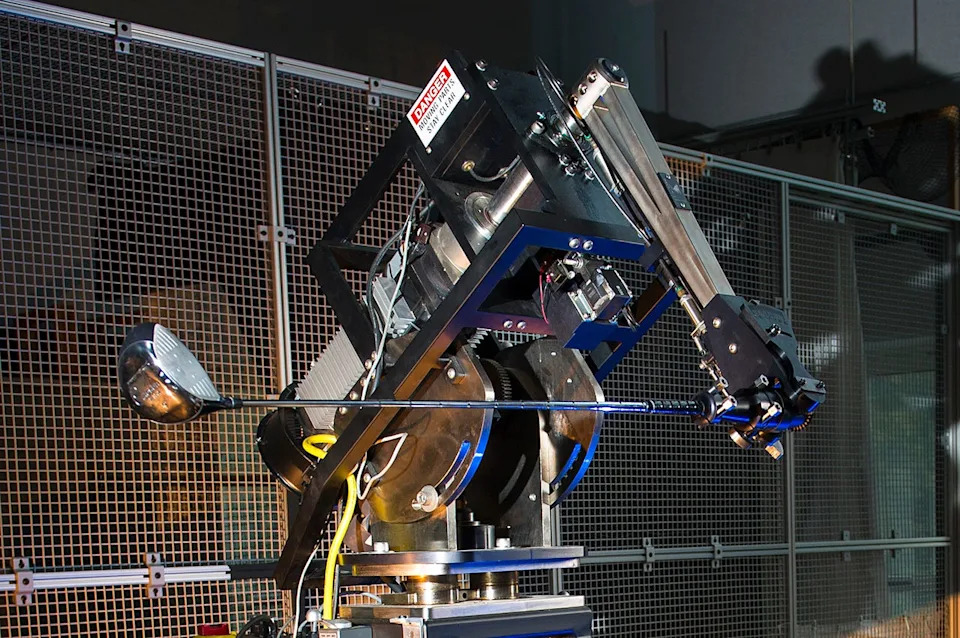
The USGA’s golf robot swings a test club at exactly the speed technicians want. (USGA)
Nine months later, the governing bodies changed course. After receiving feedback from tours, manufacturers, players and other stakeholders, the USGA and R&A abandoned the elite-only Model Local Rule approach and announced a universal rollback.
Starting in 2028, for a golf ball to be deemed conforming and be legal for play, it will be tested using a robot that swings a titanium club at 125 mph and hits the ball on an 11-degree launch angle with 2,200 rpm of spin. The shot can not exceed the Overall Distance Standard (ODS) of 317 yards of combined carry distance and roll (with a 3-yard tolerance). Currently, balls are tested at 120 mph with a launch angle of 10 degrees and 2,520 rpm of backspin.
Advertisement
Manufacturers report that nearly every premium golf ball currently being sold would become non-conforming under the new testing procedures. However, to help manufacturers and store owners sell remaining inventories and allow recreational players to use any of the old balls they have, recreational golfers would not be forced to make the switch until 2030.
The governing bodies estimated that the longest hitters could lose approximately 13 to 15 yards while average recreational golfers would lose 5 yards or less.
Perhaps the most important aspect of the decision was not the distance reduction itself, but the reasoning behind it. The governing bodies said stakeholders overwhelmingly supported maintaining a unified game played under one set of rules rather than creating separate equipment standards for professionals and amateurs.
So, the rollback had become universal because golf largely rejected bifurcation.
Advertisement
January 21, 2026: The governing bodies rethink the rollout dates


The R&A Clubhouse at The Old Course in St Andrews, Scotland.
Just over two years after announcing the rollback, the USGA and R&A found themselves revisiting not the rule itself, but the path to implementation.
In a letter sent to manufacturers and stakeholders, the governing bodies revealed they were considering abandoning their original two-phase rollout plan. Under the framework announced in 2023, elite competitions would begin using rollback-compliant golf balls in 2028, while recreational golfers would continue using current-conforming balls until 2030.
But as implementation planning continued, stakeholders raised concerns about the complications of operating under two equipment standards at the same time. Manufacturers faced the prospect of managing overlapping product families. Golf shops could find themselves selling balls that were legal for some competitions but not others. Golfers might be left wondering whether the ball in their bag was acceptable for a casual round, a club championship or a qualifier. As a result, the USGA and R&A asked stakeholders whether it would be better to move everyone to the new standard on a single date in 2030.
Advertisement
The letter made clear that the rollback itself was not under reconsideration. The only question was how to get there. Yet the episode demonstrated that even after the policy had been decided, the practical realities of implementing it remained far more complicated than simply changing a testing procedure.
March-April 2026: The implementation battle begins
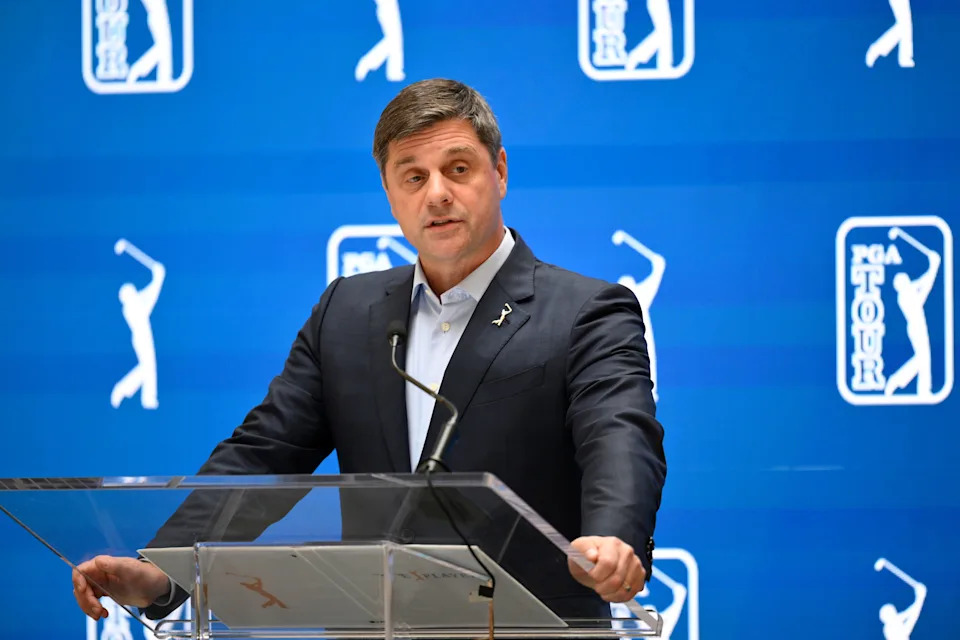
Brian Rolapp, CEO of the PGA Tour, speaks to the media prior prior to the 2026 Players Championship.
If the December 2023 announcement appeared to settle the issue, the events of 2026 have suggested otherwise.
New PGA Tour CEO Brian Rolapp publicly questioned both the USGA and R&A’s premise and their solution. He framed the debate around two questions: Is distance actually a problem? And if it is, does the rollback solve it?
Advertisement
At roughly the same time, Augusta National chairman Fred Ridley reaffirmed his support for the governing bodies in his annual press conference at the Masters Tournament. Ridley declared that “failure’s not an option” and argued that increasing distance continued to threaten the strategic variety, sustainability and long-term health of the game.
Those comments illustrated the growing divide between influential stakeholders.
The governing bodies and Augusta National remained firmly committed to the rollback. Other organizations and many players remained unconvinced.
May 10, 2026: The PGA of America still does not endorse the rollback
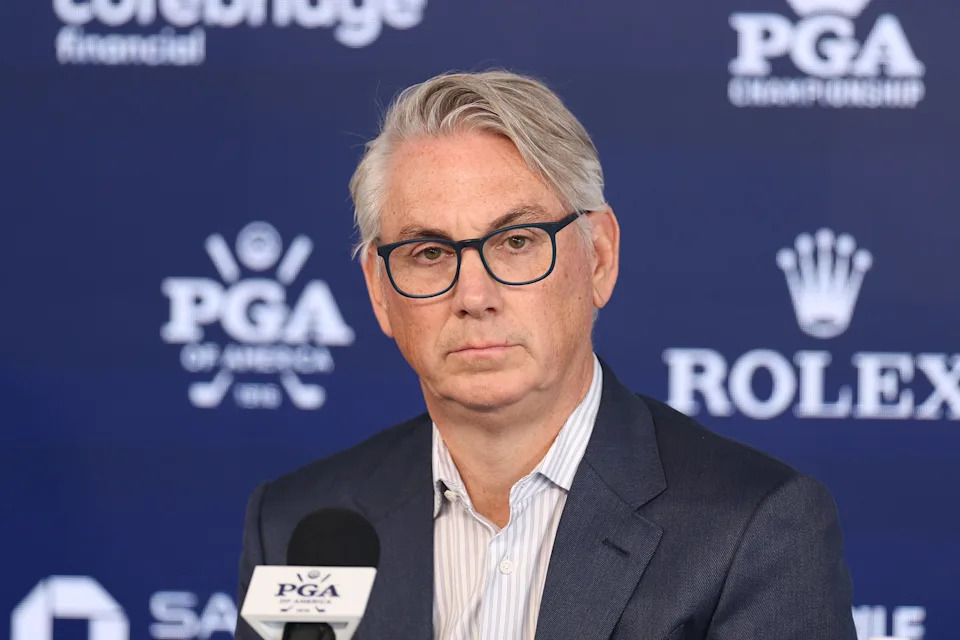
Terry Clark, CEO of PGA of America, talks to the media during a press conference prior to the 2026 PGA Championship at Aronimink Golf Club.
While Augusta National continued to publicly support the rollback, the PGA of America remained far more guarded.
Advertisement
In an interview with Golfweek’s Earmon Lynch, newly appointed PGA of America CEO Terry Clark did not endorse the rollback, but he also stopped short of opposing it outright.
“We’ve been pretty consistent in trying to make sure that recreational golfers are not harmed in this,” Clark said.
Clark acknowledged that the PGA of America had been actively engaged in discussions with the USGA and R&A and said he was encouraged by the governing bodies’ willingness to listen to different perspectives. At the same time, he made clear that his organization was still evaluating the potential effects of the rule change.
“I’m still trying to understand that a little more, so I’m continuing to work with them to figure out solutions,” Clark said. “But we’re in a little bit of wait-and-see right now.”
Advertisement
The significance of the PGA of America’s position extends beyond recreational golf. The organization operates two of the sport’s most important events, the PGA Championship and the Ryder Cup. Any hesitation from the PGA of America added another layer of uncertainty to the implementation process.
May 12, 2026: Cameron Young raises a new question

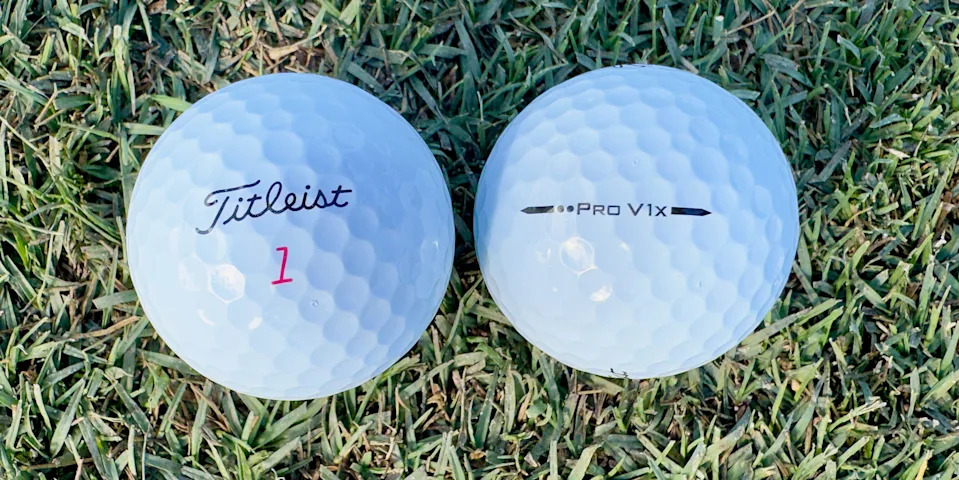
Cameron Young’s v golf balls.
Cameron Young, one of the longest hitters in professional golf, started using the low-spin Titleist Pro V1x Double Dot prototype ball in August, 2025, and on the eve of the 2026 PGA Championship, it was reported that it would conform to USGA and R&A’s new test standards, meaning it would be legal to use after the rollback started.
Advertisement
However, the ball did not reduce Young’s driving distance. He won his first PGA Tour event the first week he used the ball at the 2025 Wyndham Championship and averaged 335 yards off the tee for the week. Then won the 2026 Players Championship, hitting his drive on the 18th hole Sunday 375 yards.
His success raised a possibility that had not received much attention during the earlier phases of the debate: What if some elite players don’t lose distance with the distance-reducing balls?
Suddenly, the concern wasn’t necessarily that the rollback would fail completely. Rather, it suggested that players who generate particularly launch conditions could adapt more effectively than others, potentially preserving much of their distance advantage.
The discussion began shifting from whether the rollback should happen to whether it would work as intended.
Advertisement
May 21, 2026: The PGA Tour starts asking questions
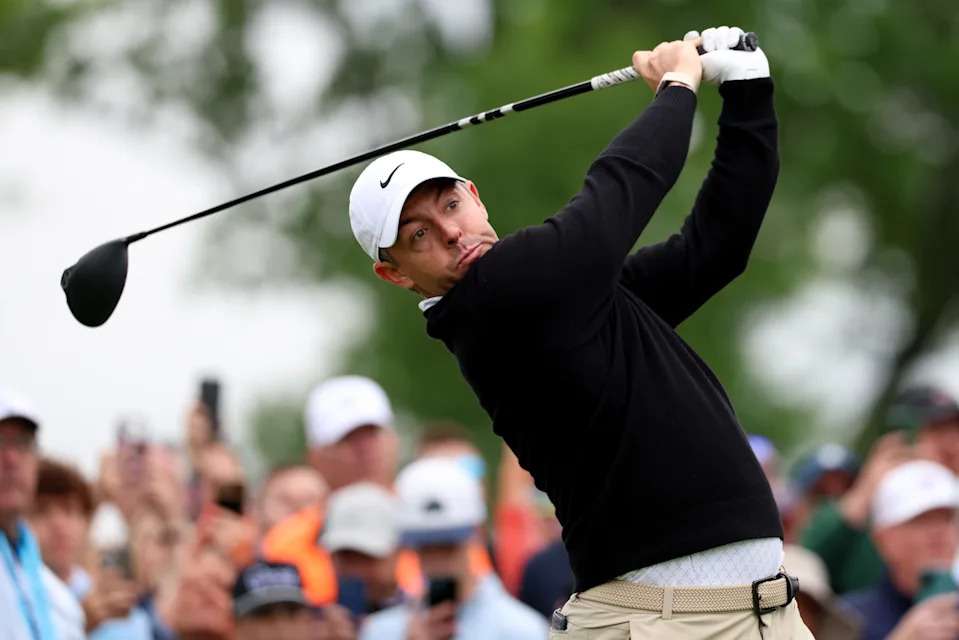
Rory McIlroy at the PGA Championship at Aronimink Golf Club
The uncertainty surrounding implementation became even more apparent when it was reported that the PGA Tour surveyed players about the rollback.
Among the questions the Tour asked was whether players felt distance was truly a problem, whether the governing bodies had effectively addressed the needs of professional golf and whether the Tour should eventually establish its own equipment rules.
Those questions underscored how much uncertainty remained despite the rollback already being approved.
Where the distance debate stands today
The rollback is no longer a proposal. It is a policy. Manufacturers are developing products to meet the new standards. The governing bodies remain committed to implementation. Augusta National continues to support the effort.
Advertisement
Yet many of the questions that existed in 2020 remain unresolved.
-
Will the rollback meaningfully slow distance growth?
-
Will manufacturers find ways to recover much of the lost yardage?
-
Will certain launch conditions and player profiles benefit more than others?
-
Will professional golf remain fully aligned behind the governing bodies?
The Distance Insights Report sought to answer whether distance was a problem. Six years later, golf is still debating whether the chosen solution will accomplish what its architects intended.
The rollback may be coming, but the debate is far from over.
David Dusek is a senior writer for Golfweek, covering equipment and technology.
This article originally appeared on Golfweek: Golf Ball Rollback debate USGA R&A golf equipment golf balls
Read the full article here


