




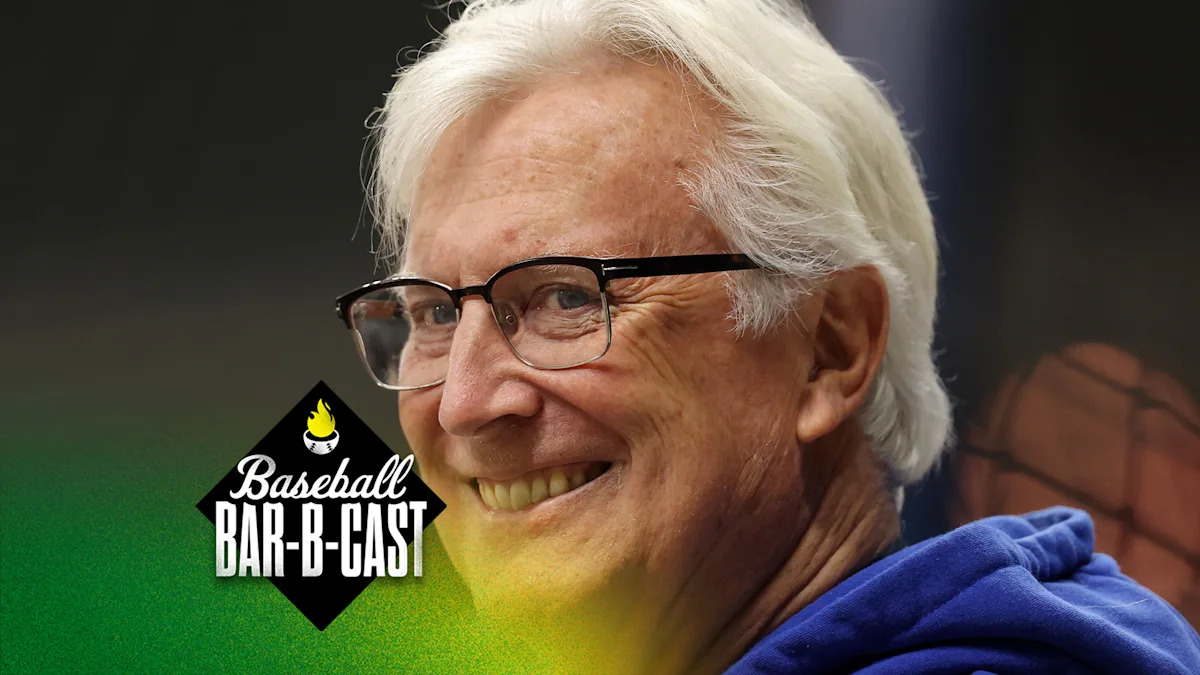
Ice Cube, fresh off driving the 2025 World Series trophy onto the Dodger Stadium turf in the back seat of a candy-blue Chevy convertible, didn’t seem to notice Mark Walter.
As the legendary L.A. rapper bounced from the podium after commencing the on-field ceremonies at last year’s World Series parade celebration, he began congratulating anybody and everybody in his path. Manager Dave Roberts, World Series MVP Yoshinobu Yamamoto, cult hero reliever Anthony Banda, team president Stan Kasten and countless others received high-fives and words of recognition. But purposefully or not, Cube strode right on by the man funding the entire operation, team owner Mark Walter.
![LA Dodgers celebrate back-to-back World Series championships [FULL CEREMONY] | ESPN MLB](https://i.ytimg.com/vi/84FrG994tpc/hqdefault.jpg)
Join or create a Yahoo Fantasy Football league for the 2026 NFL season
Advertisement
Moments later, Walter, sporting a black and gold “World Series Champions” T-shirt over a gray-blue button-down like a CEO at a company picnic, addressed the crowd. He spoke for no more than 45 seconds, uttering no more than 70 words. The audience responded with a relatively tame yet appreciative cheer. Walter then inched back into the throng of players and staff as Kasten, wearing a gaudy leather jacket emblazoned with the L.A. skyline, took the mic.
The celebration rolled on. Surely, few in attendance gave the owner a second thought. Surely, Walter, mastermind and afterthought, was happy with that dynamic.
Ten months later, things have changed.
Walter is a background character no more. Instead, he has become something he probably never wanted to become: the single biggest story in Dodger Land.
Subscribe to Yahoo! Sports MLB on YouTube for videos, podcasts and more
Advertisement
In July, multiple outlets, including Bloomberg, reported that the 66-year-old insurance magnate is the subject of an FBI investigation dating to 2025. The probe centers on an allegation that two of Walter’s insurance companies made investments in other parts of Walter’s wide-ranging business empire (including some related to the Dodgers) without labeling those investments as affiliated. Said companies have since admitted to under-reporting affiliated investments by billions of dollars in a practice that effectively amounts to self-dealing and puts Walter in danger of committing tax fraud.
Then, on Aug. 12, Walter shocked the sports world by selling the Los Angeles Lakers for a cool $12.5 billion. The timing was sudden and curious. It appeared as if Walter were flipping his NBA asset for a much-needed cash infusion in order to untangle himself from the myriad loan and debt issues he faced.
To be clear, nothing has yet been proven. Last week, Walter’s holding company, TWG Global, released a statement rebutting the allegations. Dodgers president Stan Kasten has repeatedly insisted that none of this is expected to negatively impact the Dodgers. But it’s impossible to sweep this story under the rug, particularly as the financial industry grows increasingly skeptical of Walter’s entire operation.
Crucially, the revelations of alleged misdealing also call into question the circumstances surrounding Walter’s purchase of the Dodgers for $2.15 billion in 2012. The L.A. Times reported in December of that year that Walter used just $100 million of his own funds to buy the club. Guggenheim Partners’ insurance companies, meanwhile, tossed more than $1.2 billion into the pot.
Advertisement
That approach, in and of itself, is not illegal, but Walter was sued in 2014 as part of a class-action lawsuit that accused his insurance companies of participating in high-risk, undisclosed, self-dealing transactions. The case was dismissed almost immediately. No reason has ever been given as to why. Even at the time, Walter’s leveraging of more than $1 billion of insurance money to purchase a sports franchise was seen as abnormal and brazen, if not illegal.
The entire thing is a mess, a complicated labyrinth of shady business dealings conveniently shrouded in layers of hard-to-parse finance jargon. Walter and his highly successful, highly criticized ballclub remain at the center of it all.
Advertisement
But from a baseball perspective, why does any of this matter?
Well, this Dodgers Golden Era is often framed as the story of an organization leveraging both riches and intellect to dominate the sport within the confines of MLB rules. But the revelations about Walter’s business practices call that narrative into question. There now exists a strong possibility that this era of Dodgers baseball was instead founded on a bed of lies, or at least mistruths. All of it — the TV deal and its revenue-sharing provision, the contract deferrals, the capital used to sign some of the sport’s best players — feels more tainted today than it did a few months ago.
That shouldn’t take anything away from the players or coaches or baseball operations department who’ve constructed this juggernaut. All are thriving within the ecosystem that exists. Walter’s misdealings are not their burden to bear. At the same time, the owner’s actions (or alleged actions) undoubtedly have an impact on the public perception of this sporting powerhouse.
Fans across the sport have grown frustrated with the Dodgers, asserting that the club’s financial domination within MLB’s salary-cap-less system creates an unfair playing field. Setting aside for a moment both the chosen frugality of other owners and the false panacea of a salary cap, those passionate anti-Dodger arguments suddenly hold more weight than they did before.
Advertisement
There’s no debating that Los Angeles’ seemingly endless cache of cash has helped enable its rise. If those fortunes were ill-gotten or illegally obtained through Walter’s alleged financial nefariousness, that shatters any illusion of the Dodgers as a 100 percent above-board enterprise, no matter how many titles they win.
Read the full article here


