




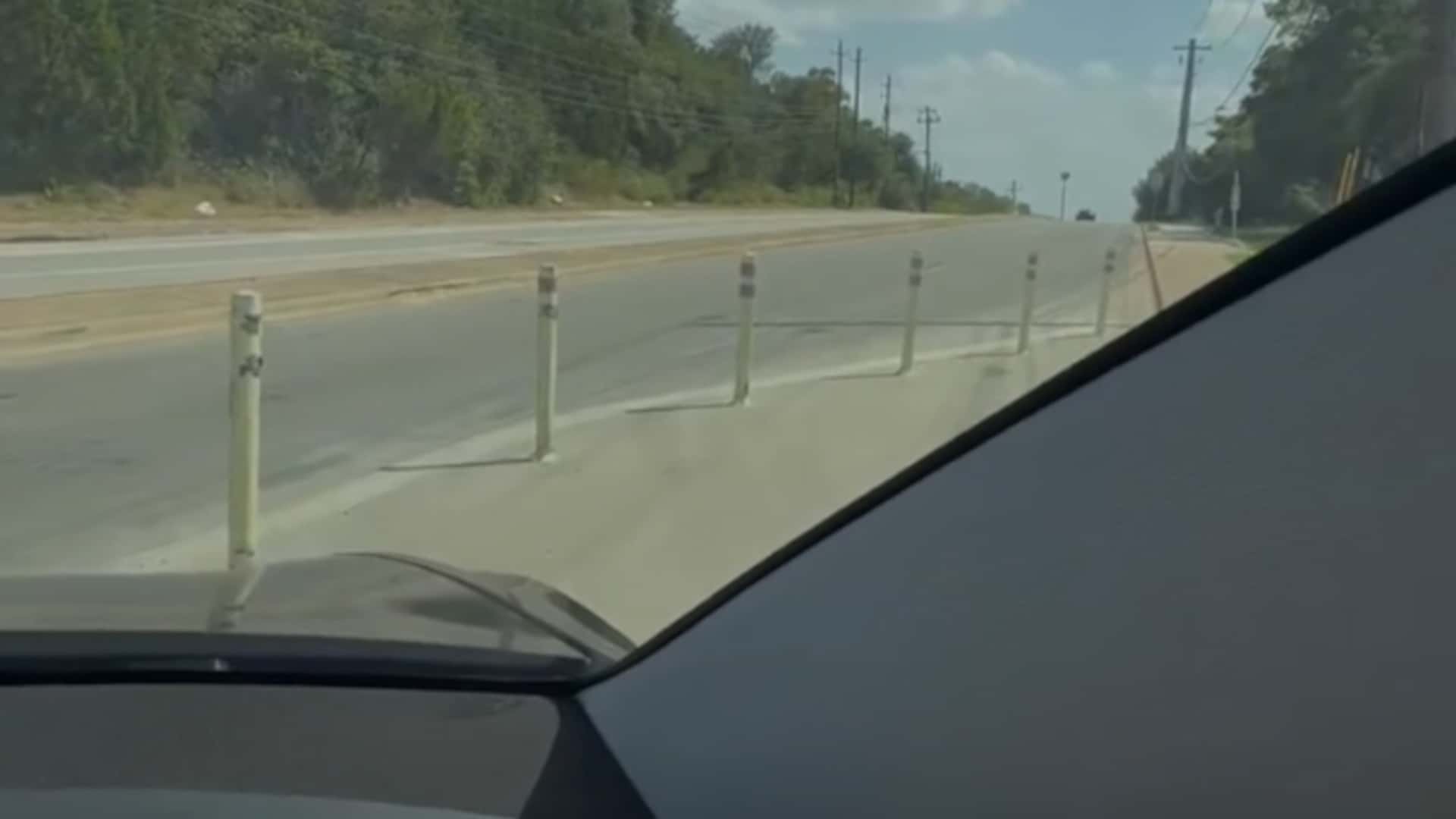
- An unattended Austin Model Y Robotaxi pushed through flexible curb bollards with passengers aboard.
- Tesla says its Robotaxis drove over 380,000 unsupervised miles across six cities and two states with zero notable incidents.
- Only 14 Tesla vehicles operated unsupervised in June, down from 25; Tesla filed 22 ADS incident reports.
Seconds of hesitation, a crunch of plastic, then the Tesla Robotaxi in Austin just keeps going. A passenger video shows a Model Y-based Robotaxi turning into a curb extension blocked by bollards and slowly pushing through the posts with no one in the driver’s seat.
The bollards have been in that Austin street buildout since early 2024, but the unsupervised Robotaxi still steers straight into them. The clip landed online only weeks after Tesla’s AI chief praised the program’s “impeccable” safety record and claimed zero notable incidents over hundreds of thousands of miles, raising blunt questions about what “notable” means for riders and city planners.
What We Know
The Austin car was already running driverless service with passengers onboard and an empty front seat. Video posted by Reddit user “bladerskb” shows the vehicle turn into a triangular curb extension that is clearly closed to traffic by flexible plastic bollards and marked as a protected space, not a live lane.
In the footage, the Robotaxi stops at the posts, inches forward, pauses, then creeps again instead of backing out. After a few seconds of this stop and go, the car audibly pushes through the bollards, bending them while a front-seat passenger reacts that it hit the posts. The vehicle then continues down the street.
No one was hurt, and the barriers are meant to flex on impact, which likely kept damage to scuffed plastic. What troubles safety advocates is an unsupervised commercial Robotaxi failing to treat a stable, well-marked roadside structure as something it must not enter, echoing cases like a recent Waymo car veering into traffic during testing.
25
Source: Motor1.com
“Impeccable” Safety Claims, Limited Miles, Cybercab Next
On Tesla’s Q2 2026 earnings call, vice president of AI, Ashok Elluswamy, told investors the company’s Robotaxis had logged more than 380,000 miles of unsupervised service across six cities and two states with “zero notable incidents.” Analysts noted that mileage is a tiny fraction of rival Waymo’s rider-only miles.
Only 14 Tesla vehicles were operating without human supervision in June, down from 25 at an earlier peak, yet Tesla has already filed 22 automated driving system incident reports with federal regulators. Set against that backdrop, an Austin Robotaxi driving through known street hardware raises hard questions about which incidents Tesla counts internally as “notable” while it promotes its Cybercab launch.
The Cybercab is a two-seat vehicle with no steering wheel or pedals, meant to rely entirely on Full Self-Driving software on public streets. Tesla plans to start Cybercab rides in Austin with employees first, then expand wider service onto the existing Robotaxi fleet under Texas statewide autonomous rules instead of city-specific Robotaxi ordinances.
Motor1’s Take: The clip punctures Tesla’s “impeccable” safety line by showing a live system misreading simple fixed street hardware with people aboard. That gap between marketing and messy reality is important to riders and to city planners deciding how much unsupervised service they are comfortable with on public streets.
Read the full article here


