




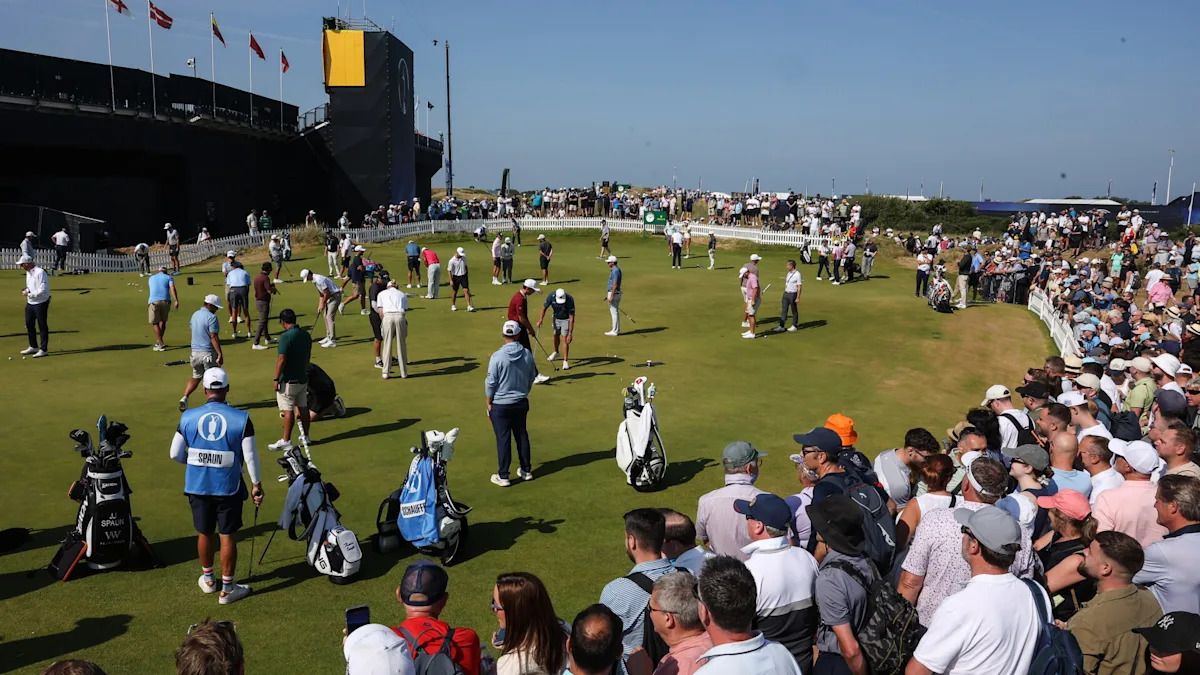
For the 11th time and first since 2017, Royal Birkdale Golf Club will play host to the Open Championship. The cream of the crop head to Southport, England from July 16-19, hoping to win the coveted Claret Jug. Prior to this year’s tournament, Royal Birkdale has undergone some significant changes on some of the holes, which will provide new challenges for the field. Sir Nick Faldo, a three-time Open champion in 1987, 1990, and 1992, breaks down the modifications that will be on display this weekend.
The first major change is at No. 4, Royal Birkdale’s first par 3. The hole was lengthened by 25 yards, and its most prominent bunker has been reshaped, making for a reduction inside. Faldo believes the modifications will allow players to “run balls up onto the green” and increase overall options. Hole No. 5, on the other hand, has been reduced by 25 yards in length, and with new fairway bunkers, players may “weigh up the risk option and reward of going for the green.” The hole’s right side has also been removed and remodeled, eliminating the blind tee shot. Lastly, a dune has been added behind the green, which poses challenges for balls which run through the putting surface.
Advertisement
The next set of changes come at No. 7. The tee box has moved significantly, resulting in a 45-degree change to the entire playing direction of the hole. The hole is 26 yards shorter than it was in 2017, and while the donut shape of the bunkers remain, three have been taken out completely. The green has been lifted, creating deeper runoffs on the sides, as well as varying levels of difficulty to save par.
“Significant remodeling has given this short but sweet par three extra teeth,” Faldo said.
RELATED: How to watch the 2026 Open Championship: TV schedule, tee times, streaming & coverage guide
Hole No. 13 took center stage the last time the Open was played at Royal Birkdale, when Jordan Spieth missed the fairway off-right by 100 yards from the tee box. He was able to play his next shot from the practice ground, and ultimately finished the hole with a stunning bogey, avoiding total disaster en route to an iconic victory. However, with the changes in the hole’s infrastructure, Faldo says his shot will be “impossible to recreate.” The fairway has changed slightly, and the hole now plays as a slight dogleg, or a bent golf hole. One of the bunkers has also been removed near the green, so players will have the opportunity to lay up if they struggle from the tee box.
Advertisement
Another pair of back nine holes that look different are Nos. 14 and 15. The old 15th is now the new 14th, with the old 14th having been replaced. The hole has been lengthened to 602 yards, 60 more than in 2017, and winds will be a big factor. This year’s No. 15 is brand-new at Royal Birkdale, and is both the longest and final par 3. Faldo describes the green as “deceptively large,” with a narrow view from the tee box.
Finally, No. 18’s tee box has been shifted slightly to the left, removing the dog leg. While there is full visibility from the tee, six fairway bunkers make the initial shot more difficult.
“It’s a suitable final test, and one that needs to be tackled carefully for those wanting to make the most famous walk in golf.”
The final men’s major of the year will kick off Thursday at 1:30 a.m. ET on Peacock and NBCSN.
Read the full article here


