




Golf has been played on North Berwick’s East Links since the 17th century giving the Glen Golf Club, laid out by acclaimed designers James Braid and Ben Sayers in the early 1900s, a history that is every bit a magnet for some visitors as the course itself.
“The layout rewards imagination, with elevated tees, hidden greens, and the salty spray of the sea never far away,” states its website. “The Glen Golf Course is more than just a scenic track on the coast – it’s a living piece of golf history.”
Advertisement
It can now add another accolade to the long list as the latest Scottish golf club to find itself in the crosshairs of a new American-backed company which, in just a year of operation, has already partnered with two historic courses with promises of millions of pounds of investments, and has been eyeing up several more.
So far, The Ancient Links Golf Company (TALGC) has taken on two Old Tom Morris designed courses: Scotscraig in Tayport, founded 1817 by the founders of The Royal & Ancient Golf Club, and Forfar Golf Club in Angus, set on land that was ploughed by monks as far back as the 12th century.
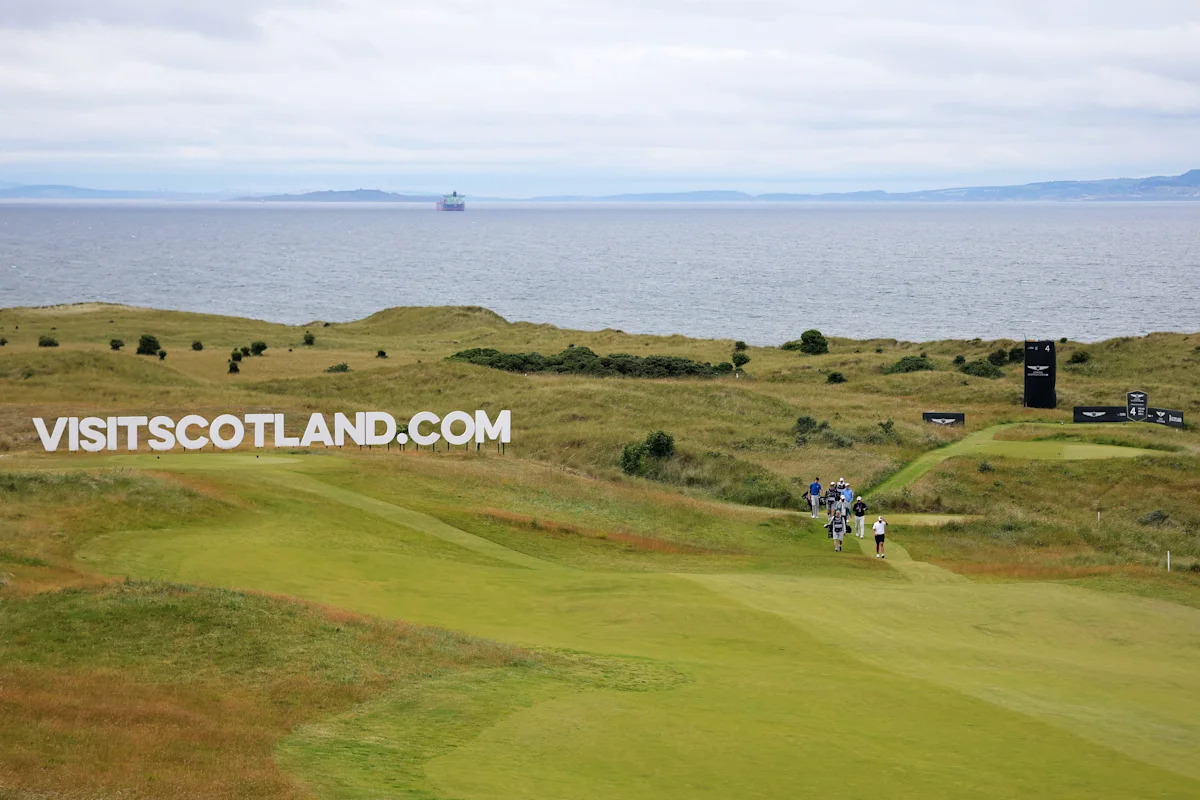
A Visit Scotland sign at North Berwick in Scotland.
It set sights on Longniddry Golf Club in East Lothian, however, talks ended over the terms of the club’s lease, while on the other side of the country, discussions are ongoing between TALGC and members of Southerness Golf Club on the edge of the Solway coast.
Advertisement
In Montrose, it has mounted a bid for a 99-year takeover bid for Montrose Golf Links – a move that has raised an uncomfortable dilemma.
For the links, including The 1562 Championship Course – the world’s fifth oldest 18-hole layout – and The Broomfield Course, is a Common Good asset, traditionally intended to be of benefit to the whole community.
Having agreed to take the proposals forward in June, Angus Council is now running an eight-week public consultation to see how almost 800 season ticket holders and the wider Montrose community respond.
There are tempting plus points. Under the deal, Montrose Golf Links Limited (MGLL), comprising Angus Council, Royal Montrose and Mercantile Golf Club, and the Montrose Caledonia Golf Club, which currently operates the links, would hold the lease, and the Common Good Fund would receive £30,000 per year in rent.
Advertisement
Particularly attractive is TALGC’s offer of £3 million investment over the first five years of the lease.
For Scottish golf clubs struggling with ageing clubhouses, fighting a changing climate, coastal erosion, and wrestling with expensive equipment, staff costs and with limited numbers of potential members on their doorstep, investment like that is bound to be attractive.
For some golfers, however, the arrival of a brand-new company with a registered address in London, an American investor, Douglas Cifu, among its leadership team and uncertainty over exactly what the deal might mean for them in the longer term, has gone down like a bad slice shot straight into the nearest bunker.
Will their tee times be squeezed to make way for higher spending American visitors? Will season ticket prices eventually rise and what will it mean for visitors from neighbouring local clubs?
Advertisement
And the niggling question of whether they can live with seeing their beloved clubs at the mercy of international investors?


Scotscraig was the first club to come under the TALGC umbrella.
Indeed, one of the first blips at Scotscraig, the world’s 13th oldest golf club and taken over by TALGC after it had posted a £200,000 loss, is said to have emerged when it suddenly increased the fees for visitors from one its neighbouring clubs. In retaliation, the other club involved is said to have raised the costs for visitors from Scotscraig.
The impact on members is the key concern among the Save The Glen campaigners in North Berwick, who say TALGC circling overhead has created divisions among members.
Advertisement
“We offer good value golf to genuine golfers and like to provide experience of a course with fantastic views and a friendly welcome,” says former club captain Alan Nisbet.
“But the bottom line is that unfortunately this has caused a lot of friction among members. “Until this started, it was a happy place to be. Chucking this into the mix has fractured friendships and that is so sad.”
The North Berwick club is understood to be just one of several in the area to be approached by TALGC, formed last year with the aim, according to its website, of “protecting historic clubs for the long term”.
It has not responded to several requests to comment on its series of acquisitions.
Advertisement
However, its website explains it “works in partnership with each Club, tailoring the structure to its individual needs and taking responsibility for the investment, operation and continued development of the venue.
“Our purpose is to provide the investment, continuity and long-term stability needed to protect each Club’s character, traditions and place in the community.”
At The Glen, some fear those traditions and layers of history – precisely what international golf visitors seek out when they arrive to play Scottish courses – may well be significantly diluted should TALGC succeed in its bid for a lease of at least 99 years, and potentially 125-years for The Glen.
“The Club is financially sound and we have record members – full membership and a waiting list of around two to three years,” says Mr Nisbet.
Advertisement
“We have a healthy visitor income, and have been reinvesting over many years in the fabric of the course, doing up the clubhouse, investing in course machinery and robotics mowers.
“We have got a good track record. Our argument is that we don’t need TALGC.”
The fear, he adds, is that eventually TALGC will seek a return on their investment – perhaps by selling their interests to new operators – which may change the way their beloved club operates forever.
“They say they have identified a model where the American visitor likes to come to courses like St. Andrews but also wants to come to golf clubs where they can sit in the clubhouse and share the chat with the members and take in the history of the club.
Advertisement
“But there is a perverse logic with Americans that come to play golf in Scotland that, if it’s not dear enough it’s not good enough. “Unless they are paying £350 a round, they don’t think it is any good.”
Around 7,000 visitors per year play at the Glen, paying a summer green fee of around £100, depending on the time of day.
A new annual membership is currently priced at £850 with a £425 joining fee. In return for taking on the running of the club, TALGC have suggested between £5m to £10m investment to the course and clubhouse.
Mr Nisbet has described the package as a “goody bag”.
Advertisement
“My worry is I see a lot of young members have the ‘wow’ factor. They think £10m, what a bobby dazzler of a course they’ll have, but it’s short-termism. We don’t know what might lie ahead.”TALGC has already ruffled feathers among the higher echelons of Scottish golf.
Earlier this year, it emerged The Royal and Ancient Golf Club of St Andrews had formally opposed TALGC’s trademark application. Its concern is said to focus on the new business’s use of the word ‘ancient’ and potential confusion with one of the oldest golf clubs in the world.
While it’s unclear exactly where all the money is coming from to bankroll buying and investing millions of pounds in links courses which, though steeped in history, are usually off the radar for most international visitors.
The group’s leadership team is made up of former Carnoustie Golf Links chiefs Michael Wells and Adair Simpson, Fife-based sports consultancy expert Archie Paton – who helped broker the US takeover of Hibernian Football Club in 2022 – corporate lawyer David Roberts and chartered accountant Hamish de Run.
Advertisement
They are joined by US-based Douglas Cifu, a retired millionaire and minority shareholder in ice hockey team Florida Panthers. Last year he was suspended indefinitely by the National Hockey League over personal comments made on social platform X for which he later apologised.
The group has certainly made a mark already at Forfar, where one of their first major steps was to mark the centenary of the club by restoring the 15th hole, known as Braid’s Best, to its original architectural intent.
That was welcomed by Forfar Golf Club general manager Owen Leslie, who said: “This is not simply about reinstating a bunker. It is about preserving heritage, respecting the vision of one of golf’s greatest architects, and ensuring future generations continue to experience Braid’s Best’ as James Braid himself intended it to be played.”
And at Scotscraig, the clubhouse has undergone a full transformation, including a £1 million kitchen upgrade.
Advertisement
On his Linkedin Page, Archie Paton lays out the vision: “We founded The Ancient Links Golf Company with a simple belief: golf’s greatest stories should be lived, shared and passed on.
“Our focus is on working with historic Scottish golf clubs, providing the long-term investment, operational support and commercial expertise needed to secure their future, while keeping hold of what matters: their members, heritage, traditions and place within their communities.”
Glen Golf Course has not replied to requests to comment. Meanwhile, the Save the Glen campaign will have to wait for the results of a vote next month to see if members want to pursue the TALGC offer.
“Democracy rules,” adds Mr Nisbet. “If members want to bring them in we will accept that. But first, we want to know what is in it for members?”
This article originally appeared on Golfweek: Scotland golf landscape changing as American investors partner with historic courses
Read the full article here


