








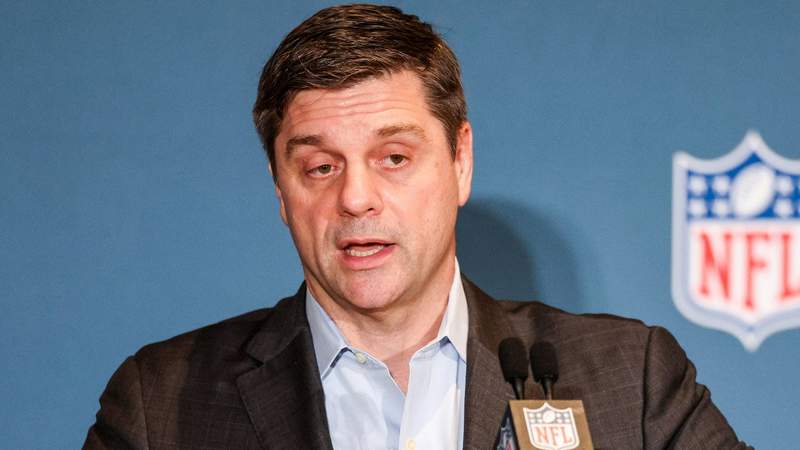
The PGA Tour’s proposed overhaul is centered on a familiar challenge: getting the game’s biggest stars to compete against each other more often. In pursuit of that goal, the Tour is exploring several ideas it once criticized LIV Golf for, including limited fields and a promotion-relegation structure. Speaking recently about those efforts, CEO Brian Rolapp explained the balancing act ahead.
“I don’t know if the Formula One model can work in golf, where everybody is showing up, the best are showing up at each event, but how close can you get to that? I think we can get close. I think we’re working hard on it and we’ll have more to say about this in less than a month, but it’s clearly what fans want,” Rolapp said on The Dan Patrick Show on May 29.
Advertisement
His message was simple: the Tour wants elite players to compete against each other more often, but not by putting them under contract. Rolapp was direct on this point. The word to focus on is ‘close.’
“This is not a sport, and we’re not a tour where we’re going to put guys under contract. It’s not in their DNA. It’s not how it’s built.”
Since last August, Rolapp has led an overhaul by forming the Future Competition Committee, with Woods in charge. The new structure splits the Tour into two tracks. While the top tier will have 21 to 26 elite events, each with 120 players and a 36-hole cut, the secondary track will operate on a promotion-and-relegation basis. The overall schedule will now see fewer than 45 events. Players will now have to participate because the format requires it. The next key date is the Travelers Championship, June 24 to 28.
If the PGA Tour has fewer events, it will automatically shift the focus to the field. The events field will have to be strong, as no golfer would frequently opt out of playing as they do now. Right now, we see tournaments where many of the top 50 golfers are not competing, just like in the 2026 Charles Schwab Challenge, where only 16 of the world’s top 50 golfers are competing. A structured schedule and system will also make it fair for rookies, as Andrew Novak argues.
Advertisement
This way, rookies and budding golfers on the PGA Tour will be able to play in big tournaments, with a strong field, and will have an equal chance of chasing FedEx Cup points. Additionally, a short and high-stakes schedule will also bring in more money, as the feeling of scarcity will kick in and attract more viewers and sponsors.
Credits: IMAGO
Woods has confirmed that changes may arrive as soon as 2027, though a phased rollout is more likely. Strategic Sports Group has already committed $1.5 billion in equity. The committee has held over 30 meetings so far, including working groups, player sessions, and board discussions. Woods believes this could bring significant financial benefits to all involved.
“Will we have a model where every single player’s in every single event? I don’t think so. I don’t think we need that. I think we’ll have a set of really compelling tournaments where almost all the top 120 guys show up and they’re competing in a competitive model that’s a lot easier to understand today.”
Advertisement
Rory McIlroy has given his support to the new direction. Following a one-hour call with Rolapp earlier this spring, the Masters champion made it clear he backs the proposed changes.
“I think what he said today it’s obviously a really good direction of where the TOUR should be going.”
There is a clear divide among the players. The rank-and-file have raised their own concerns and have not hesitated to make them known.
Brian Rolapp’s PGA Tour overhaul faces pushback from the ranks
Andrew Novak has highlighted a fundamental issue: rookies are already at a disadvantage, earning fewer FedExCup points and missing out on signature events. Introducing a two-track model widens this gap further, leaving young players stuck between outdated rules and a changing system.
Advertisement
Schedule congestion is a major issue. Justin Thomas has pointed out that having three Signature Events and two Majors in just six weeks is not what players want. He feels players plan their entire year around the Majors. When these are so close to high-stakes Signature Events on tough courses, there is not enough time to prepare. The constant grind is not just physically exhausting. It also hurts the quality of play that the Tour wants to highlight.
Matt Fitzpatrick has highlighted the imbalance in field strength. Top players are skipping regular events, which has created a two-tier system that is already happening. Lucas Glover called the restrictions on elevated events ‘silly’ in 2023. He questioned why the top 125 players are not automatically in the biggest tournaments. The structure may have changed, but the frustration remains.
Rolapp has committed to providing more clarity within a month. The Travelers Championship week stands as the next significant checkpoint. Nothing has been finalized yet, but the direction is now clear. The upcoming events will reveal the outcome.
We all know the importance of majors for golfers. After all, they plan their entire schedule around it. For example, Scottie Scheffler skipped the $20M Truist Championship a week before the PGA Championship to be well-rested, and Rory McIlroy played in it to be ready for the major. A week before Truist, Scheffler played in the Cadillac Championship, and McIlroy skipped it. Signature events being so close to majors, that too on tough courses, does not give golfers enough time to prepare, rest, and rehab, which ultimately hampers their performance at majors.
Advertisement
Trending Articles
The post ‘Not How It’s Built’: PGA Tour CEO Releases Fresh Statement on Controversial Schedule Changes appeared first on EssentiallySports. Add EssentiallySports as a Preferred Source by clicking here.
Read the full article here


