




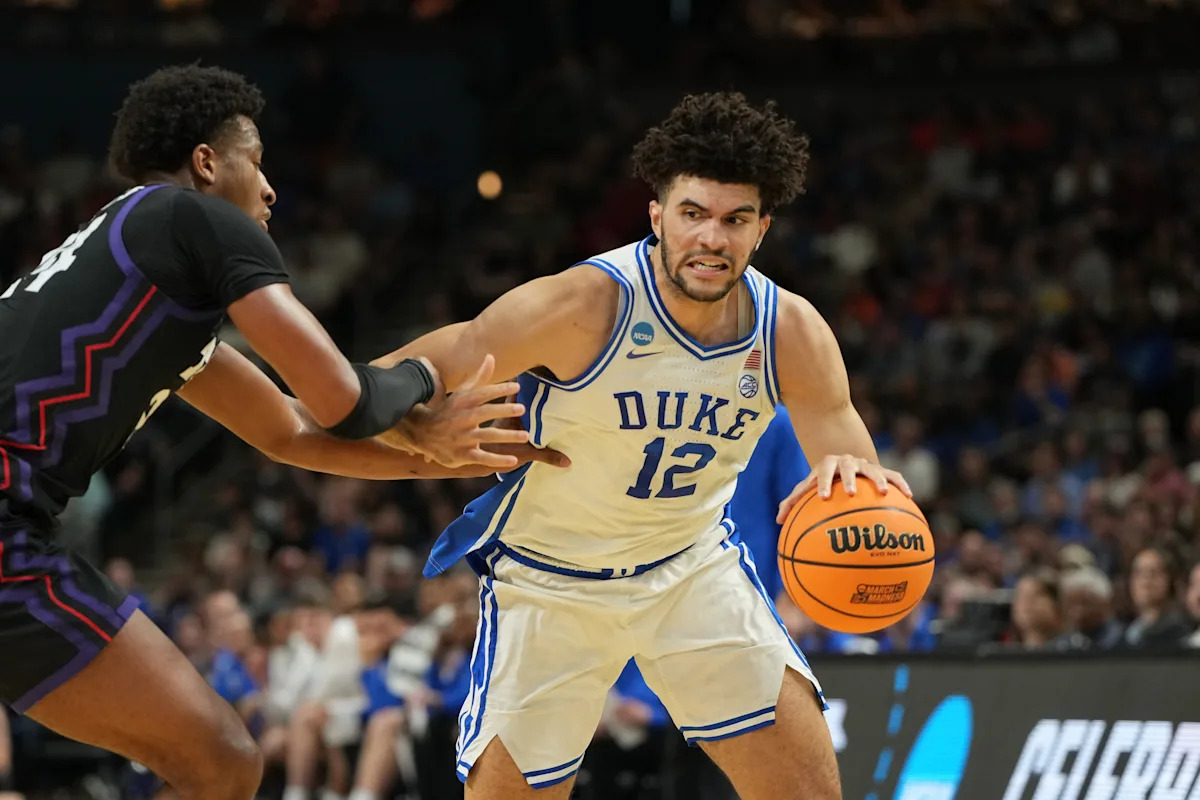
With just a few more days until the 2026 NBA Draft, fans will soon know exactly where each prospect their begin his professional careers.
Following the NBA draft combine and weeks of pre-draft workouts, front offices will soon finalize their decisions. After our conversations with folks around the league, we have more intel on when each prospect might hear their name called during draft nights at Barclays Center on June 23 and June 24.
Advertisement
Our mock draft includes data from CBB Analytics. We also spoke with P3, a sports science and athletic training company that uses biomechanical data and movement profiling to evaluate players and project NBA outcomes, to better understand how certain prospects translate physically to the next level.
Following our own conversations as well as other trusted reporting, here are our latest predictions.
ANOTHER PERSPECTIVE: Arizona Republic’s Duane Rankin makes his first-round picks
AI MOCK DRAFT: Artificial intelligence predicts every pick from the first round
Note: All heights and wingspans (as well as the distance between the two) are listed to the nearest inch and players were measured without shoes.
Advertisement
AJ Dybantsa participates in the 2026 NBA Draft Combine at Wintrust Arena.
Expect the Wizards to decide between two players: AJ Dybansta and Darryn Peterson, both of whom have already reportedly conducted workouts for Washington.
“I’m super confident in myself being the No. 1 pick. But you never know. There’s been crazy stuff that happens on draft night,” Dybantsa told USA TODAY Sports.
While he is prepared for various scenarios, the Wizards are still the most likely outcome. The franchise could instantly inject life into their offense by selecting AJ Dybantsa, the NCAA scoring champion and Julius Erving Award winner. The Big 12 Rookie of the Year also led the nation in unassisted points scored by a wide margin.
Advertisement
He would be a fascinating fit next to Trae Young and Anthony Davis, who could help him play alongside veteran talent early in his career.

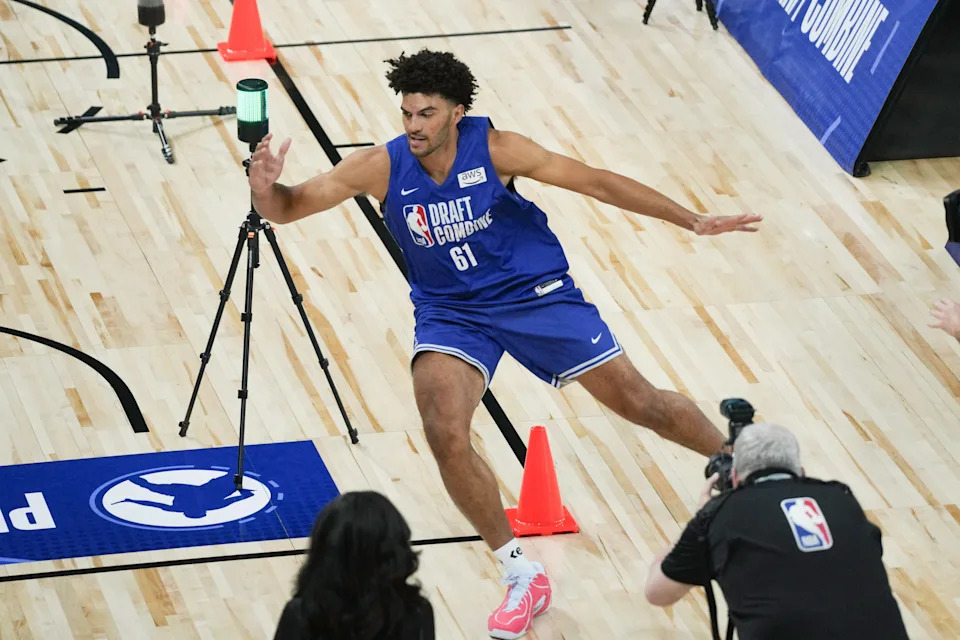
Cameron Boozer participates in the 2026 NBA Draft Combine at Wintrust Arena.
While nearly every mainstream mock draft has the Jazz selecting Darryn Peterson to join Keyonte George in the backcourt, this is still far from a foregone conclusion. In fact, ESPN reports the guard hasn’t worked out for Utah and he “informed the Jazz that he plans to take no further team visits” after only conducting meetings with Washington.
According to The Athletic’s Tony Jones, the Jazz are “genuinely torn” about who to select when they are on the clock, and Duke freshman Cameron Boozer is “firmly in the mix” at No. 2 overall.
Advertisement
The ACC Player of the Year isn’t a human highlight reel, though he performed better than expected during athletic testing at the combine in Chicago. He offers consistency and a diverse, impactful skill set, and he can bring a culture of winning after multiple championships in high school and playing on an elite Duke team that made it to the Sweet 16.
Even though his father (former Jazz player Carlos Boozer) currently works in the front office for Utah, the organization will select the best player available, and they may decide it is the national collegiate player of the player.
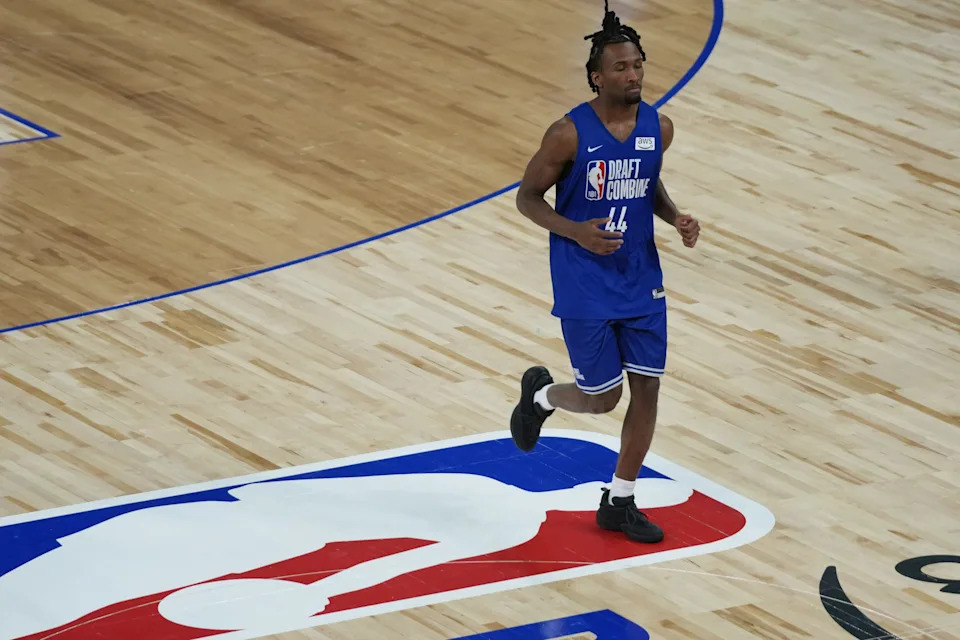
Darryn Peterson participates in the 2026 NBA Draft Combine at Wintrust Arena.
Advertisement
While he is certainly no longer perceived as the near-certain No. 1 overall pick that he once was due to relative inconsistency and injury issues, many scouts and evaluators still feel that Darryn Peterson is the most talented player in this class. It is incredibly rare to find a prospect who is able to score as efficiently as Peterson did while holding a usage rate as high as his was this season.
Peterson will reportedly only conduct meetings with the Washington Wizards at No. 1 overall, per ESPN. But that won’t prevent a team like the Utah Jazz or Memphis Grizzlies from calling his name when either are on the clock if Peterson is still available to them should the Wizards not select him.
If the Grizzlies do draft Peterson, it would give them a fresh start with a new floor general to run the offense and give them even more incentive to potentially trade longtime franchise star point guard Ja Morant.
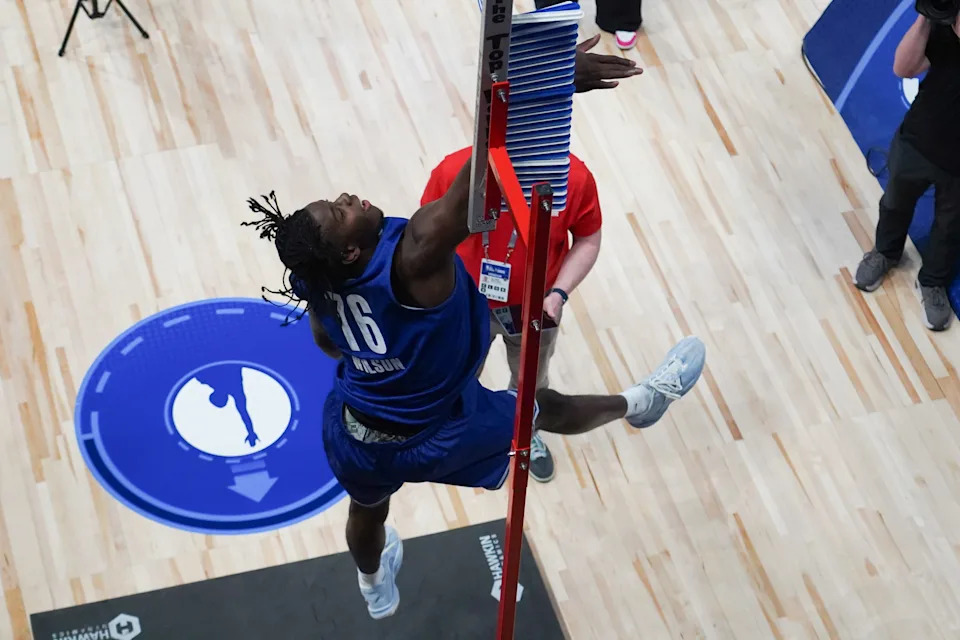
Caleb Wilson participates in the 2026 NBA Draft Combine at Wintrust Arena.
Advertisement
Bryson Graham, who was recently hired as the new executive vice president of basketball operations for the Bulls, has a simple task: Select whichever of the four players is still available.
North Carolina freshman Caleb Wilson is not just a consolation prize. He is a perfect fit for what Graham wants to build in Chicago, as he values size, length, athleticism, and physicality. Wilson did more than enough to earn this placement before his injury.
According to Bart Torvik, before the injury, the All-ACC big man led the nation with 67 dunks recorded and was one of the best vertical athletes who tested at the combine in Chicago. He was also the only player under 20 years old to reach specific thresholds for both block, steal and defensive rebound percentage.
Advertisement
The Clippers received this pick from the Indiana Pacers as part of a package involving Ivica Zubac, and while there is wide speculation they could trade this pick, they are closely linked with several guards in this range. As such, whether it’s their front office or another on the clock at No. 5 overall, look for any team on the clock to potentially call on Illinois standout Keaton Wagler.
“I’ve always played with a chip on my shoulder,” Wagler told USA TODAY Sports. “Just trying to go out each game and prove myself and do whatever it takes to win.”
Wagler reportedly “emerged as the more impressive prospect” during a recent head-to-head workout for the Clippers against another lottery-caliber guard, per Jake Fischer.
The 19-year-old guard played a crucial role in helping the Fighting Illini reach the Final Four. He projects as one of the best 3-point shooters in this class and he is a cerebral basketball player who is a good rebounder and playmaker as well.
Advertisement
During this rebuilding chapter, the Nets would love to add a player like the talented Louisville guard Mikel Brown Jr., even though they drafted three point guards last season.
He has already completed a second workout for Brooklyn, a person with knowledge of the situation confirmed to USA TODAY Sports. The person requested anonymity because they were unauthorized to speak publicly on the matter.
Brown’s draft stock has improved during the pre-draft process as he has shown teams a clean bill of health. “I got cleared by the medical staff from the league at the Combine, so we’re all green,” Brown Jr. told USA TODAY Sports. “I feel like myself again.”
Advertisement
The All-ACC guard has deep shooting range and was averaging 29.2 points per game over his last five appearances, including a 45-point outing against NC State, before his injury on Feb. 28 forced him to miss March Madness.
The Kings need a potential star and it is widely speculated that their front office is targeting Arkansas freshman Darius Acuff Jr. in this class.
En route to the Sweet 16, despite significant defensive deficiencies, the SEC Player of the Year proved he is one of the most enticing offensive prospects in recent memory. Acuff Jr. led the nation for points created either by himself or through an assist, per CBB Analytics. The speedy guard led freshmen for field goals made in transition and field goals made from both the left and right side of the court. He was among the freshmen leaders in alley-oop assists as well.
Advertisement
P3’s evaluators highlighted his “really impressive start-stop tools” and ability to generate separation in multiple directions, key traits for a high-usage guard translating to the NBA.
It is also worth noting Kings executive Scott Perry coached Acuff’s father in college and one would expect there are few scenarios where he falls below this pick. If his name is called earlier, though, Kingston Flemings could also make sense here.
8. Atlanta Hawks (via Pelicans): Kingston Flemings
With the pick the Hawks received from New Orleans, Atlanta is expected to pick a big or a guard, and one potential target is Houston freshman Kingston Flemings.
Advertisement
“He can pretty much do it all. He can defend, he can shoot, and his playmaking is really underrated. And he’s a high-IQ, high-character guy,” Chris Cenac Jr., his teammate at Houston, told USA TODAY Sports. “Any organization that gets him is going to get a great player and a great person.”
Flemings’ smaller wingspan did him no favors at the combine but he measured with a 40.5-inch max vertical and elite speed across all his agility testing, projecting as one of the fastest guard prospects since De’Aaron Fox. He helped lead Houston to the Sweet 16, and with highs as high as his were this season, it is difficult to imagine he will was available past the Hawks on draft night.
After hiring Masai Ujiri as president of basketball operations and Mike Schmitz as general manager, the Dallas Mavericks can add a lottery talent to grow alongside Cooper Flagg. One name to consider is Arizona freshman Brayden Burries, who is consistently linked to the organization.
Advertisement
Burries had two breakout games in January, which helped solidify his draft stock. He was then an exciting prospect to watch during the Big Dance, making it all the way to the Final Four and dropping 23 points against Arkansas.
Overall, the All-Big 12 guard displayed his tantalizing talent and he has proven productivity. Burries is able to defend, relocate, move the ball, and make 3-pointers off the dribble.
While it is unclear which (and how many) picks the Milwaukee Bucks will actually have in the 2026 NBA Draft due to ongoing trade rumors involving Giannis Antetokounmpo, this is a fair range for Tennessee freshman Nate Ament.
Advertisement
But it is worth noting that Bucks executive Jon Horst and head coach Taylor Jenkins reportedly recently traveled to meet with Ament during the pre-draft process, per Jake Fischer.
The All-SEC forward averaged 21.6 points per game, while shooting 38.9 percent on 3-pointers, during a 13-game stretch before an injury against Alabama on Feb. 28. It will only take one team to fall in love with Ament, and that team is likely picking this forward with a standing reach exceeding 9-foot-1 in the lottery.
-
TEAM: New Zealand (International)
Karim López had a low usage rate and played fewer minutes than other players in this range while playing against pros, but was still very productive for the NBL Next Stars program in Australia. According to The Athletic’s Sam Vecenie, his “range” starts at this pick to Golden State.
Advertisement
The Mexican-born forward is physically gifted, athletic, and universally seen as the top prospect from this class currently playing overseas. He exploded for 32 points (11-of-13 FG) with eight rebounds, two blocks and one steal against Melbourne on Jan. 30 earlier this year. According to someone with knowledge of the situation who did not have authority to speak publicly on the matter, Warriors executive Mike Dunleavy attended that game.
Despite his age, he played a huge role for his team defensively for a team that won the NBL Ignite Cup. López measured well, weighing just shy of 222 pounds and with a 38-inch max vertical. He is also a consideration for the Bulls at No. 15 overall and is unlikely to fall past the San Antonio Spurs at No. 20 overall.
Oklahoma City tends to like low-usage big men, like Aday Mara, with high assist percentages as well as high block and steal percentages.
Advertisement
While leading his team to win the NCAA championship, Mara became one of the prospects who helped himself the most during March Madness. The 7-foot-3 big man, who transferred from UCLA, is a fantastic rim protector. Opponents rarely attempted field goals at the rim when the Big Ten Defensive Player of the Year was on the court, per CBB Analytics.
He could potentially hear his name called even higher than this, too, as teams look for large players like Mara (who measured with a 9-foot-9 standing reach) as front offices value bigger bodies to throw at Victor Wembanyama. The Thunder are expected to consider Mara’s teammate, Morez Johnson Jr., as well.
13. Miami Heat: Hannes Steinbach
German big man Hannes Steinbach, who will get looks starting as early as around No. 10 overall, should make some sense for the Miami Heat. The center reportedly turned down NIL opportunities “worth up to $10 million” rather than return to college. While his Washington team missed the tournament, the All-Big Ten center is an instinctive rebounder with great hands, including an absurd 24 rebounds against USC on March 4. Additionally, Steinbach was one of the more prolific pick-and-roll finishers in college basketball. He impressed during the FIBA U19 World Cup, too, and scouts love that he is a smart basketball player who can make great reads.
Advertisement
Morez Johnson Jr. is one of the best two-way players in the NCAA. He was a crucial part of the Michigan identity this season and has thrived since transferring to the Wolverines from Illinois and can bring that same mentality to the Hornets, who are searching for a new big man.
Johnson’s shooting form at the free-throw line looks good, and he scores well near the rim, especially when cutting to the basket. The former FIBA U-19 Team USA standout and All-Big Ten big man is a very trustworthy defensive playmaker, too, and should carve out minutes at the next level. Johnson was a big winner during measurements at the combine, recording a 39-inch max vertical and testing with elite agility for his position.
15. Chicago Bulls (via Trail Blazers): Cameron Carr
Advertisement
The Chicago Bulls received this additional pick because the Portland Trail Blazers advanced past the play-in tournament and the player who improved his draft stock the most during the combine was Baylor junior Cameron Carr.
He scored 30 points in a five-on-five scrimmage, recorded a 42.5-inch max vertical and had great physical measurements. This should grab the attention of teams that tend to like athletic prospects, which new Bulls executive Bryson Graham indicated.
According to P3’s internal models, Carr grades as a 95th-percentile athlete with a rare “hyper flexor” force-production profile, a combination evaluators described as “double unique” for pairing elite explosiveness with unusually fluid movement mechanics.
The All-Big 12 wing brings shooting touch in addition to his shooting and, per Bart Torvik, he was the only player to make at least 40 field goals that were dunks and more than 60 field goals that were 3-pointers this season.
Advertisement
16. Memphis Grizzlies (via Suns): Yaxel Lendeborg
Yaxel Lendeborg showed on his way to winning the national championship that he is perhaps the most NBA-ready player in this draft class. The Athletic’s Sam Vecenie, however, reported that “there is potential for him to slip out of the lottery” on draft night, and his “pre-draft workouts have not gone particularly well” due to an ankle injury.
Despite his age and the ankle injury, he will intrigue teams like the Grizzlies, who have another first-round pick thanks to the Desmond Bane trade. The Grizzlies have shown a willingness to pick older, more experienced players in the past.
A few years ago, research indicated that the Memphis front office tends to value a few statistical similarities in their draftees: Efficient shot selection, added value beyond scoring and defensive playmaking. For the second year in a row, the Big Ten Player of the Year was an impactful dribble-pass-shoot forward who met many of the qualifications that led Memphis to find players who spent many years on their roster.
Advertisement
17. Oklahoma City Thunder (via 76ers): Chris Cenac Jr.
Regardless or whether or not the Thunder trade this pick, one name to consider is Chris Cenac Jr., whose range begins around No. 14 overall.
Cenac played into his role and caught fire at the perfect time. In his first NCAA tournament game, the big man recorded a season-high 18 rebounds while also knocking down a 3-pointer and grabbing a steal.
“I got to earn my minutes. I got to do the little things… defending, rebounding, spacing the floor,” Cenac told USA TODAY Sports. “Whatever team takes me… they’re getting a winning player that loves winning and is going to buy into whatever to help that team win.”
Advertisement
Cenac also impressed at the NBA Combine, posting a 37-inch max vertical and strong agility numbers for his size.
P3 places Cenac within its “bigs plus” model, a rare archetype combining traditional size with wing-like mobility. Evaluators pointed to his “unique tools” and described him as a potential “matchup nightmare” due to his movement profile and physical traits, which suggest his significant untapped upside.
18. Charlotte Hornets (via Magic): Christian Anderson
The Hornets could find a fairly compelling player in Texas Tech sophomore Christian Anderson, who is a potentially perfect fit and received a green room invitation to attend the 2026 NBA Draft.
After moving from the two-guard to point guard, the All-Big 12 Most Improved Player recorded more than twice as many assists per 100 possessions as a sophomore compared to when he was a freshman. Anderson managed to do that while also scoring well on spot-up possessions and handoffs. Even though he is a bit undersized, there are few better offensive creators in this class than Anderson.
The Raptors need another guard and should have Bennett Stirtz, who reportedly had a pre-draft workout with the organization, on their priority list.
After transferring from Division II to a mid-major and then to a high-major program, he is at the top of the class in creating his own shot off the dribble in isolation or the pick-and-roll. The All-Big Ten guard can also finish plays from dribble handoffs. His play during March Madness, which included 24 points against Illinois and 20 points against Nebraska, earned him a spot in the Elite Eight. The Raptors play at a slow pace, which would translate well for Stirtz, who did the same at Iowa.
20. San Antonio Spurs (via Hawks): Allen Graves
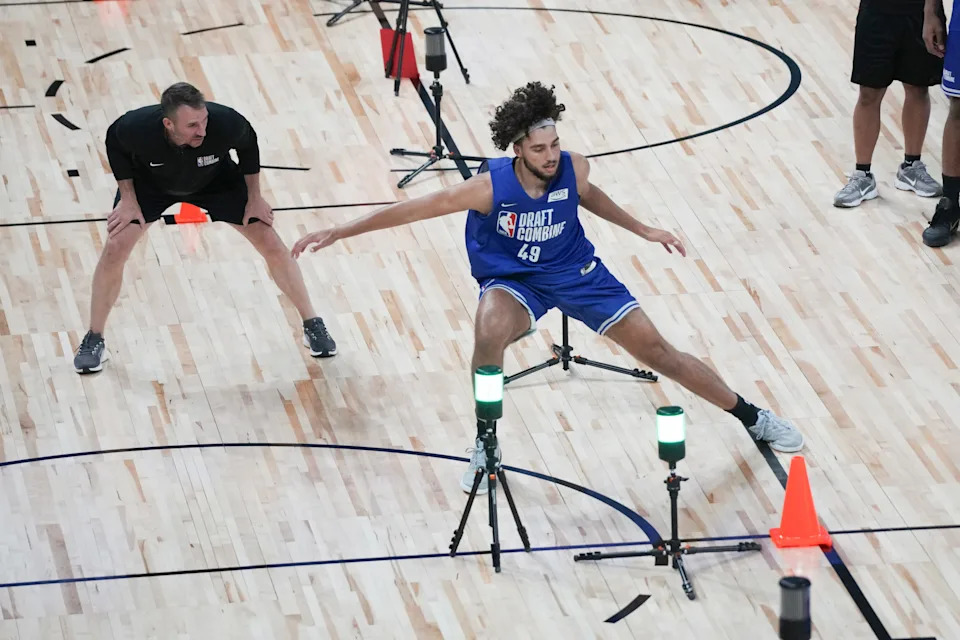
Allen Graves participates in the 2026 NBA Draft Combine at Wintrust Arena.
One of the most under-the-radar prospects in college basketball this season was Santa Clara freshman Allen Graves, who came close to becoming a March Madness hero. The WCC Rookie of the Year and Sixth Man of the Year turned heads after posting 30 points, 13 rebounds, four assists and two steals on Feb. 7 against Washington State.
That’s an area where Graves stands out among the best in this class and is likely one of the reasons he chose to turn pro rather than return to college.
The only players under 21 with a higher box plus-minus, per Bart Torvik, were Cameron Boozer and Caleb Wilson. All teams that prioritize analytical modeling in the pre-draft process like the Spurs, who reportedly hosted Graves for a pre-draft workout, will have this prospect ranked highly.
21. Detroit Pistons (via Timberwolves): Dailyn Swain
After transferring from Xavier to Texas during the offseason and helping lead the Longhorns to the Sweet 16, Dailyn Swain emerged as one of the more intriguing breakout players in college basketball.
The All-SEC forward is versatile and contributed across the board on both ends, scoring efficiently in the paint and in transition. Another appealing element is his effectiveness in isolation, where he can create for himself against defenders. Swain is quick, bouncy and a solid rebounder, and his 81.5% free-throw percentage suggests promising shooting touch. While he has three years of college experience, he’s still just 20 years old, the same age as several NCAA freshmen.
P3 categorizes Swain as a “kinematic mover,” a fluid, efficiency-driven archetype that allows players to “get wherever they want on the court” and has produced the highest density of NBA All-Stars in its data.
Expect the Pistons to have serious interest in Swain, based on multiple people who spoke to USA TODAY Sports, though Detroit will also strongly consider shooters like Christian Anderson and Isaiah Evans.
22. Philadelphia 76ers (via Rockets): Labaron Philon Jr.
The Philadelphia 76ers have a new front office led by president of basketball operations Mike Gansey and vice president of basketball operations Jameer Nelson. One name they may have their eyes on with the first-round pick they acquired after trading Jared McCain is Labaron Philon Jr. from Alabama.
Even though the All-SEC guard was not playing at 100 percent during March Madness due to injury issues, he played well in the tournament, recording 35 points during a loss against Michigan. He also notched 29 points in his first-round game and 12 assists in his second. The guard averaged 22.0 points per game this season, and he improved his 3-point shooting from 31.5 percent as a freshman to 39.9 percent as a sophomore, while also managing 5.0 assists per game in the process.
23. Atlanta Hawks (via Cavaliers): Jayden Quaintance
Jayden Quaintance recorded just one start during his sophomore campaign as he recovered from a torn ACL, meniscus and fractured knee. Evaluators are “consistently expressing concern around his medicals” about the big man, per ESPN’s Jeremy Woo.
The big man is still one of the youngest players in this class, though, and he showed elite flashes during his time at Arizona State and Kentucky. When healthy, he is arguably the most talented defender in this draft class and could help a team that may need frontcourt help, like the Hawks. During his freshman year when he was just 17 years old, per CBB Analytics, he led all D-I players in blocks per 40 minutes (0.7) on 3-pointers, regularly swatting shots on the perimeter.
While his draft stock is not what it once was due to health concerns, his youth and frame give him an opportunity to become a special player in the NBA.
24. New York Knicks: Ebuka Okorie
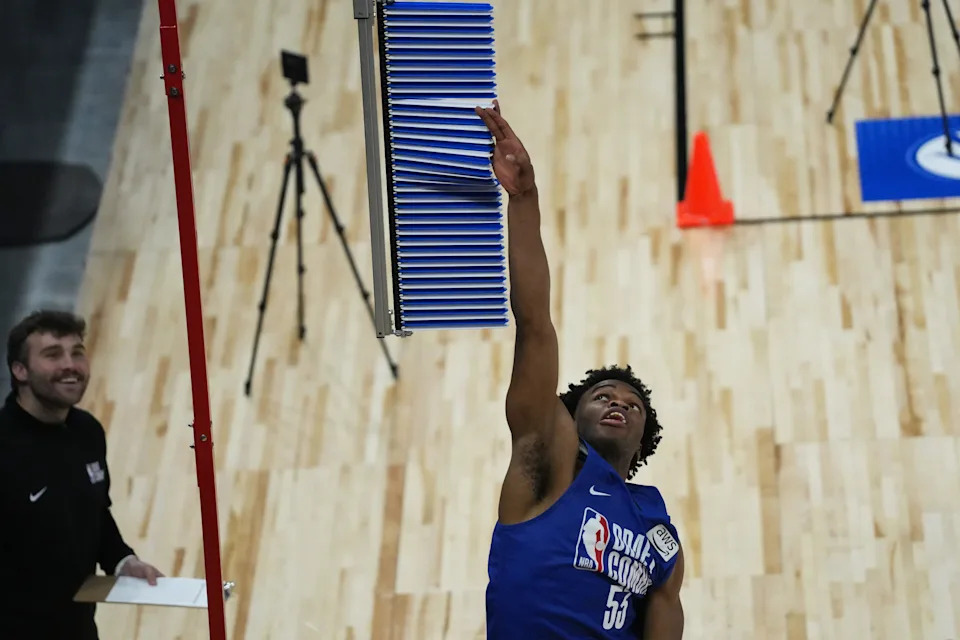
Ebuka Okorie participates in the 2026 NBA Draft Combine at Wintrust Arena.
The Knicks have prioritized scrappy, high-motor players capable of winning the possession battle through rebounds and turnovers like Stanford freshman Ebuka Okorie.
The first-team All-ACC guard was a day-one starter in the NCAA who is potentially capable of earning rotation minutes for a team like the 76ers. He averaged 23.2 points per game, recording 40 points against conference rival Virginia Tech and seven other games with at least 30 points. Okorie has earned serious first-round buzz and should intrigue teams in this range, who may like the high assist-to-turnover ratio he recorded (2.3) last season.
25. Los Angeles Lakers: Koa Peat
Arizona forward Koa Peat is potentially an appealing option for the Los Angeles Lakers. He is naturally bouncy and athletic with good positional size, a strong frame and a near 7-foot wingspan. Peat is also a solid rebounder and passer for his position.
The All-Big 12 forward will need to improve his jumper to carve out consistent, high-impact minutes at the next level, but he’s still worth first-round consideration based on his body of work so far. Peat arguably had the most interesting decisions to make when it was finally his turn to announce if he would stay in college or turn pro.
26. Denver Nuggets: Meleek Thomas
The Denver Nuggets tend to look for players with a strong assist-to-usage ratio because they rely on high-efficiency passing and off-ball movement. Arkansas freshman Meleek Thomas averaged 16.0 points, 4.4 rebounds, 2.5 assists and 1.5 steals per game while shooting 43.2 percent on 3-pointers during his 21 games as a starter last season.
He was efficient using off-ball screens and handoffs and occasionally showed some on-ball flashes as a pick-and-roll ball handler as well. He led the SEC in corner 3-pointers made (32) last season, per CBB Analytics, and his plus-four wingspan gives him solid length as a young guard who is still improving on both sides of the court. Thomas answered one of the biggest questions in college basketball when he decided to turn pro rather than return to the NCAA.
27. Boston Celtics: Isaiah Evans
Boston tends to favor players with a high effective field goal percentage, low turnover percentage and low usage rate. They also like players who make quick decisions on catch-and-shoot opportunities and on corner 3-pointers.
Duke sophomore Isaiah Evans scored 218 points when shooting off the catch, per Synergy, which ranked third-best among ACC players last season. He also matched 30 corner 3-pointers, according to CBB Analytics, which trailed the top-ranked high-major player (34) by just four field goals made. Expect the Celtics to potentially have Evans higher on their big board than other teams might. UConn’s Alex Karaban, who reportedly had a pre-draft workout with the organization, also fits the bill.
28. Minnesota Timberwolves (via Pistons): Sergio De Larrea
-
TEAM: Valencia (International)
Another one of the top international prospects in this class is Sergio De Larrea. He shot 38.6 percent on 3-pointers and 80.8 percent on free-throw attempts, suggesting good scoring touch.
He has shown a diverse skill set, including 5 rebounds with 4 assists and 2 steals during a recent win over Barça. According to ESPN’s Jeremy Woo, the Spanish prospect “has a landing spot most likely in the 25-to-35 range” in the 2026 NBA Draft. Meanwhile, Jake Fischer reported that De Larrea is a “prospect prominent” on the radar of Timberwolves executive Tim Connelly.
29. Cleveland Cavaliers (via Spurs): Henri Veesaar
We have seen a remarkable improvement from Henri Veesaar after transferring from Arizona to North Carolina. The 7-foot big man from Estonia has an excellent shot diet on offense. The All-ACC big man is scoring efficiently at the rim (especially when cutting or rolling) and on 3-pointers, while also holding his own as a rebounder and passer. Any team looking for a big man who can provide NBA minutes will have him high on their priority list. He presumably feels comfortable with his draft range, considering he was reportedly offered “at least $6 million” in the transfer portal, per CBS Sports.
30. Dallas Mavericks (via Thunder): Tarris Reed Jr.
UConn senior Tarris Reed Jr. helped himself quite a bit during the NCAA tournament en route to an appearance in the national championship game. He recorded four double-doubles during March Madness, notching 31 points and 27 rebounds against Furman. Reed also had 26 points with 9 rebounds, 4 blocks and 2 steals during a win over Duke.
There is plenty of interest in Reed from teams picking between No. 16 and No. 30 overall, based on our intel.
During the combine, he did the dirty work, recording 5 rebounds with 1 steal and 1 block in his first game and then scored 17 points (7-of-9 FG) with 5 rebounds and 2 blocks in the second. Reed also tested with elite agility for his position. Expect him to come into the league and find a role sooner, especially considering his paint dominance, rather than later.
SECOND ROUND
31. New York Knicks (via WAS): Zuby Ejiofor (St. John’s)
32. Memphis Grizzlies (via IND): Joshua Jefferson (Iowa State)
33. Brooklyn Nets: Richie Saunders (BYU)
34. Sacramento Kings: Trevon Brazile (Arkansas)
35. San Antonio Spurs (via UTA): Alex Karaban (UConn)
36. L.A. Clippers (via MEM): Ugonna Onyenso (Virginia)
37. Oklahoma City Thunder (via DAL): Ryan Conwell (Louisville)
38. Chicago Bulls (via NOP): Felix Okpara (Tennessee)
39. Houston Rockets (via CHI): Baba Miller (Cincinnati)
40. Boston Celtics (via MIL): Emanuel Sharp (Houston)
41. Miami Heat (via GSW): Nick Martinelli (Northwestern)
42. San Antonio Spurs (via POR): Izaiyah Nelson (South Florida)
43. Brooklyn Nets (via LAC): Jack Kayil (ALBA Berlin – International)
44. San Antonio Spurs (via MIA): Braden Smith (Purdue)
45. Sacramento Kings (via CHA): Maliq Brown (Duke)
46. Orlando Magic: Tyler Bilodeau (UCLA)
47. Phoenix Suns (via PHI): Jaden Bradley (Arizona)
48. Dallas Mavericks (via PHX): Otega Oweh (Kentucky)
49. Denver Nuggets (via ATL): Dillon Mitchell (St. John’s)
50. Toronto Raptors: Bruce Thornton (Ohio State)
51. Washington Wizards (via MIN): Rafael Castro (George Washington)
52. L.A. Clippers (via CLE): Nick Boyd (Wisconsin)
53. Houston Rockets: Keyshawn Hall (Auburn)
54. Golden State Warriors (via LAL): Tyler Nickel (Vanderbilt)
55. New York Knicks: Ja’Kobi Gillespie (Tennessee)
56. Chicago Bulls (via DEN): Tobe Awaka (Arizona)
57. Atlanta Hawks (via BOS): Milos Uzan (Houston)
58. New Orleans Pelicans (via DET): Jaron Pierre Jr. (SMU)
59. Minnesota Timberwolves (via SAS): Aaron Nkrumah (Tennessee State)
60. Washington Wizards (via OKC): Tobi Lawal (Virginia Tech)
This article originally appeared on USA TODAY: 2026 NBA mock draft: Projecting every pick in first and second rounds
Read the full article here


