




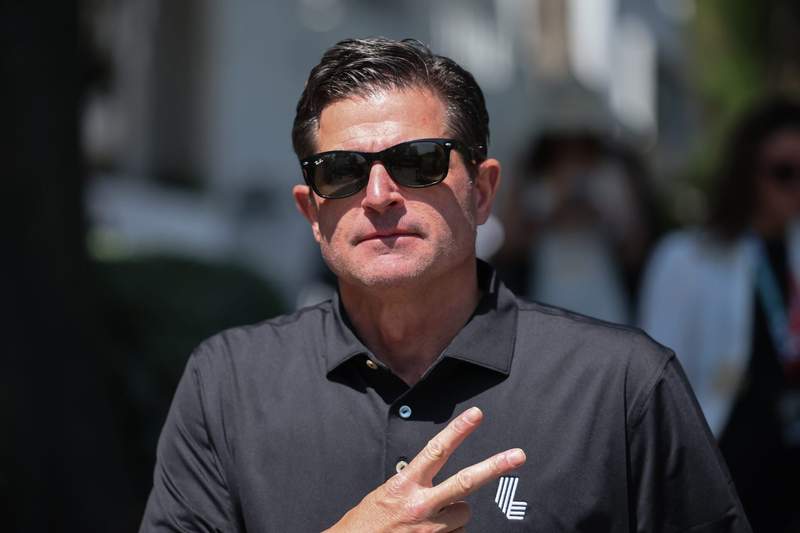
LIV Golf is flirting with bankruptcy after the Saudi Public Investment Fund announced that it will turn off the money hose at the end of the 2026 season.
LIV Golf CEO Scott O’Neil is seeking the funds which would allow the tour to continue in 2027. To that end, he has had conversations with private equity firms, family offices and high net-worth individuals, who between them are being asked for $250-350m in capital to help rescue and restructure LIV.
Advertisement
Meanwhile, the tour’s stars – the two most prominent being Bryson DeChambeau and Jon Rahm – who risked reputational damage by leaving the PGA Tour in exchange for huge prize purses and guaranteed contracts in the Saudi-backed rebel competition are also in limbo.
But while it is far from certain if, when and how the chips will fall, one thing that is virtually guaranteed is that LIV will look very different if it staggers on into 2027. A 14-event programme will likely be replaced by a 10-event one, for example, which runs the risk of players voiding their contracts, as would any significant reduction in the prize money pots available.
But those issues are secondary to LIV’s existential crisis, for now.
O’Neil and his financial rescue team – which includes investment bank Ducera, advisory firm Alix Partners, and turnaround veterans Jon Zinman and Gene Davis – are trying to market a league which has cost PIF almost $5bn to date to investors. It’s a tough sell.
Photo by Mark Brake/Getty Images
But one of the weapons in their arsenal is the success of events like LIV Adelaide.
Advertisement
The Australia swing of the tour has been by far the most successful, whichever way you spin it. In terms of attendances, atmosphere, economic impact and prestige, LIV Adelaide is the tour’s flagship event.
And a new announcement from LIV quantifies just how much the tour have thrived in South Australia, which – O’Neil will hope – can act as a proof-of-concept as they look for fresh investment.
In their press release, LIV revealed that LIV Adelaide generated $118m in total economic impact, taking the total global economic impact of the tour to $1.5bn across all events to date.
As well as confirming that it was the best attended golf event in Australian history with 115,000 spectators, LIV also revealed that 43 per cent of fans were from outside South Australia, 29 per cent were women, and 39 per cent were under 45 years old.
Advertisement
Those were among a list of marketable stats which will likely have made it into the pitch decks shown to investors, too.
On the course, LIV Golf Adelaide 2026 in February was dominated by two stories: Anthony Kim’s comeback victory and Ripper GC’s home-soil team triumph.
LIV Golf has had its detractors, to put it mildly. But the product itself, many argue, is sound.
If it could ever make peace with the PGA Tour and continue in a leaner, more sustainable fashion, the successes of Adelaide could become more universal.
Read the full article here


