





Daytona 500 qualifying is unique, and different from every other race on the Cup Series schedule. It always delivers the drama, both in the battle for pole position, but also those trying to make it into the field.
While the Indianapolis 500 has Bump Day and Fast 12, NASCAR has the Duels at Daytona. Four drivers and teams will be sent home on Thursday night as their dreams of competing in NASCAR’s biggest race comes to an end, but how does it all work?
Advertisement
Don’t worry, we’re here to explain…
2025 Daytona 500 pole sitter Chase Briscoe, Joe Gibbs Racing Toyota with the crew
2025 Daytona 500 pole sitter Chase Briscoe, Joe Gibbs Racing Toyota with the crew
Who is locked in: All 36 chartered teams that plan to compete full-time this season are locked into the Daytona 500. That leaves four open spots on the grid, which the open entries will be battling for over the next two days.
The 41st provisional: In a rule that has only existed for a little over a year (and has been tweaked multiple times), NASCAR also has an Open Exemption Provisional, or OEP, which goes to any world-class driver to ensure they are part of the field. Last year, four-time Indy 500 winner Helio Castroneves relied on the OEP, while this year, seven-time NASCAR Cup Series champion Jimmie Johnson will take it. That will add a 41st additional spot to the grid, so Johnson isn’t taking a starting position from one of the other open entries.
Advertisement
What is an open entry: Open entries are simply cars that are part-time and uncharted, which means they cannot be guaranteed starting spots. This year, there are eight of those (excluding Johnson) vying for the final four spots on the 500 grid. You can learn more about those individual drivers and teams HERE.
Read Also:

Every open entry fighting to qualify for the 2026 Daytona 500
Qualifying format: On Wednesday, qualifying itself is straightforward and traditional, with each car going out individually with one flying lap around the 2.5-mile superspeedway. The ten fastest drivers in Round 1 will go out again in a second round to fight for pole position. The front row is locked in after time trials, while the rest of the qualifying positions are merely about setting the lineup for the Duel qualifying races to follow.
Advertisement
The first two available open spots: Also in Daytona 500 qualifying, the two fastest open entries during Wednesday time trials will automatically lock themselves into the race, so single-lap speed will be critical for those eight entries not yet locked in.
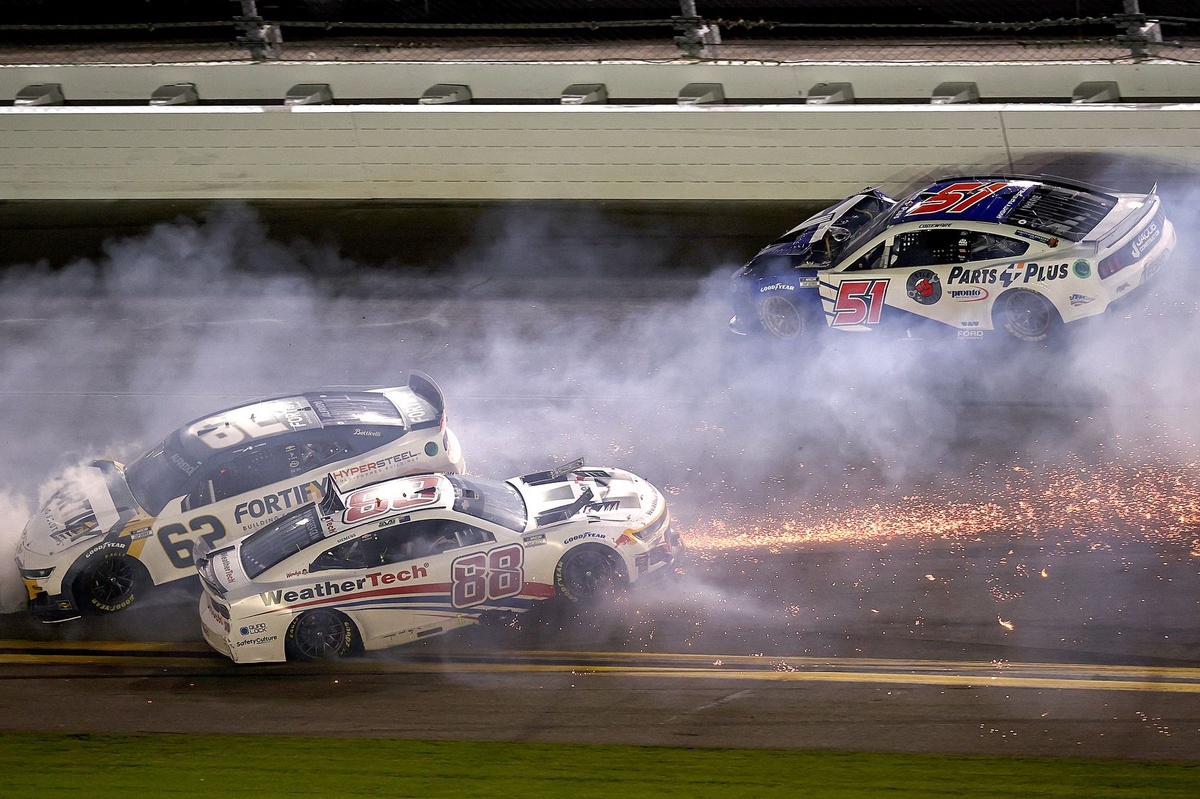
The Duel qualifying races: For the chartered teams, they have two goals in these races: Finish as high as possible to ensure a better position and a handful of points, but also protect the car. Several cars get wrecked in these high-intensity 60-lap, 150-mile sprints, so it’s a real danger. The top-ten finishers in each Duel race are awarded the same amount of points as top-ten runners at the end of stages throughout the season, with the winner earning ten points. It then drops one point for each position until tenth-place gets one. These are the first points on offer for the 2026 season, and with the return of The Chase, they are even more important.
Winning a Duel race also ensures a driver a position on the second row for the Daytona 500 grid. Duel #1’s finishing positions will decide the inside row (P3), while Duel #2 decides the outside row (P4). But remember, the front row is locked in and the 1-2 qualifiers from Wednesday will start there no matter where they finish — unless they wreck their cars and have to go to a backup, of course.
Advertisement
The Duels are an open driver’s final chance to make the field: While most of the field will be racing for a handful of points and their final starting position, the remaining open entries will be fighting simply to make the show. They will be equally split between the Duel races, and the top-finishing open entry from Duel #1 and Duel #2 will make the race. Additionally, NASCAR has made a slight change this year. Previously, the drivers who locked in via qualifying could still race their way in, thus allowing the next-best qualifier to fall back on their time, but that is no longer the case. It makes things simpler in the end. There is only one route for those who aren’t fast enough on qualifying night – beat the other open entries not yet locked in through on an on-track battle in the appropriately named ‘Duel’ races at Daytona.
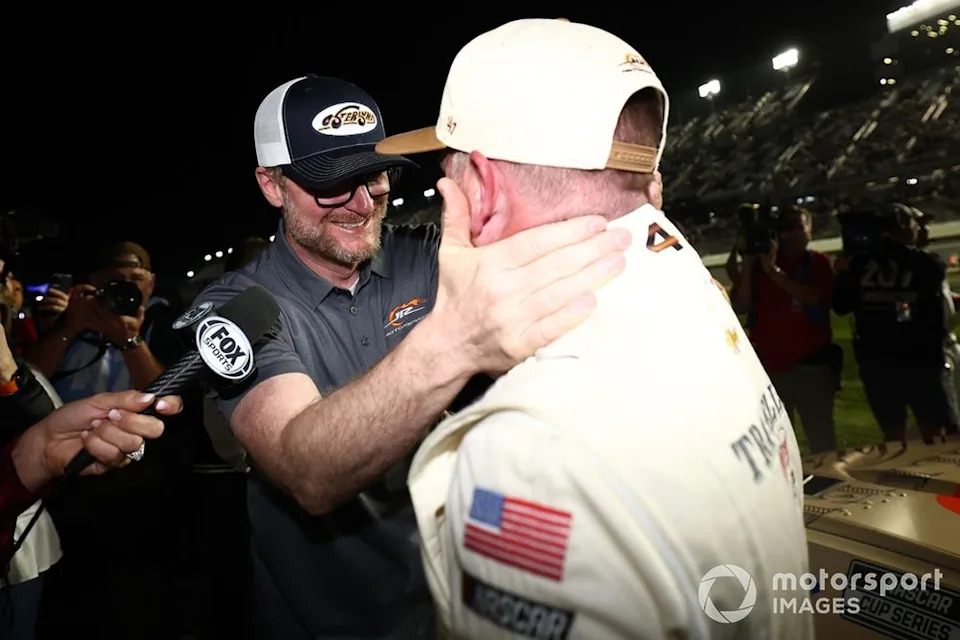
Dale Earnhardt Jr. celebrates with Justin Allgaier after qualifying for the 2025 Daytona 500
Dale Earnhardt Jr. celebrates with Justin Allgaier after qualifying for the 2025 Daytona 500
Advertisement
Now, how important is qualifying for the Daytona 500 when you’re among the fortunate drivers already locked in? Compared to most other races, not that important in the grand scheme of things. However, pit stall selection and ensuring a clear opening in and out of one’s stall could be critical on Sunday. And starting up front just makes the job easier, especially if you want points in that opening stage.
But in reality, the winner of this race can come from anywhere in the field. The pole-sitter hasn’t gone on to win the Daytona 500 since Dale Jarrett did it in 2000, William Byron won it from fifth on the grid last year, but he also won it from 18th on the grid in 2024. And looking at the year before that, Ricky Stenhouse Jr. came from 31st to win the 2023 season-opener.
Read Also:
Advertisement
How to watch the 2026 Daytona 500, full NASCAR Speedweek schedule
Full entry list for all NASCAR Speedweek races at Daytona, featuring 181 entries
To read more Motorsport.com articles visit our website.
Read the full article here