





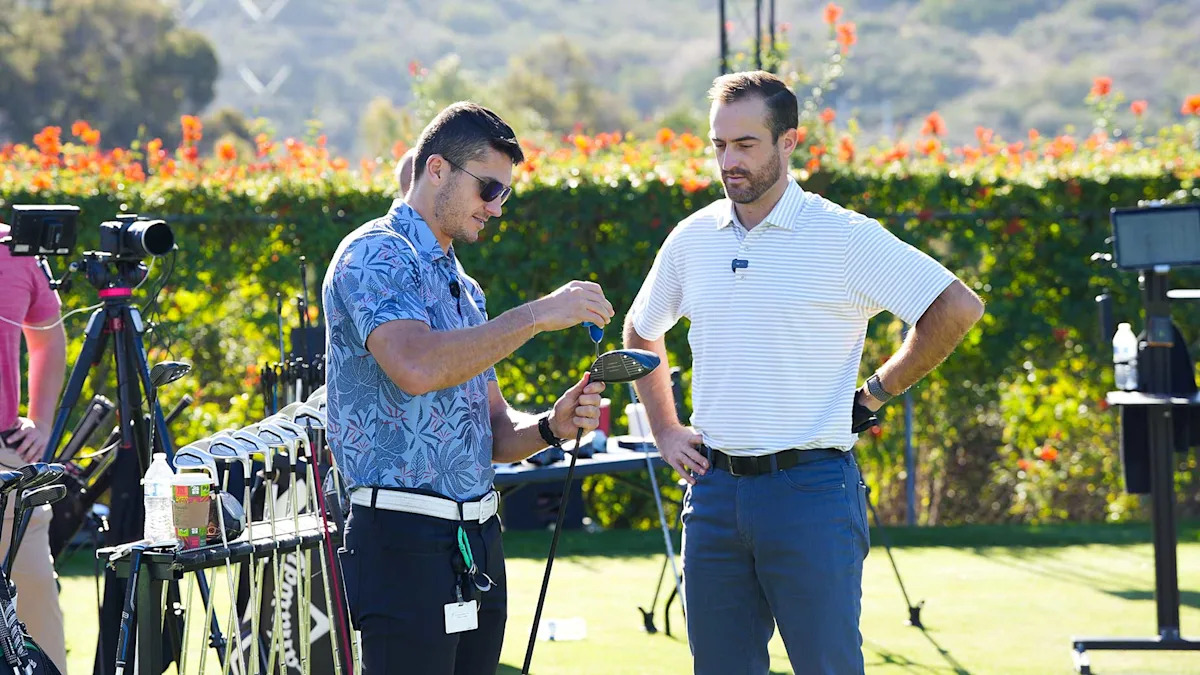
The author (right) during one of five club fittings in a single week.Adam Christensen/GOLF
In early December, when I arrived in Carlsbad, California — home to (most) of the best golf club manufacturers in the world — it felt a bit like those first few days of college.
My future was spelled out — a week bopping around Southern California, from company to company, getting “Fully Fit” for new golf clubs at each spot. And I was as froshy as 7-handicaps get — anxiously interested in being there, in much the same way my 18-year-old self was anxiously interested in going to the University of Wisconsin. I understood my game upon arrival, but I also knew this experience would be very good for me. I knew I would learn a ton, would have a bunch of people looking after me, and that I’d probably make some friends along the way. These collegial vibes made sense, I would soon learn, because like many things in golf, an equipment journey can feel a lot like college. There are entry-level classes, courses mandatory for a major, and 700-level things like Spin Loft waiting to trip you up.
Advertisement
You can be lazy about it and not care, electing for the bliss of ignorance. Someone else may pay for your equipment, just as many parents pay for their children’s schooling. You can declare your intentions for a major just like you can declare your commitment to one manufacturer. Maybe your friend declared the same way, and you wanted to be like them. That can be a costly decision when you suddenly change things up years later.
Of course, another option is … leaning all the way in to an equipment education, seizing on the opportunity and coming out on the other side feeling like a graduate. (Knowing, of course, that there’s always a deeper version of golfy graduate school if you want to press on.) This stuff is costly, too! Just like higher ed. You want to get it right. That’s why I was there. I wanted to get it right.
To keep this analogy going, we’ll say I had dropped out of my equipment education years ago. Cobra gave me a great opportunity in 2016, asking me to claim whatever set of sticks I wanted. I didn’t know what I didn’t know, so I asked for a set of forged blades — the ones Rickie Fowler used to win the 2015 Players Championship — and told myself, You’ll learn how to hit them.
Gear
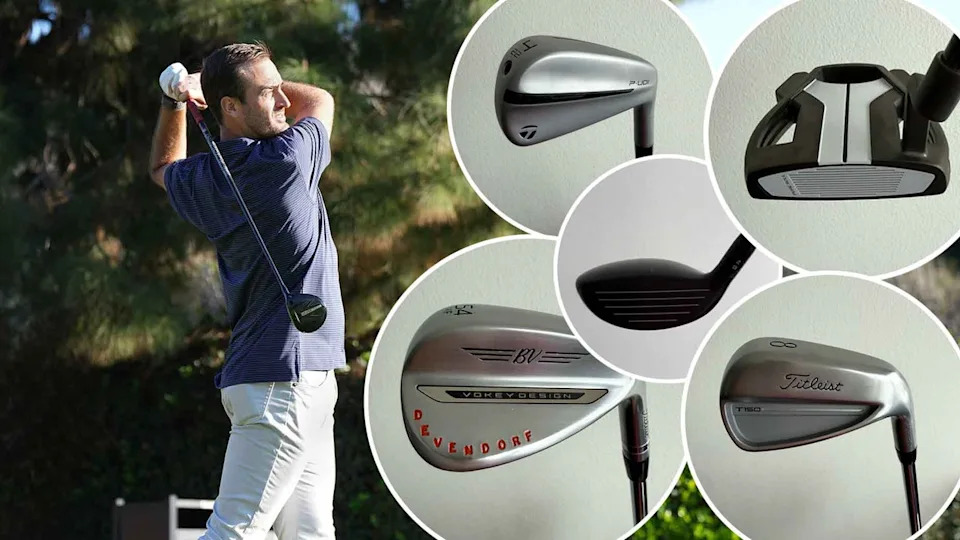
Sean Zak Fully Fit
This sent me down a bad path, in part because I did learn. My ball-striking improved from sheer practice alone, and my handicap improved alongside it. But was I ever meant to play those blades? I ditched the Cobras for a set of unforgiving Mizunos a few years later, obsessed with how they looked, and then played a set of Titleist blades after that.
Advertisement
It was probably never meant to be that way. Between my action, my commitment to the game and my age, it has become clear that playing a set of butterknife irons — besides boosting my ego — led to gapping issues and extreme inconsistency toward the long end of the bag. And what my trip to California validated, day after day, was that there’s a promised land somewhere just outside of Bladesville.
TDay 1 was at TaylorMade’s Kingdom, where the difference between P770s, PTWs, P790s and P7CBs finally registered for me — much more than the letters and numbers in those names ever did before. My TaylorMade fitter waffled between putting me into Project X 6.5 (extra-stiff) and 6.0 (stiff) shafts, to match my Tour-average swing speed.
“Why are you swinging a telephone pole?” he asked. My eyes wide, my mind racing, I hoped he was joking. “That’s what Rory McIlroy uses,” he continued, chuckling. “You don’t swing like Rory McIlroy.”
And he was right. But as the fitting went on, I warmed up and felt comfort in those 6.5-stiffness shafts because, well, I had grooved a swing to match them over the years, and that swing wasn’t producing horrible results. So we actually stuck with them.
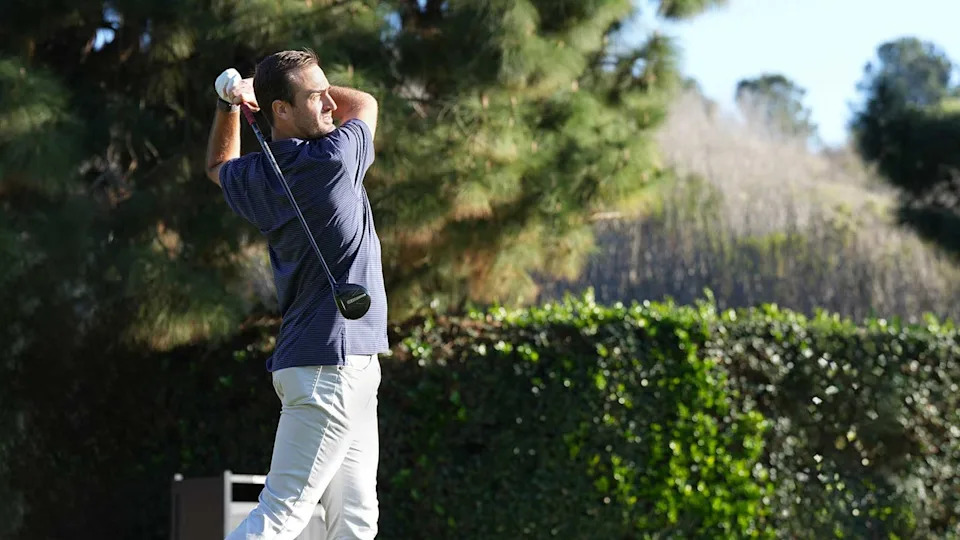
The author learned a ton about his golf equipment. Adam Christensen/GOLF
A day later, at Titleist, we learned even more. The gamers I arrived with were Titleist T100s, made for the very consistent ball-striker who has no problem hitting trajectory heights consistently. I can groove a nice, high flight with everything from 7-iron through pitching wedge, which made those clubs a fine fit. But it was 4i, 5i and 6i that were always a bit fickle. Any of my strikes toward the heel or toe always failed to fly the distance I needed, and often spun a lot more, too. But as we worked through different iron heads, we found something:
Advertisement
T150s and their extra forgiveness just outside the sweet spot — right in my typical strike zone — had a much tighter dispersion and carry distance. In simple terms, they were predictable. And when it came to getting those long irons off the ground, a higher-launching T250 5-iron was going to reach that 80-foot peak height a lot more often.
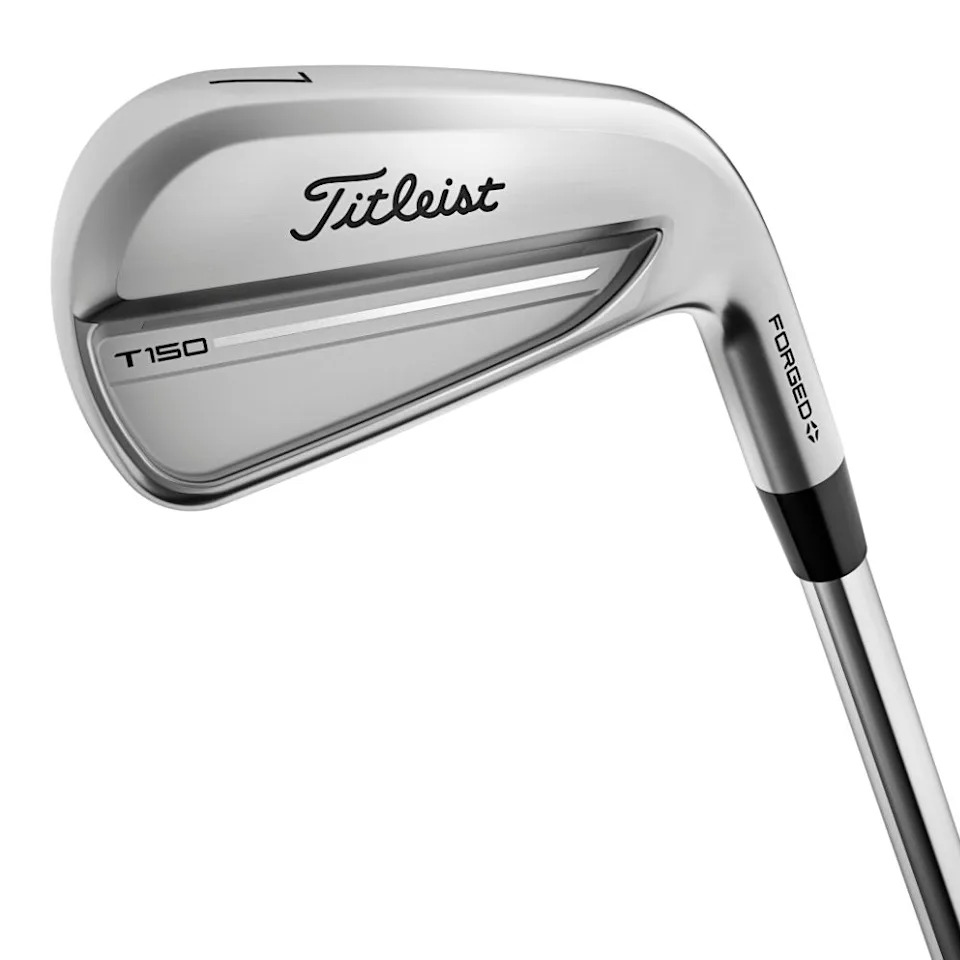
Titleist 2025 T150 Custom Irons
Titleist 2025 T150 Custom Irons
T150 Irons are crafted for added distance with unwavering accuracy. Forged into a player’s shape with progressive blade lengths, T150 offers a precise blend of speed, stability, and consistency—providing the confidence to hit and hold greens from anywhere. Confidence-Inspiring Forged Design Forged into a player’s shape with a slightly larger head size for pure feel with extra stability. Elevated Ball Speed 1° stronger lofts (vs. T100) combine with an improved muscle channel through 7-iron and lower long-iron CG to help improve speed, launch, and carry. Superior Flight and Stability Split high-density tungsten produces optimal CG with remarkable stability for precise shotmaking. Consistent Speed & Spin New VFT technology and progressive groove design provide consistent spin and speed across the face in variable conditions.
Advertisement
$215.00 from Fairway Jockey
View Product
ALSO AVAILABLE AT: PGA Tour Superstore, Titleist
On the third day, at Cobra, the knowledge of three consecutive fittings was washing over me like the second semester of a foreign language. Was I fully fluent? Not quite. But I could understand what others in class were saying. I understood what it meant when my fitters kept adjusting my irons two degrees upright, and I could really start to communicate what I was feeling. After some time, it wasn’t so daunting to speak up in class. It helped that my coworkers — many of whom could qualify as teaching assistants — stepped in and interrupted my fittings, pressing the teachers for more info specific to ME. (That may not help you, the amateur at home, who will likely go through fittings alone. But it is a reminder to study up on some club terminology before you get baptized in a hitting bay.)
Advertisement
My final two fittings tended to blend together, but not in a bad way. They featured a bunch of time spent just beyond the irons. In that zone between 3-wood and 5-iron, where you should still be able to see 10- to 15-yard gaps between clubs. My gapping had mostly been flattened to something almost nonexistent. Everything seemed to go roughly 220 yards.
At Callaway, I had my first experience with a 7-wood — their Quantum Max — which very nearly went into my bag (and still might, the more I experiment with it).
At Srixon, I hit more 5-woods than I probably have at any other time in my life. The ball just … went … in a way 4-irons never seemed to. That, more than anything, was the biggest learning of my week in equipment academia. The aspects of my experience, my action, my strength, my skills, my hand-eye coordination, my brain — it all makes a helluva lot more sense with fairway woods than it does with cute, tiny, aesthetically pleasing long irons.
The clubs we went with — built from comfort, performance and appearance — are all listed below, including a driver and 3-wood that I just can’t quit. What I need to do now — metaphorically moving the tassel of my ball cap from one side to the other — is apply all the lessons of the equipment degree I earned to the real world, as they say. You know, on the golf course.
Advertisement
Check out more on Sean’s WITB here
Sean’s Fully Fit 2026 WITB
Ball: 2025 Titleist Pro V1
Driver: Titleist GT2 9° (Tour AD VF-6 X)
3w: Titleist GT2 13.5° (Project X HZRDUS 6.5, 80g)
5w: Titleist GT2 16.5° (HZRDUS 6.5, 80g)
Utility: TaylorMade P-UDI 4-iron (KBS Tour Lite S)
Irons: Titleist T250 5i, T150 6i-PW (Project X 6.5)
Wedges: Vokey 50.12F, 54.14F, 58.10S (Project X 6.5)
Putter: TaylorMade Spider Tour X (L-neck)
Ready to overhaul your bag in 2026 like our Fully Fit panelists? Find a club-fitting location near you at True Spec Golf.
Watch Fully Fit 2026 below!
The post How 5 days of club fittings changed my mind on golf equipment | Fully Fit 2026 appeared first on Golf.
Read the full article here