




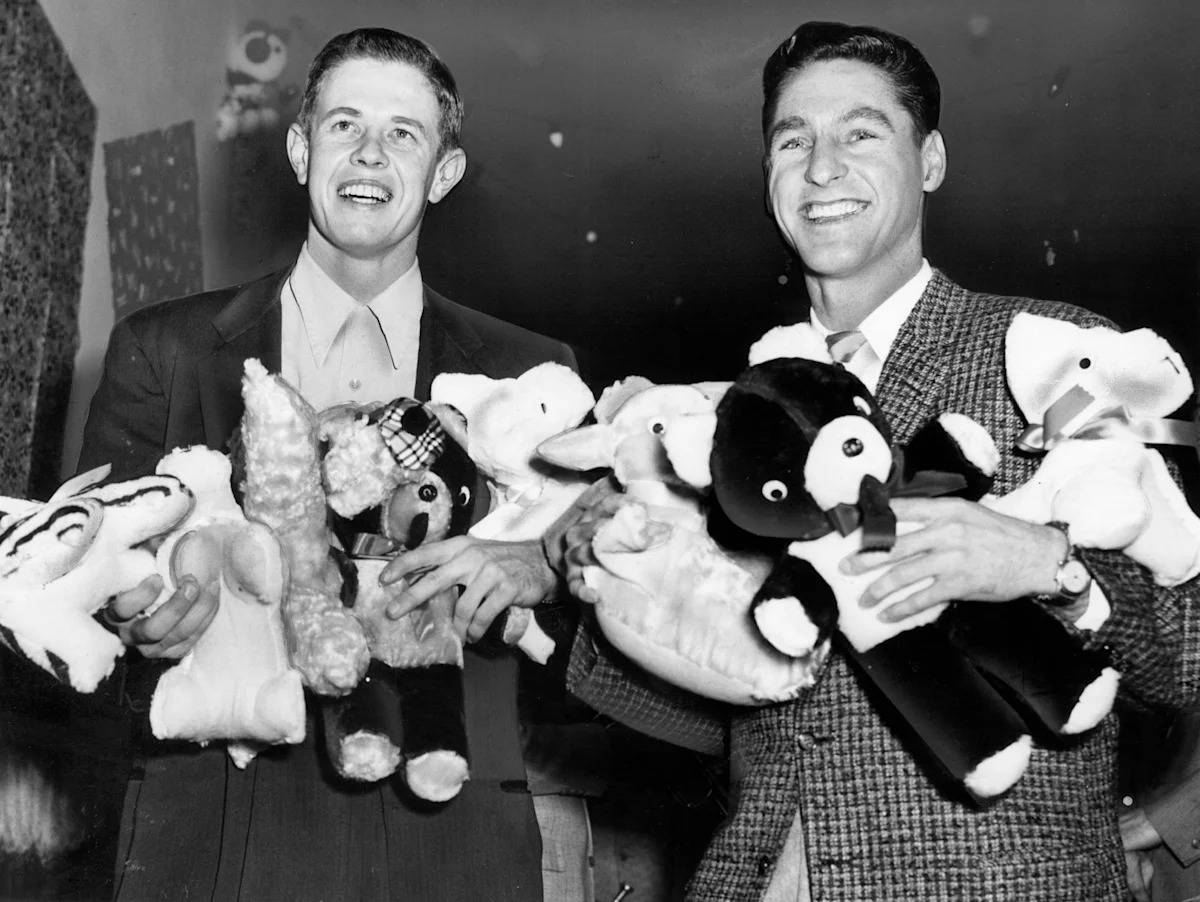
This week we’re going to take a break from the trade rumors and do something that’s our privilege as fans of the most successful franchise in NBA history.
We’re going to look back.
It’s May of 1971 and the ABA Finals are underway.
Advertisement
The league’s sprawling western division is represented by the Utah Stars, a team that finished second in the league with a 57-27 record. The best record in the league belonged to the Indiana Pacers, which finished 58-26.
The Eastern division was clearly the weaker of the two. The Virginia Squires took the top seed, 55-29, but second place belonged to the Kentucky Colonels which finished the season at 44-40.
The Colonels are on their third coach of the season.
The first 15 games were coached by Gene Rhodes, who led the team to a 10-5 record. This was not good enough for team owner John Y. Brown, who fired him, with Alex Groza coaching the team for the next two games (both wins), before being replaced by Celtic legend Frank Ramsey. Ramsey took the job on the condition that he be allowed to fly to games from his home in Madisonville, Kentucky, 150 miles away. Brown agreed to this and Ramsey took over the Colonels.
His record as a regular season coach was nothing to write home about. The team went 32-35 with him on the bench. He was noted for being something of a micromanager, insisting on taping players’ ankles himself.
Advertisement
However, the Colonels caught a bit of lightning in the playoffs. In the first round, they faced off against the Floridians. The Colonels won the series 4-2, in part due to their reliance on the three point shot. During the regular season, the Colonels were mid-pack when it came to three point attempts per game, with the league’s second best success rate from beyond the arc, while the Floridians avoided the shot like the plague. The Colonels’ use of the shot reflected Ramsey’s own preference for outside shooting during his playing career with the Celtics.
In the second round, the Colonels faced off against the top seeded Virginia Squires.
The Colonels rallied from a 2-1 deficit, winning three straight games to close out the Squires 4-2. Game 3 of this series was an offensive extravaganza, with the two teams combining for 287 points in a 150-137 Squires victory; that total score remained a playoff record for both leagues until a double-overtime contest in 1992 between Portland and Phoenix.
This set up a Finals matchup with the Utah Stars. The Stars were spending their first season in Utah, having relocated from Los Angeles over the summer.
Advertisement
Utah had made quick work of the Texas Chaparrals, a team that would go on to become the San Antonio Spurs, sweeping them in the first round after the Chapparals won a play-in tiebreaker against the Denver Nuggets. The Stars won their four games by an average of 15.75 points.
The Stars’ opponents in the Western Division Finals were the Indiana Pacers, who had won the ABA title the year before.
This series went the full seven games, with Utah closing out the series at the Indiana State Fair Coliseum 108-101.
The Stars were coached by Bill Sharman, another Celtic legend who had already tasted success as a basketball coach. He guided the Cleveland Pipers to a championship in the short-lived ABL in 1962, and had coached the San Francisco Warriors to the Finals in 1967, the year the Sixers broke through the Celtics’ dynasty and got Wilt his first championship.
Advertisement
Thus the 1971 ABA championship marked the first—and so far only—occasion when a pair of ex-Celtics found themselves on opposing benches jockeying for a league championship.
As was fitting for an era dominated by big men, the Stars were led by veteran center Zelmo Beaty, who was on his way to the Hall of Fame. The Colonels, on the other hand, had stayed local in the draft, picking their starting center, Dan Issel from the University of Kentucky before the season started. Issel would be the ABA’s Rookie of the Year, and would also end up in the Basketball Hall of Fame.

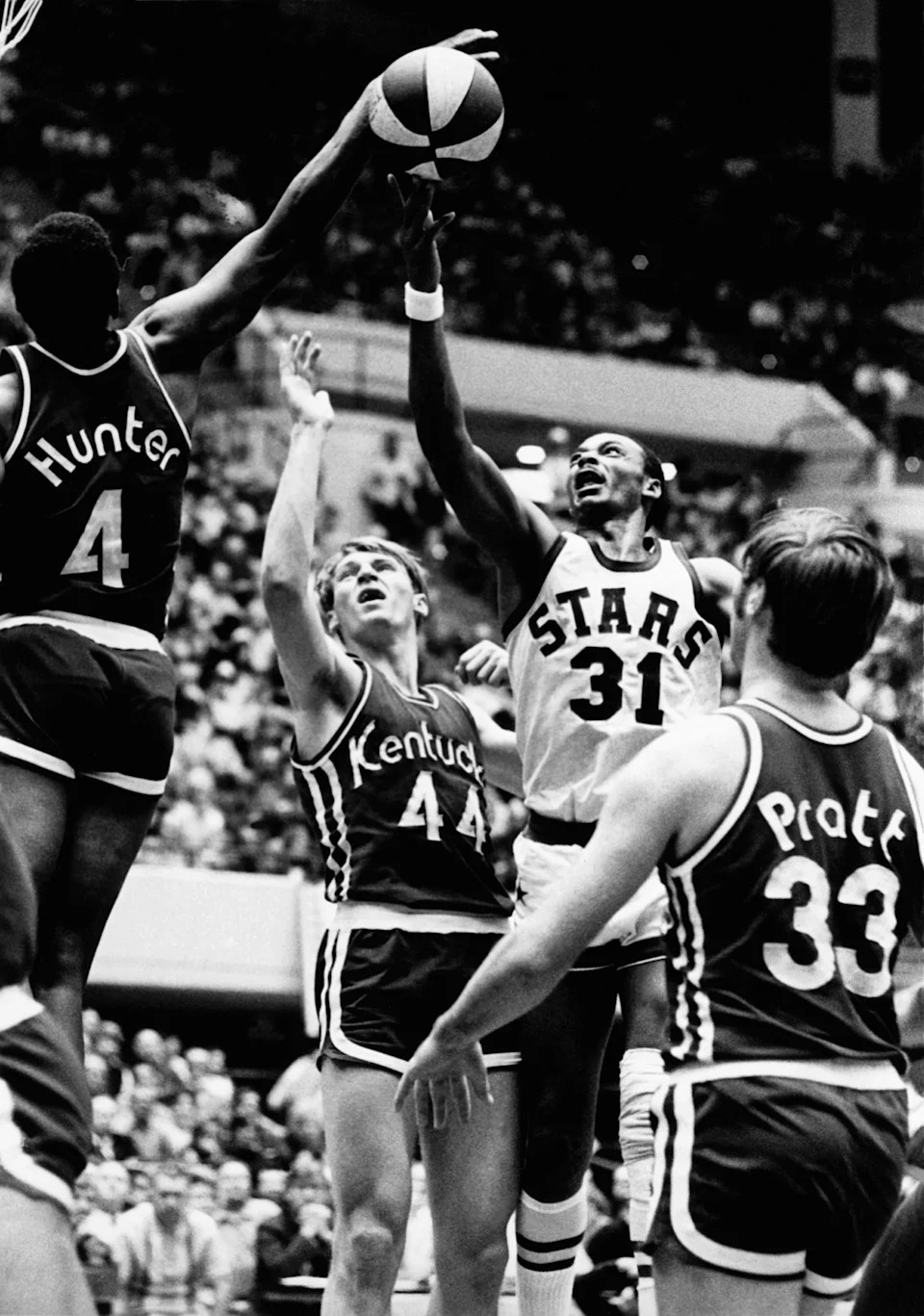
SALT LAKE CITY – 1970: Zelmo Beaty #31 of the Utah Stars drives to the basket against the Kentucky Colonels during an ABA game circa 1970 in Salt Lake City, Utah. NOTE TO USER: User expressly acknowledges that, by downloading and or using this photograph, User is consenting to the terms and conditions of the Getty Images License agreement. Mandatory Copyright Notice: Copyright 1970 NBAE (Photo by NBA Photo Library/NBAE via Getty Images) | NBAE via Getty Images
Utah’s home court was the brand new Salt Palace, a drum-shaped venue which housed the Utah Jazz from 1979 to 1991. Although the arena could hold over 10,000 people, average attendance during the first Stars season was just 6,100. Despite filling barely half the seats in the arena, the Stars led the ABA in attendance that year. The arena, constructed as part of Utah’s bid to host the 1972 Winter Olympics, was demolished in 1994 to make room for an expanded convention center.
Advertisement
Kentucky played their home games at Freedom Hall, a cavernous arena on the Kentucky State Fairgrounds that was designed to house the Kentucky State Fair World’s Championship Horse Show, a confusingly named event that requires almost a hundred yards of clear floor space. Aside from seats located along the sides of the court, the arena was not well-suited to basketball, although it could host over 16,000 fans during the years the Colonels played there. The venue also hosted six NCAA Final Fours between 1958 and 1969. It’s still standing, and still hosting horse shows and basketball games.
The Finals went seven games, and featured, among other things, Frank Ramsey bringing a bottle of oxygen to Utah to help cope with the high elevation (Salt Lake City sits at 4225 feet above sea level, which is high enough to give you a nice bout of altitude sickness, as I can personally attest).
In the first game of the Finals, Utah stomped Kentucky, 136-117. The only highlight for Kentucky was a surprising 36-point performance by Darel Carrier, who made six of seven three-point attempts. Utah had six players score in double figures and three players with 20+ points, including a pair of reserves.
The Stars had little difficulty winning Game 2, 138-125, and they looked to be well on their way to dominating the Colonels until the series went back to Kentucky. Here the Colonels won a pair of close contests to even the series.
Advertisement
The teams continued to swap home court victories over the next two games, with Kentucky squeaking out a three-point victory in a classic Game 6 that pushed the series to a deciding Game 7. Kentucky was clinging to a slim lead when Dan Issel was sent to the bench with five personal fouls in the third period. With him out, Cincy Powell stepped up and kept the Colonels in the game by scoring 20 of the teams 31 points over a 21-minute span as Utah edged out to a slim lead.
Kentucky fought back late in the fourth and put the game away at the free throw line, nailing all four attempts over the final 33 seconds. A bid by Red Robbins to tie the game with seven seconds to go off a deliberately missed free throw and a three-point attempt went nowhere when Dick Nemelka’s shot bounced off the rim. The game also featured a small shower of beer cups and debris from the stands when the scorekeeper apparently failed to sound the buzzer at the end of the third period allowing a late Utah basket to count.
The series shifted back to Salt Lake where Utah won the deciding game by ten, despite 41 points from Dan Issel, playing his final game as a rookie.
The Finals MVP was Zelmo Beaty, who had been an NBA All-Star before jumping to the upstart ABA.

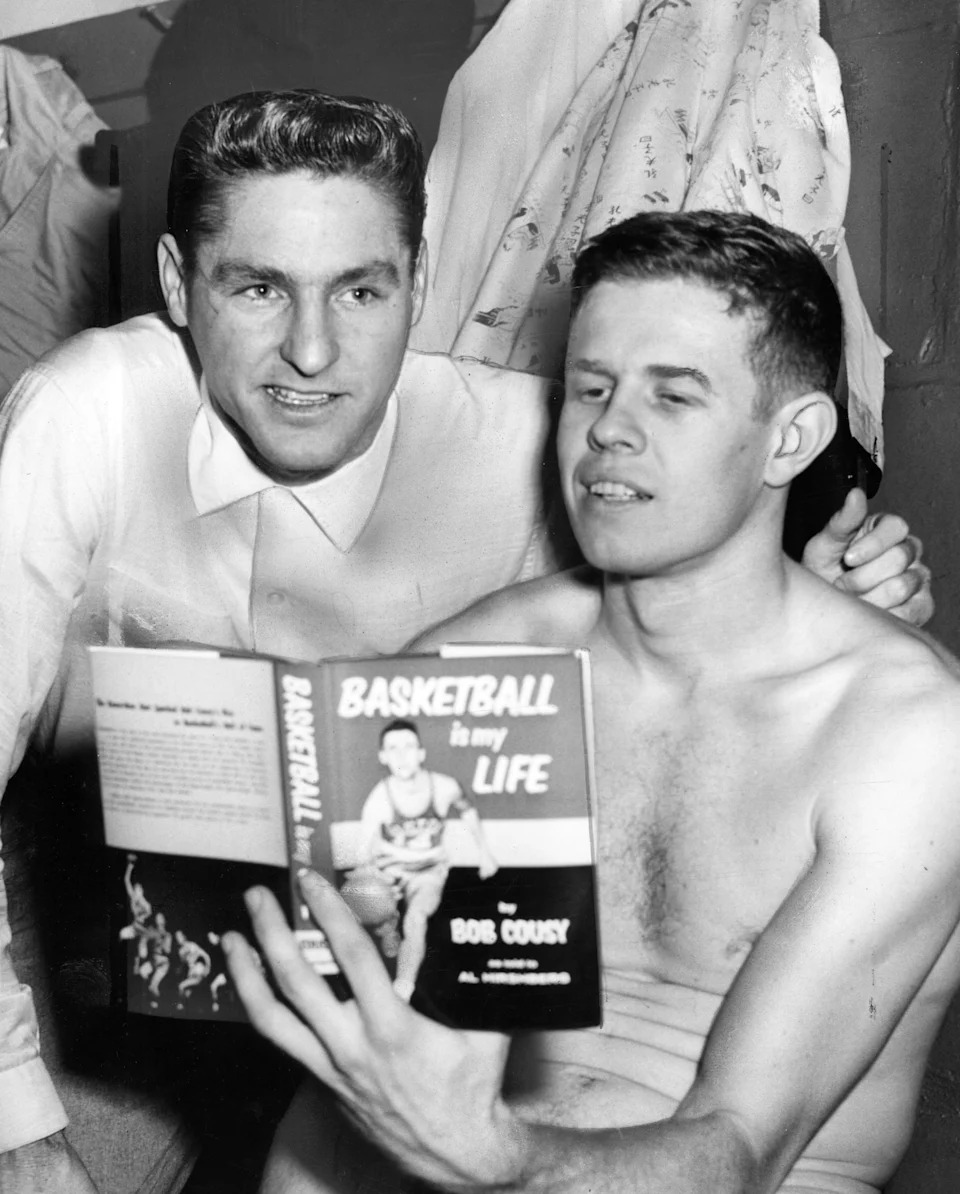
BOSTON, MA – APRIL 8: Boston Celtics players Bill Sharman, left, and Frank Ramsey read a copy of teammate Bob Cousy’s book “Basketball is My Life” following a practice during the 1958 NBA World Championship Series in Boston on April 8, 1958. (Photo by Gil Friedberg/The Boston Globe via Getty Images) | Boston Globe via Getty Images
Frank Ramsey was fired by John Y. Brown at the conclusion of the series. Ramsey settled down to a quiet life in Madisonville, eventually becoming a bank president.
Advertisement
Bill Sharman parlayed his ABA championship into a head coaching gig with the Los Angeles Lakers. He hired ex-Celtic KC Jones away from Harvard University, and these Celtic-tinged Lakers went on to record a then NBA record 69-13 record which featured an astonishing 33-game winning streak. When the Lakers won the title that season, it made Sharman the only coach to win a title in three different professional basketball leagues.
Sharman was also one of two coaches to win a title in the NBA and the ABA. The other, Alex Hannum, had been Sharman’s college teammate with the USC Trojans.
When Sharman retired from coaching in 1976, he took the Lakers’ general manager slot, a post he held until 1982.
The Colonels’ owner, John Y. Brown, would win an ABA title in 1975 and promptly sold Dan Issel’s contract to the Baltimore Claws. Then he took a three million dollar buyout from the NBA to extinguish the Colonels franchise after the 1976 season. He said that he had no interest in being in the basketball business and before buying a controlling stake in the Buffalo Braves later that same year.
Advertisement
In 1978, Brown finagled a franchise swap with Irv Levin, who owned the Celtics. The idea was that Irv Levin wanted to move a team to his home state of California, and there was no way on earth that this team would be the Celtics. The Braves, however, were teetering on the brink of disaster and were easily packed up and moved to San Diego, where they became the Clippers.
Thus, John Y. Brown ended up owning the Celtics, and one of the first things that he did was trade three first round picks for Bob McAdoo. Now, McAdoo was a great player, but he was in no way worth three first rounders. Brown did this without bothering to consult with Red Auerbach—in fact this was the second trade Brown executed without talking to Red first.
Brown’s tenure as owner of the Celtics was short-lived. After the 1978-79 season, Red delivered an ultimatum to Brown, having an offer to run the Knicks in his back pocket: “Either you go or I do.”
Brown, who had not yet dealt with anyone that had Red’s record and personality—folded. He sold his stake in the Celtics to co-owner Harry Mangurian in 1979.
Advertisement
Ramsey and Sharman, of course, had played together with the Celtics in the late 1950s. Ramsey was Sharman’s backup and the NBA’s first real sixth man.
Sharman was part of the Celtics’ title winning teams in 1957, 1959, 1960 and 1961. Ramsey was also part of those teams, as well as the teams that won in 1962, 1963, and 1964. He was replaced as the team’s sixth man by John Havlicek.
Sharman’s number 21 and Ramsey’s 23 both hang in the rafters above the Celtics’ home court.
Read the full article here


