




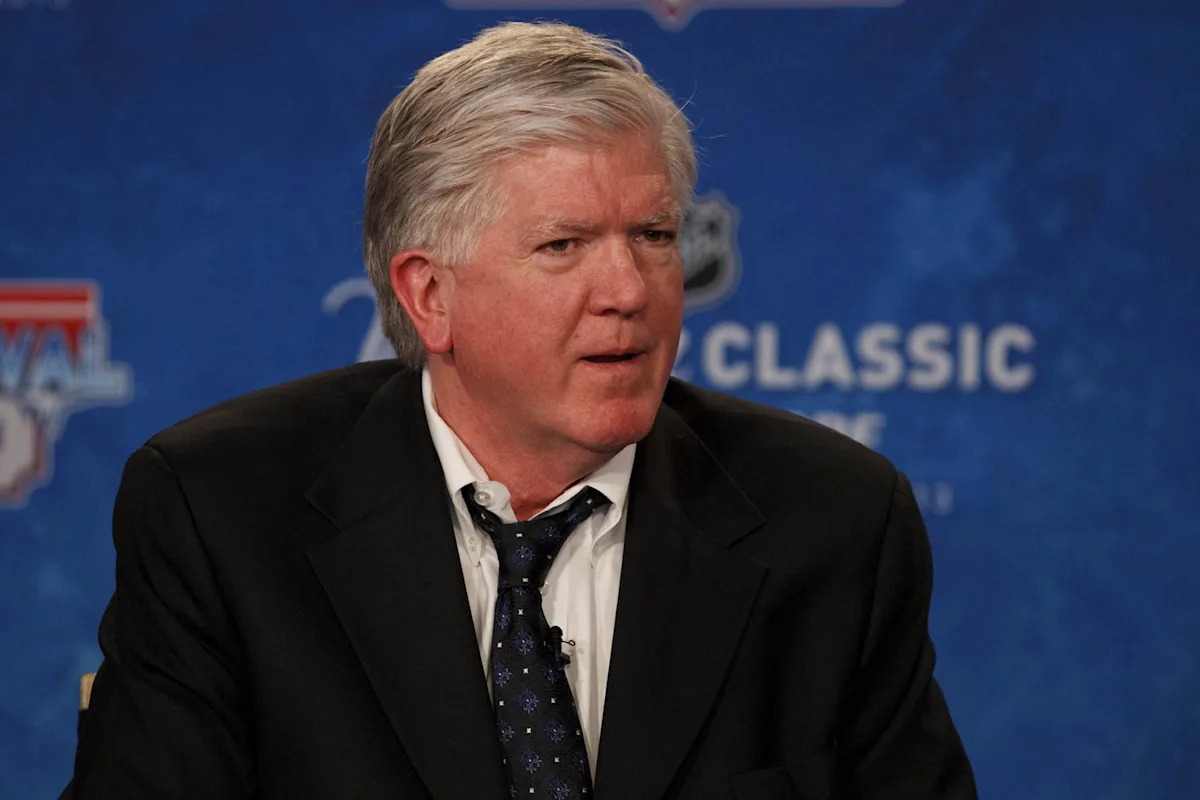
When the Hockey Hall of Fame announced its Class of 2026 on June 22, Brian Burke’s selection in the Builders category felt both overdue and entirely fitting. The longtime NHL executive, whose fingerprints are on Stanley Cup success, franchise revivals, league discipline, Olympic hockey and a generation of media coverage, joins Patrice Bergeron, Carey Price, Pekka Rinne, Keith Tkachuk and Cindy Curley in the Hall. For Burke, it is recognition not just of titles won or drafts executed, but of a career defined by relentless engagement with the game at every level.
Burke’s path through the NHL reads like a map of modern hockey’s front-office evolution. He served as director of hockey operations for the Vancouver Canucks in the early 1990s before a brief stint as general manager of the Hartford Whalers. He then spent six seasons in the NHL’s league office as executive vice-president and director of hockey operations, where he became the league’s chief disciplinarian, the man charged with interpreting and enforcing the rulebook during an era of evolving physical play and expanding scrutiny. That experience gave him a league-wide perspective few executives possess.
Advertisement
He returned to club management as president and general manager of the Vancouver Canucks from 1998 to 2004, helping stabilize and re-energize a franchise that had struggled for relevance. The Sedin twins, drafted and developed during his watch, became cornerstones of sustained success. From there Burke moved to the Anaheim Ducks as executive vice-president and general manager, guiding the organization to its first Stanley Cup in 2007, a validation of his belief in building through a mix of high-end talent, physical identity and cap-aware roster construction.
It was in Toronto, however, where Burke became a daily fixture for those of us on the beat. Named president and general manager of the Maple Leafs on November 29, 2008, he took over a franchise desperate for direction and star power. He spoke bluntly about the team’s identity, the need for physicality, and the realities of competing in a salary-cap world.
When I joined the Leafs beat in 2011, Burke was still the GM and president. He was always approachable and available. He believed in what he called the “rules of engagement” a straightforward philosophy he would articulate plainly: if you were asking questions to promote the team or seeking legitimate information about the organization, he would answer. There was no gatekeeping for its own sake. In an era when some executives viewed the media as an obstacle, Burke treated reporters as part of the ecosystem that helped sell the product. He understood that accessibility built trust and, ultimately, grew interest in the team. Practices, morning skates, off-day scrums, he was there, often holding court with the same candor he brought to the draft table or trade calls.
The Leafs did not reach the playoffs during Burke’s tenure, finishing with a 129-135-42 record across parts of five seasons before he was relieved of his duties in January 2013. Yet the foundation he helped lay — in scouting, player development and a willingness to accumulate draft capital — contributed to the infrastructure that later executives inherited. More than the wins and losses, what lingered was the way he conducted himself: honest, passionate, and never above explaining the “why” behind a decision.
Advertisement
After Toronto, Burke served as president of hockey operations for the Calgary Flames and later held the same role with the Pittsburgh Penguins. He also served as general manager of the 2010 U.S. Olympic team that captured silver in Vancouver. In every stop, the through-line was the same: a commitment to the game’s integrity, player development and the business of selling hockey.
Even now, years removed from day-to-day management, Burke remains a visible and influential presence in Toronto. He continues to do the media rounds, offering sharp analysis on television and radio, while regularly attending games from the press box at Scotiabank Arena and showing up at practices. That continued engagement speaks to who he has always been: someone who loves the game too much to step away completely. Younger reporters and front-office staff still seek him out for counsel. His willingness to share hard-earned lessons has made him a de facto mentor in a league that too often treats institutional knowledge as disposable.
Burke’s induction is a reminder that the Hockey Hall of Fame honors builders in the fullest sense of the word. It is not only about championships or individual accolades, though he has both. It is about the cumulative impact on the sport, the franchises he stabilized, the players he helped develop, the standards he upheld in the league office, and the example he set for how executives can and should interact with the people who cover the game. In an industry that can feel increasingly guarded, Burke’s career stands as proof that openness and accountability are not liabilities. They are part of the job.
Burke is one of the most prominent advocates for LGBTQ+ inclusion in hockey and was the driving force behind the You Can Play Project, which operates under the philosophy that “if you can play, you can play”
Advertisement
He’s the definition of a builder, and Burke’s call to the Hall is well deserved.
See more of The Hockey News on Google — Save us as Preferred Source
Image
For action-packed issues, access to the entire magazine archive and a free issue, subscribe to The Hockey News at THN.com/free. Get the latest news and trending stories by subscribing to our newsletter here. And share your thoughts by commenting below the article on THN.com or creating your own post in our community forum.
Read the full article here


