




After losing 26 games in the past two seasons, there must be a change ahead. And change has happened all over this Cleveland Browns roster this offseason. Newly minted head coach Todd Monken is an offensive guy. Everywhere he has landed, he has transformed the offense into a unit of success and found ways to grind out wins.
RELATED: NJOKU FINDS A NEW HOME
One of the offensive groups that has transformed is the tight end room. Veteran David Njoku was a free agent; the team didn’t offer him an extension during the season, and so he publicly said his goodbyes to the City of Cleveland. Recently, he signed with the Los Angeles Chargers, and every Browns fan wishes him luck.
Advertisement
One reason Njoku wasn’t pursued was that his salary didn’t match his production. He was paid like a Top 5 tight end, but didn’t have the multiple Pro Bowls or even get past the 1,000-yard plateau even once in his career. Secondly, last year’s rookie Harold Fannin, Jr. proved to be a very good offensive weapon that will need more targets as the season unfolds.
Monken wants to pound the ball on the ground. That takes good blockers and a lot of bodies who will do the dirty work. That essentially spells tight end.
Usually, an NFL team will keep three tight ends on the roster, but this coaching staff will, in all likely retain four. And every single one must be proficient in blocking in-line or downfield.
How will this room fill out? What are Cleveland’s current options? Tight end seems to be the hot position group around the NFL in 2026. In the NFL draft, 22 were selected. Two were chosen by the Browns, who are going to use a lot more multiple-tight-end sets and use a higher target percentage on this position.
Advertisement
The trend with Cleveland going forward is to go with heavier tight end sets and prioritize this aspect. A lot of two and three-tight end sets will become the norm with his new offense. And because of this, a roster needs capable bodies.
In recent Browns tight end news, former UFL player Sal Cannella was waived on May 9. That leaves seven tight ends on the roster, and most likely the coaching staff will elect to keep four. That number could be three, though. Adding a fourth in this room, that means having to cut a depth cornerback, a backup defensive end, or that 10th offensive lineman and only retain nine (which is trouble). Which four? That obviously depends upon what happens in training camp.
One thing that is a huge plus with this group, there isn’t that crazy monster contract being paid to any of them.
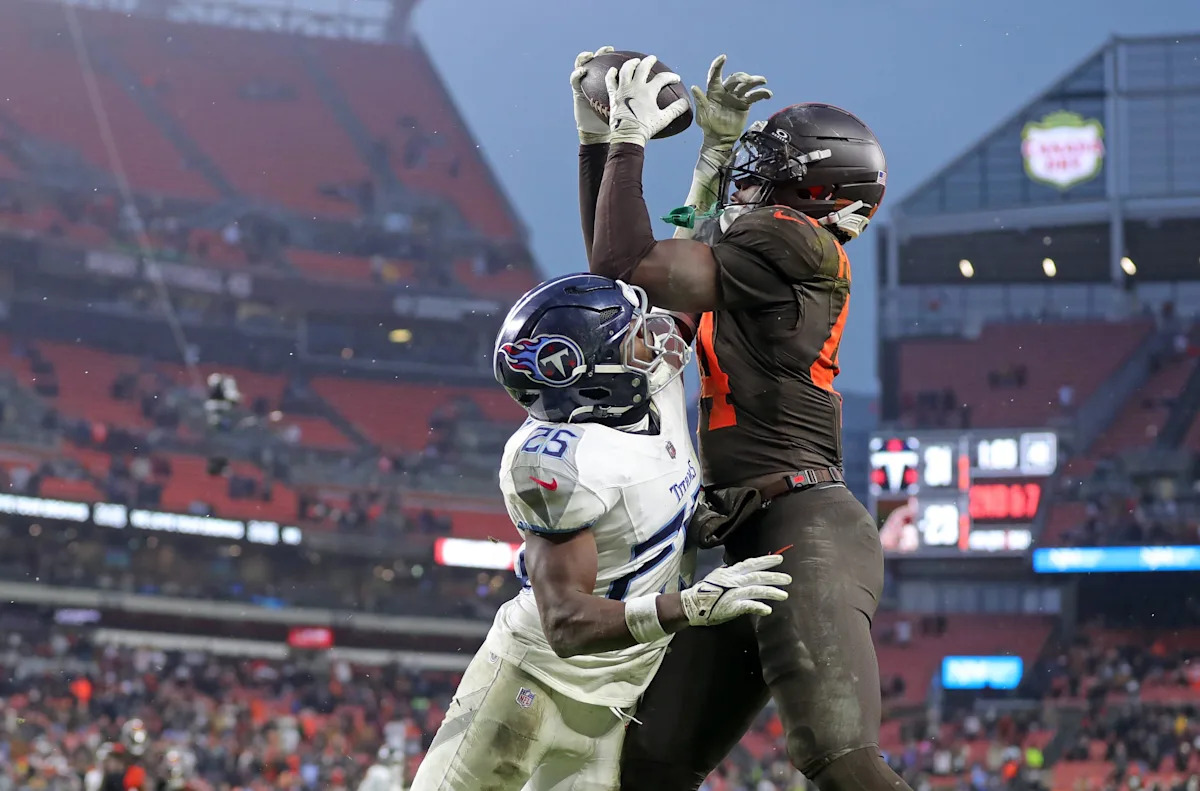
Harold Fannin, Jr. (6’-4”, 241 pounds)
NFL draft: Round 3 (2025)
Advertisement
Contract: Year 2 of his rookie 4-year deal
The Ohio kid had a tremendous season last year. In his final year at Bowling Green, he led the nation in receptions and also in receiving yards, without being an actual receiver. Fannin was the highest-graded player in college football (96.1) by Pro Football Focus.
Coming in as a rookie with the Browns, he was viewed as a complement to Njoku. For the majority of the first half of the season, that pretty much played out that way. But quarterbacks Dillion Gabriel and then Shedeur Sanders figured out that Fannin was a weapon, not a sidekick to the veteran. For Sanders, Fannin was his go-to guy.
RELATED: HAROLD FANNIN INTERVIEW
At season’s end, he had 107 targets, which led the team. He had scored six touchdowns. Fannin converted 32 first downs. Out of his 731 yards, 352 were YAC numbers. He did have four drops, with several in critical situations in close games.
Fannin is considered a receiver first, and then maybe he will block. It’s not like he isn’t interested in blocking, but in college, he rarely did and accounted for 56% of all offensive plays catching the ball. That is why his reception numbers were so high. Game plan: Throw it to Fannin. When Njoku came to Cleveland, he was a horrible blocker. Then, during the bye week in his third season, O-Line coach Bill Callahan took the time to teach him, and after a while, his blocking skills were consistent. Somebody needs to take the time to tutor Fannin.
Advertisement
Fannin was voted to the NFL All-Rookie Team. Long term, he projects that there isn’t a ceiling for his talents. Can he become one of the league’s best at the tight end position? Can he become the franchise’s next Ozzie? Yes, he is more of a large receiver and has great hands, and it is clear he doesn’t want to be tackled. Monken will be able to move him around and play in different areas of the field. He is simply a mismatch no matter where he is lined up.
Fannin’s favorite thing to do away from the field is to fish.

Blake Whiteheart (6’-4”, 250 pounds)
NFL draft: Undrafted (2023)
Contract: Year 1 of his 1-year deal
Advertisement
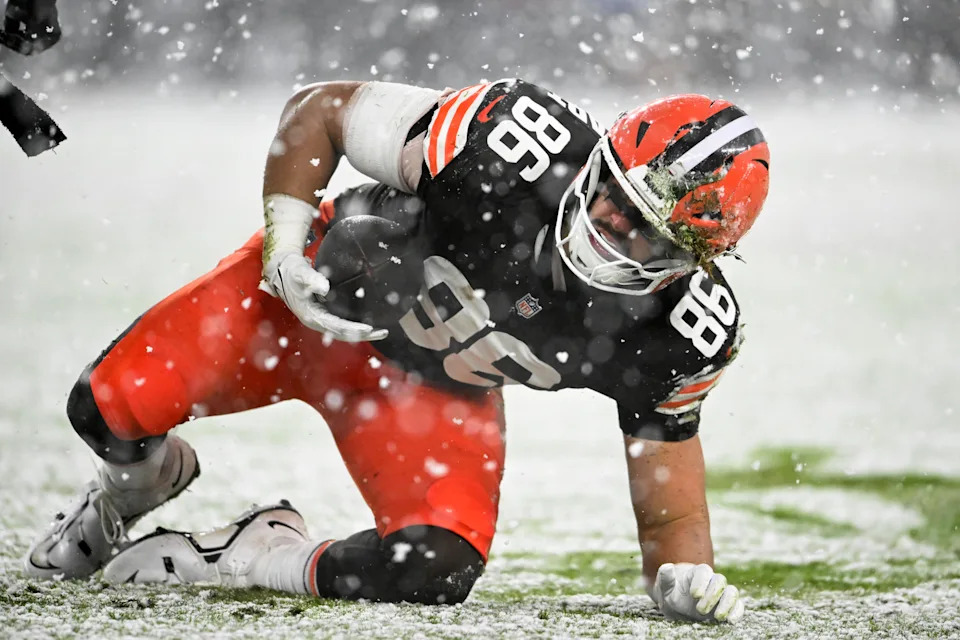
The veteran has inked three one-year contracts in a row and brings veteran depth to the group. Last year, he played in all 17 games with four starts. He has played 452 offensive snaps for Cleveland and 355 special teams reps over the past two years.
Going into 2026, he should be considered the “next man up” as far as the tight end room. Which is quite an accomplishment from a kid who didn’t grow up playing sports, but was into motocross instead. In high school, he found out he was pretty good at football and had a knack for catching the ball. He is also a good tackler on special teams in punt coverage.
RELATED: BLAKE WHITEHEART INTERVIEW
Whiteheart is an above-average pass catcher and will block, but needs some refinement in this department. He cannot remain engaged, but will position himself in line and attempt to get in the way downfield. He gives complete effort and will take on bigger defensive linemen, but isn’t spectacular.
Advertisement
His wife grew up in Akron. Whiteheart is a gamer, loves fishing, juggling, listens to the band Paramore, and is learning the game of golf.
Jack Stoll (6’-4”, 247 pounds)
NFL draft: Undrafted (2021)
Contract: Year 1 of his 1-year deal
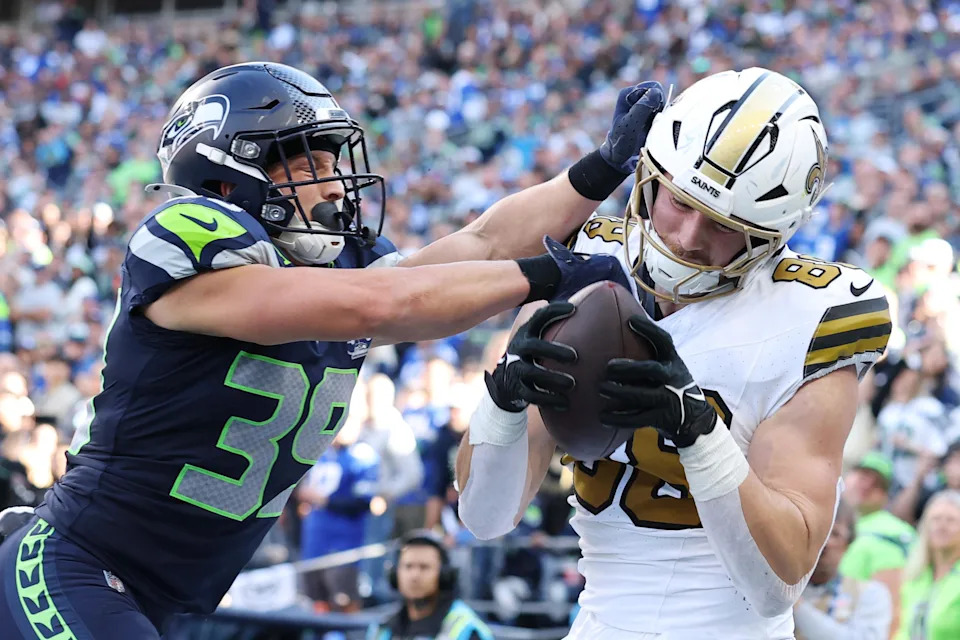
The new offense installed by Monken will need plenty of blockers and blocking tight ends. This is one of those.
Stoll has had very little production catching passes since he arrived in the NFL back in 2021 – 28 receptions to be clear. What’s that? 5.6 catches? Not a game, per season. Which all means that Stoll is relied upon for his blocking abilities. And that is the reason Cleveland signed him. Running the ball a lot means players in front who can move bodies. Stoll has registered 1,019 snaps as a run-blocker, 126 as a pass-blocker, and 704 special teams snaps.
Advertisement
In training camp, Stoll will have to prove his worth as a blocker and a “skinny offensive tackle.” Otherwise, this is a generic signing by the Browns on a guy who just might become a training camp body.
Brenden Bates (6’-5”, 255 pounds)
NFL draft: Undrafted (2024)
Contract: Year 2 of his rookie 4-year deal
Bates is an Ohio kid haven grown up in Cincinnati. He played basketball, football and ran track. His parents, grandfather, and both his siblings all played sports in college. Bates was All-State in high school.
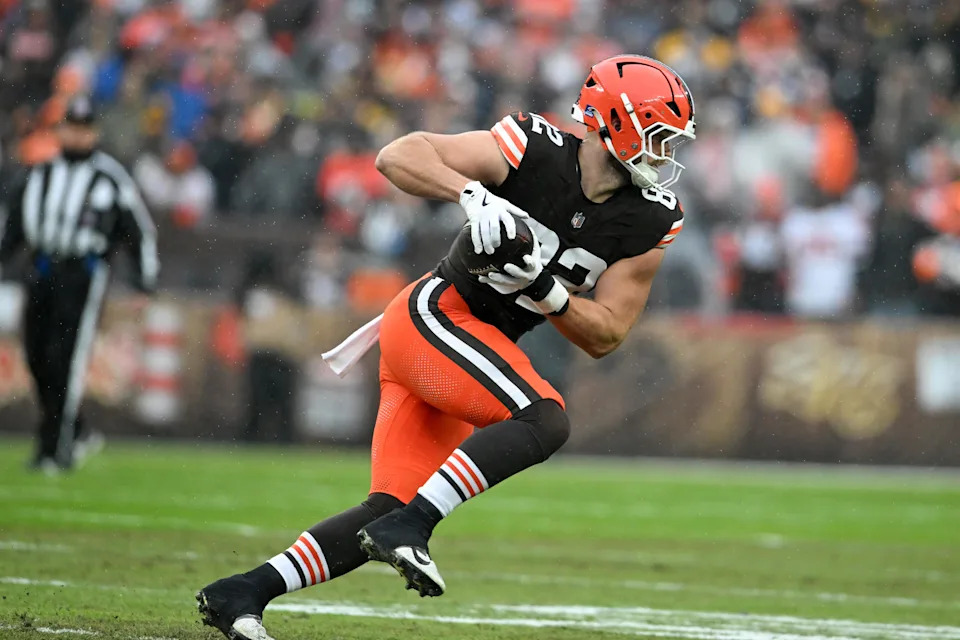
The Browns signed him as a blocking tight end. He came out of college as a top blocker. Since coming to the NFL, he has been on the practice squad of three teams and has signed with Cleveland twice. Last year, he was on the main roster, played in four games, and had four catches for 48 yards. So far, Bates has played in 16 NFL games, with half of those in orange and brown.
Bates was tendered as an exclusive rights free agent. He will be used in running downs, but nobody is going to claim him on their fantasy team or select him in Madden. His role with the Browns is to move defenders and snag a pass here and there.
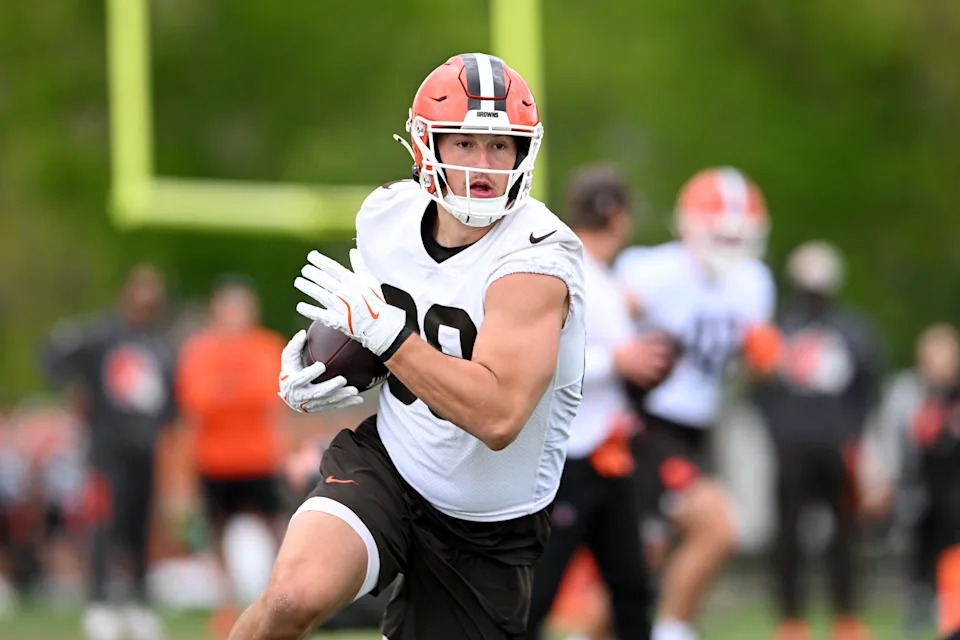
Caden Prieskorn (6’-5”, 255 pounds)
NFL draft: Undrafted (2025)
Advertisement
Contract: Year 1 of his 1-year deal
Prieskorn was always the big kid without all the filling. He played QB in high school and guided his team to a state championship in Michigan. When he arrived on the campus of the University of Memphis, they switched to tight end as he had filled out a bit. He entered the transfer portal and arrived on the campus of Ole Miss for his final two seasons. At one point, Prieskorn was a semifinalist for the Mackey Award. In his five years of college play, he had just 112 catches.
Last year, he was cut by the Detroit Lions, the Denver Broncos, and the Tampa Bay Buccaneers before being signed to the practice squad of the Browns. He has yet to appear in an NFL regular-season game. In January, he was signed to a reserve/futures contract.
He is strictly a developmental Y-tight end prospect who can beat zone and has some ideal measurables. Prieskorn is built to block, and that’s where he will need to show his worth. He has had limited production in pass catching and is not a vertical threat. He will also need to sustain his blocks longer, and his route running needs work.
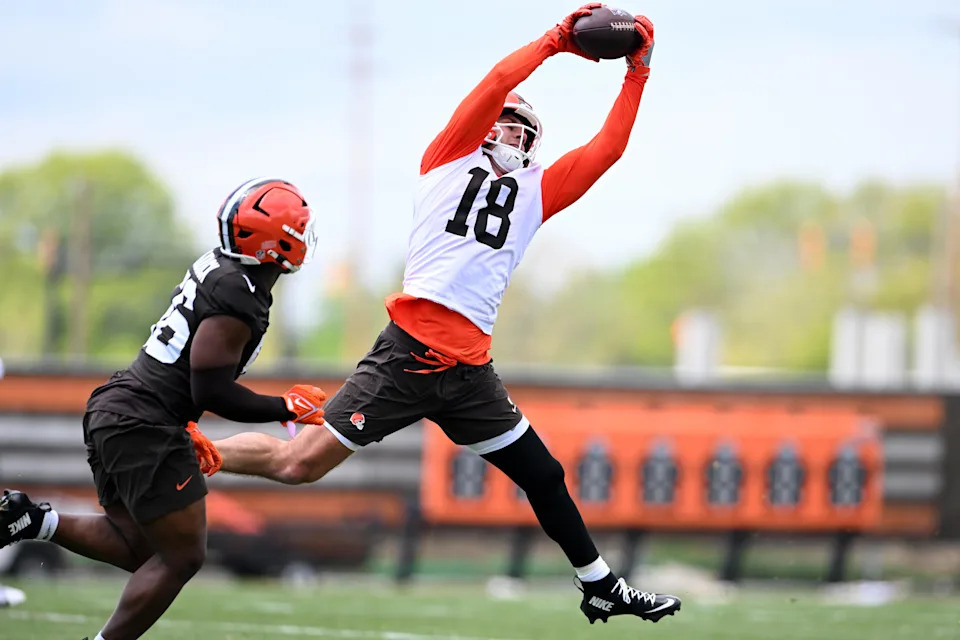
Joe Royer (6’-5”, 247 pounds)
NFL draft: Round 5 (2026)
Advertisement
Contract: Year 1 of his rookie 4-year deal
Another Ohio kid who was raised in Cincinnati and grew up a huge Bengals fan. Yeah, that. In college, Royer was either in-line or in the slot. In 2024, he broke Travis Kelce’s single-season school record for catches by a tight end (50). He has impressive hands and is a big target. He can block somewhat, but is not dominant in this regard. He will need some tutelage.
LINK: MEET JOE ROYER
He has decent speed but isn’t going to outrun anyone. Keep in mind, Royer is hand-picked by Monken after being selected in Round 5, who sees him as a do-it-all project. He shows good body control and has excellent football IQ. Has untapped ceiling. He has inconsistent hand placement, so that will need to be worked on.
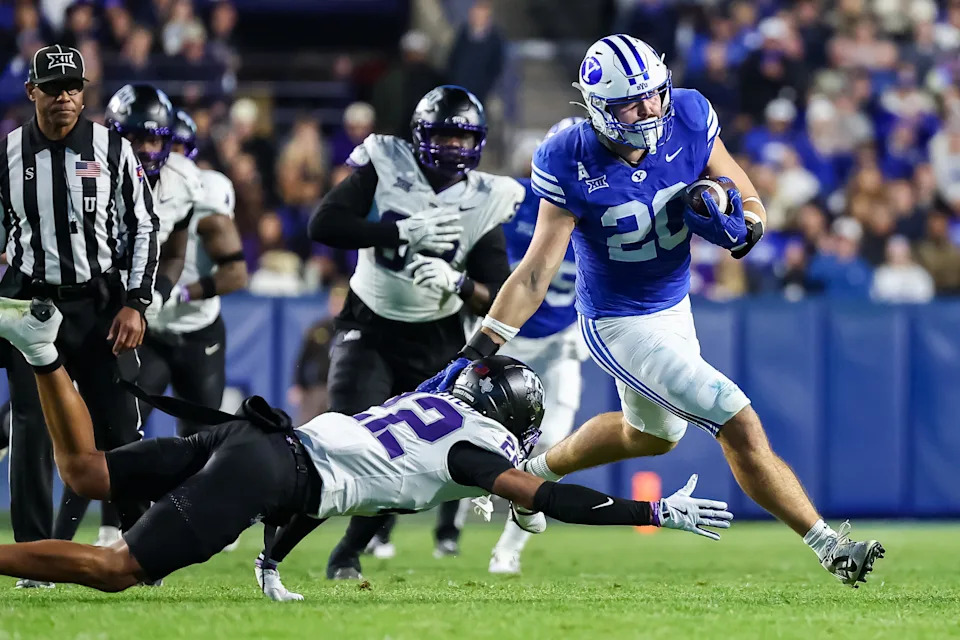
Carsen Ryan (6’-4”, 250 pounds)
NFL draft: Round 7 (2026)
Advertisement
Contract: Year 1 of his rookie 4-year deal
The Y-tight end spot was where Ryan usually lined up in college. He has decent hands and is a decent blocker, but is limited in both. As a blocker, he is both quick and physical. Cleveland took him in the seventh round.
LINK: MEET CARSEN RYAN
Ryan does lack burst getting out of his breaks and has some stiffness when he adjusts to poorly thrown balls, and needs work sinking as a blocker to re-leverage.
Read the full article here


