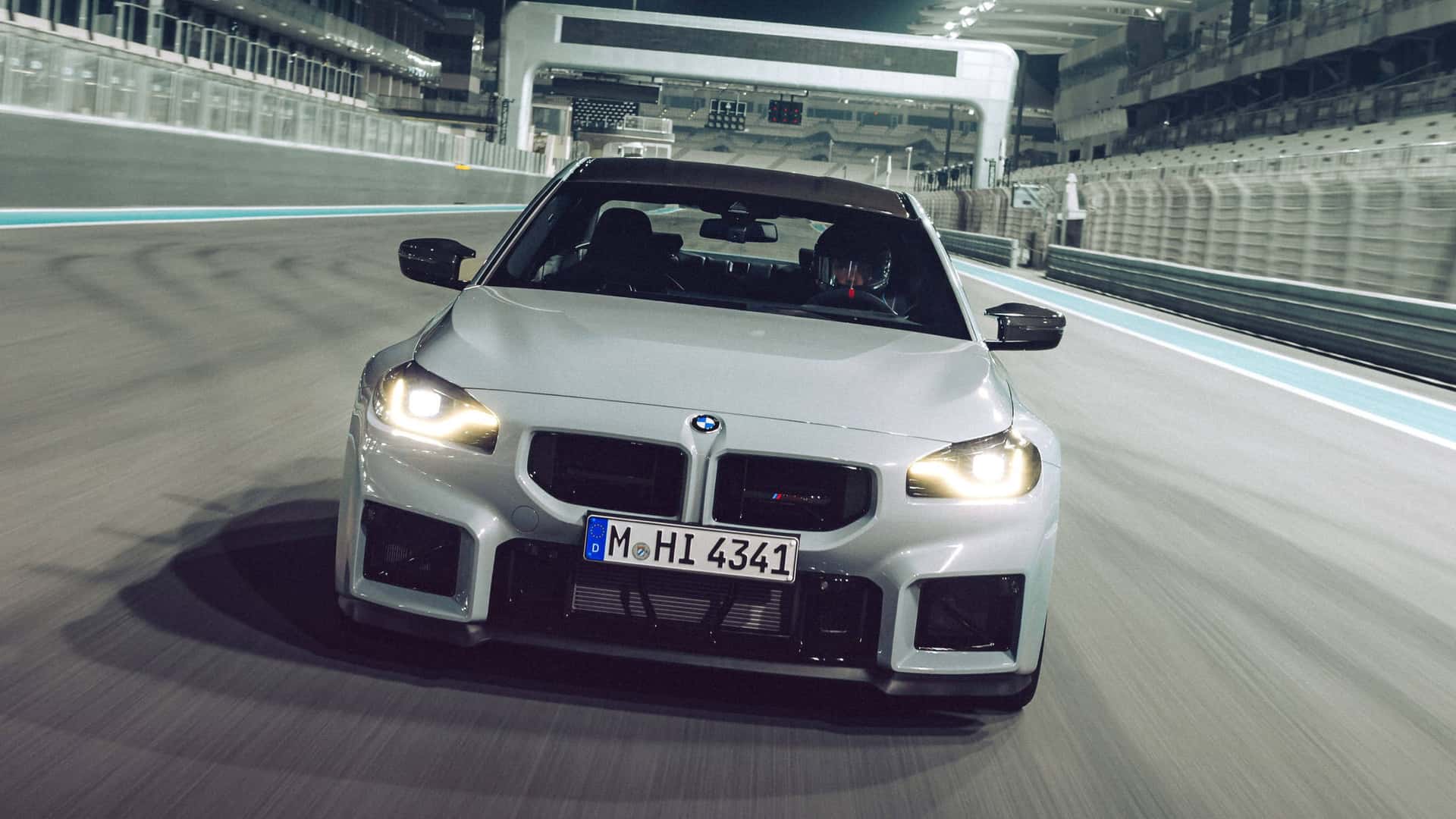
- BMW has new pre-chamber combustion technology entering production.
- The technology will appear on the M2, M3, and M4 starting this year.
- It is called M Ignite and is designed for BMW’s inline-six engines to meet Euro 7 emissions regulations.
BMW says it will begin series production of a new pre-chamber ignition system known as “BMW M Ignite” starting in mid-2026. The technology, patented in 2024 and developed from motorsports applications, will first appear in the inline-six engines of the BMW M2, M3, and M4. The goal is improved efficiency under high load, along with meeting the Euro 7 emissions standard set to take effect in November 2026.
At the heart of the BMW M Ignite technology is a newly integrated pre-chamber in the cylinder head. It’s connected to the main combustion chamber via transfer ports. The pre-chamber has its own spark plug and ignition coil, effectively giving the engine two ignition systems.
At low and mid engine speeds, combustion continues to rely primarily on the conventional spark plug in the main chamber. Only at higher rpm and load conditions does the pre-chamber ignition take on the central role. In this mode, part of the air-fuel mixture is directed into the pre-chamber and ignited there. The resulting flames then shoot at high speed through the transfer channels into the main chamber.
Photo by: BMW
These so-called ignition jets ignite the mixture in the main chamber at multiple points simultaneously. According to BMW, this significantly increases the combustion rate while reducing the risk of uncontrolled self-ignition—commonly referred to as knock. Another claimed benefit is lower exhaust gas temperatures, which should help reduce thermal stress and improve emissions performance.
Along with the pre-chamber ignition, BMW’s inline-six engines will receive additional technical updates, including higher compression and turbochargers with variable turbine geometry. Despite the revisions, BMW says the engines’ output figures will remain unchanged. The new technology is primarily focused on improving efficiency under full-load conditions.
The tech is especially relevant for performance driving. BMW claims fuel consumption under high-load operation drops significantly, allowing drivers to run longer on the same tank of fuel. At the same time, the more efficient combustion is intended to support compliance with future emissions requirements.


The rollout of BMW M Ignite will be phased in. Starting in July 2026, all variants of the M3 and M4 will be equipped with the new system. One month later, production of the M2 with the same technology is set to begin. Displacement and power levels are expected to remain unchanged versus the current versions across all models.
By introducing pre-chamber ignition, BMW continues transferring motorsports technology into production vehicles. Systems like this have been used for years in various racing series because they enable faster, more controlled combustion. By applying the concept to production engines, BMW aims to keep traditional high-performance internal-combustion models viable for road use over the long term, even as emissions regulations tighten.
Motor1’s Take: BMW is well aware that the combustion engine is the foundation for the brand, and BMW M Ignite shows it is truly trying to keep the powertrain type alive with innovations. The automaker has little trouble designing high-powered engines, but now it has to make them more efficient, and we are curious what other technologies BMW will introduce to achieve this.
Read the full article here