



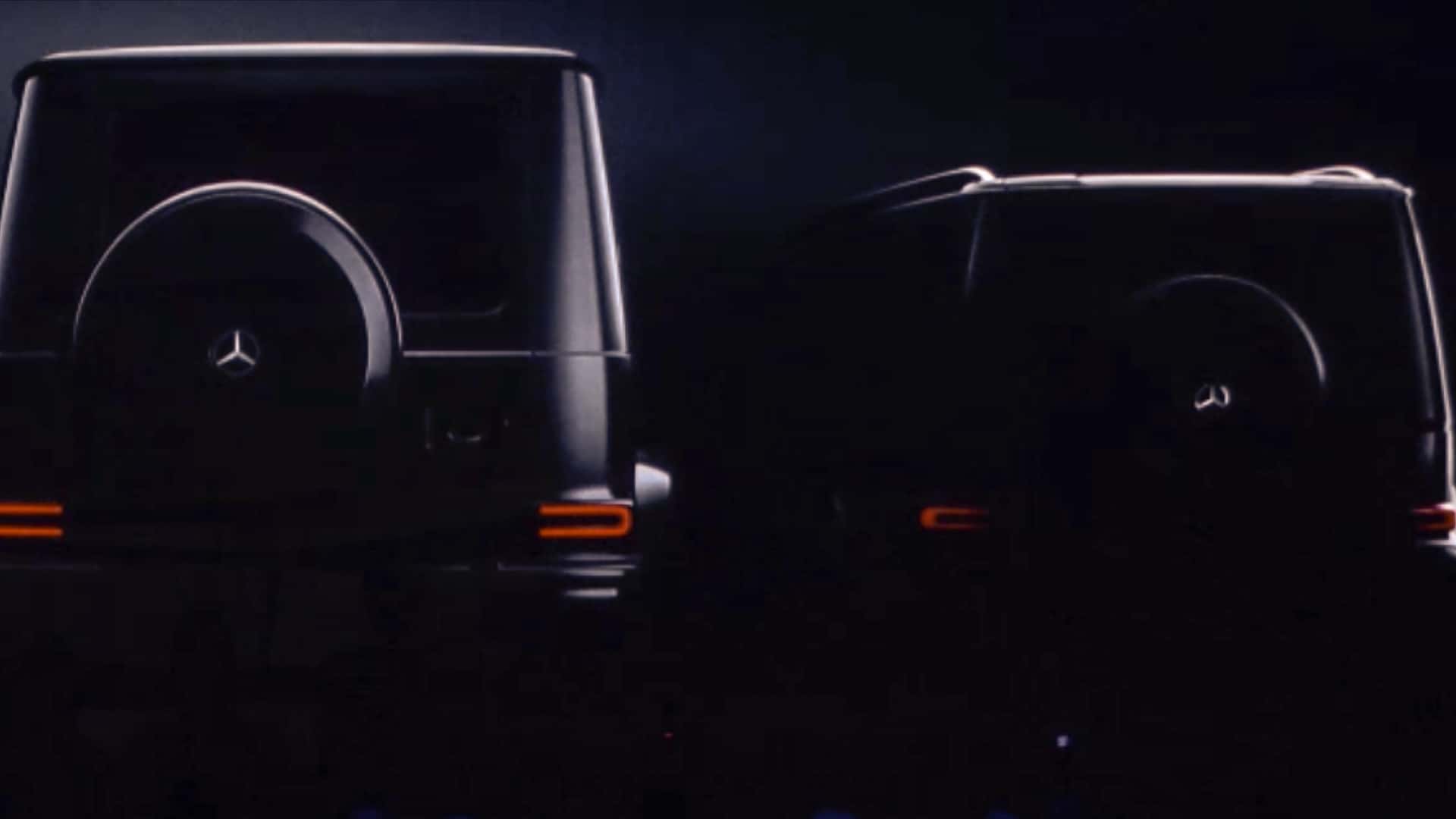
- The compact G-Class is likely to be assembled in Hungary rather than Germany.
- Mercedes is looking to lower production costs by building the off-roader in Kecskemet instead of Rastatt.
- The Hungarian site is expected to become the biggest Mercedes factory in Europe.
It’s been nearly three years since Mercedes announced plans to scale down the G-Class formula for a more compact and affordable version. Following the teaser released in September 2023 at the IAA show in Munich, the off-roader has received a multitude of nicknames, including Little G, Baby G, and Junior G. Mercedes itself has been using the lowercase “g” in “g-Class” to set it apart from its bigger brother, but without specifying when the model will hit the market.
All signs point to a 2027 launch, and when the day comes, the little brother to the venerable Geländewagen could wear the Made in Hungary label. Automotive News Europe cites people familiar with Mercedes who say the smaller G will be assembled at the Kecskemét site. While the company has never officially announced where the vehicle would be built, many assumed it would come to life at the Rastatt factory in Germany alongside the CLA.
It was a logical assumption, given that the g-Class is expected to use the same platform as the swoopy compact luxury sedan and its more practical shooting-brake sibling. The alleged decision to build the vehicle at the company’s plant in Hungary apparently stems from a desire to cut costs. Mercedes has lower operating costs in Kecskemét than in Rastatt, and it’s looking to save money by building the mini G in Hungary rather than on its home turf.
Photo by: Mercedes-Benz
Before it can save money, the three-pointed star needs to spend some. It’s pouring €1 billion into expanding the Kecskemét factory to boost annual capacity to up to 400,000 units, making it the largest plant in its European production network. According to the report, the Hungarian site is projected to account for as much as 30 percent of Mercedes’ entire European production, double its current share. To get there, it’s hiring approximately 3,000 new employees, bringing the workforce to around 7,500.
In theory, building the g-Class (or whatever it’s called) in Hungary instead of Germany could make the vehicle cheaper to buy. Of course, that’s only true if Mercedes decides to pass some of the savings on to customers. What will they get? Certainly not a vehicle as capable off the beaten path as the full-size G. However, logic suggests it’ll be far better on rough roads than the similarly sized GLB. The two might not be as closely related as everyone thinks, given that Mercedes boss Ola Källenius once said the g is a “completely new development.”
The g-Class Will Have Gas And Electric Versions
Regardless of where production takes place, the new arrival is expected to be more affordable than initially believed. The plan was to build the g exclusively as an electric vehicle, but U.S. dealers convinced the company to add a gas engine under the hood. Although the gap between ICE and EV models continues to narrow, the mild-hybrid GLB is still about €4,000 cheaper than its electric sibling in Germany.
How much could it cost? We’d wager it will command a significant premium over the GLB (from €46,868). At the same time, it’ll obviously remain well below the G-Class, which costs more than two and a half times as much, at €127,591. If it’s truly an all-new model, as Mercedes executives claim, that will likely translate into a much higher asking price than the company’s current crop of compact cars without encroaching on G-Class territory.


Motor1’s Take: Cost-cutting decisions are being made every day across the industry. Automakers are looking to trim expenses wherever they can, and taking advantage of lower operating costs is a no-brainer. Assembling the g-Class in Hungary would deal a huge blow to the German factory, but that’s how the cookie crumbles when companies try to save every cent.
From a consumer perspective, the alleged decision shouldn’t really upset prospective buyers, given that the full-size G-Class isn’t made in Germany either. In fact, it’s technically not even built by Mercedes, since Magna Steyr handles production at its facility in Graz, Austria. That hasn’t hindered the vehicle’s success, which posted record sales last year, with demand rising 23 percent to 49,700 units.
Source:
Automotive News Europe
Read the full article here