




-
CEO Gernot Döllner says enthusiasts still favor combustion engines as they move upmarket.
-
Audi believes EVs are more readily accepted in lower segments.
-
The V6 and V8 still have a future at Audi, but the larger engines ain’t coming back.
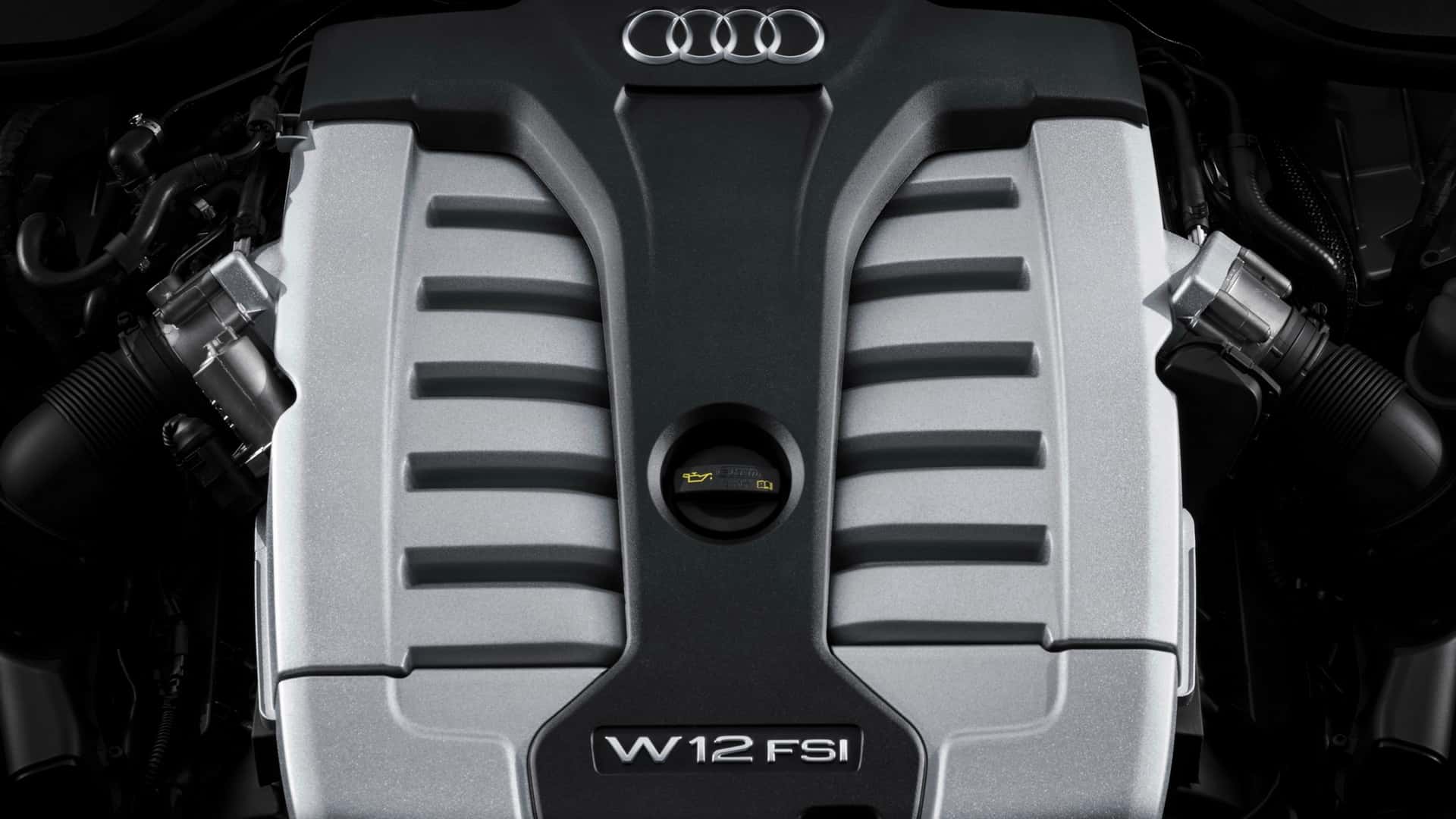
There once was a time when Audi could get away with selling the A8 full-size sedan with a mighty W12 and still pass emissions regulations. At the peak of the Piëch era (see what I did there?), when everything seemed possible, engineers shoehorned a V12 diesel into the Q7 luxury SUV. Heck, they even adapted the engine for a bonkers R8 TDI supercar concept with a six-speed gated manual gearbox.
But both twelve-cylinder powerhouses are now nothing but distant memories, and the naturally aspirated V10 mounted behind the seats of the R8 is also in the rearview mirror. Seeing the glass half full, the V6 and V8 engines still have a future in Ingolstadt. This pledge comes from a company that once said it would go completely electric by 2032. Like nearly every other automaker, it has backtracked on its lofty EV agenda.
Audi will continue selling ICE-powered vehicles for an indefinite period, and its head honcho just made an interesting observation about customer preferences. Speaking with Bloomberg, CEO Gernot Döllner said people shopping in the higher segments tend to prefer combustion engines. That’s why it made perfect sense to launch the exotic Nuvolari with a big V8 by taking the Lamborghini Temerario shortcut.
Audi R8 V10 Performance RWD
Electric Cars Are More Widely Accepted In Lower Segments
At the other end of the hierarchy, EVs have broader acceptance, according to the #1 at Audi. The company is about to cater to that audience by bringing back the delightfully quirky A2 as a fully electric compact car, serving as an indirect replacement for the subcompact A1 hatchback and Q2 crossover, both of which have recently gone out of production.
‘We find that the higher the segment is, the more the enthusiast still loves the combustion engine. The lower the segment is, the more battery electric is accepted.’


Photos by: Audi
But despite Audi’s newfound appreciation for engines, the Concept C will remain purely electric when it morphs into a production vehicle next year. The two-seater sports car with the company’s first-ever targa roof won’t gain a gas engine, according to a statement Motor1 received from Daniel Schuster, Spokesperson for Technical Development. That’s disappointing to hear, as we can all agree the Porsche 718’s alter ego with an Audi badge is exactly the type of performance vehicle that practically begs for the RS3’s inline-five.
Seeing the glass half full, at least Audi has managed to retain the V6 engine in the RS4-replacing RS5 and will give the upcoming RS6 sedan/wagon duo at least a V6. These are heavyweight plug-in hybrids designed to meet emissions regulations, as the alternatives would have meant downsized engines or killing the cars altogether.
40
Source: Audi
Motor1’s Take: Döllner’s comments might be one of the more honest assessments we’ve heard from a major automaker about the future of the combustion engine. The industry has spent so much time talking about EVs as the inevitable replacement for gasoline-powered cars that it’s easy to forget cars aren’t always rational purchases. The more expensive and specialized they become, the more emotion matters.
That’s particularly true for supercars. Nobody really needs a 1,000-hp car capable of more than 200 mph, so telling its buyer that an EV is more efficient doesn’t address the point. People with the means to buy a Nuvolari are paying for the drama, the engineering, and, yes, the noise. However, the latter has suffered in recent years because of increasingly strict emissions and noise regulations.
Read the full article here


