




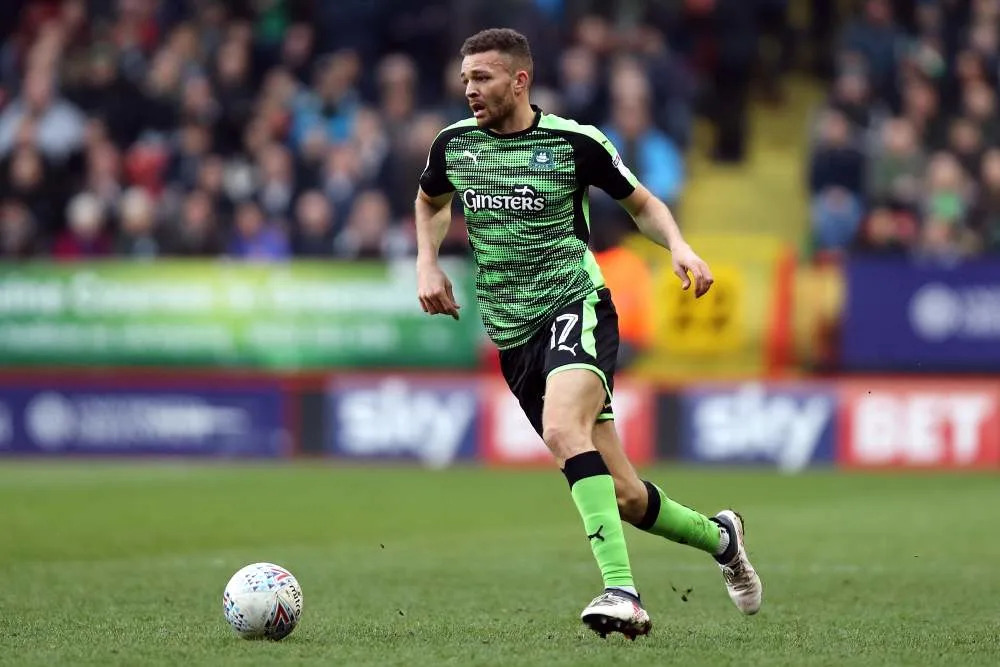
You represented Antigua and Barbuda at international level during your playing career. How did that opportunity come about?
“It happened completely out of the blue. I received a message on Instagram from someone involved in recruiting players with Caribbean heritage, and they asked whether I had any family connections.
Advertisement
“I’d always thought I only had Jamaican heritage because that’s the side of the family I knew best, but after doing a bit of research I discovered I also had Antiguan heritage. From there, everything moved pretty quickly.”
What was the experience of playing international football like?
“It was incredible. One thing I’d always wanted to do during my career was play abroad, and although that opportunity never came at club level, representing Antigua and Barbuda gave me the chance to experience football in a completely different environment.
“It also helped that Mikel Ledgerwood was the manager. People will know him from his time at Crystal Palace, and he’s coaching at Reading now. Having someone with that British background made settling in much easier. There were also four or five UK-based players in the squad, so I travelled over with them, and that helped everything feel familiar straight away.”
Advertisement
Looking back on your time as Airdrie manager, how do you reflect on that experience?
“When I look back over my four years at Airdrie, it wasn’t just a straightforward progression.
“Rhys McCabe brought me to the club as a player, and we got on really well. I bought into his football philosophy straight away, and he gradually brought me into the coaching side of things. When the assistant manager left, I stepped up into the player-assistant role and naturally started taking more responsibility on the coaching side than the playing side.
“Rhys then moved on, another manager came in, and things didn’t quite work out. That created an opportunity for me, probably earlier than I’d expected, but it was always something I wanted to do.
Advertisement
“If you look purely at the 25 league games I was in charge for, our form would have had us sitting fifth over that period. It was an unfortunate way for it to end, but I’m really glad I took on the challenge because I learned a huge amount.”
Has managing only strengthened your desire to return to the dugout?
“Definitely. I’m only 35, so I’m still relatively new to first-team coaching.
“I’m open-minded about whatever opportunity comes along because every role teaches you something. Managing is completely different from being an assistant, but I genuinely loved it. If anything, it only made me want to do it again.”
Advertisement
What was the biggest adjustment when you went from sharing a dressing room with players to managing them?
“I’d already started distancing myself from the dressing-room side of things when I became a player-coach and then player-assistant, so that transition wasn’t too difficult.
“The biggest change is that every important decision rests with you. You’re the one telling players they’re not playing or making tactical decisions that disappoint people. That’s probably the hardest part of management.
“But I really enjoyed that responsibility. Throughout my playing career I worked under managers with different ideas, different methodologies and different styles of football, so coaching is something that has always fascinated me.”
Advertisement
Have you used your time away from management to continue developing as a coach?
“Not yet, although I’ve spoken to a few people and it’s definitely something I want to do.
“I’d love to visit clubs, maybe even abroad, and see how different coaches work rather than staying inside the Scottish football bubble. If nothing comes up over the next few weeks, that’s something I’ll definitely look to do.”
What kind of coach do you see yourself becoming?
“For me, it’s all about creating the right environment.
“I’ve recently completed my UEFA A Licence, and hopefully over the next couple of years I’ll move on to my Pro Licence.
Advertisement
“Whether I’m a manager or an assistant manager, my aim is to create an environment where players can flourish, enjoy themselves, be creative and keep improving.
“Every player wants to be part of a positive environment where they’re encouraged to express themselves. That’s the type of culture I’d love to build because I think that’s when you get the very best out of people.”
Your move from Montrose to Partick Thistle proved to be a defining moment in your career. How do you look back on your time at Firhill?
“It was an incredible period in my career.
“Going from part-time football at Montrose into a full-time environment was a huge step and I owe a lot to Jackie McNamara for giving me that opportunity. He trusted me, encouraged me to express myself and gave me the freedom to enjoy my football.
Advertisement
“Jackie had a brilliant eye for recruitment as well. There were four or five of us around a similar age, so it was a great dressing room and a brilliant environment to develop in.
“My first season was really about adapting to the level, but I always remember Jackie saying after the final game that we’d be challenging for promotion the following year.
“That belief spread throughout the squad, and we carried it into our Championship-winning season.”
You were named in the Championship Team of the Year in each of your first two seasons and then experienced the managerial transition from Jackie McNamara to Alan Archibald, who was already at the club. How important was that continuity?
Advertisement
“It was massive.
“Archie had worked closely with Jackie, so when he stepped into the job he already understood how everything operated. He didn’t come in and try to reinvent things. He made a few tweaks and added his own ideas, but the foundations stayed exactly the same.
“I think that continuity was a big reason why we kept progressing and eventually got over the line to win promotion.”
Kris Doolan became one of the Championship’s most prolific goalscorers during that period. As an attacking full-back, how enjoyable was it playing alongside him?
“It made my job a lot easier.
Advertisement
“I loved getting forward and putting crosses into the box. A lot of the time I’d just put the ball into dangerous areas because I knew eight or nine times out of ten Kris Doolan would be there to finish it.
“People often ask me who the best striker I played with was and Kris is always one of the first names that comes to mind. He was such a natural finisher.
“There were always strikers coming into the club, and sometimes they’d get picked ahead of him, but somehow Kris always found his way back into the team. That says everything about both his quality and his character.”
Another player Partick supporters still speak fondly of is Chris Erskine. What made him such a good teammate?
Advertisement
“He was brilliant.
“We developed a really good understanding down the left-hand side. I’d be bombing forward from left-back while Squiddy was doing his thing further up the pitch. On the other side you had Stephen O’Donnell and Steven Lawless, so we had real balance across the team.
“It was a fantastic dressing room full of good players and good people, and that always makes a huge difference.”
How challenging was the transition from part-time football at Montrose to becoming a full-time professional?
“The biggest adjustment was physical.
“You’re training every day, playing at a higher level and dealing with midweek matches as well. The demands are completely different, and it probably takes a few months to adapt.
Advertisement
“I was fortunate because I settled in quite quickly, but there’s no doubt it’s a big step up.”
After helping establish Partick in the Premiership, you earned a move to Wigan Athletic. Was testing yourself in England always one of your ambitions?
“Yes, I think it probably was.
“After my first season in the Premiership there was some interest from clubs in Scotland, but nothing materialised. Then Wigan came in after the following season when Uwe Rösler was manager, and it was an opportunity I really wanted to take.
“Unfortunately injuries and managerial changes meant things didn’t work out the way I’d hoped, but that’s football.”
Advertisement
You went on to have spells with Doncaster Rovers and Plymouth Argyle. How do you reflect on those experiences now?
“Doncaster was disappointing because we were relegated from League One and then, in the final game of the season, I suffered my ACL injury.
“I missed a large part of the following season, and those setbacks are never easy, but looking back they’ve helped me as a coach because they’ve given me a much better understanding of what injured players go through and the mental side of rehabilitation.
“Plymouth was completely different. I absolutely loved my time there. It’s a proper one-club city with fantastic support, and we had a brilliant dressing room.
Advertisement
“We narrowly missed out on the play-offs, but I’ve got nothing but positive memories from my time there.”
Plymouth is one of the more isolated clubs in English football. Did that affect your experience away from the pitch?
“Not really. I’ve always adapted quite well whenever I’ve moved clubs.
“I’d left home to join Partick when I was 18 or 19, so relocating wasn’t something that bothered me.
“Plymouth was a fantastic place to live. The weather certainly helped, and the supporters were brilliant. Every home game felt like the whole city got behind the club because it’s such a strong one-club community.
Advertisement
“When you’ve got good people around you and a good dressing room, settling in becomes much easier.”
Looking back across your time in English football, who were some of the toughest opponents you came up against?
“Blackburn were a very strong side when I was at Plymouth.
“I also remember playing Stoke City in the FA Cup when I was at Doncaster. They had players like Peter Crouch and Joselu, who went on to play for Real Madrid.
“When you come up against players of that quality, it reminds you there are always more levels in football, but they’re the experiences you want as a player because they challenge you.”
Advertisement
After your time in England, you returned to Scotland with Motherwell. How do you reflect on that spell?
“It was probably a case of the right club at the wrong time.
“After the ACL injury, I struggled to get any real consistency. When you have that operation, they take part of your hamstring to create the graft for your knee, and I started picking up a few hamstring issues afterwards.
“I just couldn’t really get going at Motherwell, but I can’t speak highly enough of the club or Stephen Robinson. He was a really good coach, and he’s doing well now at Aberdeen.
“It just felt like the right time to go back down to England and have the loan spell at Crewe, which I really enjoyed.”
Advertisement
You then returned to Scotland with Livingston. Was that a period where your interest in coaching really started to develop?
“Definitely.
“I started quite well at Livingston, although my first few games were a pretty tough introduction because I played Celtic and Rangers early on. It was a good reminder of the standard in Scottish football.
“But that was probably the period of my career where I first started thinking seriously about coaching. I became really intrigued by how the coaches worked, how they prepared sessions and the different approaches they used.
“Being around that environment definitely sparked something in me.”
Advertisement
Your time at Airdrie saw you work closely with Rhys McCabe and be part of a successful period for the club. What made that partnership work so well?
“It was refreshing.
“Although I enjoyed a lot of my playing career, there were times when I wasn’t always playing in a style that suited my game. Football has changed, and the way I see the game is about being positive, being possession-based and wanting to dominate matches.
“Rhys and I saw football in a very similar way. We wanted the team to have the ball, be brave and play on the front foot.
“It was a really enjoyable couple of years. Winning the cup, getting promoted and seeing players develop gave me a real thirst for coaching.”
Advertisement
Looking back at the SPFL Trust Trophy victory of 2024, how significant was that victory over The New Saints, particularly considering what they have achieved in Europe since?
“When you look back at the team sheets, it was a massive result.
“A lot of those players were still there when The New Saints reached the Conference League, so it showed the level of team we were able to compete against.
“But we had a real no-fear mentality. Everyone believed in the style of football we had created, and that belief is a huge factor when you’re building a successful team.
“Those moments stay with you because you create something together and everyone buys into the same idea.”
Advertisement
You later stepped into the manager’s role at Airdrie after Danny Lennon departed. What was the biggest lesson from taking charge?
“It was a huge learning experience.
“When I took over, I tried to continue the principles and identity that had been built because that was something everyone had bought into.
“The difficult thing is when a club decides to go in a different direction. Football decisions are important and, ideally, you want people making those decisions who understand the football side of things.
“It will be interesting to see where Airdrie goes over the next couple of seasons because there was a lot of good work done during that period.”
Advertisement
Having played under so many different managers, how much has that experience influenced the coach you want to become?
“A lot.
“Throughout my career I’ve worked with managers who had different styles, different ideas and different ways of developing players. You take bits from everyone.
“I’ve experienced the highs of winning promotions and the lows of injuries and setbacks. All of that helps you understand what players go through.
“For me, it’s about creating an environment where players can improve, where they feel comfortable expressing themselves and where they enjoy coming in every day.”
What does the future look like for you in coaching?
“I just want to be involved in football in some capacity.
“I’ve recently completed my UEFA A Licence, and hopefully in the next couple of years I’ll look towards doing my Pro Licence.
“Whether that is as a manager or an assistant manager, the aim is the same: create an environment where players can flourish, have fun, be creative and grow.
“That’s what everyone wants to be part of, and it’s something I want to help build.”
Having experienced football from part-time level all the way through international football, the English leagues and now coaching, what motivates you most heading into the next chapter of your career?
“It’s about giving back.
“I’ve been fortunate to have a career with so many different experiences. I’ve seen different clubs, different countries, different styles of football and worked with so many different people.
“Now I want to use those experiences to help other players. If I can create an environment where people enjoy their football and reach their potential, that’s what will give me the most satisfaction.”
Read the full article here


