





One of the quickest ways to make a golf coach feel his age is to have a former junior golfer return with a junior golfer of his or her own. I have been fortunate enough to experience that, and every time it happens, I am reminded how much of my life has been tied to teaching kids this game.
Over nearly three decades, I have had the chance to help thousands of young people discover golf, explore it, learn it and, in some cases, become very good at it. Some stayed with the game competitively. Some eventually found other interests. Years later, a few have trusted me with their own children, essentially handing the game from one generation to another and asking me to help again.
Advertisement
There are trophies, low rounds and college opportunities scattered throughout those years, but those are not the memories I value most. I remember kids getting the ball airborne for the first time, making a team they weren’t sure they could make, finding confidence they didn’t have before, or simply discovering that a golf course could become a place they loved being.
That has been one of the great blessings of being a PGA Professional and coach.
My coaching has changed, though. I once spent much of my time introducing children to golf. Today, a larger percentage of my work centers on competitive teenagers, and that has exposed me much more regularly to a part of coaching that can hurt.
Advertisement
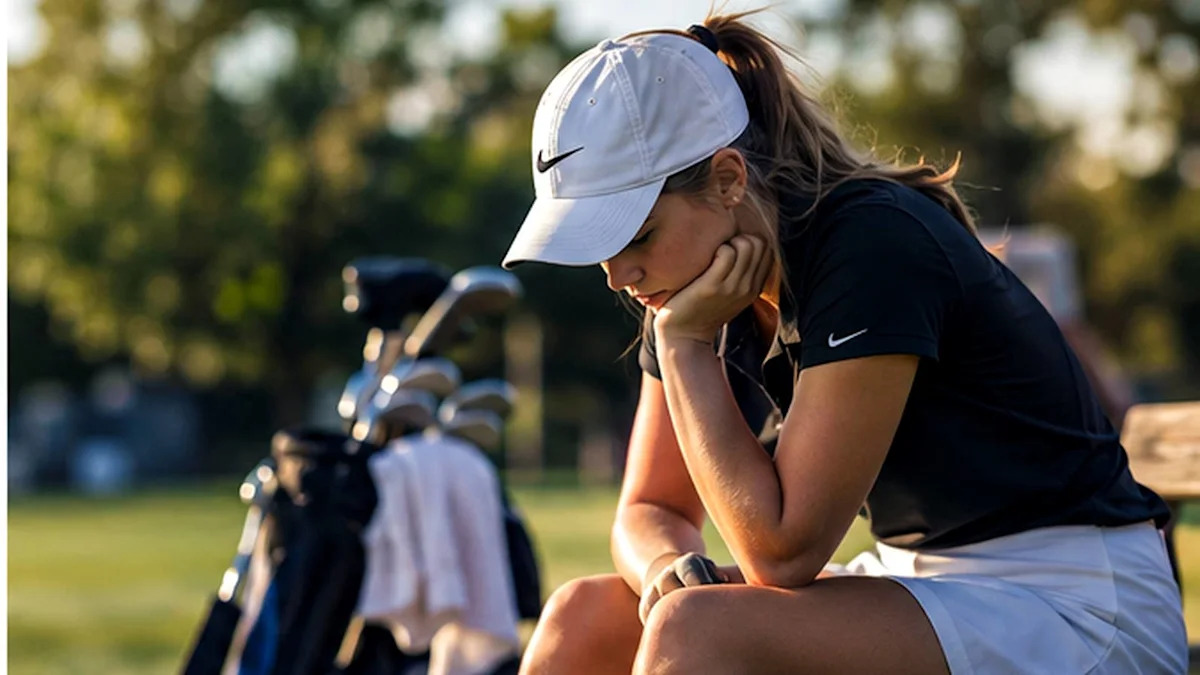
Golf can be brutal to a young person who cares deeply about being good at it.
A coach can prepare, teach, challenge and support a young golfer, but eventually the player has to own the next shot. The relationship matters most when the game becomes difficult and the conversation extends beyond swing mechanics. One More Roll Golf Media.
The Coach Eventually Has to Let Go
I understand the attraction and the damage competitive golf can deliver because I lived some of it myself. I played high school and college golf, and some of the memories from those years remain vivid decades later. A great round, a pressure putt, a team moment, or simply realizing you could compete with somebody you once thought was better can stay with you for the rest of your life.
Advertisement
The other memories stay, too. Golf has an extraordinary ability to expose insecurity because there is almost nowhere to hide. You hit the shot. You write down the number. Nobody can substitute for you, and eventually the numbers are added together.
As a coach, I can prepare a player for that environment in almost every way I know how. We can work on the golf swing, putting, short game, course management, routines, breathing, decision-making, emotional control and practice habits. I can study statistics, watch video, develop plans, talk through tournament situations and try to anticipate what the player might encounter.
Then competition begins, and the most difficult part of coaching takes over.
Advertisement
I cannot hit the shot.
I cannot make a teenager use a pre-shot routine we have practiced repeatedly. I cannot force somebody to respond constructively after a double bogey. I cannot stand inside a player’s head on the 14th tee and quiet the fear that the round is beginning to get away.
Ultimately, the player has to take everything we have worked on and put it into play. That ownership is necessary for development, but accepting it doesn’t get easier just because I have been coaching for a long time.
Advertisement
When you care about a young person, you want the good outcome for them.
Sometimes you want it desperately.
Two Different Scorecards, the Same Concern
The past several days have driven that home for me in two very different ways.
One young player I coach was still producing perfectly respectable scores. There was nothing dramatic enough on the card to suggest a serious problem. Yet, our conversations told me he was becoming consumed by mechanics, positions and the feeling that something in his golf needed to be fixed.
Advertisement
He was playing better than he felt.
Eventually, our work shifted away from adding another technical thought. The golf needed to become a task again rather than an inspection. Give the player a target. Ask him to create the shot. Let him use the swing instead of analyzing every piece of it while the club was moving.
That situation reinforced something important: A young golfer can look fine statistically while struggling significantly with his relationship to the game.
Advertisement
Another young player I coach is dealing with almost the opposite problem. The results have become difficult enough that there is no hiding from them. Golf has begun to feel foreign, confidence has been battered, and the player I know is capable of much better golf is having trouble finding any evidence of that player when competition begins.
Those scores hurt to see as a coach because I know the work that has gone into trying to prevent them. More important, though, is what repeated disappointment can begin doing to the teenager experiencing it.
A bad round bruises.
Advertisement
Enough bad rounds can scare.
A young golfer can begin wondering whether the next tournament will bring more of the same. Frustration can become expectation. The first mistake of the day can suddenly feel like confirmation that another miserable round has started.
That is no longer only a swing issue.
Brendon Elliott’s Advice for Parents and Coaches
Look Beyond the Scorecard
The numbers tell you how the young golfer played. They do not always tell you how the young person is doing.
Advertisement
Ask a better question
Instead of stopping at “What did you shoot?” ask, “How did golf feel today?” or “What was hardest about the round?”
Listen before you fix
Not every difficult round needs an immediate lesson, swing thought or solution. Sometimes the player needs to be heard first.
Watch what follows them home
Pay attention when golf begins affecting mood, confidence, schoolwork, sleep, relationships or the willingness to return to the course.
Advertisement
Keep accountability
Supporting a young golfer does not mean removing standards. Preparation, routines, effort and honest self-evaluation still matter.
Separate performance from identity
A bad round means the player had a bad round. It should never become shorthand for who that teenager is.
Know the edge of the coaching lane
When the struggle reaches well beyond golf, another bucket of balls or another technical answer may not be what the young person needs.
Advertisement
The standard I try to follow: Develop the golfer, challenge the competitor and never lose sight of the kid carrying the clubs.
Golf Does Not Always Stay at the Golf Course
This is the part adults around competitive teenagers need to take seriously.
A score is supposed to measure a round of golf. It should not become a measurement of the kid who shot it.
That distinction becomes harder for teenagers who care intensely about what they do. Golfers can tie enormous portions of their identity to their games, just as high-achieving students can become consumed by grades or musicians by an audition. Nobody around them necessarily has to apply unreasonable pressure for that to happen.
Advertisement
Young people are quite capable of supplying the pressure themselves.
I was a teenager about 35 years ago, and teenagers certainly dealt with expectations then. We wanted good grades. We wanted to play well. We wanted approval from coaches, parents and friends, and many of us worried about what we were going to do with our lives.
I do believe today’s young people experience another layer.
There is almost no escape from comparison. Their phones can show them somebody else’s tournament victory, college commitment, highlight reel, test score, vacation and seemingly perfect life before they have even finished processing their own disappointing afternoon.
Advertisement
School keeps moving. Other activities continue. Family expectations exist. Friends have their own successes and struggles. Coaches ask for accountability. The teenager adds his or her own expectations on top of all of it.
Then golf can pile on.
We need to be careful when a young person’s disappointment with the game begins traveling home.
For Teenage Competitive Golfers
When Golf Starts Feeling Heavier Than It Should
Taking the game seriously is good. Letting every result determine how you feel about yourself is something different.
Advertisement
1. Your score is information.
It tells you what happened during a round. It does not erase your ability, your work or what you may become as a player.
2. Use the tools you already have.
Your routine, breathing, preparation and decision-making matter most when the round becomes uncomfortable.
3. Stop trying to repair every shot.
One poor swing does not require a new mechanical theory. Constant searching can make the game feel even more complicated.
4. Tell somebody what is really going on.
Advertisement
Coaches and parents cannot help with something they do not know you are carrying. Saying “I’m struggling” is useful information, not weakness.
5. Own what you can control.
Practice honestly. Prepare well. Use your routine. Make the best decision you can. The result will never be completely controllable.
6. You are allowed to be more than a golfer.
Golf can be enormously important to you without becoming the only way you measure whether you are succeeding.
Advertisement
After a difficult round
Ask: “What can I learn from today without carrying today into everything else?”
Ask Something Other Than the Score
Golf coaches love information we can measure. Fairways hit, greens in regulation, putts, proximity, scrambling and scoring averages can help us understand whether a player’s perception matches what is actually happening.
Those numbers also have serious limitations.
They cannot tell me whether a teenager dreads the next round. They cannot tell me whether golf is affecting the ride home, dinner, homework or the way that player feels the next morning. They cannot show me whether a young person is beginning to see every poor result as evidence of something wrong with him or her.
Advertisement
That information comes through conversation, and “What did you shoot?” is often not enough on its own.
Sometimes I need to ask, “How does golf feel right now?”
I need to know whether the player still wants to practice. I need to understand what happens mentally after a bad hole. I need to know whether the goal still belongs to the player or whether golf has turned into an ongoing attempt to avoid disappointing everyone around them.
Advertisement
Parents need those answers, too.
There is also a boundary coaches should respect. I am a golf coach. I can help with competitive frustration, routines, preparation, perspective, practice structure and the mental skills involved in playing the game. When problems spread well beyond golf and affect a young person’s overall well-being, the solution cannot simply be another lesson.
Knowing when the issue has moved beyond our lane is part of caring for the people we coach.
Advertisement

Caring Without Owning the Result
There is another difficult responsibility for coaches and parents.
We have to resist taking ownership of the outcome.
I can know exactly what a player should do and still watch that player choose something else under pressure. A parent can provide every reasonable opportunity and still watch a son or daughter struggle. Everybody involved can communicate well, provide support and genuinely want what is best for the young golfer.
Advertisement
The game can still go sideways.
That does not automatically mean somebody failed.
Development is messy, particularly during the teenage years. Players are learning golf while they are also learning who they are, how they respond to failure, what motivates them and how much of their identity they want tied to an activity.
Sometimes my job is technical. Sometimes it is demanding. A player needs to practice something we have agreed upon, follow a routine, prepare properly or accept accountability for decisions that contributed to a poor result.
Other days require something different.
The coach has to see the kid.
The Line Worth Watching
When a Difficult Round Stops Being Only About Golf
Frustration belongs in competitive sports. The concern grows when the disappointment begins changing the player’s relationship with the game or with life away from it.
Normal Competition
The round hurts.
The player is disappointed, talks through it, learns something and eventually moves forward.
Pay Attention
The next round already feels threatening.
Fear of repeating the previous result starts affecting confidence, preparation or decision-making before competition even begins.
Look Beyond Golf
The result keeps traveling.
Golf frustration begins affecting mood, school, sleep, relationships, confidence or a young person’s broader sense of self.
What the coach can do
Simplify the golf. Ask better questions. Listen. Reinforce routines and accountability. Help the player separate one performance from everything that came before it and everything still ahead.
What the coach cannot do
Hit the next shot, guarantee the next score or solve every problem that reaches beyond golf. Good coaching includes recognizing when another kind of support is needed.
A bad golf score should be allowed to hurt.
It should not be allowed to tell a teenager who he or she is.
Why I Still Love Doing It
I sometimes miss the simplicity of introducing little kids to golf.
A ball got into the air and everybody celebrated. A putt went into the hole and you might as well have won the Masters. Nobody asked for a ranking update.
Competitive golf becomes more complicated because the stakes feel more real to the player. Scores matter. Teams matter. Tournament results matter. College aspirations may matter. Learning to perform when you care about the outcome is one of the valuable things sports can teach.
I would never want to remove that challenge.
I do want to make sure we are not so busy developing golfers that we fail to notice what the game is doing to the young people playing it.
That is especially difficult for coaches because we care about the results, too. I want my players to succeed. I want them to experience the confidence that comes from seeing hard work become good golf. When one of them is lost, hurting or frightened by where the game seems to be heading, I feel it.
But I cannot carry the golf bag emotionally for them any more than I can swing the club for them.
My responsibility is to prepare them, challenge them, support them and pay attention. It is to help them understand that a round can be awful without them being awful, that improvement rarely moves in a straight line and that a golf score should never be allowed to define the person writing it down.
Then, eventually, I have to let them walk to the first tee.
I have watched thousands of kids make that walk in one form or another over nearly three decades. Some eventually came back with children of their own.
Maybe that is the part worth holding onto when the coaching gets hard.
Long after the scorecards are gone, the kid is still there.
PGA of America Golf Professional Brendon Elliott is an award-winning coach and golf writer who serves as Athlon Sports Senior Golf Writer. Read his recent “The Starter” on RG.org, where he is their Lead Golf Writer. To stay updated on all of his latest work, sign up for his newsletter or visit his MuckRack Profile.
Related: Still Shooting Par, Still Struggling: What One Student’s Slump Taught Me About Young High Achievers
Related: Quiet Please Golf Podcast Joins Athlon Sports
Related: East Potomac Contracts Leave Public Golf Promises Untested
This story was originally published by Athlon Sports on Sep 29, 2026, where it first appeared in the Golf section. Add Athlon Sports as a Preferred Source by clicking here.
Read the full article here