





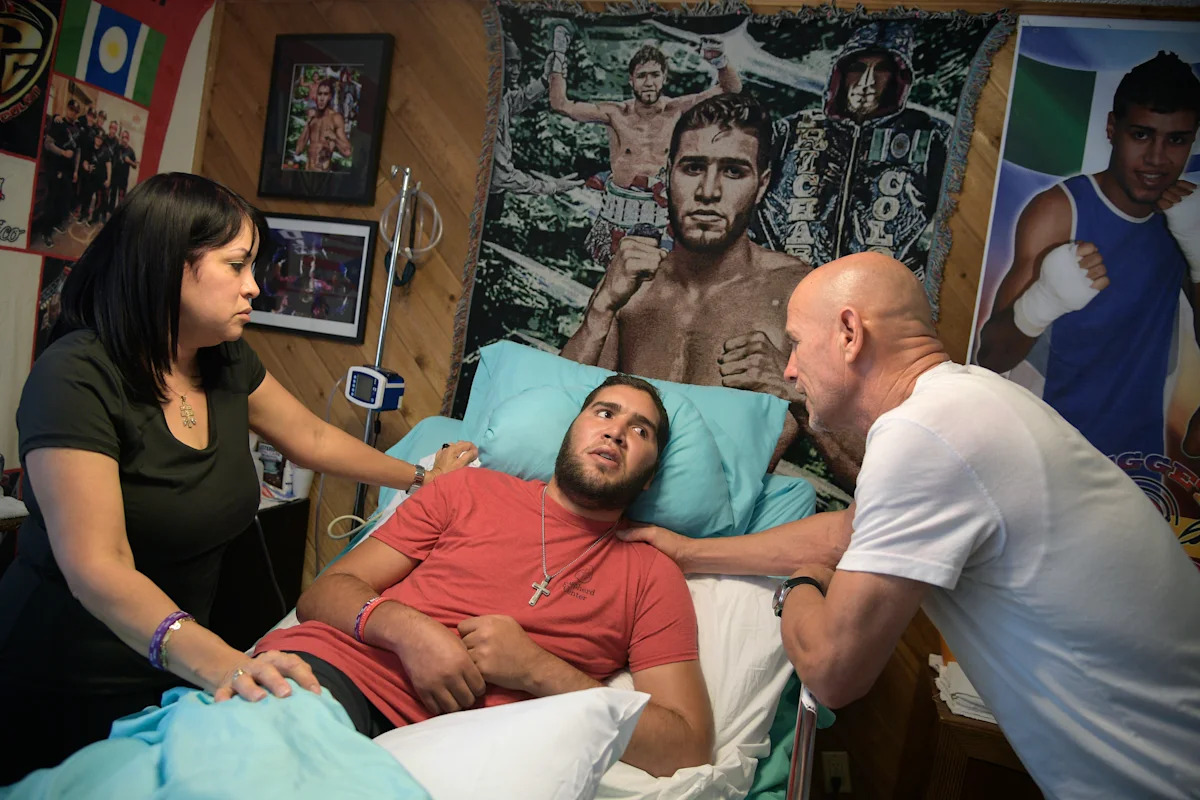
Prichard Colon, 33, died Thursday, more than a decade after suffering a life-altering brain injury in a boxing ring.
His father, Richard Colon, announced his death Thursday on Facebook:
“Good morning my people. I regret to inform you of the passing of my son Prichard from this earthly world, NOW HE IS in a better world. I did everything possible to fulfill HIS WISH, HIS DREAM of bringing him ON VACATION to Puerto Rico as much as he desired but COULDN’T. Thank you for so many years of love and prayers. As much as you can, please keep us in your prayers.”
In October 2015, Colon was a 16-0 Puerto Rican super welterweight given the opportunity to fight on national television on NBC against Terrel Williams in Fairfax, Virginia.
Advertisement
Colon complained about illegal punches landing behind his head during the bout. Referee Joe Cooper finally deducted a point from Williams in Round 7 for the infraction after allowing him to get away with fouls for much of the contest.
In the closing seconds of Round 9, Colon was knocked down by a punch that blatantly landed behind the head. The shot, however, was not deemed illegal by Cooper. It was the second knockdown of the round.
Colon’s team removed his gloves at the end of Round 9, mistakenly believing the contest was over. There was still one round remaining, though, and Colon was disqualified for being unable to answer the bell for Round 10.
He returned to his dressing room, but shortly afterward became dizzy, vomited and collapsed. Colon was rushed to the hospital, where he was diagnosed with subdural hematoma and underwent emergency surgery. He spent 221 days in a coma.
Advertisement
Colon’s parents filed a lawsuit in 2017, seeking more than $50 million and alleging medical malpractice by ringside physician Dr. Richard Ashby for failing to act when Colon indicated that he felt pain in the back of his head as a result of illegal shots, and told him he felt dizzy in Round 7.
Colon never recovered from his life-changing injuries. Although he made limited progress during rehabilitation and was learning to communicate through a computer, he required around-the-clock care for the remainder of his life.
Read the full article here