





Look, I get it.
Changes to professional golf in the LIV era, while frequent, are about as interesting as bowel movements.
I get it because I have also felt my eyes glaze over at a headline capturing the “latest changes.” I get it because I have also wondered when and how much I am supposed to care about the smallest shifts in corporate governance and marketing budgets. I get it because I have also felt a vague annoyance with the fact that this news cycle develops in a thousand small drips rather than a single, steady stream of information.
Advertisement
As a reporter, it is my job to care about these things – and I’ve felt that way. I can only imagine where that leaves you.
But some changes in golf are significant not for what they are but for what they represent. That’s the category the two changes filed on Tuesday morning fit into in the golf world: The PGA Tour’s expanded strategic alliance with the DP World Tour and Asian Tour; and the LPGA’s decision to play an event in Hawaii at what might be considered the best golf course on the islands, Nanea.
These changes, or perhaps more accurately, acquisitions, reflect more than just a shift in the way we view the golf calendar. They represent two seismic shifts in the way the business of professional golf is conducted. As educated, intelligent, literate golf fans, that makes these changes considerably important to your perception of the sport around you, so let’s talk through each of these changes and what they mean.
1. The strategic ‘strategic alliance’
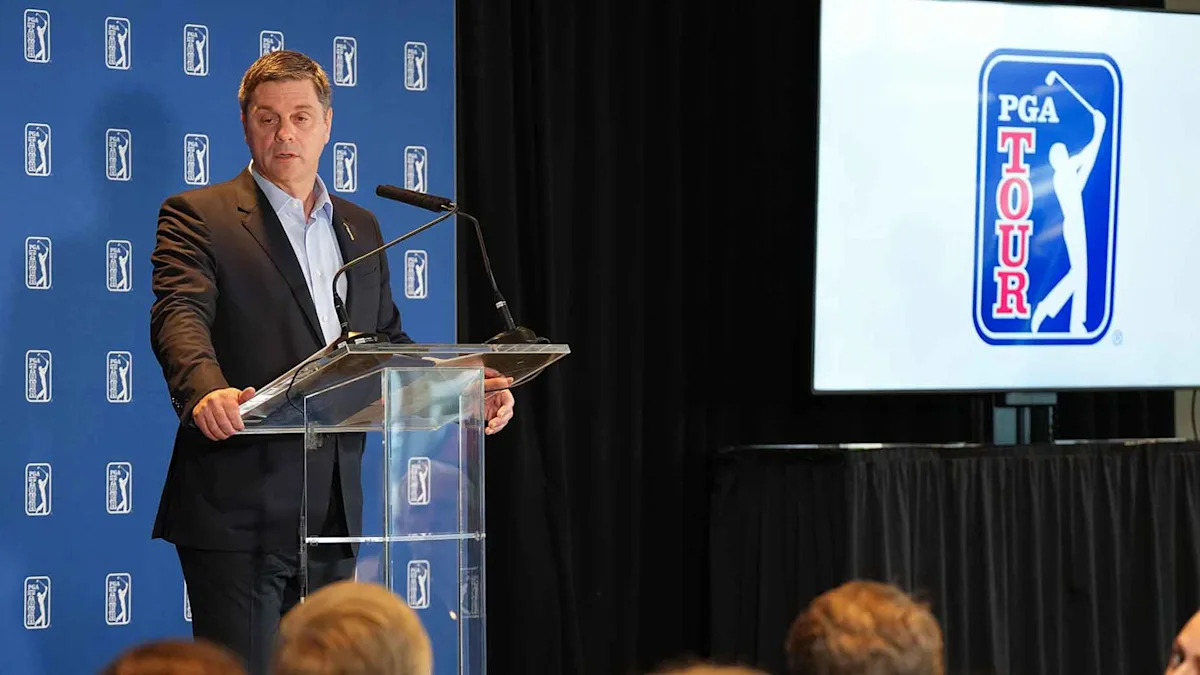
The PGA Tour has made a lot of very precise moves since being taken over by new CEO Brian Rolapp: the announcement of a new two-tiered tour; the shaping of a competitive new schedule; the decision to blast sponsor’s exemptions into the sun.
Advertisement
But none might be considered more strategic than the move announced Tuesday morning: the Tour’s decision to launch a new “strategic partnership” with the DP World Tour and Asian Tour through 2029.
Sharp golf fans will remember that the Tour’s decision to partner with the DP World Tour ahead of the launch of LIV was at least partially responsible for saving their bacon. With the DPWT at their side back in 2021, the PGA Tour could be sure that the DPWT wouldn’t partner with LIV, creating an international super league that could have threatened to split the balance of power in modern pro golf forever. Under the agreement, the Tour could also push to expand its international footprint and its domestic talent pool without ever engaging in a LIV bidding war. A win-win-win.
That initial agreement is expiring soon, leaving the Tour to negotiate new terms with the DPWT to ensure their Roosevelt-Churchill partnership continued. But there’s been a little uneasiness about how it would play out, especially now that the Tour is now safely in it Truman era. (I’m not sure about my decision to cast Jay Monahan in the role of FDR in this metaphor but stick with me.)
Tuesday’s announcement doesn’t prolong the DPWT partnership, but it does create a new partnership in which both the PGA Tour and the DP World Tour are on the same time. The new agreement also adds a partnership with the Asian Tour, which had previously been aligned with LIV, into the fold. While the alliance certainly has its benefits for the Asian Tour (namely money and a path to the PGA Tour), it is most beneficial for the PGA Tour, which can now claim absolute world dominance over LIV.
Advertisement
LIV is currently furiously in the search for fundraising, and also facing some serious economic danger if it’s not able to raise that money quickly. The Asian Tour figured to be at least an important piece of those negotiations. The Tour’s decision adds what could only be described as an Ali haymaker to its current repertoire of jabs and hooks at its floundering competitors.
But the most fascinating thing about this move actually has little to do with LIV. It’s that the Tour probably didn’t need to do it. Even before Tuesday’s announcement, LIV was already in a load of hurt and facing an uphill battle to long-term solvency. The PGA Tour was already holding all the cards.
And yet Tuesday’s announcement suggested that Rolapp wasn’t content with that outcome. He wasn’t just hoping to win the fight; he was hoping to win by way of knockout. He didn’t want to see LIV fall; he wanted to make sure he was the one pushing them over.
The Tour will say that they’re merely acting in their own interests. And they are. It just so happens that their interests are aligned with killing LIV and all of its offspring.
Advertisement
[Extreme Kevin Kisner voice] Well, Dan, they don’t call it strategic for nothing!
2. The NEW Hawaiian Swing
Nanea Golf Club in Hawaii. Karl Mackie
Not to be outdone by Rolapp’s acts of aggression, LPGA commissioner Craig Kessler also made waves on Tuesday morning.
Kessler and his tour announced that the LPGA is headed to Hawaii, bringing a first-of-its-kind event to what many consider the best course on any of the Hawaiian islands, Nanea, for sometime in the spring of 2027.
There’s a lot we don’t know about the so-called Nanea Cup, but here’s one thing we do: It represents an impressively targeted attempt to steal marketshare right from the under the PGA Tour.
Advertisement
Golf fans will recall that the PGA Tour has abandoned the “Hawaiian Swing” altogether in the new age, opting instead for tournaments held in major metro areas in the “lower 48.” With the new event, the LPGA is (smartly) betting they can build something curated and intentional in a market the PGA Tour has left behind.
But the idea is about more than just high hopes. Charles Schwab, Dell and Salesforce have all come in as sponsors for the new event, which will feature 95 LPGA stars competing against the top 25 players in the collegiate game. The timing of the new tournament will fall on the same weekend (but critically outside of the broadcast window) of the Players Championship, giving the LPGA a chance to draft off a weekend of heavy golf-watching crowds. And the tournament host will provide a draw on its own: Nanea is regarded by many as the top course in Hawaii, and has already established itself as a haven for women’s golf, hosting the Stanford women’s team’s annual “Nanea Invitational.”
It’s early for any of us to say if the new event will be a success, but you can certainly give points to LPGA brass for trying. The opportunity presented by the Nanea Cup represents the exact kind of swing that has been sorely missing from the tour for years: big, bold ideas to target golf-dense audiences and draw considerable TV interest.
Of course, options like this only come around every so often. (If you could do ’em all the time, everybody would’ve done them already.) But the Nanea Cup gives the LPGA a chance to target a new kind of audience for its tournament hosts: Low-scale, high-production-value events held in major golf markets on elite golf courses. That sounds like a winning strategy to me, and I (selfishly) hope some of the more open-minded Long Island country clubs are keeping an open mind.
The post 2 major pro golf acquisitions just gave us a glimpse into the future appeared first on Golf.
Read the full article here