





Heading into the summer, just about every Timberwolves fan had their own dream offseason mapped out. Some wanted Tim Connelly to swing for the fences one more time and somehow pry Giannis Antetokounmpo loose if Milwaukee finally decided to tear things down. Others talked themselves into buying low on former superstars whose value had cratered. Zion Williamson was one of those names that kept resurfacing. While Ja Morant found his way into plenty of hypothetical trade machines. Personally, I kept coming back to Kyrie Irving. Dallas looked like a franchise pivoting toward Cooper Flagg, and if there was one glaring weakness on Minnesota’s roster after another deep playoff run, it was the absence of a true point guard capable of organizing the offense, taking pressure off Anthony Edwards, and punishing defenses for selling out to stop him. It all seemed logical enough.
Then Tim Connelly went completely off-script.
Advertisement
Instead of chasing the names everyone expected, he started by moving Julius Randle to Brooklyn in what, at first glance, looked almost depressing. Wolves fans had spent months debating which star Minnesota could bring back in exchange for Randle. Instead, Randle was moved for financial flexibility, with the Wolves clearing salary and taking a modest step back in the draft from No. 28 to No. 33.
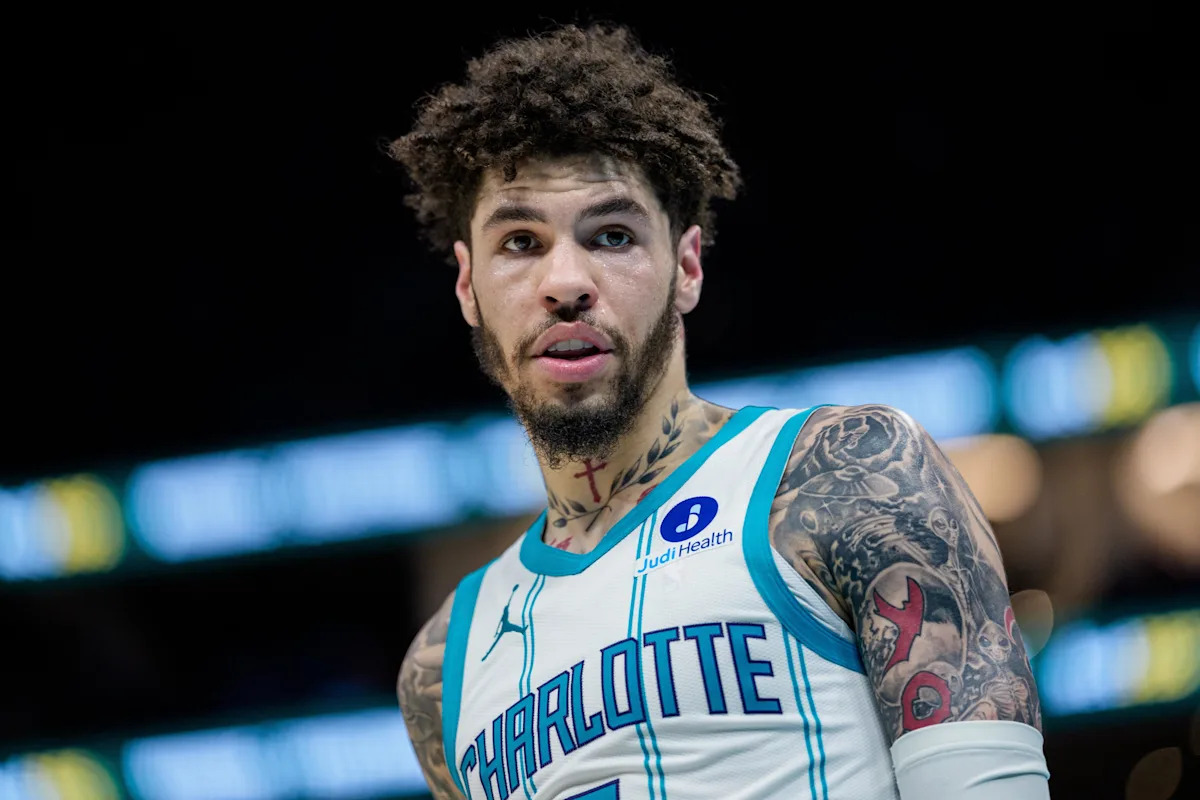
Just a few days later, Connelly pushed the entire table over. Naz Reid, arguably the most beloved role player this franchise has ever had, was headed to Charlotte along with future draft considerations. Coming back to Minnesota was LaMelo Ball.
Until the rumors began surfacing just a few days earlier, I don’t think many people honestly believed Ball was available. Charlotte had quietly become one of the NBA’s most entertaining young teams during the second half of last season. They made a legitimate push that sent them to the Play-In Tournament, and with Ball finally healthy, it looked as though the Hornets had every reason to continue building around him. Instead, Charlotte apparently decided they were selling at peak value, cashing in on their franchise cornerstone before his market had a chance to cool. Sometimes rebuilding teams zig when everybody expects them to zag, and Minnesota happened to be standing in exactly the right place when it happened.
The result is one of the biggest franchise-altering trades the Timberwolves have made since acquiring Rudy Gobert.
Advertisement
What’s fascinating about this move is how neatly it ties back to one of the most debated draft decisions in franchise history. Remember the months leading into the 2020 Draft? The basketball world couldn’t decide whether Anthony Edwards or LaMelo Ball should go first overall. Every mock draft seemed to alternate between the two. Half the analysts loved Ball’s creativity and passing. The other half believed Edwards possessed the higher ceiling as a franchise scorer. Wolves fans spent weeks arguing about it before Minnesota finally turned in the card with Edwards’ name on it.
Looking back now, it’s impossible to argue they got that decision wrong. Edwards has become exactly what every franchise spends decades searching for, a legitimate top-five caliber player entering his prime. He’s already led Minnesota to two Western Conference Finals appearances. During his tenure, the Timberwolves have won five playoff series. That number almost sounds made up when you remember the franchise had won only two playoff series during the previous thirty-five years combined. Edwards didn’t just become an All-NBA player; he fundamentally changed what people think of Timberwolves basketball.
Now, six years later, Minnesota gets to walk through the sliding doors and discover what life with LaMelo would have been like. LaMelo Ball hasn’t experienced the same team success. Playing in Charlotte rarely provides those opportunities. But talent has never been the question. Ball remains one of the league’s most creative passers, one of its most imaginative offensive players, and perhaps most importantly for this particular roster, exactly the type of point guard the Timberwolves have lacked ever since Mike Conley began slowing down.
For years, Minnesota’s offense has too often relied on Anthony Edwards solving increasingly impossible problems. Teams blitzed him forty feet from the basket because they knew there wasn’t another primary creator waiting behind him. Edwards frequently had to bring the ball up, initiate the offense, beat his first defender, survive the second defender, create for teammates, and somehow still have enough left in the tank to score thirty-five points. That’s simply not sustainable against elite playoff defenses.
Advertisement
Ball changes that equation immediately. His greatest gift isn’t necessarily his scoring. It’s the way he sees the floor two passes ahead. He naturally speeds up teammates simply by finding them earlier and in better positions. Suddenly Jaden McDaniels isn’t creating offense from scratch quite as often. Rudy Gobert gets easier looks diving to the rim. The entire offense becomes less dependent on Edwards playing superhero every single possession.
That’s why I think it’s fair to say Minnesota now possesses the most dynamic young backcourt in the NBA.
Of course, none of that makes saying goodbye to Naz Reid any easier. If Anthony Edwards became the face of modern Timberwolves basketball, Reid somehow became its heartbeat.
Think about how improbable his story really is. An undrafted player who worked his way from developmental prospect into Sixth Man of the Year candidate. A fan favorite whose name became its own meme. A player whose popularity became so ridiculous that fans literally waved beach towels bearing his name and, in some cases, permanently tattooed the “two words” onto their bodies.
Advertisement
That isn’t normal. Role players aren’t supposed to inspire that kind of devotion, but Reid wasn’t just another role player. He represented everything fans love to believe about sports: hard work, development, loyalty, and the idea that someone nobody wanted could become indispensable.
His departure leaves more than an emotional void. It leaves a basketball one.
Minnesota suddenly finds itself remarkably thin at power forward. The Wolves now feature one of the deepest guard rotations in basketball while simultaneously lacking a traditional starting-caliber four. That’s a dramatic philosophical shift from the roster construction we’ve watched over the last three seasons, where overwhelming frontcourt depth became one of Minnesota’s defining characteristics.
Which brings us to the elephant (or perhaps the King) in the room.
Advertisement
If you’ve spent more than five minutes on NBA social media this week, you’ve undoubtedly seen the LeBron James speculation. Maybe it’s fantasy. Maybe it’s wishful thinking. Maybe it never gets beyond message boards and sports talk radio.
But here’s the interesting part: this trade at least makes the conversation plausible.
By creating an obvious opening at power forward, whether intentional or coincidental, Minnesota now has a roster that makes considerably more basketball sense for LeBron than it did in June. Whether that actually leads anywhere is another discussion entirely, but the possibility alone illustrates that Connelly probably isn’t finished reshaping this roster.
The final chapter of this offseason hasn’t been written yet. Even if another move never materializes, pairing Anthony Edwards with LaMelo Ball better aligns the franchise with Edwards’ timeline than building around Randle ever could have. Ball is entering his prime alongside Ant rather than aging out of it. Their strengths complement one another naturally. One is an explosive scorer capable of taking over games. The other is a gifted facilitator who thrives creating opportunities for everyone around him.
Advertisement
It’s a pairing built for the next five years, not merely the next one.
That explains why the latest SB Nation Reacts poll showed 83 percent of Wolves fans approving of the trade despite the emotional cost attached to it. Nobody wanted to lose Naz Reid. That’s simply the reality. But most fans also recognize that championships require difficult decisions, and sometimes the move that hurts the most is also the one that gives your franchise its best chance to reach another level.
We’ll miss Big Jelly.
Hopefully he’ll find success in Charlotte. Hopefully Wolves fans will give him the standing ovation he deserves whenever he eventually returns to Target Center. And who knows? The NBA has a funny way of bringing people back together. Maybe someday Reid finds his way home again.
Advertisement
If that day comes, the beach towels will be waiting.
And judging by the number of “Naz Reid” tattoos walking around Target Center these days, so will a few thousand permanent reminders of just how much he meant to this franchise.
The Minnesota Timberwolves currently sit at +2200 odds to win the NBA title at FanDuel Sportsbook. Thats a 500 point improvement from last week’s +2700. Does somebody know something?…
Read the full article here