





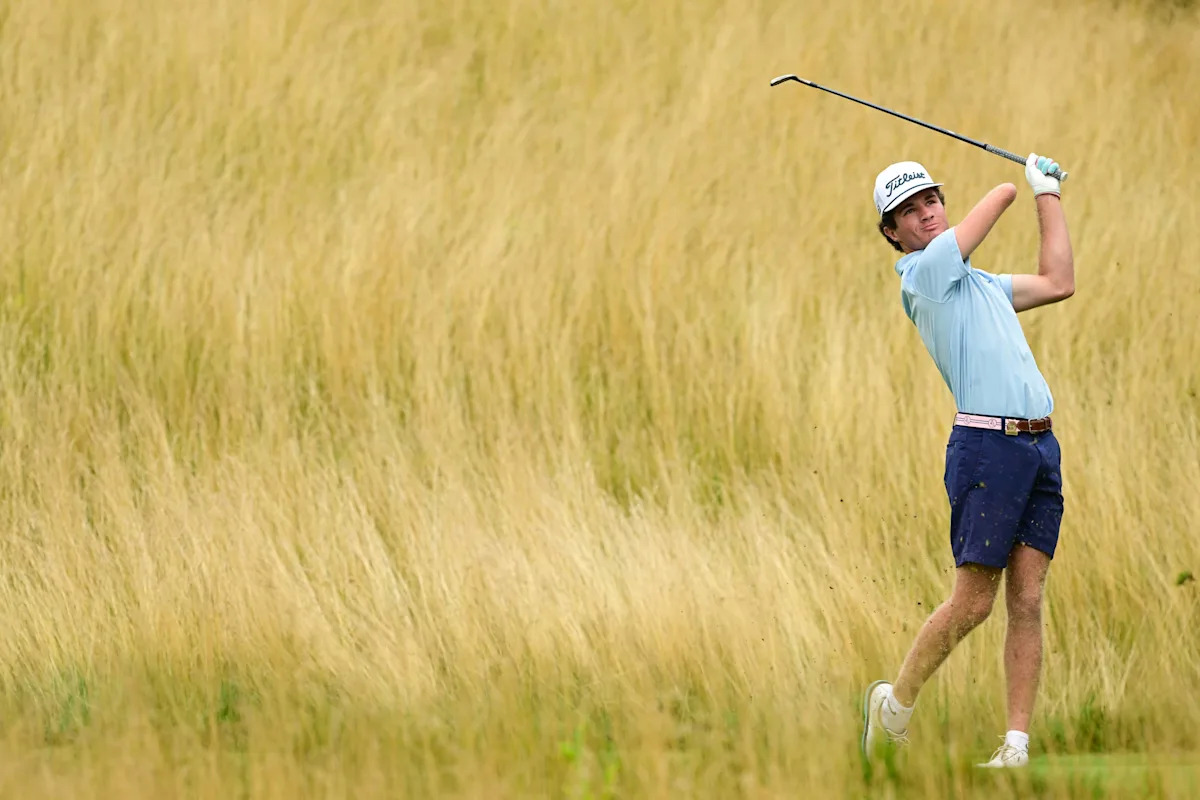
In the middle of a crowded golf summer, with the PGA Tour schedule rolling, major championships still fresh in everyone’s mind and the sport’s biggest names often dominating the conversation, one of the most meaningful championships in golf returns this week at Woodmont Country Club.
The fifth U.S. Adaptive Open is being played July 6-8 on Woodmont’s South Course, and it may be the most important reminder all season that golf is bigger than scoreboards, purses and television windows. It is a USGA championship, yes. It is competitive. It has elite players, defending champions, national representation and a trophy at the end.
Advertisement
But it also has something golf does not always stop long enough to celebrate: a field full of players who prove the game can meet people where they are and still ask everything of them competitively.
This year’s championship features 96 players from 34 states and nine countries. The USGA received 250 entries, and 18-hole qualifiers were conducted at eight sites around the country. The youngest player in the field is 15-year-old Tommy Morrissey of Palm Beach Gardens, Florida. The oldest is 76-year-old Dennis Walters of Jupiter, Florida.
That age range alone tells a story. So does the field itself.
Advertisement
This championship should matter to every golfer. It should matter to every coach, every parent, every club professional and every player who has ever believed golf has the power to change someone’s life. For me, it also carries a personal layer because a few names in this field are not just names on a tee sheet. They are people I know, people I respect and people who represent the very best of what this game can be.
Championship Snapshot
2026 U.S. Adaptive Open
Advertisement
Woodmont Country Club, South Course • Rockville, Maryland • July 6-8
Field Size
96
Players in the field
Age Range
15-76
Youngest to oldest competitor
Format
54
Holes of stroke play
Categories
8
Impairment categories
Why it matters: This is not an exhibition. It is a national championship that gives adaptive golfers a USGA stage, a competitive pathway and a growing spotlight inside the larger golf world.
This Is Not an Exhibition. It Is a Championship
A general view of the driving range area during the 2026 U.S. Adaptive Open at Woodmont Country Club (South Course) in Rockville, Md. on Monday, July 6, 2026. (Logan Whitton/USGA)
The beauty of the U.S. Adaptive Open is that it can be deeply inspirational without being treated like a ceremonial event. The field includes male and female players, professionals and amateurs, national and international competitors, and players across eight impairment categories.
Advertisement
The championship is 54 holes of stroke play, with a cut after 36 holes. Players must have a WR4GD Pass and a Handicap Index not exceeding 36.4. The impairment categories include Intellectual Impairment, Lower Limb Impairment, Multiple Limb Amputee, Coordination Impairment, Seated Players, Short Stature, Upper Limb Impairment and Vision Impairment.
That structure matters. It tells the golf world that adaptive golf belongs under the same championship umbrella as the U.S. Open, U.S. Women’s Open, U.S. Amateur and every other USGA event. It also tells young players watching from home that the pathway is real. This is not a side stage. This is a national championship.
Woodmont’s South Course is a fitting host. The Rockville, Maryland club has long been tied to championship golf, including U.S. Open final qualifying, the 2020 U.S. Women’s Amateur won by Rose Zhang and last year’s U.S. Adaptive Open. The South Course opened in 1950 and was designed by Alfred Tull, with input from Woodmont member Leopold Freuberg and superintendent Rudy Will. Joel Weiman completed a renovation and redesign in 2022.
Advertisement
There is competitive weight here. There is history. There is a golf course with pedigree. There is a field that had to earn its way in.
And then there are the stories.
Players To Watch
Four Stories That Carry The Week
Tommy Morrissey
15 • Upper Limb Impairment • Palm Beach Gardens, Florida
The youngest player in the field earned his spot through qualifying and represents the next wave of adaptive golf.
Albert “Chazz” Bowker
29 • Short Stature • Buellton, California
Advertisement
A qualifier and one of adaptive golf’s memorable personalities, Bowker brings style, confidence and competitive bite.
Dennis Walters
76 • Seated Players • Jupiter, Florida
A World Golf Hall of Fame member and lifelong golf ambassador, Walters remains one of the game’s great examples of courage.
Amy Bockerstette
27 • Intellectual Impairment • Phoenix, Arizona
The “I Got This” Foundation founder returns for her fifth U.S. Adaptive Open start and continues to expand golf’s reach.
Advertisement
Tommy Morrissey Brings Youth, Skill and a Personal Connection
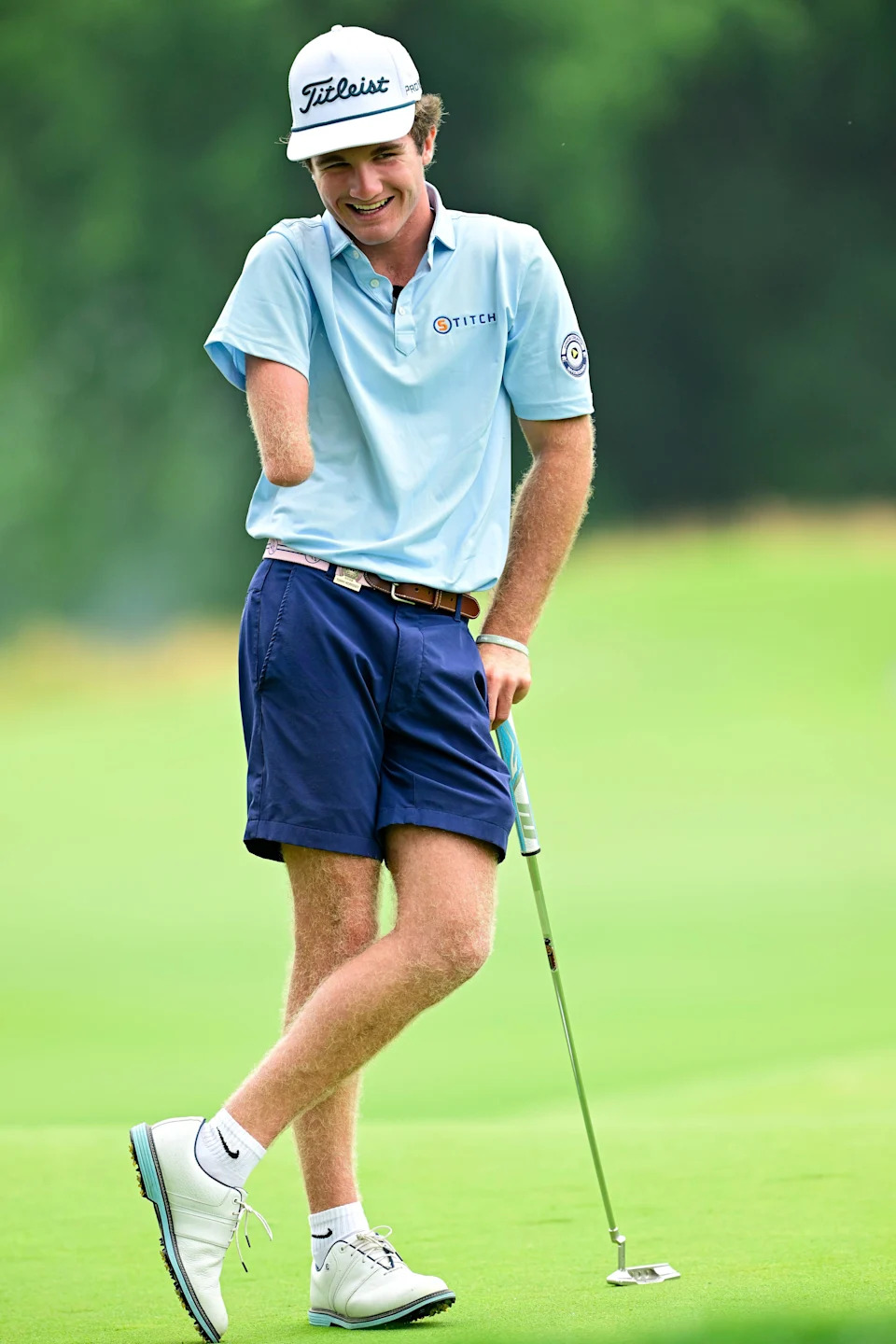
Tommy Morrissey stands on the 11th hole before playing his shot during the 2026 U.S. Adaptive Open at Woodmont Country Club (South Course) in Rockville, Md. on Monday, July 6, 2026. (Logan Whitton/USGA)
At 15, Tommy Morrissey is the youngest player in the field. The Palm Beach Gardens golfer qualified in the Upper Limb Impairment category, and his story has been part of the golf world for a long time, even at his young age. Morrissey was born without the lower part of his right arm and became known in golf circles when he was just 3 years old.
For me, this one hits a little closer to home. I have known Tommy and spent time with him when he was younger, and he has always been a fantastic kid. Yes, the golf is impressive. Yes, the talent is obvious. But what stands out even more is the person. He has carried himself with joy, confidence and a maturity that has made people inside the game pull for him long before he ever pegged a tee in a USGA championship.
Advertisement
The part that should make every junior golfer stop and think is not just that Morrissey made it. It is that he qualified for the U.S. Adaptive Open on his first attempt. For a championship that is still only in its fifth year, he represents the next generation of adaptive golf, a player who grew up knowing this stage existed and wanted to earn his way onto it.
That matters because pathways only work when young players can see where they lead. Tommy is not just a feel-good story. He is a competitor, and he is also a reminder that a young player with a dream, support, grit and access can grow into a national championship field.
As a PGA Professional and coach, I see something powerful in that. Golf is not supposed to ask young people to fit one perfect mold. It is supposed to give them a place to build confidence, sharpen skill and find out how much they are capable of doing.
Advertisement
Tommy has been doing that for a long time.
U.S. Adaptive Open Video
Tommy Morrissey at Woodmont Country Club
Watch: Tommy Morrissey speaks during the fifth U.S. Adaptive Open at Woodmont Country Club, where the 15-year-old is part of a field showcasing the competitive future of adaptive golf.
Albert “Chazz” Bowker Brings Personality, Influence and Competitive Fire
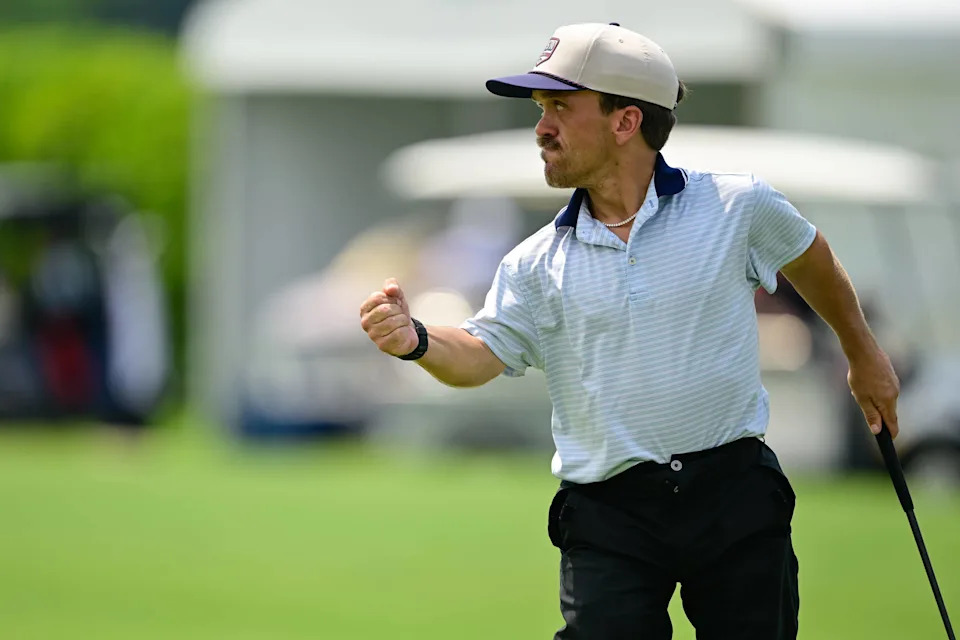
Albert Bowker reacts after sinking his putt on the ninth hole during the first round of the 2026 U.S. Adaptive Open at Woodmont Country Club (South Course) in Rockville, Md. on Monday, July 6, 2026. (Logan Whitton/USGA)
Albert Bowker, known around the adaptive golf community as “Chazz,” is in this year’s field as a 29-year-old qualifier from Buellton, California, competing in the Short Stature category. His presence brings one of adaptive golf’s most recognizable personalities back into the national spotlight.
Advertisement
Bowker has also become something increasingly important in today’s golf ecosystem: an influencer who uses visibility the right way. In an era when golf content is often driven by trick shots, swing tips, product drops and personality-driven storytelling, Chazz has carved out space by being authentically himself. He brings style, humor, energy and pride to adaptive golf, and that matters because representation in this game does not only happen on leaderboards. It also happens on social platforms, in short-form videos, in the way players share their story and in the way young golfers discover someone who looks, moves or competes like they do.
He has built a reputation that extends beyond his scorecard, but the golf backs it up. In 2024, Bowker won the Short Stature Division at the inaugural GAP Adaptive Championship and finished tied for 14th overall in the U.S. Adaptive Open. GAP described him as a staple in the adaptive golf community with a beaming personality and style, and Golf Digest has since written about his growing platform and his ability to spread the word for adaptive golf.
That combination of personality and performance gives Bowker a unique place in this championship. He is not just participating in adaptive golf’s growth. He is helping promote it, shape it and make it more visible.
Advertisement
Golf needs players like Chazz. Every era of the game has its personalities, the players fans remember because they bring life to a range, a first tee or a post-round interview. In adaptive golf, Bowker is one of those figures. He reminds people that inclusion does not mean softening the edge of competition. It means letting more people bring their full selves to it.
U.S. Adaptive Open Video
Albert “Chazz” Bowker at Woodmont Country Club
Watch: Albert “Chazz” Bowker speaks during the fifth U.S. Adaptive Open at Woodmont Country Club, where his personality, influence and competitive spirit continue to help bring adaptive golf to a wider audience.
Advertisement
Dennis Walters Is Still Teaching Golf What Courage Looks Like

Dennis Walters watches his tee shot on the 12th hole during the 2026 U.S. Adaptive Open at Woodmont Country Club (South Course) in Rockville, Md. on Monday, July 6, 2026. (Logan Whitton/USGA)
Dennis Walters is the oldest player in the field at 76, but that hardly begins to explain his place in the game. Walters is competing as a qualifier in the Seated Players category, and he won that category at the 2022 U.S. Adaptive Open. He was paralyzed in a golf cart accident at age 24 after having played college golf at North Texas State University and finishing 11th in the 1967 U.S. Amateur.
Advertisement
For me, Dennis is not just a name in the field or a Hall of Fame story. He is a fellow PGA Professional and a friend, and I have had several meaningful conversations with him over the years. There are certain people in golf who leave you better after you spend time with them. Dennis is one of those people.
I cannot help but be proud of him, not only for what he has done as a player and performer, but for what he has represented to the game for nearly five decades. He has lived a life in golf that would be remarkable under any circumstances, but the way he has used that life to encourage, entertain, teach and inspire others is something every PGA Professional should appreciate.
For nearly five decades, Walters has taken golf to people through “The Dennis Walters Golf Show,” a one-hour trick-shot clinic that has traveled more than 3.5 million miles and included more than 3,000 performances. He is also a member of the World Golf Hall of Fame, an Honorary Lifetime Member of the PGA of America and a Ben Hogan Award for Courage winner.
Advertisement
There are people who play golf, people who promote golf and people who embody why golf matters. Walters has done all three. His presence at Woodmont gives the championship a living bridge between golf’s past, present and future. He is not here as a ceremonial name. He is in the field, with a scorecard in his hand, still competing and still teaching the game how wide its reach can be.
Amy Bockerstette Keeps Showing the Game What Confidence Sounds Like
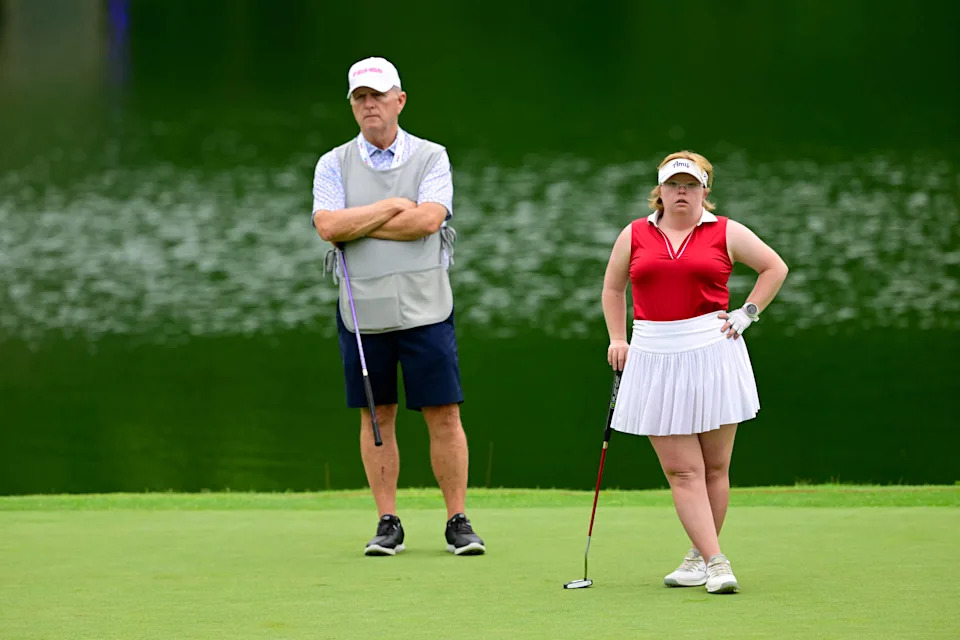
Amy Bockerstette reads her putt with her caddie on the fifth hole during the first round of the 2026 U.S. Adaptive Open at Woodmont Country Club (South Course) in Rockville, Md. on Monday, July 6, 2026. (Logan Whitton/USGA)
Amy Bockerstette’s name is already familiar to many golf fans because of her unforgettable connection with Gary Woodland at the 2019 WM Phoenix Open. But her story is much bigger than one viral moment. Bockerstette, 27, of Phoenix, was born with Down syndrome and is making her fifth U.S. Adaptive Open start this week as a qualifier in the Intellectual Impairment category.
Advertisement
She also founded the “I Got This” Foundation, which provides golf instruction, playing opportunities and organized events for people with Down syndrome and other intellectual disabilities. She has also been active with LPGA*USGA Girls Golf, further extending her influence beyond her own competitive career.
Bockerstette’s message has always been simple, but that does not make it small. “I got this” became a phrase people attached to one moment, yet it has grown into something much more meaningful. It is confidence. It is access. It is the idea that golf can become a place where players are seen for what they can do, not limited by what others assume they cannot.
That is why Amy’s continued presence in this championship matters. She has moved from viral inspiration to lasting impact, and that is a much more meaningful legacy. Golf does not need to simply applaud her story. It needs to learn from it.
Advertisement
The Defending Champions Add More History
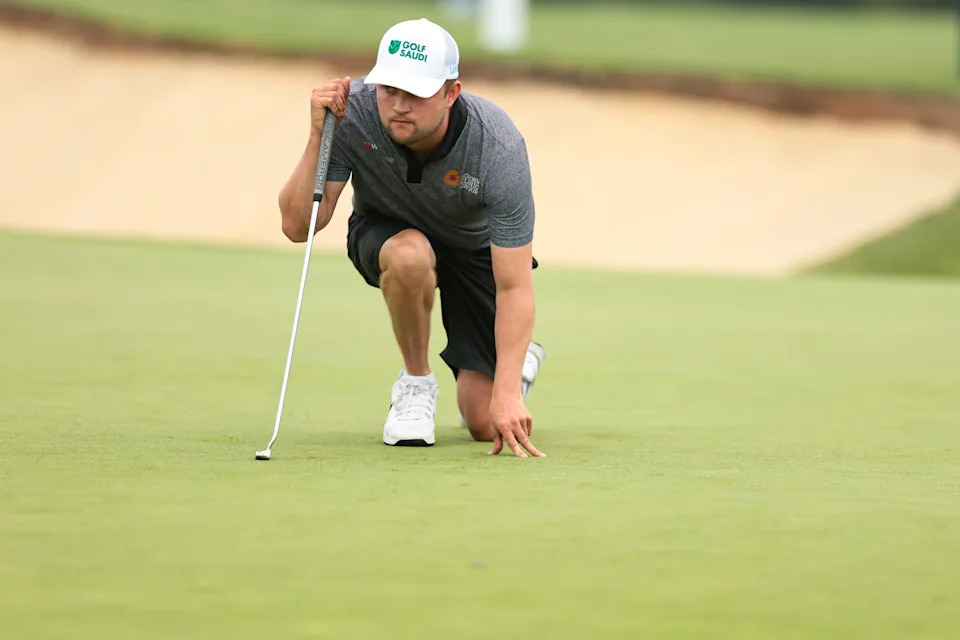
Kipp Popert lines up his putt on the ninth hole during the first round of the 2026 U.S. Adaptive Open at Woodmont Country Club (South Course) in Rockville, Md. on Monday, July 6, 2026. (Kathryn Riley/USGA)
There is serious history on the line at Woodmont, too. Kipp Popert, the three-time defending men’s overall champion from England, has a chance to add to one of the most dominant runs in the early history of this championship. Kim Moore, who captured the women’s overall title in 2025 after also winning the inaugural event in 2022, can continue building her own place in U.S. Adaptive Open history.
That is another reason this event should not be reduced to a feel-good story. Feel-good stories matter, but this championship also has competitive weight. Popert, Moore, Bailey Bish, Ryanne Jackson, Simon Lee and others have already started building a history book for an event that is still young enough to remember its first tee shot.
Advertisement
The best championships do both things. They tell us who won, and they tell us why it mattered.
Why This Week Matters for the Whole Game
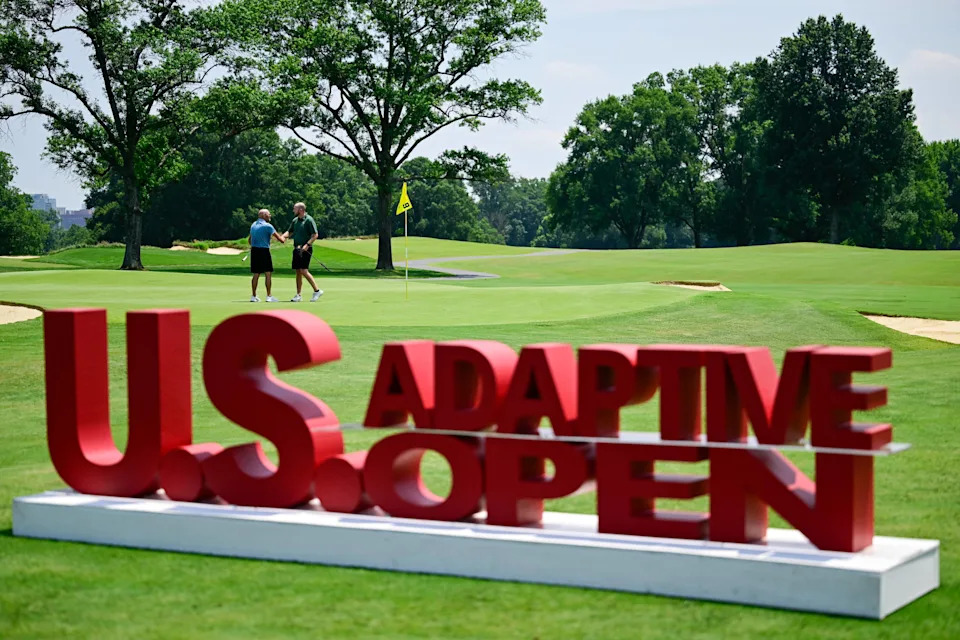
Jonathan Chown and Joshua Philbeck interact on the ninth hole after sinking their putts during a practice round ahead of the 2026 U.S. Adaptive Open at Woodmont Country Club (South Course) in Rockville, Md. on Sunday, July 5, 2026. (Logan Whitton/USGA)
Golf has spent years trying to talk about growing the game. Sometimes that phrase gets thrown around so much that it loses its meaning. The U.S. Adaptive Open gives it meaning again.
Growing the game is not only about attracting new customers, building new facilities or creating new formats. It is about making sure the game’s doors are open wide enough for people to see themselves walking through them. It is about a 15-year-old like Tommy Morrissey, a fantastic young man I have been lucky enough to spend time with, earning his first start. It is about Albert “Chazz” Bowker using his influence and personality to make adaptive golf more visible. It is about Dennis Walters, a fellow PGA Professional and friend, still showing up, still competing and still inspiring after a lifetime of service to golf. It is about Amy Bockerstette turning confidence into a movement.
Advertisement
This championship should be watched, promoted and celebrated because it shows golf at its best. Not perfect. Not polished for a commercial. Better than that.
It shows golf as a game that can adapt without losing its soul, compete without losing its compassion and inspire without asking anyone to feel sorry for the people playing it. That is an important distinction. The U.S. Adaptive Open is not asking golf fans for sympathy. It is asking for attention, respect and appreciation.
Those things are earned at Woodmont.
Advertisement
The fifth U.S. Adaptive Open is not just one of the most meaningful events on the golf calendar. It is one of the clearest windows into what this game can become when it decides everyone belongs.
Bigger Than The Scorecard
What The U.S. Adaptive Open Shows Golf
Access Matters
The championship gives adaptive golfers a visible USGA pathway and validates the idea that competitive golf should have room for more players.
Competition Matters
The stories are powerful, but the championship is real. Players earn spots, chase titles and compete under a USGA spotlight.
Advertisement
Representation Matters
Young golfers watching at home can see players who look like them, move like them or share their challenges competing on a national stage.
Bottom line: The U.S. Adaptive Open is not just a feel-good event. It is one of golf’s clearest examples of what growing the game is supposed to look like.
PGA of America Golf Professional Brendon Elliott is an award-winning coach and golf writer who serves as Athlon Sports Senior Golf Writer. Read his recent “The Starter” on R.org, where he is their Lead Golf Writer. To stay updated on all of his latest work, sign up for his newsletter or visit his MuckRack Profile.
Related: The Monday Mowdown: Three Very Different Courses Take Center Stage in a Huge Week for Golf
Related: Golfers, We Need Your Answers: Take The Athlon Sports Golf Poll
Related: Chris Gotterup Isn’t Coming Anymore. He’s Here.
This story was originally published by Athlon Sports on Jul 6, 2026, where it first appeared in the Golf section. Add Athlon Sports as a Preferred Source by clicking here.
Read the full article here