





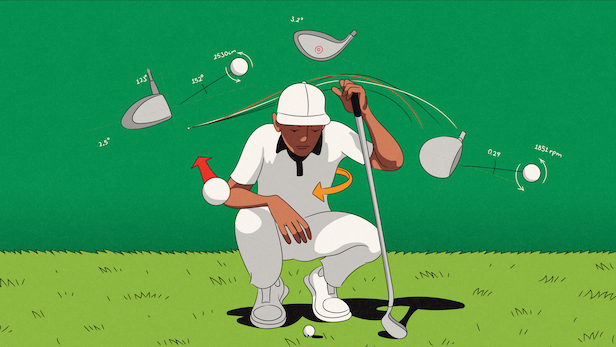
Watching pros practice and amateurs practice is like glimpsing into two strange, separate worlds. Pros seem maniacally focused on a few things while us amateurs seem kinda focused on lots of different things.
The problem is that all things aren’t created equal in golf. Some things are really important—and others barely matter at all. Over time I’ve realized that the genius of pros isn’t simply being able to do the important things, but knowing how to quickly spot what the important things are in the first place.
Advertisement
So that’s what I asked pros, and their teachers, about during my recent stretch on the road. What is the important stuff, that matters more than the rest of us realize? Here’s what they said.
1. Your shoulder alignment, not your feet
Look at pros’ feet and you’ll see them pointing all sorts of places. Some guys stand open, with their feet aligned to the left. Others closed, with their feet out to the right.
Where your feet are pointing can be important. But where your shoulders are pointing is super important. The arms often follow the direction of your shoulders, which is why players and their coaches work on dialing that in.
Advertisement
Like Chris Gotterup and his coach, Golf Digest Best in State teacher Jason Birnbaum, explain:
“A lot of people notice his foot alignment, but we’ve measured it. His feet are pointing to the left, but his hips are slightly to the right of that. And his shoulders are to the right of his hips, and pretty close to square.”
2. Ball-first, center contact
Amateur golfers often miss short, but not just because they under-club themselves. It’s also because their quality of contact is bad. They’re missing the sweetspot of the club, or worse, hitting the ground before the ball. Off-center contact bleeds distance and predictability.
Advertisement
Solid contact is the ultimate first principle in golf, and it’s why pros focus so intensely on it. Often you’ll see their range sessions start with chips and little wedge shots before working progressively up. And when they do, they’ll use periodic resets back down to wedges to ingrain that feeling of solid strike.
As Matt Wallace explains:
“I used to think about the swing a lot, and then when you’re thinking about that, you don’t move as well. I try to dumb it down as much as I can when I’m about to execute the shot, and that comes literally back down to striking the golf ball as clean as I can, right? So… that’s why I think my ball striking has elevated. Scottie Scheffler, Rory, whoever you are, if you don’t strike the ball well, then it’s in the lap of the gods as to where that ball’s gonna go.”
3. The takeaway is more important than you think
It’s wrong to say that all takeaways should look the same—they shouldn’t. Go on tour and you’ll spot all sorts of different takeaways. But it’s also wrong to say that because of the differences, takeaways aren’t important.
Advertisement
Go on tour and you’ll see golfers grind over their takeaways. They incorporate it into their waggles; they drill it on the range. And again, they’re not all textbook. Bobby Jones had an unusual takeaway, but he wrote and spoke often about the importance of his takeaway. Making sure it starts with a gentle breaking of the wrists, and with a smooth, slow tempo.
The specifics of the takeaway change, but one thing is clear: The best players in golf think about it, and work on it often.
4. Setup: the only thing you can change instantly
Think of the golf swing like this: The moment it starts you gradually begin losing control of it—any changes you want to make become progressively more difficult. By the time you’ve reached the top of the backswing, you basically can’t change it. The moment you start your downswing, your brain literally doesn’t have enough time to process any action you may want to do until the ball is already gone.
Advertisement
It means your setup is the only thing you can change quickly, instantly, and relatively easily.
“Posture, ball position, stance width; those are the things you have complete control over,” Golf Digest Top 50 Teacher Justin Parsons says. “Basic stuff, but it’s astonishing how much time [tour players] spend on it getting it right.”
5. Their grip moves around. So does yours.
Watch Scottie on the range and you’ll see the best player paying a lot of attention to the most boring thing imaginable: His grip.
Grips and golf swings move around, often without you even realizing. One day you place your left hand on the club a little differently than the day before, then a week later it’s a little different than that. Fast forward a few months and you’re missing shots left and have no idea why.
Advertisement
It’s why players and their coaches are so proactive in preventing any bad things happening in their grip. Golf Digest No. 1-ranked teacher Mark Blackburn uses 3D systems to measure it by degrees when his players are playing well so he has a baseline for when they’re not. It’s your only connection to the club, as it’s often said. Something Scheffler spoke to when I asked him about it:
“I always use the grip club, because I’m trying to get the same fundamentals down, just because they will change subconsciously as I’m trying to do different things. Just because I get really into playing golf versus trying to search or find things….So like I’m always trying to make sure I get those fundamentals down to make ’em try to keep my neutral to neutral….My thing is if I can get a feel for where the club is, I can do what I need to do with the golf ball. So if I’m having trouble getting a feel for where the club is I’ll make a little judgment to try to feel the club. That’s why I talk to getting back to neutral and seeing and creating shots, because my goal is always to have a feel for where the clubhead is and then use that feel to curve the golf ball different ways and control it.”
2282415297
Kate McShane
Advertisement
6. Getting comfortable with the uncomfortable
How many times have you thought about managing discomfort? With the rise of data and analytics in sports, this art of the emotion has become equally important. Why? Because often the shot players want to hit (AKA, a layup off the tee) is in direct contrast to what the data would say is the best play (AKA, hit driver). Learning to get comfortable and commit to the shot that puts the odds most in your favor is an essential part of the process.
“In some ways getting the numbers is the easy part. So much of my job after that is helping players manage discomfort,” says Tour IQ founder Cory Jez. “Accepting the range of outcomes, and not letting discomfort prevent them from choosing the right shot.
7. Rest is as important as practice
Of all the ones on the list, this is arguably the one pros are worst at, but that doesn’t mean they don’t consider it important.
Advertisement
Players often try to hard work their way out of every problem. It’s what makes them great. The problem is it can also be counterproductive. Their well-meaning hard work can veer into panic practice. Reps for the sake of reps that gradually turn into bad reps.
It’s why players’ coaches often implement ball counts around big weeks, like major weeks. Rest doesn’t feel like hard work, but it’s just as important.
“Sometimes the best thing you can do is prioritize intentional rest and recovery. It’s hard for these guys, but it’s often what they need to perform their best,” Parsons says.
8. Know your carry distances inside and out
In many ways the number players care about the most is the simplest one: Carry distances. Pros pay such close attention to it that even without a launch monitor, most of them can guess their numbers within a yard or two—even on their mishits.
Advertisement
Carry distances change based on altitude and temperature too, but don’t worry, pros take time to plot that all out as well.
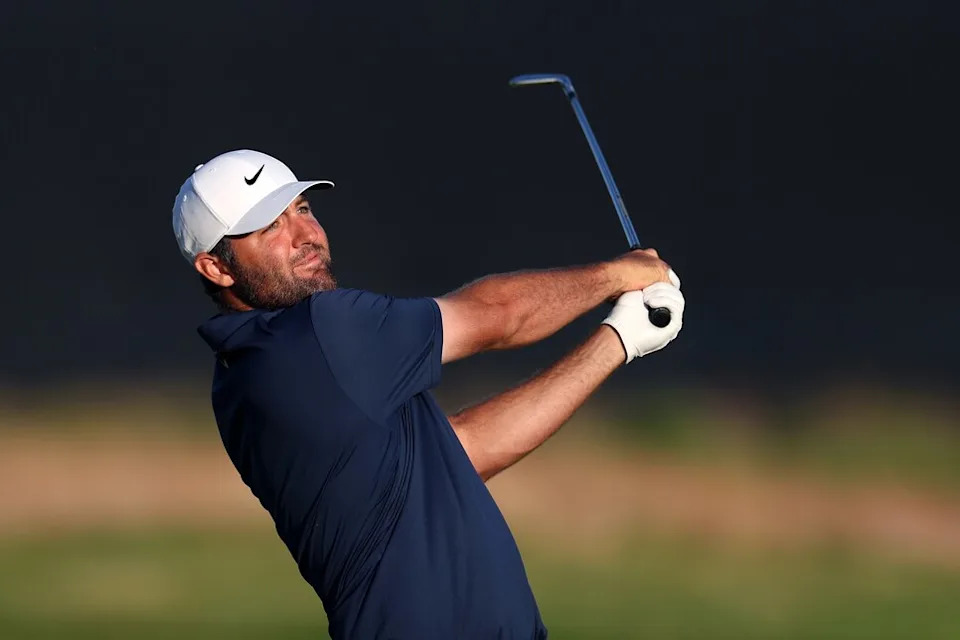
“On my machine at home I have four numbers that pop up,” Scheffler says. “Distance, spin, ball speed, clubhead speed. If the distance is where I think it should be, I don’t look at anything else.”
2282415297
Kate McShane
It’s the furthest thing from the way amateur golfers approach carry distances. Most of the rest of us ballpark our own carry distances and overestimate on the high side along the way. And our scores suffer for it.
9. Check the wind on the range, not just the course
A quick note that pros think a lot about wind direction. That’s in part because it affects them so much more given the height and speed they hit their shots. But there are two specific things you can learn from them.
Advertisement
Before getting settled on a golf course, pros always pay close attention to two things:
-
What the most common wind direction is on the course
-
What the wind direction is on the range
The latter is especially important, because it can give you a false dawn. No, you’re not hitting draws on the range—the wind is just strong right-to-left. If you head to the course planning for it, you won’t be happy with the result.
10. Use the two types of practice
Few things are more tedious than practicing your pre-shot routine, but pros instinctively reserve time on the range to practice exactly that as part of an overall balance.
At the start of their range and putting sessions, you’ll often see players hit the same shot with the same club, usually as they do some kind of drill. This is known as “block practice”—they’re repeating the same task, over and over again.
Advertisement
Towards the end of their range sessions, they’ll move towards “random practice.” They’ll hit different shots with different clubs to different targets, using their pre-shot routine throughout. It’s the same mentality they’ll use on the golf course.
“Both random and block practice are used, and they’re both good at improving different skills,” coach Matt McCullough of the Country Club of Darien and longtime coach to PGA Tour U star Ben James, says. “Once you’ve used block practice to ingrain technique, you should move into random, target practice. The mix is what’s good.”
My colleague Sam Weinman went deep on the range-to-course problem which touched on this, check that out here:
Read the full article here