





I never thought the day would come when Akron, Ohio, would be dumped from pro golf’s annual tournament calendar after 72 years of legendary moments at Firestone Country Club.
But I also never thought a cheating scandal could happen at the Soap Box Derby, or that gambling on sports would be legalized in Ohio in 2023, or that high school athletes could be paid through endorsements.
Advertisement
Akron’s future in pro golf seemed secure. Longevity was on our side.
More: Kaulig Companies Championship returns for one last party at Firestone
The first tournament came in 1953 to Breathnach Country Club in Cuyahoga Falls and then moved to Firestone Country Club the next year.
One year during a media interview about our upcoming tournament, an official said out loud what we knew about ourselves: We are “the Green Bay of pro golf.”
The recipe was simple: combine a welcoming community with a world-class facility and compete on the same level of prestige with Pebble Beach, Augusta, Pinehurst or any famous venue. Those courses are the New York Yankees, Dallas Cowboys and Boston Celtics of their industry. And we belonged. Green Bay had the Packers, and Akron had golf.
Advertisement
In 1959, after six years of success with the Rubber City Open, a bold move paid off big. Firestone Tire management had the foresight to hire renowned course designer Robert Trent Jones to upgrade the South Course, giving it national majesty. The reason? It had been chosen to host the 1960 PGA Championship, one of golf’s “majors,” along with the British Open, the U.S. Open and the Masters.
Akron’s emergence in golf coincided with a television era that delivered regional stars Jack Nicklaus and Arnold Palmer to cheer for.
Three times, a PGA major was held here (1960, ‘66 and ‘75). When a made-for-TV event was created in 1962 called the World Series of Golf, Firestone was chosen as the site.
The website essentiallysports.com reported in May 2026 that Firestone’s record of hosting 88 tournaments is surpassed only by Pebble Beach, Colonial and Augusta.
Advertisement
Our city and region did more than just sit, watch and cheer. That’s because pro golf’s business format is set up as a nonprofit. The “workers” at Firestone were volunteers, using vacation time from their real jobs to help raise money for the Northern Ohio Golf Charities & Foundation. A 1968 Beacon Journal story reported there were 600 volunteers that year. The charity’s website, nogcf.org, says 73 years of golf have led to more than $34 million in local “impact.”
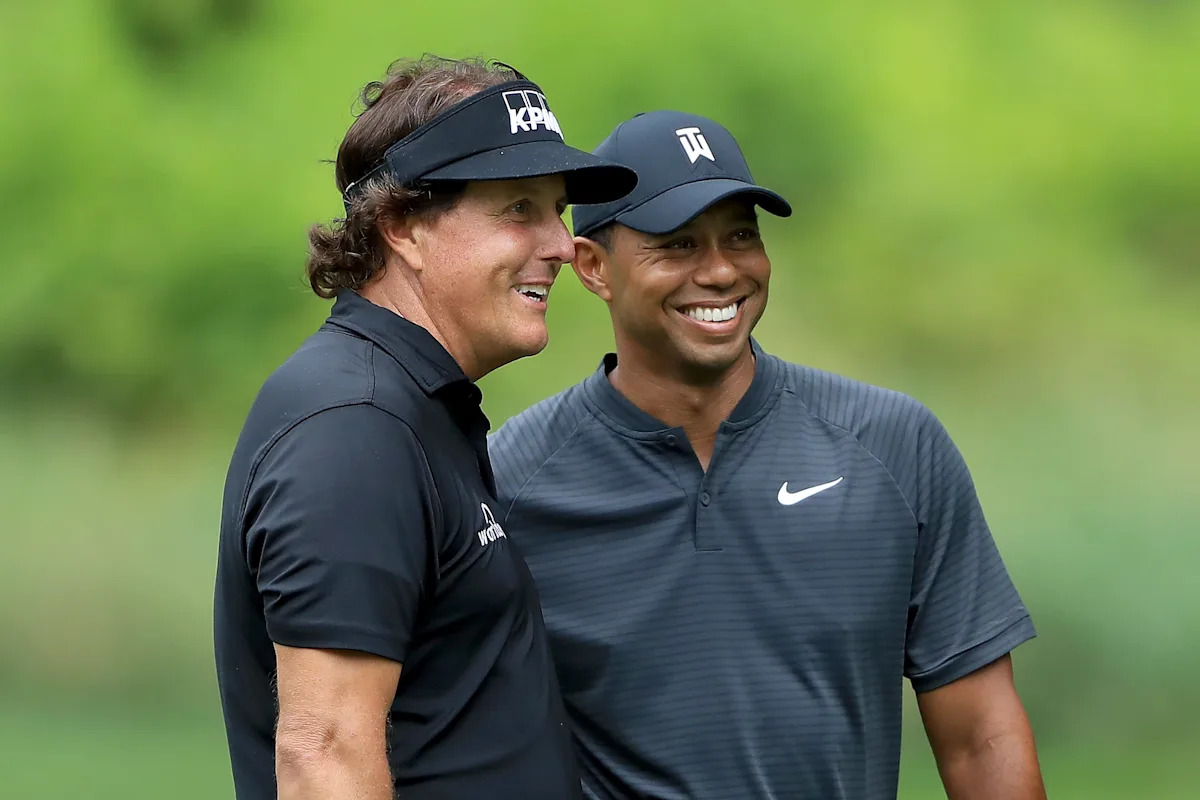
Phil Mickelson and Tiger Woods smile during a practice round prior to the World Golf Championships-Bridgestone Invitational at Firestone Country Club South Course on Aug. 1, 2018 in Akron, Ohio.
Akron became well known for the prowess displayed by Nicklaus and his successor in stardom, Tiger Woods, on the South Course. Nicklaus’ first visit to Firestone had been in 1958, before the Robert Trent Jones redesign. He finished 12th in the Rubber City Open at age 18. By 1976, he had won seven times in Akron and was the leading money-winner here for a long stretch.
Then came Woods. He won eight times between his first appearance in 1997 and last victory in 2013. He won three years in a row in two separate sequences – ‘99, ‘00 and ‘01 and again in ‘05, ‘06 and ‘07. In 2000, he set the course record with a 72-hole score of 259, 21 under par. A three-hour weather delay during the final round caused him to play the 18th hole in near darkness with fans holding up lighters as if they were at a rock music concert. His 168-yard shot to the green landed two feet from the flag, and he made birdie.
Advertisement
But times change, corporate management turns over, and as fast as anyone can yell “Fore!” Akron is being relegated to history.
Who would have thought Bridgestone, the world’s largest tire company by sales, with an estimated $24.3 billion (according to the trade publication Tire Business) in 2017, could allow a Memphis, Tennessee, event to be upgraded in 2019 to a World Golf Championship-level tournament? Firestone’s consolation prize starting in 2019 was a seniors event.
And starting in 2027, we become a golf orphan.
The PGA Tour Champions tournament, formerly known as the Senior Players Championship, returns to Firestone Country Club July 9-12 in what appears to be its final stop in Akron for now, with the event set to move to Newport Beach, California, starting next year.
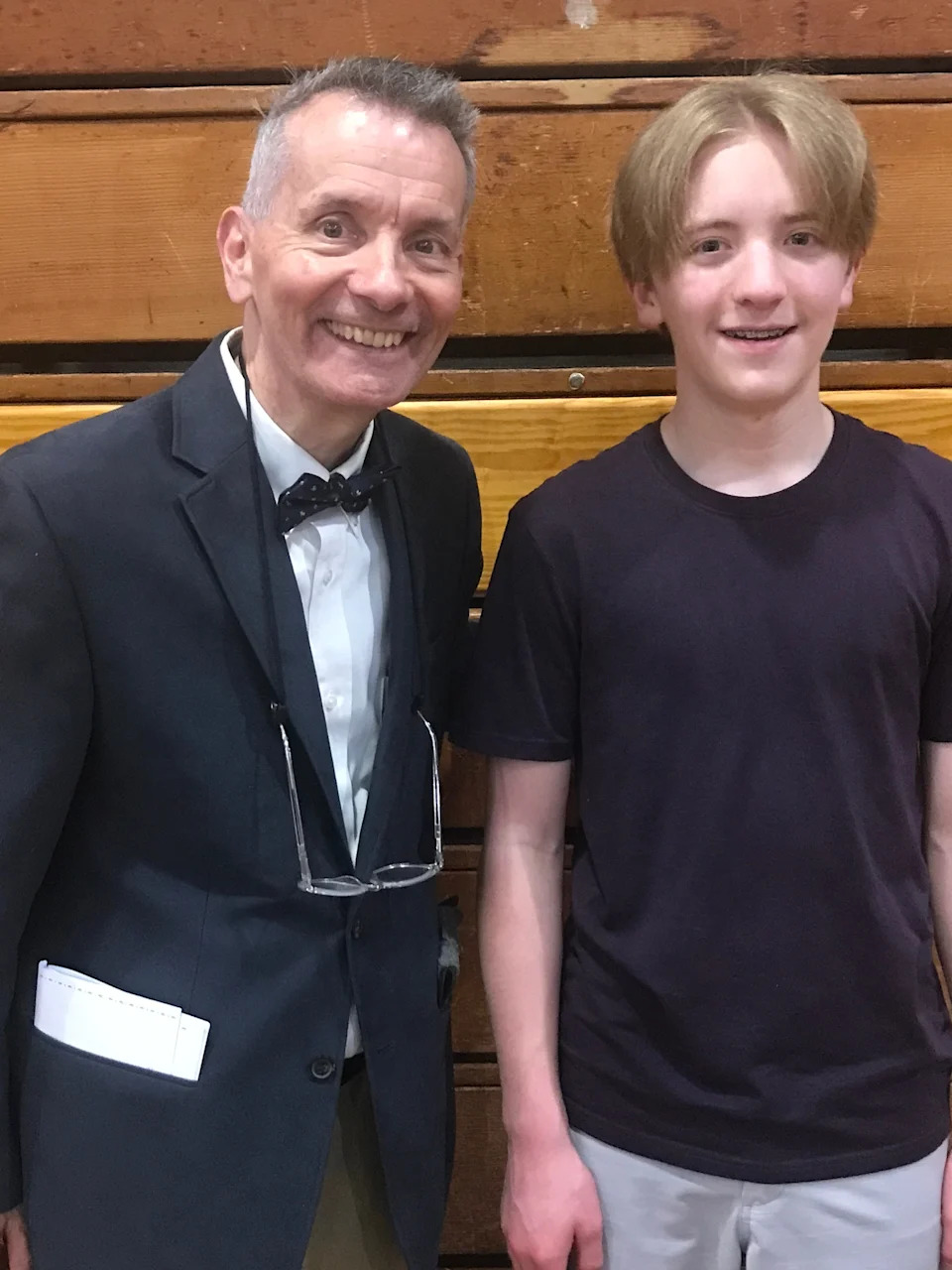
Former Beacon Journal Sports Editor Larry Pantages
The former Rubber Capital knows the hurt of being the Punching Bag Capital. All of the Akron area’s big industries enjoyed a heyday, followed by a decline − or even disappearance. The Pro Bowlers Association was founded here and also departed.
Advertisement
I have a distinct memory of watching the end of the tournament on television one year, and then hearing my father say, “Jump in the car. Let’s go.” Where were we going on a late Sunday afternoon? To the Akron-Fulton airport terminal on Triplett Boulevard.
Dad knew who was going to be there. Sure enough, Arnold Palmer arrived by car, boarded his jet, looked out the left-hand window in the pilot’s seat, smiled and waved. We waved back. The engine roared and then the jet rumbled down the runway.
He dipped the jet’s wing after takeoff, a figurative goodbye and thank you to Firestone and its own army of volunteers and devoted fans.
If the 2026 tournament is the farewell, the PGA Tour executives are showing they have no appreciation or understanding of this fabled course, its place in golf history and the people behind its success. If the PGA Tour’s 2027 calendar is not in cement yet, Akron and Firestone want a mulligan.
Advertisement
Akron native Larry Pantages was the Beacon Journal’s deputy sports editor from 1991-97 and sports editor from 1998-2006. In 2004, the Sports department produced a 50-part daily series of stories as Firestone Country Club celebrated 50 years of hosting pro golf tournaments. In 2025, the Summit County Sports Hall of Fame honored Pantages with the Andy Palich Memorial Service Award.
This article originally appeared on Akron Beacon Journal: ‘The Green Bay of pro golf’ could never lose its tournament — and then it did
Read the full article here