





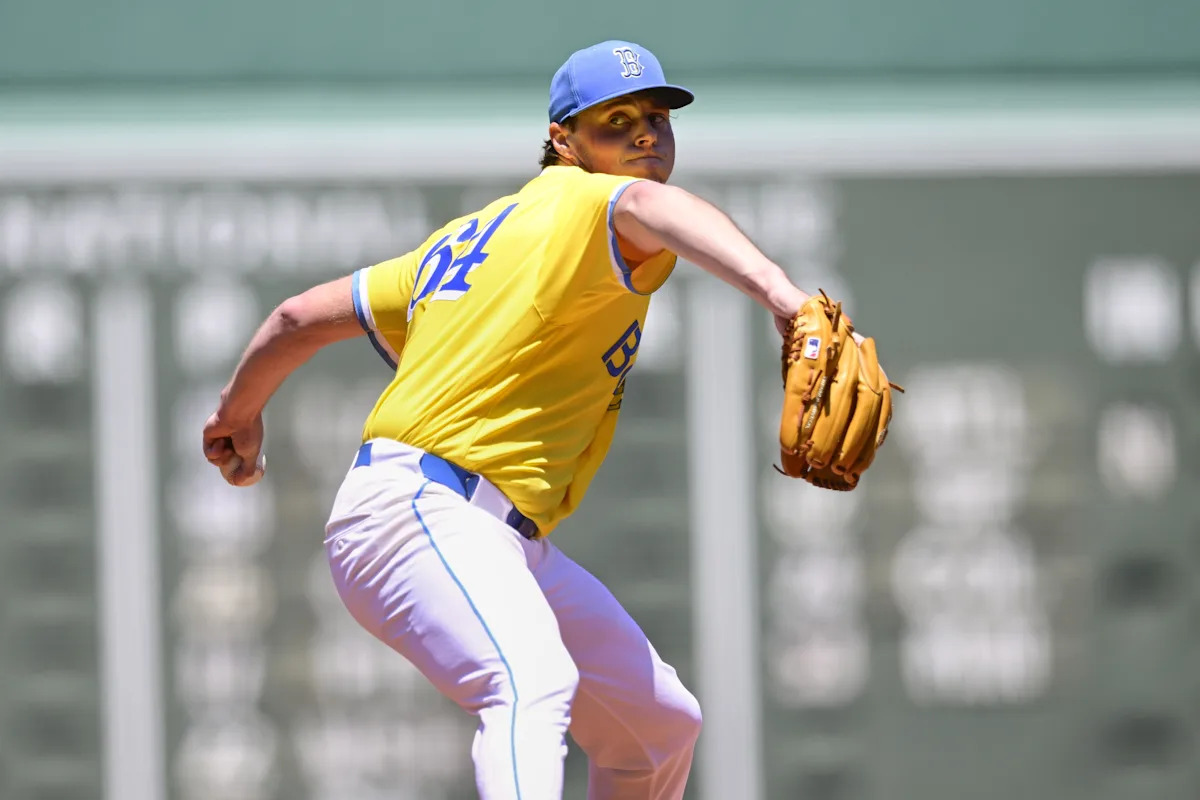
Jake Bennett debuted earlier than expected in 2026 thanks to injuries and poor performances. In his two starts in early May, he was underwhelming, but solid. He struck out just four of 42 hitters faced, allowing five earned runs over 10.1 innings while picking up his first career win and loss. He was sent back to the minors for a few weeks, but returned in June, and has leveled up since his debut stint. In four starts since returning, he’s posted a 2.78 ERA and struck out 24.1% of hitters faced. The Red Sox are just 1-3 in his starts, but he’s given them a chance to win regularly, going at least five innings in each of those appearances.
I wrote about Bennett after those first two starts and was noncommittal one way or the other. I liked his changeup, but didn’t think his fastball was enough to allow the changeup to carry his arsenal. Two starts is hardly a large sample, but the 9.5% strikeout rate he posted wasn’t high enough to survive in the big leagues, regardless of stuff. As I mentioned, though, his strikeout has since exploded to 24.1% in June, and while the changes aren’t major, they might be enough to believe they’re for real.
Advertisement
In his first two starts, Bennett’s four-seam fastball posted 56.8% strike rate against right-handed hitters. Over that span, the pitch was tied for his most-used against righties. With a strike rate below 60%, Bennett was behind hitters often. Since returning, his fastball’s strike rate against righties is over 70%. His percentage of pitches thrown behind in the count has dropped about 10% as a result. What changed? A couple of things.
The first change is location. Bennett’s fastball isn’t an outlier in terms of shape or velocity, meaning he has to spot it well to succeed. Since returning from Worcester, he’s increased the usage from 29% to about 40%, and located at the top of the zone more consistently.
On top of the location improvements, there are some minor changes to the shape as well. First, and most importantly, he’s throwing a little bit harder. Between his fastball and his sinker, he’s up about one tick. In terms of four-seam shape, the vertical movement is about the same, although he’s pitched in both Tampa and Colorado, the two biggest outlier stadiums in terms of vertical movement, but the arm-side movement has increased about two inches. That two plane movement, along with an increase in arm-side fastballs to righties is likely increasing to the huge swing and miss rate the four-seam has generated over his last four starts.
Advertisement
It’s also worth noting that he’s saved the pitch for deeper counts since returning, allowing the pitch to live at the top of the zone as he turns to more early sinkers over the plate. Those sinkers have also seen velocity gains, although the location has been consistently over the heart of the plate. It’s been effective so far, but the expected outcome numbers against it are on the high side, and an aggressive team might be able to take advantage.
The change in Bennett’s two-strike approach against righties is significant. Here’s a look at his pitch mix in his first stint (May) versus his second (June).
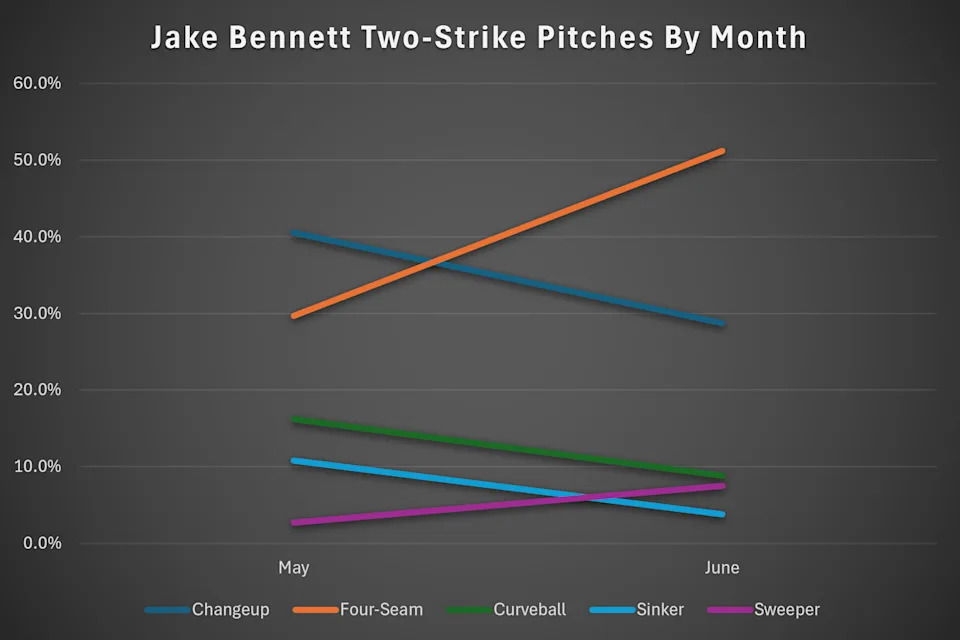
In his first two starts, righties saw a ton of two-strike changeups. In his next four, he’s leaned on the four-seam fastball. Again, because the fastball shape is roughly average, it needs to be above the zone. By throwing it with two-strikes, he can afford to live higher because he’s looking for whiffs and not called strikes. It also has the added benefit of keeping hitters off his changeup.
Advertisement
While his changeup has been tagged as his best pitch, he didn’t record a single strikeout with it. The pitches were either fouled off, spit on, or hit into play. Hitters were ready for the changeup and were more exposed to the four-seam early in counts, allowing them to react to it. Now, with the four-seam in mind with two-strikes, the changeup has been more effective. You can see hitters’ approaches in the new swing tracking data. Righties swung early just twice against Bennett’s two-strike changeups in May. In June, they’ve been early 11 times on 15 swings. Just three of those swings have been foul balls, while seven have returned strikeouts. Here’s one of the good ones.
View Link
Bennett’s stuff isn’t so overpowering that he’ll be able to survive with this one game plan. He’ll need to continue to adapt as teams start to figure him out. Adding vertical movement or velocity to his fastball would be one route (easier said than done), finding a breaking ball to drop in the zone for early called strikes would be another. The cutter is also always a great choice for strikes, even if it’s just the occasional backdoor offering early in counts to steal one. He’ll get the Angels in his next start, who have been one of the most aggressive teams against left-handed pitching. If he can get ahead of hitters and his sinker isn’t hit, he’ll be in good shape. If they’re ready to hit early in counts, he’ll have to pivot on the fly. For now, the two-strike approach is working, and Bennett is making his case to stick in the big league rotation.
Read the full article here