





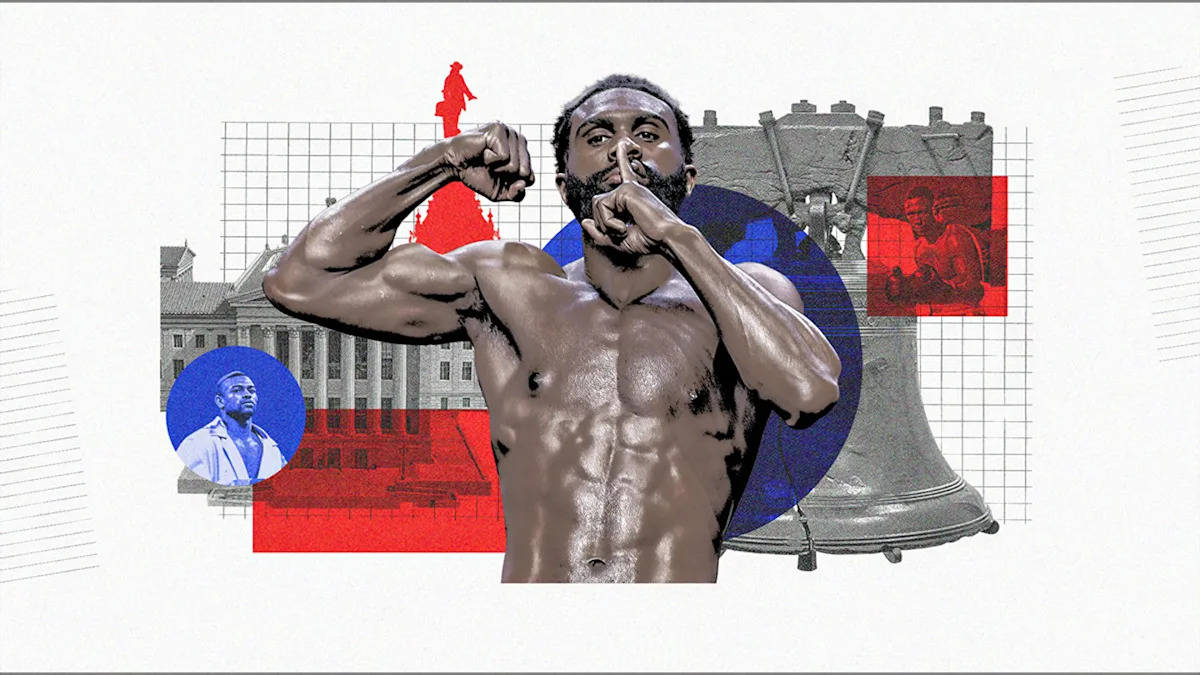
As always when a fight ends and a venue empties, I followed the crowd and just listened. I listened to the excitement. I listened to the disbelief. I listened to fans describe something for which I had yet to find the words.
Through the doors of the T-Mobile Arena, and across one of the bridges on Las Vegas Boulevard, we were powered for the most part by memories of the masterpiece we had all witnessed: Terence Crawford dismantling Errol Spence inside nine near-perfect rounds. Yet what also kept our legs moving and the conversation flowing that night in 2023 was the prospect of Crawford’s future and, chiefly, what he should do next. The world, they said, was now at his feet, but what exactly did that mean?
Advertisement
At that point, it was hard to say. Any mention of a Spence rematch — the original plan — was deemed either silly or sacrilege on account of the ease with which Crawford had finished Spence at the first time of asking. Meanwhile, as alternatives, other names were being bandied about, none of which whet the appetite. You had new names, unfamiliar names, and just a nickname: “Boots.”
This nickname was heard a lot that night and referred of course to Jaron Ennis, the highly touted welterweight contender from Philadelphia considered next in line. He was 10 years Crawford’s junior at 25, with a professional record of 31-0, and was mandatory challenger for the IBF title Crawford had just snatched from Spence. However, for all Ennis’ accolades and talent, many felt he needed time, not Terence. In fact, on this matter fans of both Crawford and Spence seemed to be united three years ago. Their verdict, from what I could make out, was fairly unanimous: “No way, it’s too soon.”
Indeed, it was perhaps only out of desperation that “Boots” was mentioned in the same breath as “Bud” Crawford that July night in Las Vegas. After all, had the previously unbeaten Spence been as competitive against Crawford as we once expected, we would have known Crawford’s next move and would have had no reason to accelerate Ennis’ development to fill a sudden void. But because the disparity between Crawford and Spence had turned out so great, we all now panicked and sought fresh challenges on Crawford’s behalf. That’s where Ennis, as fresh as they came, entered the equation — or at least the conversation. “[Crawford would] ruin him,” I heard one Spence fan proclaim, having already agreed it was too soon. “Look what he did to Errol.”
Remembering then how it had looked and felt, the group in front of me shared a brief and rare moment of silence. The only sound now was the sound of boots on the ground. “He is from Philly, though,” one of them said. “He can fight.”
Jaron Ennis has long been considered the future of American boxing.
(Mark Robinson via Getty Images)
When we think of fighters from Philadelphia, we first think of all the great nicknames. Nicknames like “Smokin'” and “Joltin'” and “Boogaloo” and “The Executioner.” Then, in no particular order, we think of the names: Joe Frazier, Matthew Saad Muhammad, Bobby Watts, Meldrick Taylor, Bennie Briscoe, Jeff Chandler, Bernard Hopkins and so on. These men were all known as “Philly fighters” not just because they were either born or based in Philadelphia, but because they embodied the core values of the city and carried themselves a certain way. If you knew boxing, or were aware of the signs, a “Philly fighter” could be easily identified from just the sound of a grunt or a shell-shaped silhouette against a wall.
Advertisement
“I’d say a Philly fighter is versatile, crafty, and an underdog,” said Steve Cunningham, Philly’s former two-time world cruiserweight champion. “For the most part anyway. You do have guys like Danny Garcia, ‘B-Hop’ [Bernard Hopkins], and now Jaron Ennis. But even ‘B-Hop’ came on the scene as an underdog against [Felix] Trinidad. I was the same. I was the underdog going overseas all the time fighting opponents in their backyards.
“Philadelphia boxing, to me, is like a farm where we keep pushing out great, high-level athletes in the ring. That’s because there are great, high-level athletes in the gym. We have champions working alongside younger guys and these younger guys are coming up watching the champions. I can’t tell you how many great fighters I worked alongside. We had ‘J-Rock’ Julian Williams, ‘Cool Boy’ Steph [Fulton], Eddie Chambers. We were all in the gym together and that’s back when ‘J-Rock’ and ‘Cool Boy’ were still amateurs. I see them now and they’re like, ‘Man, you motivated me so much.’ I’m just like, ‘Wow, I had no idea.’ We all kind of fed off each other.”
From other members of the Philadelphia fight fraternity, you will hear different adjectives used to describe what makes a Philly fighter so special. Marc Abrams, for instance, a longtime publicist and blow-by-blow commentator in the area, opted for the words “tough” and “gritty” and “blue collar” when presented the same challenge. He added: “A guy who fights with a lot of desire.”
Then you have Hall-of-Fame promoter J. Russell Peltz, who required only one. “Aggressive,” said Peltz, whose relationship with boxing in Philadelphia stretches all the way back to 1969, when, at the age of 22, he promoted a middleweight fight between Bennie Briscoe and Tito Marshall at the 1,300-seat Blue Horizon. “Even though some of the great Philadelphia fighters, like Tommy Loughgran, were excellent boxers, the image of the Philly fighter is an aggressive fighter who is tough and never quits.”
Advertisement
As true as that is, often when a Philly fighter is described as aggressive and tough, or as someone who never quits, it accounts for more than what they demonstrate in the ring. Sometimes it can be an attitude, or a mindset they have cultivated away from the ring; attributes with which they were either born or had to rush to find.
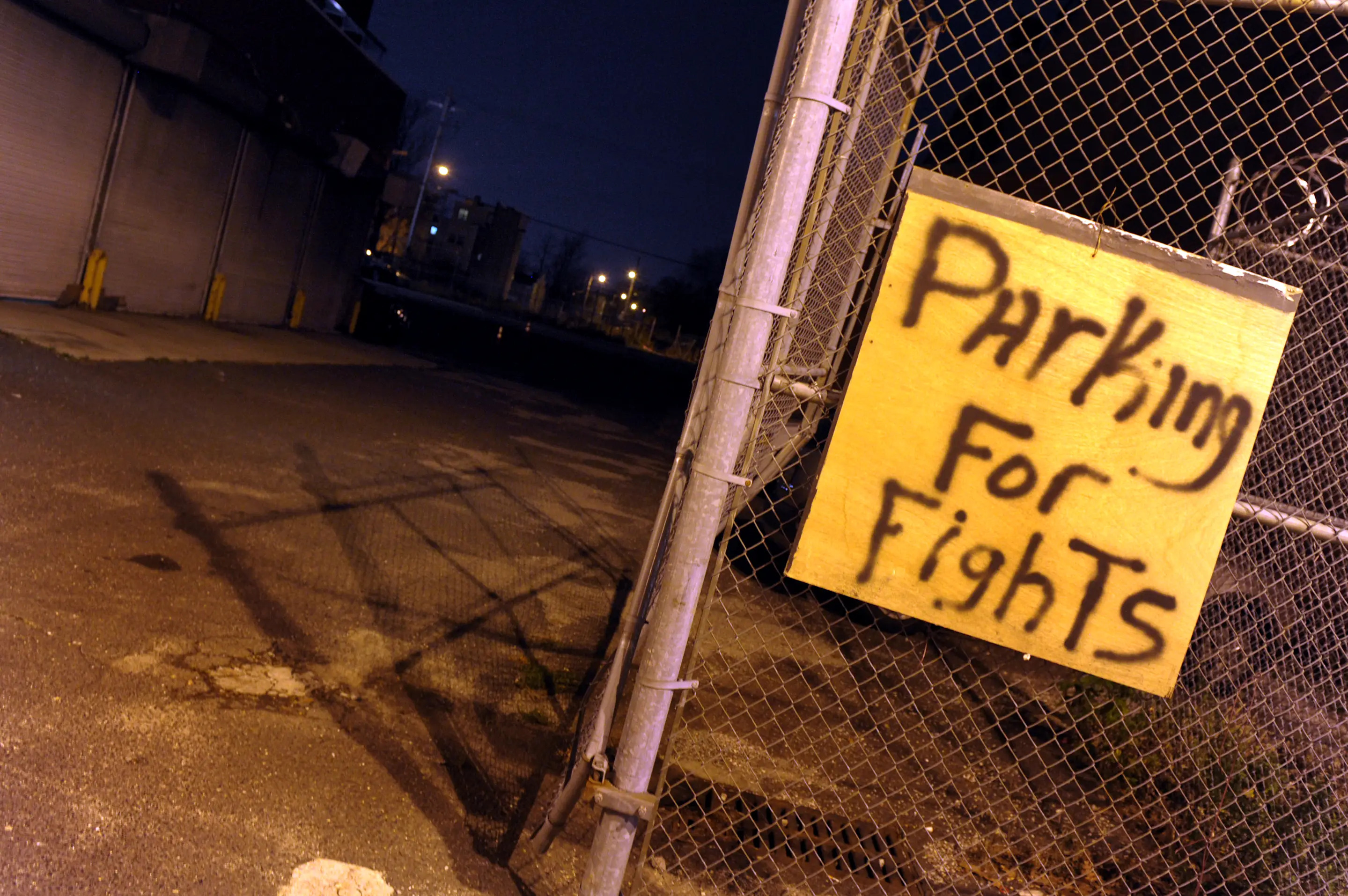
The parking sign hangs for Philadelphia’s legendary boxing venue, Blue Horizon.
(The Washington Post via Getty Images)
“Philly is a real tough city and it has made me the man I am today,” said Danny Garcia, a former two-weight world champion. “When you live in Philly, you have to learn how to look after yourself and you’re forced to mature at a young age.
“I’m not proud of it, but I had fights all the time growing up. In fact, my father used to sit outside my school and pick me up early every single day because I was fighting in school. My brother and I would get in a ton of fights at elementary school and, as a result, Dad would have to stay on his toes and wait for the call.
Advertisement
“By the time I got to middle school, though, I was heavily into boxing and had matured a lot. Thankfully, for my father’s sake, I started hearing the school bell to end the day more often than not.”
Garcia was just seven years old when the desire to fight first grabbed him, though would have to wait until he was 10 — the minimum age allowed by local law for a minor to train — to enter Philadelphia’s Harrowgate Boxing Club and put on a pair of gloves. By his own admission, those three years of latency were long and tricky to navigate, but any time lost was clawed back due to how swiftly Garcia took to the sport.
“I remember shadowboxing in front of the mirror on my first day in the gym and one of the coaches came up and asked me if I’d boxed before,” he said. “He was convinced I’d had a load of amateur fights because of the way I shaped up and threw my punches. I told him I’d never boxed before and he was really surprised. Even at 10 I think I was a natural fighter.”
Which, ultimately, is what a Philly fighter is. Above all else, a Philly fighter is a natural fighter. It is someone who was seemingly born to do it — fight, that is — and someone whose inherent rough edges are smoothed down when in the gym learning how to box.
Advertisement
“In any country or city where there are ghettos and low-income living, you will get the best fighters,” said Cunningham. “Everybody’s trying to fight their way out of here. That’s a mindset, not just a sport thing. It’s a big city and everybody’s trying to get out of here however they can. Some are doing it illegally and some are like, ‘I can hit somebody in the face and make some money?’
“Also, when I was growing up in Philly, getting bullied was a thing you tried to prevent. So it was about protecting yourself. A lot of guys, myself included, went to the boxing gym to do that. Boxing has just been a foundation point for most Philadelphians. Stop anybody walking down the street and there’s a good chance they will say, ‘Yeah, I used to box.’ You then look them up and are like, ‘Damn, they didn’t lie.'”
Advertisement
With enough men of a similar mind, it is perhaps no surprise that Philadelphia has always had a booming boxing industry — or, as Cunningham calls it, a fighting farm. For years the City of Brotherly Love was both the place you went if you wanted to watch fights and the place you went if you wanted to learn how to fight.
“It’s one of the original major boxing cities in the country because of the immigration from the south,” explained Peltz. “Philly, New York, Boston, and in those days St. Louis, Detroit and Chicago, were all hotbeds for boxing. Most of the fighters came from the south. [Joe] Frazier is an example of that. There were some that were born in Philly, but a lot of them migrated from the south.”
In his role as promoter, Peltz was responsible for giving opportunities to many boxers who were either born in Philadelphia or set up home there in an effort to improve their ability to fight. His shows at the legendary Blue Horizon, in particular, would act as a proving ground for a number of Philadelphia’s best up-and-coming stars. It was there the likes of Jeff Chandler and Bernard Hopkins, as well as countless others, sharpened their skills and smoothed their edges.
“It was a small ring — 15 feet by nine inside the ropes — and it was a small building and the fans were very close to the ring,” recalled Peltz. “There were a lot of Philly vs. Philly and neighborhood vs. neighborhood fights and the people came out for those. They used to say about a fighter, ‘You haven’t made it until you’ve fought in Madison Square Garden.’ Well, they would say the same here, only about the Blue Horizon. Certainly, throughout the nineties, everybody wanted to fight at the Blue Horizon.”
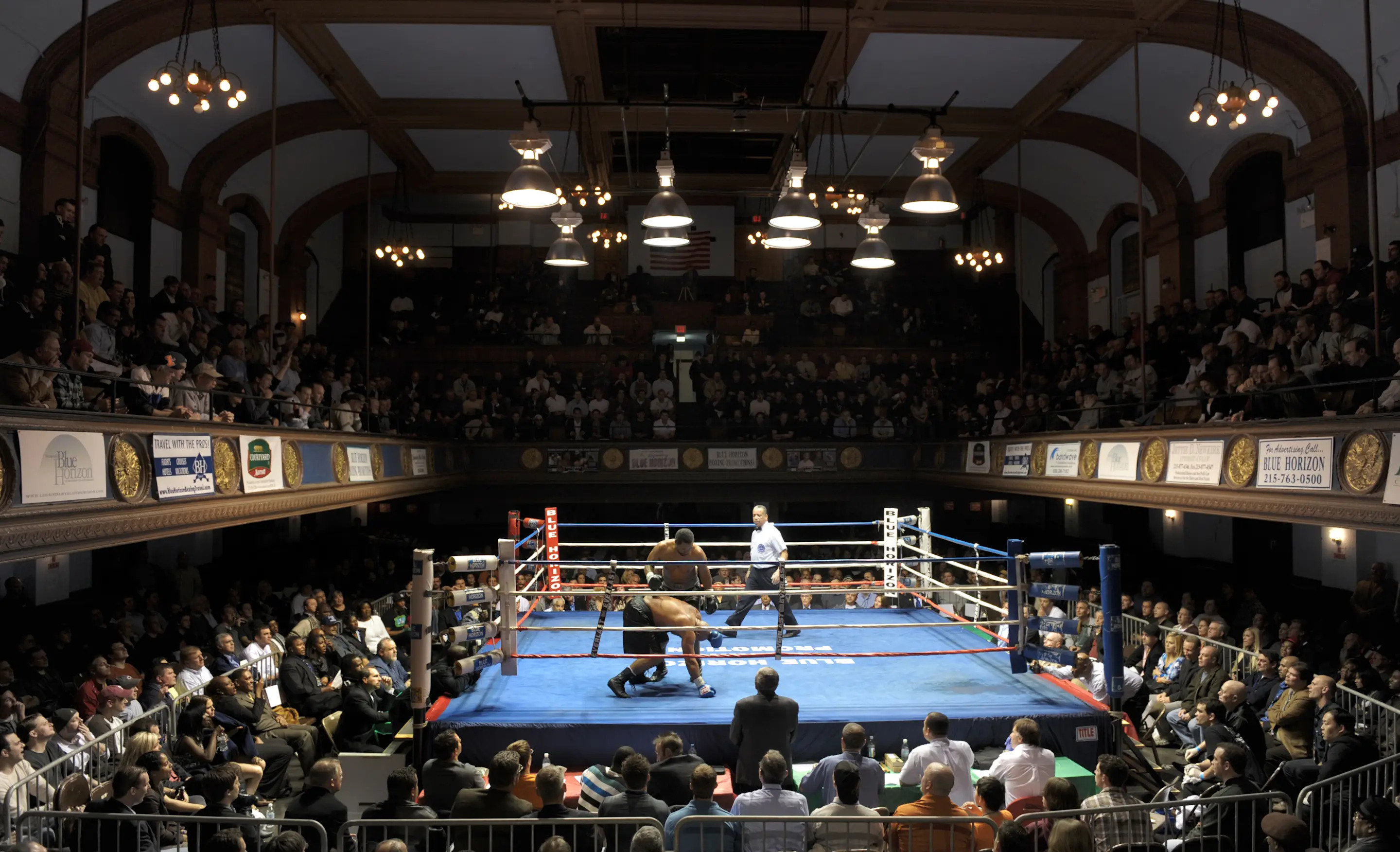
The interior of the Blue Horizon on a Friday night — hallowed grounds for boxing historians.
(The Washington Post via Getty Images)
Even on a larger scale boxing in Philadelphia was thriving throughout the seventies, eighties and nineties. The city boasted world champions and big events aplenty and some nights it felt like the center of the boxing universe.
Advertisement
“There was a time when Russell Peltz was running the shows at the Spectrum, where the 76ers and the hockey team used to play, and he would do shows on Monday nights and get 13, 14, 15,000,” said Abrams. “He would do world-title fights with Tyrone Everett and get 18,000 people there.
“Also, there was a time when Philadelphia fighters fought Philadelphia fighters a lot. That was great for the city. Unfortunately, that doesn’t happen so much anymore. Philly fighters don’t want to fight other Philly fighters. I ask them why and they say that because the fight would be on a club level the money’s not there. It’s still a great scene, of course, but that’s perhaps why it’s not exactly the way it was.”
In the past two decades there have been fewer major events held in Philadelphia, with even the best fighters from the city often having to hit the road for work. These include the likes of Garcia, Cunningham, Williams, Fulton, and Tevin Farmer, all of whom have had their finest nights away from the city in which they were born.
“It’s disappointing but I understand the business side now,” said Cunningham. “When I was signed with Don King, his reason for not bringing fights to Philly was because the people didn’t support. In Philly we have a basketball team, as well as football and hockey teams. Those [basketball, football and hockey] are mainstream sports pushed on the news, so the people are fanatical about them. But when you get a fighter, most of the time we ain’t in the stream at all. Most people don’t even know we have a champion when we have a champion. I was a two-time champion and even now only so many people know that, or knew that then. It wasn’t on the news like that, so the fan base doesn’t come out. I understand why promoters shy away.
Advertisement
“But I think Ennis has had three fights in Philly now and the first fight he had here was unbelievable — sold out almost. It can change.”
Since turning professional in 2016, Jaron Ennis, a former Golden Gloves champion as an amateur, has won 35 fights in a row and only occasionally needed to advance beyond second gear. In talent alone, he appears to be blessed in ways many of the other great champions from Philadelphia were not. It might even be said that he is both a product of his environment and a fusion of all the Philly fighters who came before him, some of whom are related by blood.
“When I first started doing the PR stuff, Jaron’s brothers, Derek and Farah, fought between them about 20 times on shows I was working on,” said Abrams. “Farah won an NABF title, while Derek won the USBA championship; he beat Gabe Rosado which was a big fight here in Philly. They had nice careers. They became good fighters. But all I kept hearing around that time was, ‘Wait until you see the younger brother.’
“Well, now we know. Now we understand what they meant.”
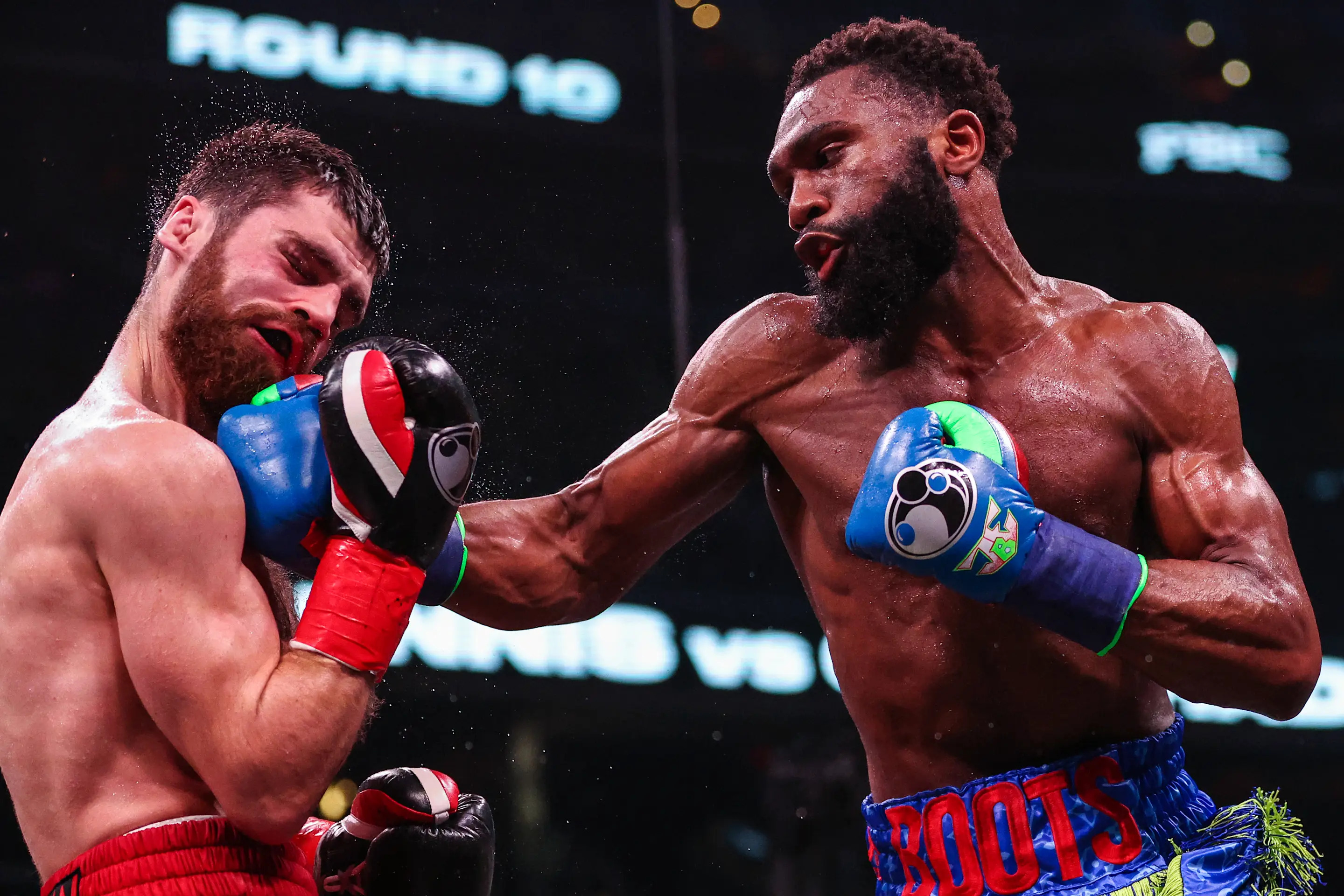
Jaron Ennis rampaged his way to the IBF and WBA welterweight titles.
(Patrick Smith via Getty Images)
Rather than share a ring with Terence Crawford, Jaron Ennis would in the end have to make do with replacing him as IBF welterweight champion. That was the consolation prize Ennis received once Crawford elected to move up to super welterweight and suggested, by doing so, that Ennis, his mandatory challenger, was not a big enough reason — or simply, name — to have Crawford stick around at 147 pounds.
Advertisement
“It’s definitely not how I wanted it,” Ennis told Boxing Scene in 2024. “I’d rather take [the belt] from somebody, but there’s nothing I can do. I couldn’t say ‘no,’ I couldn’t say ‘yes.’ They just elevated me up. Nothing I can do. But I’m going to defend the belt and do what I need to do.”
As champion, Ennis now had a degree of power to do what he needed to do, and one of the things he needed to do — or wanted to do — was bring big-time boxing back to Philadelphia. He was able to then fulfill this ambition with the help of Matchroom Boxing, his new promoter, who have since had Ennis headline at the Wells Fargo Center in three of his past four fights. That, for both Ennis and Philadelphia, has been an important development.
“‘Boots’ has kind of brought it back,” said Abrams. “They did about 36,000 people over those three fights. The opponents weren’t big names, but they still did 14, 10 and then 12 [thousand]. In the area he has shown that it can be done; big-time boxing here can be done. If he ever fought in a major fight here, they would do 18 or 19,000 people without a question.”
According to Cunningham, it’s a different kind of crowd Ennis attracts when headlining in Philadelphia. It’s not the Blue Horizon crowd, nor a crowd likely to know the names Hopkins or Saad Muhammad, let alone Briscoe. It is instead a much younger crowd, the kind content to watch the fight through their phone and spread the word via a social media post.
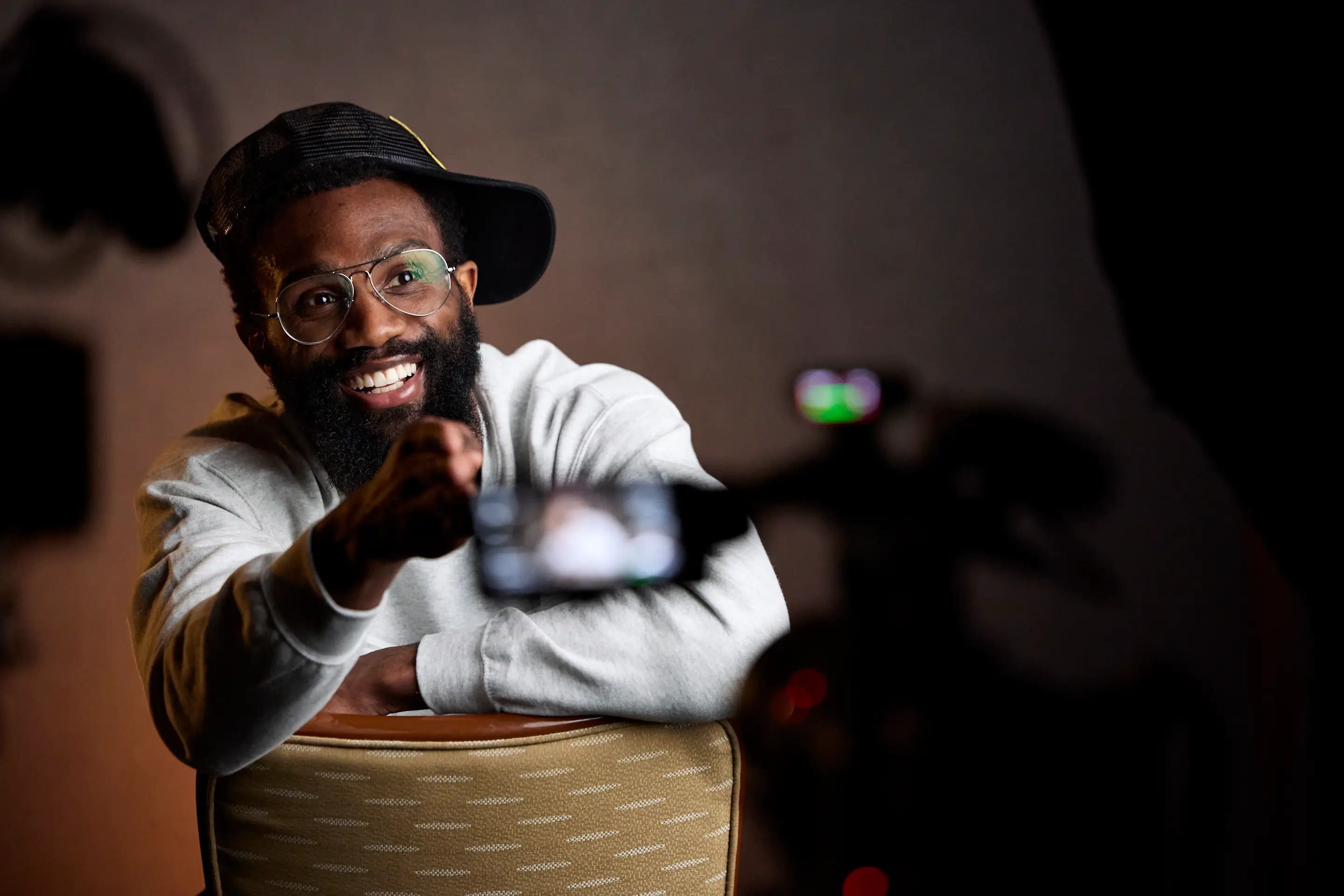
Jaron Ennis speaks to media ahead of Saturday’s fight.
(Mark Robinson via Getty Images)
“He’s in this era of social media greatness — no, not greatness, but profoundness — where you have to self-promote and be active on social media to sell stuff to people,” said Cunningham. “He’s doing that, so he’s now got a whole different generation and demographic interested in him and coming to his fights.”
Advertisement
When asked whether Ennis was the talk of bars and barbershops in Philadelphia, Cunningham reacted positively: “He’s a big name, yeah.” However, Abrams, when asked the same question, was a little less enthused. “That’s the problem,” he said. “He’s is known a little bit around town, but not a great deal.”
As for Peltz, for whom Ennis once boxed a four-rounder, no punches were pulled.
“Do they talk about him? No,” he said, amused by the very idea. “He had three [recent] fights in Philly and he drew big crowds, but that was mainly because people just like to go to big events these days. The bare-knuckle boxing drew 17,000 people at the Wells Fargo Center in Philly last year. That was because it was a big event. People were curious.
“‘Boots’ drew about 13,000 for one fight and about 11,000 for the next fight, but nobody knew who the opponents were. I didn’t even know who they were. People came because it was a so-called big fight and because we don’t get many of them in Philly these days.
Advertisement
“‘Boots’ is a terrific fighter, but to compare his popularity to fighters who came out of Philly before him, like Gil Turner, Joey Giardello, Bennie Briscoe, it’s just … different. It’s not the same. Those were street kids. They hung out on the corners among the people. I don’t know for sure, but I would think ‘Boots’ has made enough money by now to avoid corners.”
Regardless of how or where he spends his free time, Ennis will on Saturday night be in Brooklyn, where he is set to challenge Xander Zayas, the WBA and WBO super welterweight champion, in one of the sport’s most eagerly anticipated fights of the year. Win that and Ennis (35-0, 31 KOs) will become not only a two-weight world champion, but he will also shoot up the pound-for-pound list, which is territory few Philadelphians have inhabited of late. In fact, it could be argued that not since Bernard Hopkins, a perennial top three pound-for-pound fighter in his 30s and 40s, has someone from Philadelphia been regarded as one of the true superstars of the sport.
“I think Ennis is on the cusp of that,” said Cunningham. “I don’t think we’ve seen him have to exhaust his abilities to get a win yet. I think he’s just in there coasting right now. Maybe against Xander, this guy will make him work to the point where we see this crazy ability from him. I mean, we’ve already seen his crazy ability, but maybe Xander will make him dig into his bag to win. With the skills Ennis has shown so far, and the comfort he displays in the ring, I think that, yeah, he’s the next star.”
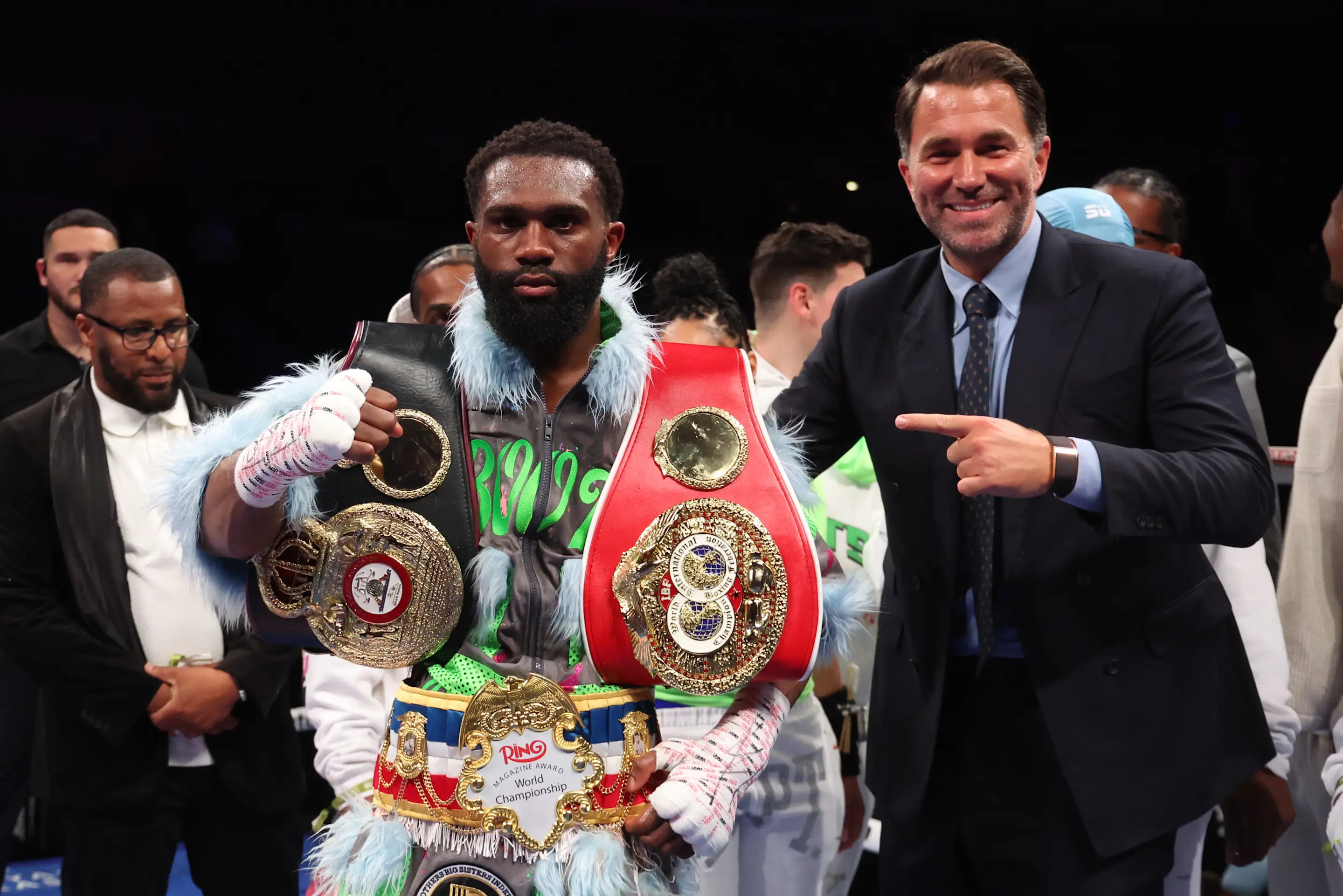
Can Jaron Ennis become a two-division world champion?
(Ed Mulholland via Getty Images)
Almost three years on from the night we decided he wasn’t quite ready for Terence Crawford, we have since seen Ennis, 28, replace Crawford as a champion at welterweight and move up a division with the aim of going one better. Now, with Crawford retired, Ennis has the chance to become not just Philadelphia’s next boxing star, but America’s. He sees that spot at the top of the pound-for-pound list vacated by Crawford last year and he wants to try that on for size, too.
Advertisement
“Talent-wise he is good enough,” said Peltz. “But I don’t think he has the — I’m trying to think of the right word — I don’t think we’ve seen his personality come out yet. We don’t know who he is. We knew Giardello was a tough street kid and we knew Briscoe was a tough street kid. But ‘Boots’ is very quiet, mannerly. Maybe that’s not what you want in a fighter. I mean, he’s a great kid, but it’s hard. When fighters only fight once or twice a year, it’s hard to develop a following. Let’s use tennis, for example. What would happen if [Carlos] Alcaraz or [Jannik] Sinner only played once a year? [Rafael] Nadal and [Roger] Federer must have played each other 30 times. What would happen if they played each other just once every five years? You can’t develop a following with inactivity.
“That’s not an issue exclusive to Ennis, by the way. That’s an issue across the board. I can walk into a restaurant in Philadelphia with 200 people in there and not one of them could tell me the name of the current heavyweight champion of the world. I would bet on that. I could then go to a baseball game or a football game, where there are 30,000 people in the audience, and I would still be surprised if a single American could tell me the name of the current heavyweight champion of the world. Now how many of those do you think could tell me who Ennis fought in his last fight? Ennis is just a microcosm of this issue.”
Be that as it may, Jaron “Boots” Ennis has always been about the future, not the past. In 2023, he was considered the future of the welterweight division rather than a direct rival to Terence Crawford, and now, in 2026, we focus on his next fight — his first career-defining one — as an indication of his star potential. Should he win that fight, and therefore dethrone Xander Zayas, you will surely be able to locate someone sitting in a restaurant or ballpark somewhere who could detail in glowing terms how “Boots” has now found his feet. You just might have to trawl through their social media, that’s all.
Read the full article here