






It’s not how I would usually spend a Friday morning. Skin red raw from a steaming hot bath, I flop myself out and onto the bathroom floor as my wife looks over me — a cocktail of confusion and concern splashed across her face.
She grabs me a handful of heated towels as I swaddle myself. Head throbbing, I stare at the ceiling and my vision begins to narrow in. The wooden panels above me begin to dim, like someone is slowly turning down my body’s brightness.
Advertisement
I close my eyes for the next 10 seconds and let my body drift — as if being pulled under by a colossal wave. It’s kind of peaceful down here.
I am not a fighter — and never have I been the fighting type. I’ve not even pretended to be.
As a kid growing up in a suburban corner of northwest London, you were far more likely to find me in a playground huddle passionately debating the previous night’s soccer controversy or trading Pokémon cards, than squaring up to anyone behind the bike sheds. Still, I reveled in sport and competition. Lunchtime games, whether it be soccer, cricket or four square — which I miss dearly as an adult! — carried the weight of life and death. What do you mean we have to return to class?! It’s 4-4. We play until there is a winner!
I was never exposed to fighters, either. Boxing wasn’t a sport encouraged at school, nor one that was even considered worth discussion in physical education classes. So my love of the sport grew on my own terms. British heroes like Lennox Lewis, Frank Bruno and Ricky Hatton lit up my television screen on the weekends, while my fingers would turn black from ink as I ferociously flicked through the back pages of the Sunday papers to source any overnight results.
Advertisement
Boxing magazines opened another door. They gave me access to the personalities behind the punchers. Forget the one-word answers and airbrushed interviews that soccer players would give post-match, boxers spoke from the heart, often without filter, without agenda. They’d swear. You can’t swear! Well, at least that’s what I had grown up believing on a diet of BBC’s “Match of the Day.”
June 8, 2002: Lennox Lewis and Mike Tyson fight for the world heavyweight titles.
(Focus On Sport via Getty Images)
It was almost otherworldly. I was hooked. I wanted to know more and more about the men and women who dared to go where I didn’t — inside the ring, throwing punch after punch, eating punch after punch, all in front of a crowd baying for their blood. For money, fame and titles? Yes. But often because fighting was the only language they’d ever known.
Fast-forward a decade or two and becoming a boxing journalist has allowed me to facilitate the sharing of their stories. Allowing these voices to be heard, from part-timer, regional journeyman to undisputed world champion, remains one of the greatest privileges of my life.
Advertisement
But there is a familiar stick used to beat those of us in this line of work: How can you write about something you have never done yourself? It is a defense certain fighters reach for when criticism comes their way, yet it feels almost uniquely reserved for combat sports. But is this machismo-ladened opinion … fair?
The fight game is, after all, unlike any other sport, so perhaps the set of life rules that we have subconsciously agreed on as a society don’t stretch inside the ropes. Sure, you can criticize a meal without knowing how to boil an egg. Wasn’t that singer a bit s***? But you yourself don’t know your soprano from your tenor. Heck, I’ve wandered around London’s Tate Modern art museum wondering if I was in the right place. Life experiences are, by their nature, subjective.
Yet how can I possibly empathize with a boxer as the bell goes at the start of a fight without having any indication of what they’ve gone through to get to that moment?
A number of boxers have been quoted as saying that making weight is the hardest part of their job. Former cruiserweight world champion Tony Bellew had famously outgrown the 175-pound weight class when fighting Isaac Chilemba in back-to-back fights in 2013. “I wasn’t training to improve my boxing ability,” the Liverpudlian explained. “My whole focus was on making weight.” And many throughout history have shared this sentiment.
Advertisement
“The weight-making has scarred me mentally to this day and it’s still pretty bad,” former three-weight world champion Duke McKenzie explained. “People who have never experienced making weight will never understand how it affects you. But it does.”
Some fighters even haven’t lived to tell the tale of a weight cut, losing their lives due to severe dehydration leading to cardiopulmonary failure.
In 2015, 21-year-old mixed martial artist Yang Jian Bing died after reportedly losing around 15% of his body weight in the days leading up to a bout in the Philippines through severe dehydration. He collapsed shortly before the weigh-in and later died.
Advertisement
Three deaths within the space of little more than a month in 1997 exposed the dangers of extreme weight-cutting in amateur wrestling and forced sweeping changes to the sport. Bill Saylor died while attempting to rapidly shed weight by exercising in a heated room while wearing rubber suits designed to trap sweat; he suffered fatal heat-related complications during the process. Joseph LaRosa died under strikingly similar circumstances, using intense exercise and severe dehydration methods in sauna-like conditions to make weight. Weeks later, Jeff Reese also lost his life while engaging in extreme weight-loss practices.
So I spoke with my editor at Uncrowned — give yourself a pat on the back, Shaheen Al-Shatti — and, to his credit or concern, he listened as I explained my plan to cut weight like a boxer.
I would set a weigh-in date, target 154 pounds (super welterweight), which felt about right for my 35-year-old frame of 5-foot-11, and put myself through something resembling a six-week training camp, as though a fight contract had just landed through my mailbox.
How bad could it be?
The weight-making has scarred me mentally to this day and it’s still pretty bad. People who have never experienced making weight will never understand how it affects you. But it does.
Week 1
-
YMCA bench press test: 42 (40 kilograms/88 pounds)
-
5-kilometer run: 24 minutes, 22 seconds
-
Punches in 3 minutes: 161
-
Workouts: 2x strength training, 2x runs, 1x boxing drills
Advertisement
If I wanted to successfully drop the necessary 24 pounds (10.8 kilograms) in six weeks, then activity was a necessity. I’ve fluctuated in weight throughout adulthood, but not until getting married last summer did I truly understand the benefit of — as my then-fitness coach would say — “getting your f**king steps in.”
Before any tailored fitness plan was drawn up, I decided on one non-negotiable: 12,500 steps a day, every day, for the duration of camp.
How those steps came was less important. Walking, running, shadow boxing, skipping — if the number ticked over, it counted. The logic was simple enough: Hit that baseline and, at the very least, I probably wouldn’t gain any weight.
Which, admittedly, felt like a fairly low bar to clear for a challenge built around pretending to be a professional fighter.

I was about to became exceedingly familiar with London’s boxing gyms.
(Taiyou Nomachi via Getty Images)
A sunny spring morning in London is hard to come by, but clear skies on the morning this challenge started gave me that motivational kick. A gentle five-kilometer run in a nearby woodland area of Surrey called Virginia Water seemed like a good starting point.
Advertisement
It was here, in 1806, that the infamous professional boxing pioneer, Sam Elias — better known as “Dutch” Sam — fought Tom Belcher in a bare-knuckle fight described as “one of the best contested and most skillful battles ever witnessed.”
Dutch Sam was famed for inventing the uppercut — known then as the undercut — and with a reported record of around 100-2, was considered the “best fighter in all the Kingdom.” But Sam’s most impressive feat was the size of the men he was able to beat. Standing at just 5-foot-6 and weighing 130 pounds, Sam fought and beat foes weighing up to 168 pounds.
His nutrition of “three glasses of gin a day” probably hampered him more than being constantly outsized by opposition. His death in 1816 came 51 years before the Marquess of Queensberry Rules were drafted, which outlined the birth of weight class distinction in boxing. Not until 1886 was a true lightweight champion crowned in Jack McAuliffe — the division in which Dutch Sam would have competed.
In 2026, there are 18 recognized male weight classes and 17 women’s. Men range from 105 pounds (minimumweight) to 200 pounds-plus (heavyweight), whereas women start at 102 pounds (light minimumweight) up to 175 pounds-plus (heavyweight).
Advertisement
Weight divisions were introduced to create something resembling a level playing field — to ensure, as much as possible, that fights were decided by skill rather than sheer size. But over time this concept has introduced a raft of problems where fighters seek to gain advantage fighting in a weight class that is below their natural weight.
It is now common practice in combat sports to utilize weight manipulation and dangerous levels of dehydration in order for athletes to reach an inappropriately lower weight class for their size. After weighing in, typically 36 hours before their contest, fighters will then refuel with large quantities of water and food to a point where their bodies are unrecognizable the following day, weighing, in some instances, 30-40 pounds over the contracted weight limit.

Weight classes were designed so fights like this — Jake Paul vs. Anthony Joshua — don’t happen.
(JC Ruiz – PA Images via Getty Images)
I tried explaining this concept to a couple of friends who had come over for dinner that evening. The irony was sublime as I chomped down on a delicious white chocolate and pistachio cookie that one of them had baked. There may have been some ice cream involved as well … oh, and a beer. Who’s counting?
Advertisement
“Think of a springboard,” I explained. “The further you can press down on it, the higher you are going to spring up. That’s what fighters do in order to be as big and strong in their weight class as possible.”
“Isn’t that dangerous?” one of them asked.
I scoffed. “No, no. Boxers do this all the time. It’s a pretty normal practice.”
“But … you’re not a boxer.”
I mean, she wasn’t wrong. I decided to double down on this idea that weight shifts are very common in the sport. I used the ridiculous anomaly of Manny Pacquiao as an example. Throughout his 30-year career (and counting), the Filipino has won world titles in eight different weight classes, ranging from flyweight (112 pounds) to my target of super welterweight (154 pounds). But it’s unlikely this will ever be repeated.
Advertisement
Some fighters, including the legendary pairing of “Marvelous” Marvin Hagler and Gennadiy Golovkin, spent their entire careers at the same weight. They ruled the 160-pound division throughout different periods of boxing history, drawing criticism from some for not testing the waters in different weight classes in search for extra titles.
But greatness can also lie in understanding the limits of your own frame and working with your physiology, rather than waging war against it.
Kerry Kayes, a former British bodybuilding champion and nutrition coach, explained it well in an interview with Sky Sports a few years ago.
“Maybe Marvin Hagler comfortably stayed at the same weight throughout his career because he didn’t boil himself down falsely at the beginning of his career. For years, the sport’s approach to making weight was brutally simple: Don’t drink, don’t eat, skip in a sauna, take laxatives, empty your bowels and crawl onto the scales. If you missed the mark, you were lazy. Train harder next time.”
Kayes added: “There is a place for nutritionists within the sport of boxing, definitely.”
Advertisement
We finished eating dinner that evening and I decided that was my last “cheat meal” throughout this challenge. Living like a fighter isn’t just long runs listening to the “Rocky” soundtrack. It’s a lifestyle.
And if I was going to take even a watered-down version of that seriously, I was going to need some help.
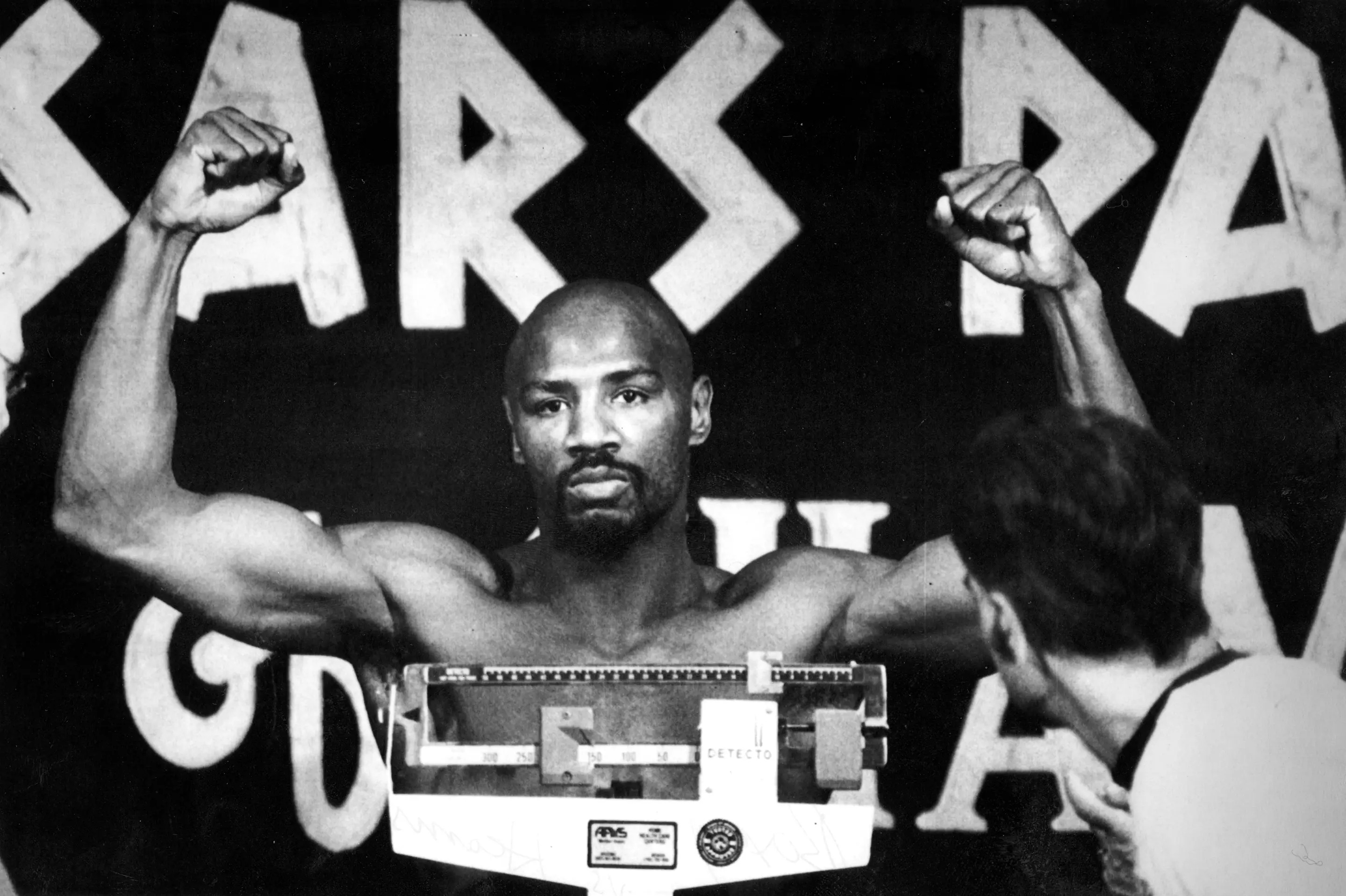
April 15, 1985: Marvin Hagler weighs in before his legendary boxing match against Thomas Hearns.
(Boston Globe via Getty Images)
Week 2
-
Workouts: 3x strength training, 4x padel matches, 2x runs
“This is going to be a pretty gnarly cut.”
A deep Yorkshire accent vibrated my phone as I began by unofficially appointing Lee Rickards as my sensei for the foreseeable future.
Rickards is a distinguished performance nutritionist specializing in weight-making sports, notably boxing. He holds both a Bachelor of Science in Sport Science for Performance Coaching and a Master of Science in Sport and Exercise Science from Sheffield Hallam University — but more importantly, he’s a bloody good bloke.
Advertisement
His fighters will back me up. Sunny Edwards, Lerrone Richards, Skye Nicholson and Fabio Wardley are just some of the world champions and contenders who have been coached by Rickards, and his scrupulous methods have yielded some excellent results.
“The biggest advice I give any fighter is: Assess, don’t guess,” he explained, a week after I had guessed that I should be aiming to boil down to 154 pounds.
“But it’s a lot harder in boxing simply due to resources.”
I let out a sigh of relief.
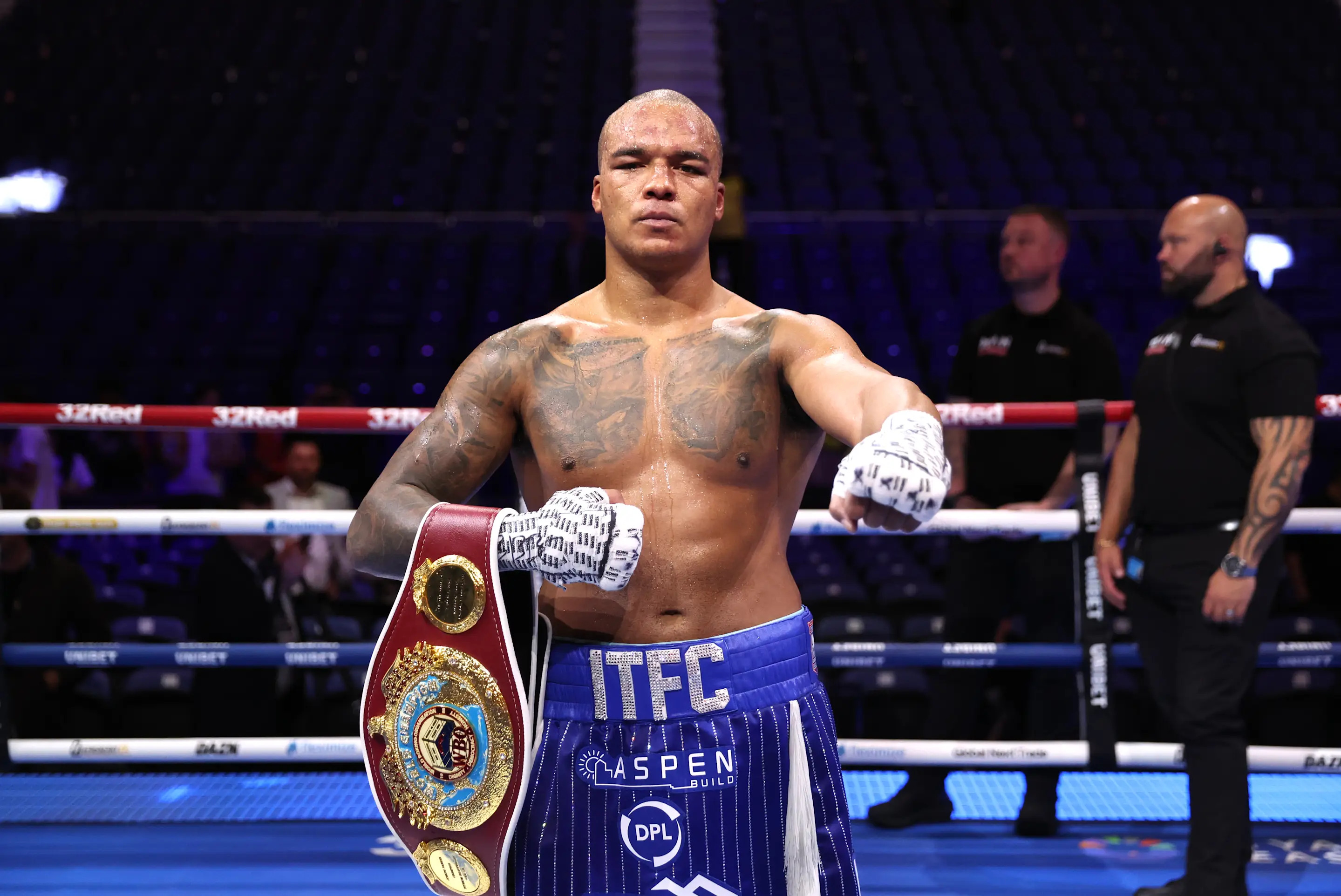
Former WBO world heavyweight champion Fabio Wardley has worked with Lee Rickards in the past.
(Steven Paston – PA Images via Getty Images)
“In combat sports there is generally a lack of education; a lack of knowledge. There’s limited funding for research as well, so there aren’t any privileges. If you compare the number of funded studies in boxing compared to say, [soccer] or rugby then you’ll be amazed at the difference — think 500 as opposed to 50,000.”
Advertisement
“Boxing attracts people from poor and deprived backgrounds and a lot of them can’t afford a nutritionist like myself to guide them,” Rickards continued, “especially at the start of their careers when it is the most important time to know, for example, what weight class you should be fighting in.
“Thankfully there has been a shift in the last few years, but before, boxers were just taking all their advice from coaches or other fighters in their gym. And what works for someone doesn’t necessarily work for another.
“So many fighters will turn professional into the wrong weight category. Maybe because they’ve got a higher muscle mass than fat mass. Coaches will see them walking around [out of competition] close to their fighting weight, and assume that they are too small for their class. But the reality is that they haven’t got much fat mass to shift in order to reach a lower class.”
Rickards explained that body composition analysis is the gold standard of determining what weight class a fighter should be aiming for, whether that’s through a DEXA bone-density scan — limited to one use per year due to radiation effects — skin-fold testing or Bioelectrical Impedance Analysis (BIA). My own analysis through a version of BIA — my “smart” bathroom scale, which detailed a layman’s set of results of muscle mass and fat mass — luckily gave me the confidence that 154 pounds was a reasonable target.
Advertisement
“If your habits in camp are good, then it’s a pretty simple process,” he added. “Fat should come off pretty easily, and if you can do it gradually with consistency, then you shouldn’t have any problems making weight.
“If you can stay in a calorie deficit — with enough energy to train sufficiently — throughout the bulk of camp, then you’re well set for that final week. Then, just think of a Tour de France cyclist. When they have that big hill finish, they want to throw everything off their bike to lose that last bit of weight. For you, that will be water and additional residue in your stomach — so you’ll want to limit fiber.”
Rickards went on to outline the science of water loading at the start of fight week, so that your body naturally reacts and dehydrates pre-weigh-in.
Aquaporins are specialized proteins that act as microscopic water channels, regulating the movement of fluid throughout the body. Within the kidneys, they function like carefully controlled floodgates, determining how much water is reabsorbed into the bloodstream and how much is expelled as urine.
Advertisement
When large volumes of water are consumed, the body’s hormonal signaling responds by effectively closing many of these gates, reducing water reabsorption and encouraging the kidneys to flush out the excess. This mechanism is one of the key physiological principles behind water loading, where deliberately increasing fluid intake can temporarily train the body to excrete water at an accelerated rate.

Conor McGregor’s weight cuts famously became difficult toward the end of his featherweight reign.
(Jeff Bottari via Getty Images)
Dropping a considerable amount of water weight hours before weighing in is a controversial subject in combat sports. The theory that a boxer can rehydrate as quickly as they can dehydrate is flawed. Multiple scientific studies show that a boxer who is dehydrated, even if they have been drinking rehydration fluid for a full day, cannot perform at the same level, and cannot defend themself properly.
The brain is cushioned by cerebrospinal fluid (CSF), a protective layer designed to act as a shock absorber inside the skull. But when a heavy punch lands in boxing, the force and violence of the movement can overwhelm that protection entirely.
Advertisement
The brain is thrown against the inside of the skull, accelerating, decelerating, twisting and shifting within a confined space. It is this violent motion — rather than simply the impact itself — that causes much of the damage to fighters over their careers, leading to trauma in the brain and changes to the fluid meant to protect it.
Dehydration — due to a reduction of CSF — exacerbates this impact.
Rickards believes that the practice of dropping water during fight week should be more controlled by organizations like the British Boxing Board of Control (BBBofC).
“Everyone is doing it [excessively dehydrating] — but some fighters will veer into that unsafe territory in order to make a contracted weight,” he explained. “If there was, A, an agreed method to drop water weight and, B, an agreed percentage that was safe to do so, you would stop a lot of fighters going to dangerous lengths and putting their lives in danger.”
Advertisement
“At the moment, if a fighter misses weight, the BBBoC will give them a two-hour extension to make it. What on earth do they think they are going to do in order to make the weight?!”
Chris Eubank Jr.’s weight cut to a contracted 160 pounds in his rematch with Conor Benn last year went viral. He was fined $13,450 by the BBBoC for misuse of social media after a hearing examined his apparent use of a sauna to make weight. This fine added to the whopping $500,000 charged by Benn’s side of the contract as Eubank Jr. missed the limit by 0.05 of a pound.
“When there’s thousands of dollars on the line,” Rickards said, “fighters are going to do it [extreme water cut] whether you advise them against it or not. That’s the battle we’re up against.”
We said our goodbyes and Rickards signed off: “May the force be with you, Lewis.”
Advertisement
Now armed with a strategy, the fundamentals of nutrition — working under my Basal Metabolic Rate of 1,760 kcal/day — and an idea on the final water cut, the objective appeared clearer and reachable.
Later that same evening, American boxer Brandon Adams — who was supposed to be fighting at a contracted weight of 154 pounds — withdrew from his fight with Ireland’s Caoimhin Agyarko. The 36-year-old collapsed in his Las Vegas hotel room after complaining of chest pains, and was hospitalized before the weigh-in.
My calves and knees were throbbing. I had played at least four games of padel in the week — to a pretty intense level, if I don’t say so myself — and stairs, as well as standing up, were proving an issue. Full disclosure: Padel has become a new obsession of mine. I just didn’t realize the impact it was going to have on my tricenarian joints. But after years of playing soccer, it scratches a competitive itch I was previously finding hard to locate.
I mean, where else can you scream “Vamossssss!” at a stranger without any other accompanying Spanish?
Advertisement
The long and short of it was that “getting your f**king steps in” was coming with some side effects. I audibly groaned as I sat down at a Spanish restaurant in the market town in Berkshire, England to celebrate my mother-in-law’s birthday.
With Rickards’ dulcet tones still ringing in my ears, I perused the menu. Patatas bravas? Hmm, I wish. Croquetas de jamón? I probably shouldn’t. An endless list of delicious, calorific tapas dishes.
“I’ll take the steak please, mate. And an agua.”
When there’s thousands of dollars on the line, fighters are going to do it [extreme water cut] whether you advise them against it or not. That’s the battle we’re up against.
Week 3
-
Workouts: 2x strength training, 2x runs, 2x boxing workouts
I was becoming increasingly aware of how much this whole exercise — let’s be honest, playing dress-up as a professional boxer — had started to bleed into the rest of my life.
Advertisement
It turns out food dictates a frightening amount of your daily rhythm. Eating isn’t just fuel; it’s routine, comfort, social interaction. It is stitched quietly into almost every part of modern life. Well, mine anyway.
To maintain a fairly aggressive calorie deficit, I found myself turning down social plans simply to stay on course. The fear of seeing the scales spike the morning after a salty meal or calorie-dense dinner began creeping toward obsession, while late-night pavement pounding became a kind of insurance policy — punishment and protection rolled into one — to undo any perceived slips from earlier in the day.
I found the psychology of the situation fascinating. If little old me was beginning to catastrophize about not making a self-imposed weight for a pretend fight all to — well, write exactly what you are reading now — then how are fighters able to manage their emotions when hundreds, thousands and sometimes millions of dollars are on the line?
I explored these complexities with my close friend, Luke. Dr. Luke Barnes — Sports Psychologist and Senior Lecturer at Leeds Trinity University — to you. We met 11 years ago as solo travelers across Europe, and immediately bonded over our love of cold lager and visiting as many soccer stadiums across the continent as possible. We’d spend endless hours slouched in dive bars disappearing down rabbit holes over all-time Premier League XIs, reliving every painful England tournament exit, and debating just how much of our lives we’d sacrifice for 10 minutes on the pitch representing our beloved Chelsea and Nottingham Forest respectively. (The answer? Not the dog, but I’d probably trade one of the cats in to don the No. 9 shirt.)
“It’s about reframing the threat of the situation,” he explained. “Turning any perceived threat into a challenge, believing that you have the tools to overcome it rather than succumb to the dangers of the threat.
“A challenge is different to a threat. It’s something that can invigorate us — it’s an obstacle; something that we can aim toward overcoming. Whereas a threat? Well, that’s typically something that we aim to avoid.”
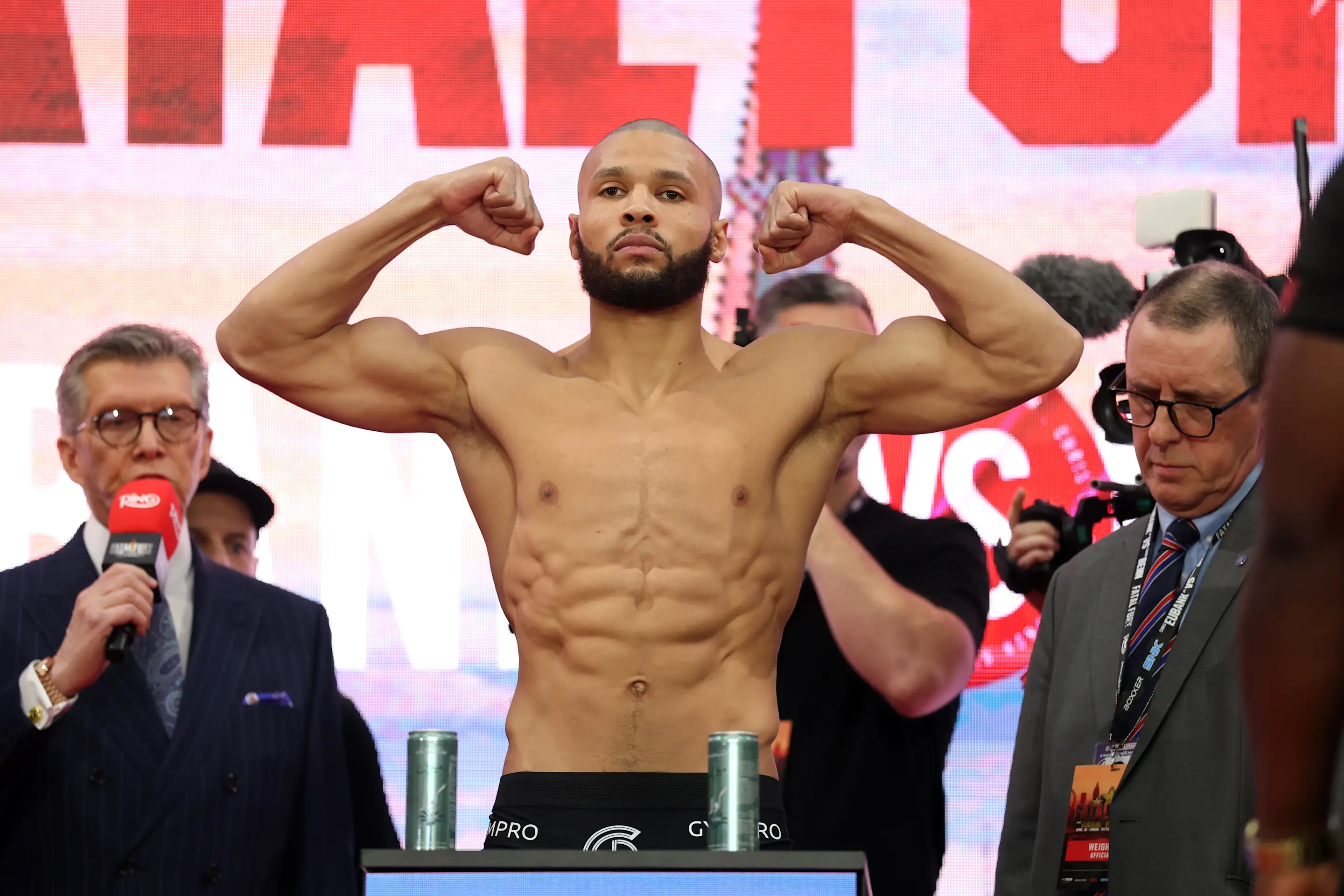
Chris Eubank Jr. was infamously weight drained for his rematch with Conor Benn — and it showed in his performance.
(Richard Pelham via Getty Images)
As with anything psychological, it is, of course, easier said than done. As he spoke, it was impossible not to imagine the blank face of a boxer, in their first session, trying to process this information. I consider it a privilege that I am able to understand some of the practices that Luke — sorry, Dr. Barnes — went onto outline. This isn’t meant to sound condescending; I studied Sport and Exercise Psychology as an undergraduate between 2008-11 and was struck by the resistance across the professional sporting landscape to acquiesce to some of the diligently formed research.
That’s not to say the lay of the land isn’t changing. The global sports psychology market was valued at $4.8 billion in 2025 and is projected to grow to $9.7 billion by 2034, expanding at a compound annual growth rate of 8.1%. Those figures reflect a broader shift across modern sport, where mental conditioning is no longer treated as an optional extra, but as a fundamental pillar of performance alongside physical preparation. I guess the buzzwords attached would be: “Finding those marginal gains.”
“So if you’re applying that to making weight, what we’d look to do is help the boxer reframe the process,” Luke said. “It’s not going to be helpful to their camp if they are focussing on possible negatives if they miss weight — like losing their purse, losing their title, getting fined etc. So let’s try to change that. The challenge of making weight — if successful — can yield some career-changing outcomes, and if they are focusing on these positives then they are more likely going to thrive in camp.”
We touched on binge-eating as well. The temptation to think “f*** it” once going over my daily calorie allowance, and then just writing the day off, ascending into a gorge-fest of sourdough and chips was too strong to ignore on certain days. This all-or-nothing mentality can easily transform into the cognitive distortion of “catastrophizing” and is hard to row back from.
“Your focus then needs to shift from perfection to damage limitation,” he said. “If you are able to compartmentalize this ‘binge,’ then there is no reason why it should escalate to anything damaging your overall goal.”
I’ve interviewed hundreds of boxers over the years, and only a very small number have ever openly discussed working with a psychologist. The names that immediately spring to mind are Anthony Joshua and Austin “Ammo” Williams — two fighters who have shown a notably rare willingness in boxing to look inward in pursuit of self-improvement.
Whether that comes down to a lack of education around what sports psychology can actually offer, financial limitations, or simply the stubborn belief that improvement in boxing begins and ends with the physical, it’s difficult to say. This remains a sport where toughness is still too often mistaken for silence.
And when it comes to making weight — a process that can dominate a fighter’s life for camps stretching 10 or 12 weeks — I’ve certainly never come across a boxer using psychological support specifically to navigate that side of the sport.
Luke’s own consultancy has spanned over 10 different sports and 100 athletes, but not a boxer in sight. He had an initial meeting with an MMA fighter, but it went nowhere. “He didn’t get back in touch, so I assume he thought it was a load of shite,” Luke admitted.
He hung up as I was on my way to what had become my temporary church: The gym.
A gentle 30-minute jog through the rain bought me enough wiggle-room to walk into the gym, witness what looked like a live-action Royal Rumble unfolding between every piece of equipment imaginable, and promptly turn back around again. Instead, I spent 20 minutes shadow-boxing in the neighboring park, dressed head-to-toe in a Junto Nakatani tracksuit — leaning even further into the increasingly undeniable reality that I was essentially playing dress-up as a professional fighter — before finally calling it a night.
I put the key in the door and was welcomed home by the familiar screeching and wagging tail of my miniature dachshund, Franco.
Hobbling toward the fridge, closely shadowed by a dog whose nose is somehow longer than his legs, I threw together dinner — chargrilled chicken, tenderstem broccoli and a helping of grains. The boiling kettle drowned out his further cries for attention.
Settling onto the sofa, I could feel Franco’s eyes drilling into the back of my skull. He sat motionless, unblinking, convinced that if he stared hard enough a piece of chicken might somehow launch itself from my plate and into his mouth.
“I know how you feel, buddy,” I muttered.
At that moment, we were both dreaming about a meal we weren’t getting.

“I may have made a terrible mistake.” (Lewis Watson, Yahoo Sports)
Week 4
-
YMCA Bench Press Test: 46 (40 kilograms/88 pounds)
-
5-kilometer run: 24 minutes, 3 seconds
-
Punches in 3 minutes: 156
-
Workouts: 1x strength training, 3x runs, 2x boxing workouts
Jake Pollard has made weight as a professional boxer more times than you. I’d put good money on that. In fact, he has made weight as a professional boxer 110 times more than me — which, yes, is a grand total of 110 times.
I featured the 34-year-old in an article for Uncrowned last year titled: Meet the real-life Glass Joe, boxing’s 1-100 ‘professional loser’ and we have stayed in contact ever since.
Pollard is an extremely impressive athlete. In essence, he is a boxing opponent for hire, fighting as many times as he can — sometimes every weekend of the same month — earning a consistent wage on a fight-by-fight basis.
But that schedule leaves little room for the dramatic weight cuts. When you’re competing as frequently as Pollard, the goal isn’t to strip away huge amounts of weight two or three times a year. It’s to remain consistent, hovering around fighting shape at all times.
To him, the concept is refreshingly straightforward.
“It’s quite easy, though, isn’t it?” he said, a wry smile creeping across his face. “I mean, your body tells you everything, doesn’t it? If you’re hungry, eat. If you’re thirsty, drink.
“I’ve never used a nutritionist — I’ve just learned to do things my own way. But I am strongly of the opinion that journeymen shouldn’t have to drop significant amounts of weight. They are already disadvantaged enough, and with such short notice given on fights a lot of the time, it seems crazy to make these demands. The A-side essentially wants to have their cake and eat it.
“Part of the reason I adopted the journeyman lifestyle is that I want to be able to enjoy my life. I want to be able to have a McDonalds with my son without worrying, or have a pint of beer — stuff that you simply can’t do in a camp when you’re dropping a load of weight.”
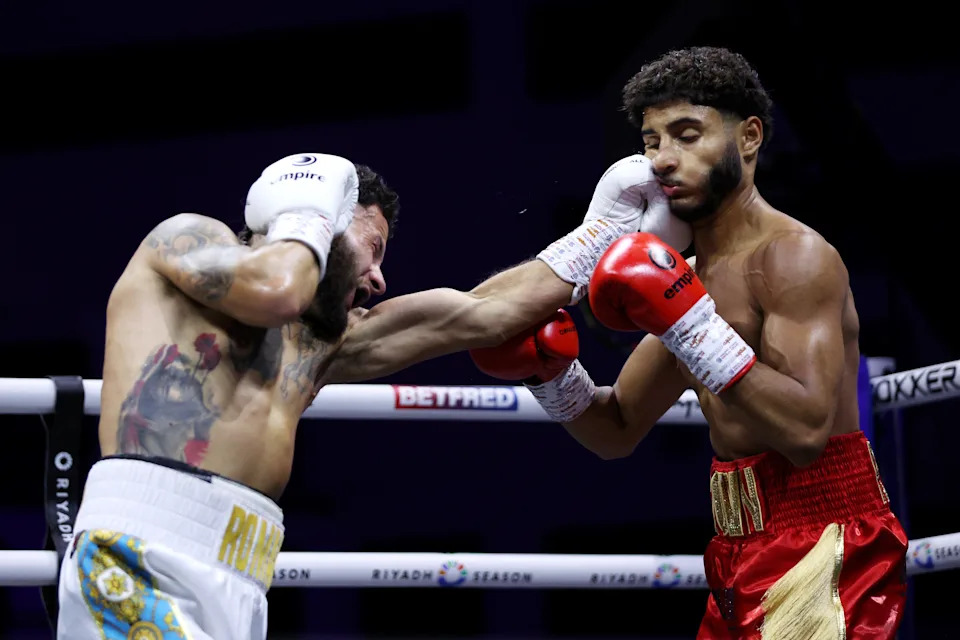
Jake Pollard (left) punches Yuvraj Karia during their super featherweight fight in April 2026.
(Ryan Hiscott via Getty Images)
Pollard fought four times across March and April this year ranging between a weight of 121-132 pounds. For context, around the same weight, former WBC featherweight champion Gary Russell Jr. fought just seven times in seven years when he owned the title.
“I can stay healthy and flexible,” Pollard explained. “You’re obviously trying to aim to a certain weight class when you agree to the fight, but I’m not going to kill myself to get there — it’s simply not worth it.
“You get a few teams that kick up a fuss and say that I have to lose a couple extra pounds before the fight, but if I say no and threaten to go home, they soon change their tune. A journeyman’s body is going to naturally fluctuate. That’s life.”
I found Pollard’s attitude refreshing, but ultimately, unmotivating. He’s right: Boxers should be fighting like him, as close as possible to their natural and most consistent weight. It’s healthier. It’s easier to maintain. It’s easier to predict and understand your body’s warning signs if you’re not pushing it further and further each time.
But the 100-plus defeats on his record tell the wider story. Elite sport is a relentless pursuit of marginal gains — hunting for the extra one or two percent that separates success from failure, victory from defeat.
It’s supposed to be uncomfortable, right?
Those marginal gains were thrown into sharp focus later that week.
After six months of training, my wife was preparing to run the London Marathon in memory of her father, whom we had lost 16 months earlier.
Watching her over that period had been genuinely inspiring. No run was too early, too late, too wet or too miserable. She approached the challenge with a quiet determination, leaving no stone unturned in her pursuit of being the best version of herself on race day.
Every session had a purpose. Every sacrifice felt intentional. And — without leaning into the tired British stereotype of maintaining a stiff upper lip — she rarely complained about the aches and fatigue I’m sure were circling her increasingly battered body like sharks.
I’d gotten myself down to east London early on race day and was rewarded by some gorgeous morning sun. Headphones in, bopping along to a tired 2000s indie playlist, I walked from Canada Water to Cutty Sark along the underside of the snaking River Thames. As I got closer to the famous British clipper ship, crowds began to hug the sidewalks on either side of the glistening tarmac.
At the front of the race, 31-year-old Kenyan distance runner Sebastian Sawe headed a pack of elite athletes surging toward central London with ease. They had barely broken a sweat. Clad in fluorescent pink race vests, they swept past at a pace that barely seemed human, disappearing almost as quickly as they arrived. Around me, spectators scrambled for their phones, desperate to capture a moment that lasted little more than five seconds before the pack vanished into the distance.
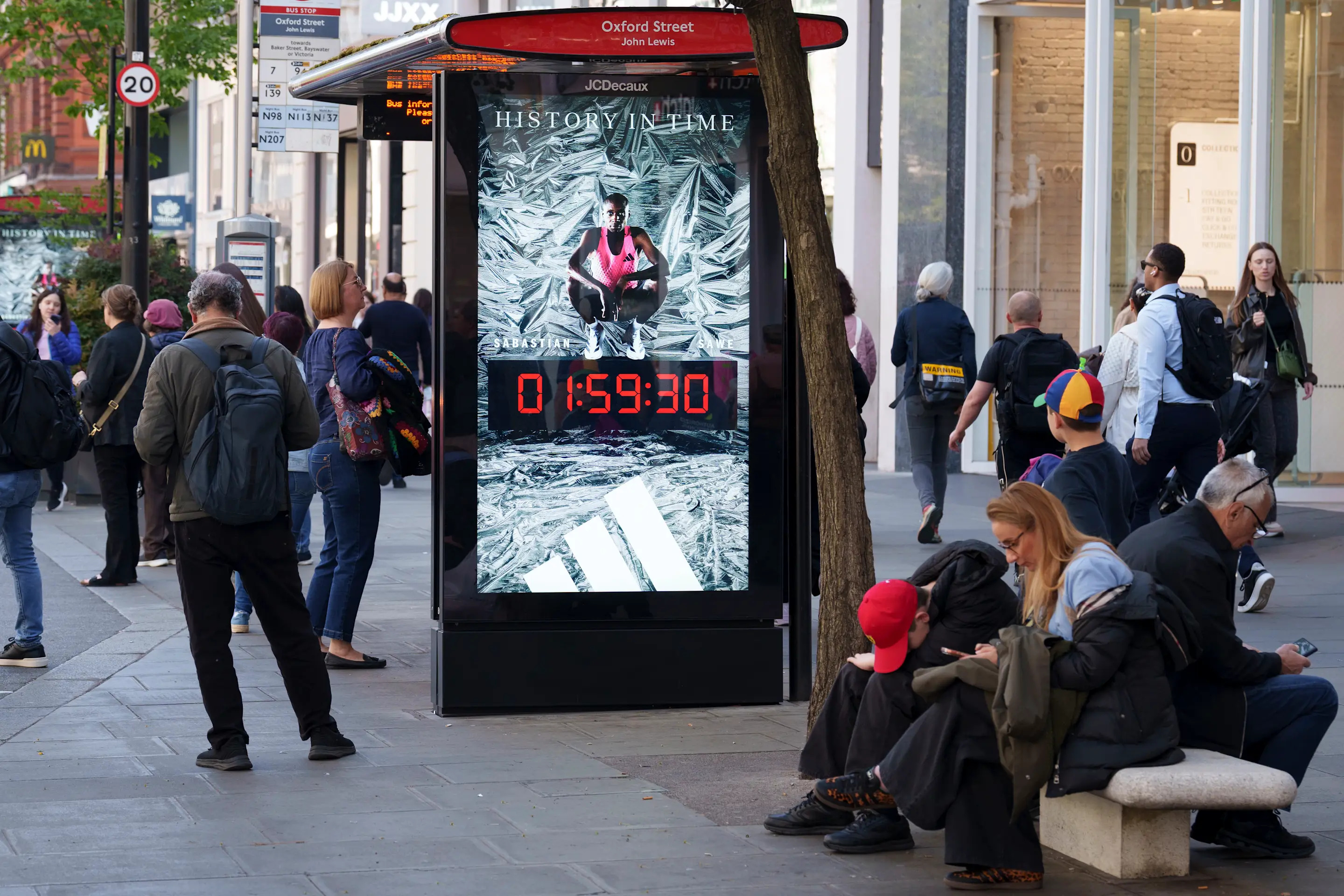
The morning after Kenyan runner Sabastian Sawe won the London Marathon with a world record time of 1:59.30, the first-ever sub-two-hour marathon in a competitive race.
(Richard Baker via Getty Images)
Later that morning it was confirmed that Sawe set a world record marathon time of 1:59:30, becoming the first athlete ever to run the 42.195-kilometer distance in under two hours. His marginal gain? A 97-gram “super shoe” from Adidas.
My wife completed the course in twice the time, an incredible achievement of her own. Her secret? Showing up, over and over again. “Discipline over motivation,” she would quote from an Oleksandr Usyk interview that resonated with both of us. Oh, and jelly babies. Don’t forget jelly babies.
It felt like a timely lesson as I entered the final stretch of my own challenge.
Week 5
-
Workouts: 2x strength training, 4x runs, 2x boxing workouts
A pudgy-faced David Lemieux answered the phone in jovial spirits. The screams of children that could be heard in the background of his kitchen underlined the changes his life had taken over the four years since he had been retired, but that didn’t stop the 37-year-old from engaging happily in stories from his 15-year career.
In his pomp, the Canadian held the middleweight division’s IBF world title and was regarded as one of the consistent names in the upper echelons of the famous 160-pound class. He mixed it with fighters including Gennadiy Golovkin, Curtis Stevens, Billy Joe Saunders and one of the sport’s biggest current stars, David Benavidez.
Lemieux walked away from the sport in 2022 with a record of 43-5 (36 KOs), choosing a quieter life back home in Montreal. And truthfully, he bears little resemblance to the fighter who spent years torturing himself to make the middleweight limit. The sharp cheekbones and gaunt features have been replaced by something healthier, more relaxed — the look of a man no longer living his life according to the scales.
“I’ve got some crazy weight-cutting stories for you, my man,” he declared with a grin. I explained my situation being a couple of weeks out from my own weigh-in, and he had plenty of words of … well, perhaps calling it “wisdom” might be a stretch.
“I always struggled bringing my weight down. I guess everyone’s bodies are different. There were certain fights where I had to absolutely kill my body to drop the last couple of pounds — they were the most difficult of the entire camp.”
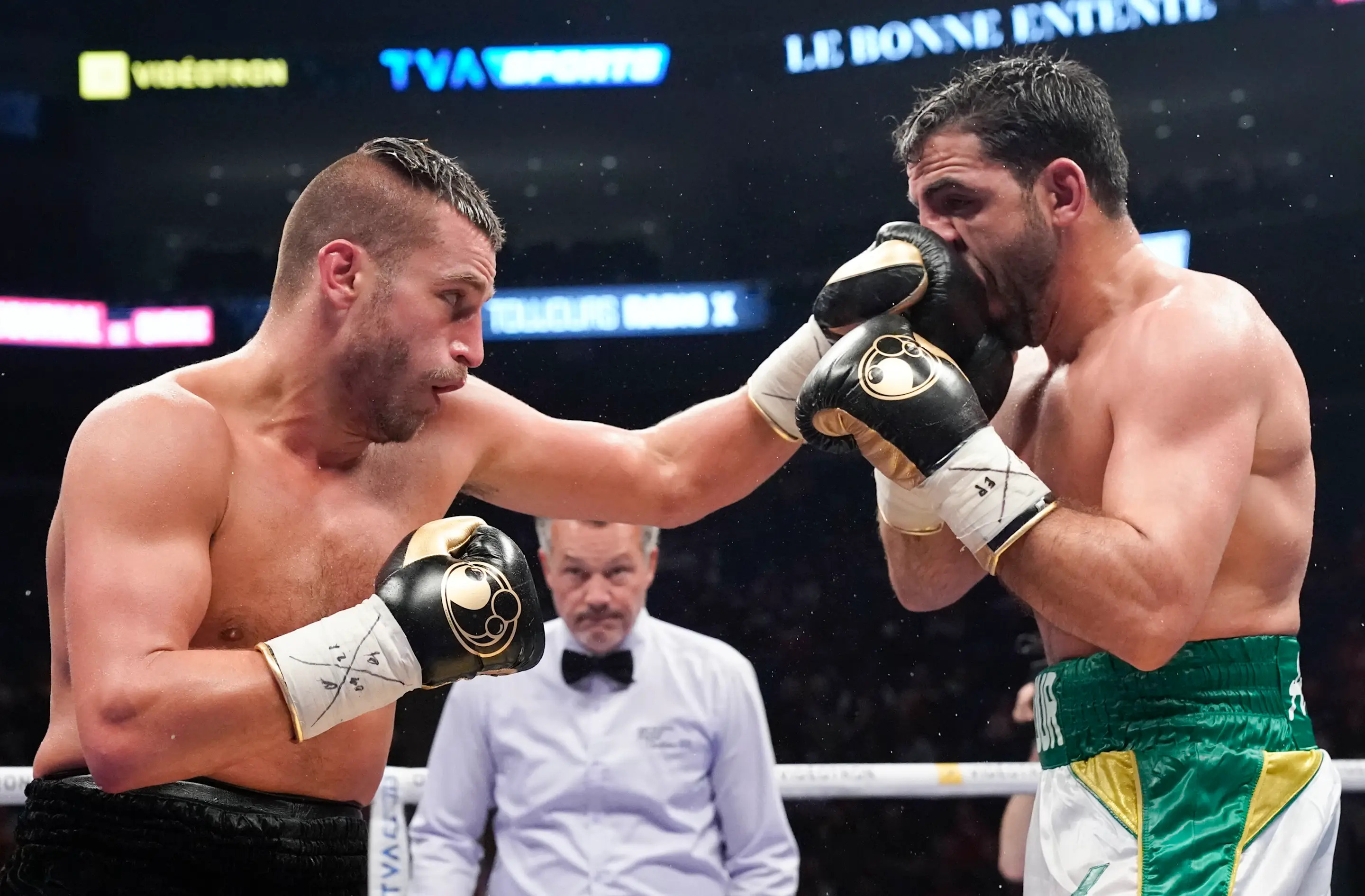
May 26, 2018: David Lemieux (left) punches Karim Achour during their middleweight fight.
(Mathieu Belanger via Getty Images)
Lemieux fought the aforementioned Golovkin in 2015 for the unified titles at middleweight. The Kazakh arrived at New York’s Madison Square Garden as a big favorite thanks to his rampaging 33-0 record, and the way he was able to rehydrate into a much bigger man than his opponents put pressure on Lemieux to match him physically.
Weighing in became a fight in and of itself for Lemieux.
“I ran for a good 45 minutes, and probably hadn’t eaten for a day and a half. I went into the sauna — a very hot one, let me tell you — and not a bead of sweat was coming out of my body. I had absolutely nothing left to lose. I looked at my coach and shrugged my shoulders. ‘Take some blood out of me if you have to, because this might be the only way’.
“I looked at the scales and they read 160.4 pounds — or something like that — so I went back into the sauna and just tried to produce any saliva from my mouth so I could spit it out. Literally nothing was off the table. It was the biggest fight of my career — a unification for the middleweight titles, so there was no option but to make the limit.
“I kept going in the sauna and eventually had to remove my underwear for the weigh-in, but we got there in the end. Mission accomplished.”
Looking back at Lemieux’s career, it’s impossible not to conclude that he could have done with better advice in the weight-making process. The Golovkin fight came with a 30-day check weight as ordered by the IBF — a weigh-in 30 days before the fight, to try and ensure that fighters are dropping weight gradually rather than crashing it unhealthily. Lemieux’s reported check-in weight was approaching the maximum allowable limit, tipping the scales at a beefy 175.8 pounds. For context, Golovkin weighed 165 pounds.
Lemieux explained how on a normal fight week (without the IBF’s stipulations) if he was 20 pounds overweight on the Monday with a weigh-in due on the Friday, he would feel he was in a good position to lose it. Anything more would be touch and go.
This again came with complications. A failed attempt to make weight against James de la Rosa in 2016 left Lemieux hospitalized due to dehydration.
“My body just shut down,” he explained. “I had nothing left. I had blurry vision and remember not being able to hear my mom in the hospital as she was talking to me. I wasn’t right in my head at all. I guess it was my body trying to protect me — it shut down and was basically telling me it had had enough.”
The clarity and eloquence that Lemieux is able to regale these brutal stories with is fortunate. Following the James de la Rosa incident, Lemieux still pushed his body to the middleweight limit another five times, before ending his career with a run at 168 pounds.
It struck me how much Lemieux seemed to enjoy talking about his career weight struggles. It felt sadistic. He seemed to take an incredible amount of comfort in believing that “every body is different” and some methods that work for some, simply won’t for another. He didn’t accept that he was fighting for a majority of his career in an unnatural weight class.
And this difference is even more stark between the male and female bodies. Former Team USA member and current 4-0 professional Amelia Moore told me that evening how boxing as a whole needs to learn to be more sport-specific in its approach to weight making.
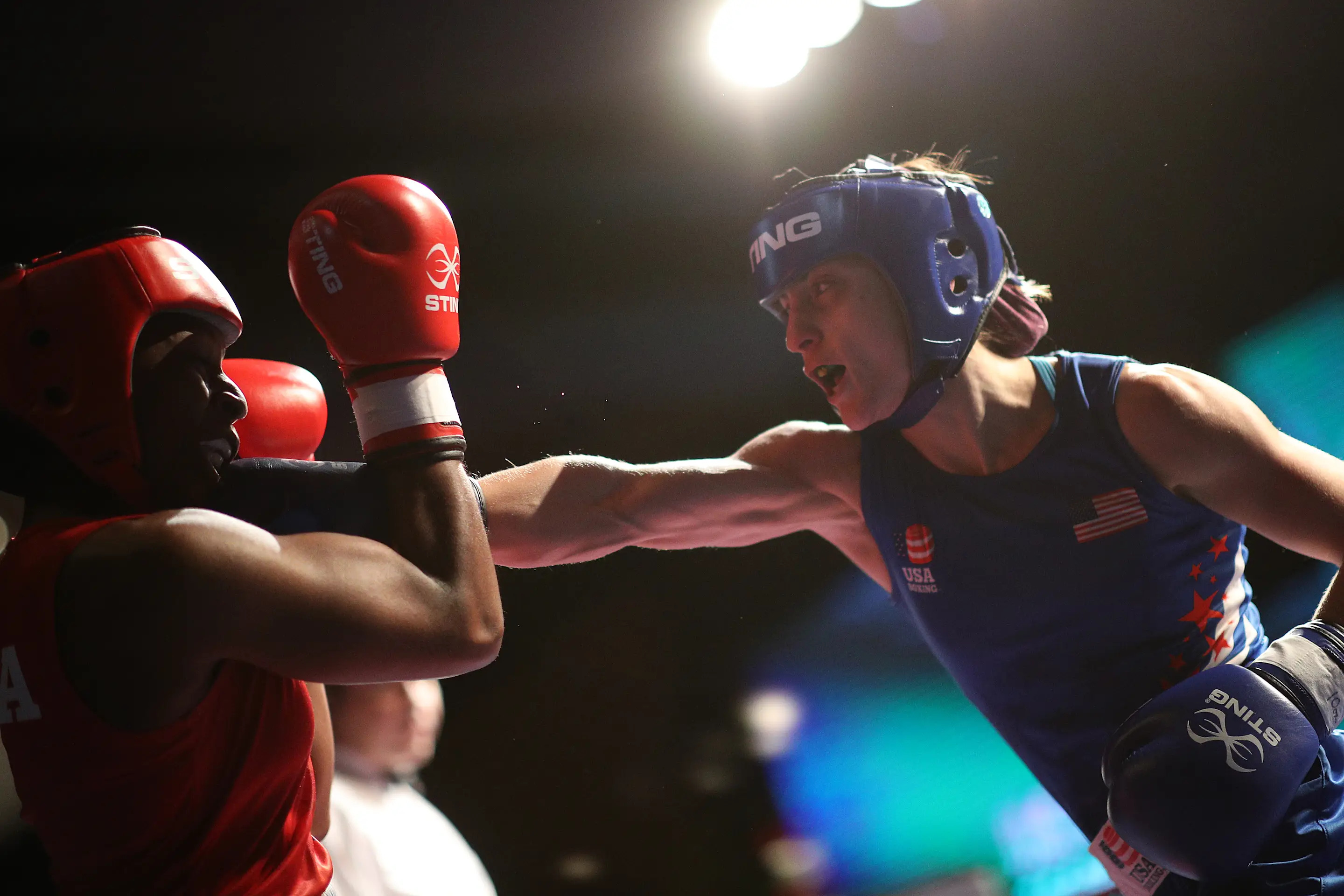
Amelia Moore (right) fights Rashida Ellis during the 2020 U.S. Olympic boxing team trials.
(Chris Graythen via Getty Images)
The Connecticut fighter is a trailblazer in the women’s code. After suffering as an amateur, she is attempting to educate the sport through science on better practices for finding and maintaining life in specific weight classes. At 5-foot-8, Moore has competed from 147 pounds down to 125, and during her amateur career was forced to stay at a particular weight for up to 10 days due to the nature of the multi-fight competition.
“It was just a guessing game,” she explained in reference to what weight class she should fight in as an amateur. “I was so dehydrated trying to make 132 pounds as an amateur. I was putting strain on my kidneys. Muscle cramping. My back hurt because I didn’t have enough water for my kidneys. And I wasn’t eating enough, not eating the proper things, anyway.
“Women’s biology is a little bit more sensitive because of our need to regulate our hormones. We struggle more if we are carb-deficient. Our bodies need minerals and nutrients at a baseline level, and if we aren’t getting them — things like sodium, potassium, magnesium — then the body starts trying to take it from elsewhere in the body.”
The consequences weren’t confined to competition either. During her career, Moore experienced amenorrhea, going an astonishing nine months without having a menstrual cycle.
“For female athletes, the issue extends far beyond reproductive health. If you don’t cycle, if a female doesn’t cycle, it starts to mess with your bone density,” Moore explained. “Amenorrhea can cause osteoporosis, almost. And it causes stress fractures.”
“That’s when you start seeing boxers getting weird injuries. Like hand injuries and shin splints, because your bones are getting more brittle due to being starved of what they need.”
It served as another reminder that the effects of prolonged weight manipulation are not always visible on the scales. In many cases, the most significant damage occurs beneath the surface, with consequences that can linger long after an athlete’s competitive career has ended.
With the amount of technology at our fingertips, Moore is convinced that boxing, as a sport, is failing to keep up. “If you work backward from your target, it can be pretty simple,” she added. “It seems crazy to me the number of fighters that are still starving themselves on fight week when it’s going to have such a detrimental effect on your body in competition. I don’t know if it’s more laziness or a lack of education. I guess both.
“Your body has a memory — and a pretty f**king good one at that. If you’ve put it through hell once trying to make a certain weight, then it’s going to try and protect itself the next time you try it — so that’s going to make it even harder, right?
“We need to move away from the idea of a ‘weight cut’ and turn it into a longer term, healthier ‘weight management.'”
I was a week out from my own weight cut and becoming increasingly aware that the final push would be somewhat of a lottery. I was still walking around around 8-10 pounds over the 154-pound limit, so needed to be armed with the best, healthiest tactics going into the final seven days.
“Oooosh, oooosh.”
There’s nothing like the sound of a boxing gym. The rhythmic hiss of punches cutting through the air. Thudding gloves on pads. Trainers barking instructions from across the room.
Granted, this particular Egham Boxing Club operated out of a primary school hall tucked away behind my house rather than some grimy old fight club. There were no dust-covered heavy bags hanging in dark corners, no decades of sweat soaked into the walls. But a boxing gym is a boxing gym, and the soundtrack remains the same wherever you find it.
If the past five weeks had been me playing dress-up, then I guess we should call this the dress rehearsal. I’d been an infrequent member of the club for the past couple of years since moving to this corner of Surrey, but thought it would only be right to return on this of all weeks.
Everyone is treated the same here — it’s one of its most charming qualities. I’ve said it many times before: I’ve tried every kind of sport under the sun and been to more clubs than I’d care to name, but boxing clubs always feel the most welcoming. For something built around fighting, toughness and bravado, it’s often the place where ego is least tolerated.
For youngsters, it’s also a less pressured route into the sport. Bodies are still growing, still changing. They are still encouraged to aim for certain weight classes once they start competing to keep the sport safe and fair. But under no circumstances do they want to develop poor relationships with food, and on the more severe end, eating disorders.
After a sweltering warm-up in a hall not built for more than 20 exercising adults, I partnered up for some touch sparring, working on building into practice some combinations. It didn’t take long to get a full sweat on. I wiped my forehead and smeared a wet, salty stain across my blue glove, shaking it off only to repeat the process a minute later.
It felt good — the motivation I needed going into the final week. My mind wandered and I got caught flush in the mouth by a straight jab. We touched gloves and I smiled. It was nice to forget about my weight for a brief, painful moment.
My body just shut down. I had nothing left. I had blurry vision and remember not being able to hear my mom in the hospital as she was talking to me. I wasn’t right in my head at all. It was my body trying to protect me — it was basically telling me it had enough.
Week 6
-
Workouts: 2x strength training, 5x runs, 2x boxing workouts
Dr. Neil Scott has been a boxing doctor since 2012 and the Chief Medical Officer for the British Boxing Board of Control since 2017.
His credentials and experience have seen him become one of the most trusted figures at boxing’s biggest events. It’s an extremely time-consuming job, but the fact that the sport has positioned him as one of boxing’s best moral compasses is a true testament to his professionalism and duty of care.
My thoughts turned to mine — and fighters’ — health post-weigh-in. What were the dos and don’ts of rehydration?
“The important point is that dangerous weight-cutting is not a sign of professionalism or toughness — it is a medical risk,” he explained. “In many cases, the time between weighing in and fighting simply isn’t long enough for the body to recover and rehydrate fully.
“A 24-hour recovery period can improve hydration status considerably, but full physiological recovery from aggressive dehydration is far more complex than simply drinking fluids again. You may restore body weight relatively quickly, but that does not necessarily mean the brain, vascular system, electrolyte balance and cellular function have completely normalized.
“The more extreme the weight cut,” he continued, “the less likely it is that an athlete has fully recovered by fight night. From a ringside medicine perspective, the concern is not simply the number on the scales — it’s whether the athlete is medically fit and neurologically protected once they enter the ring.”
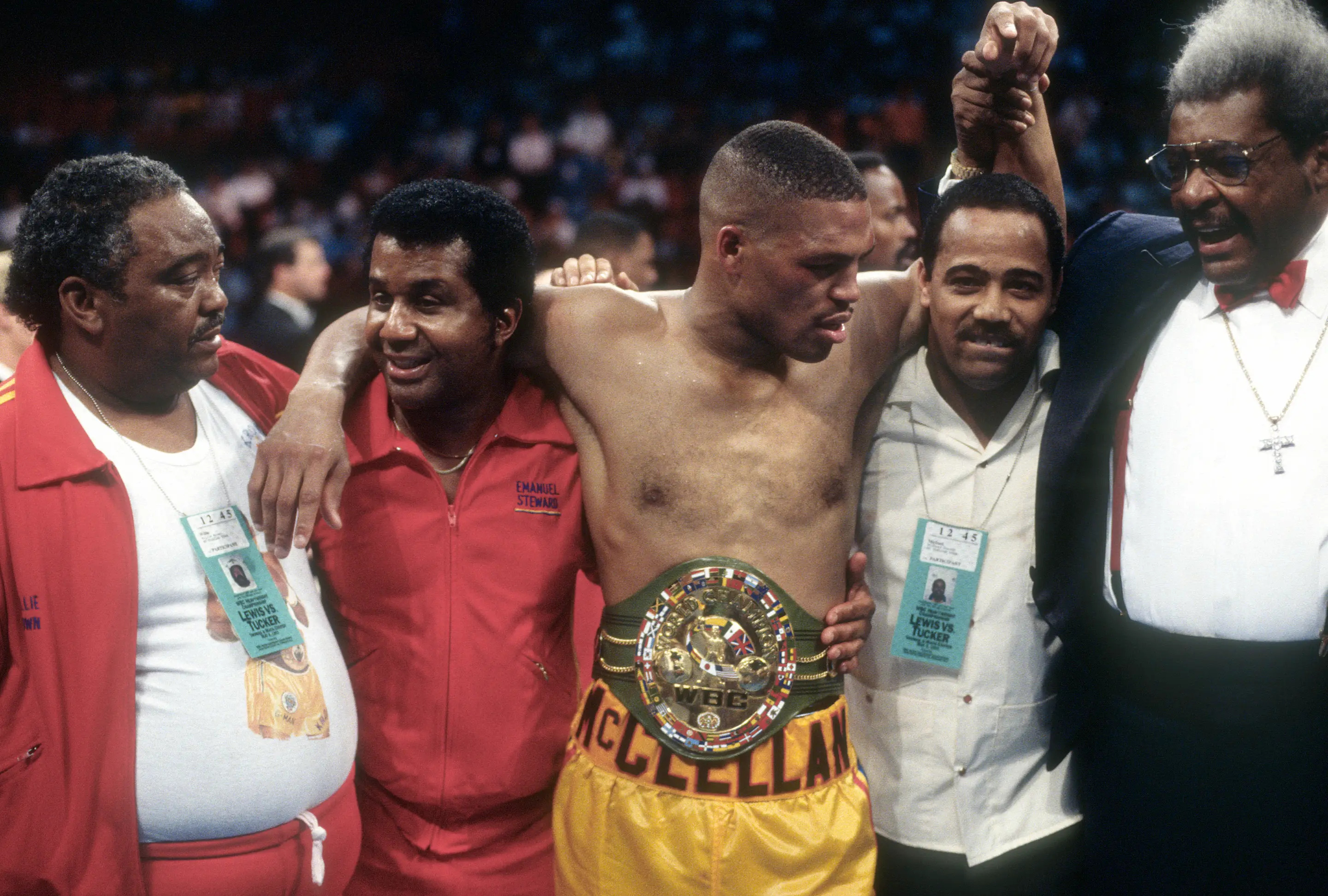
Gerald McClellan had famously tortuous weight cuts. In 1995, after a loss to Nigel Benn, he spent 11 days in a coma and suffered extensive brain damage.
(Focus On Sport via Getty Images)
Dr. Scott was in agreement of the opinion that a lot of the time fighters will disregard how they feel due to external pressures. Much like Rickards laid out to me, Dr. Scott explained that “fighters are often highly motivated to continue regardless of medical advice.”
That’s why the role of doctors like Dr. Scott is so vital in the sport. As ringside doctors, their responsibility is always fighter safety first.
“I think the sport is moving in the right direction, but there are several areas where further progress could improve athlete safety,” he said. “Firstly, greater education is essential — hydration and longterm weight management.
“Secondly, I think there is a strong argument for more longitudinal monitoring of athletes during training camps rather than focusing purely on the official weigh-in.
“We should also continue discussions around hydration assessment, limits on percentage body-weight cuts, additional pre-fight medical oversight, closer monitoring of repeat extreme cutters and a better use of technology.
“Ultimately, everyone involved in boxing — governing bodies, promoters, coaches and medical teams — has a shared responsibility to prioritize fighter welfare above competitive advantage,” he finished.
A few days out from weighing in and Dr. Scott’s words weighed heavy.
I had limited social interactions in the week’s run-up, and even more limited reserves of energy. Like a kid waiting for Christmas, it became normal to go to sleep early each evening, just so the next day arrived sooner and I could indulge — to some degree — on some protein-rich food.
I made fewer and fewer attempts at trying to get any enjoyment out of this part of the process. Everything was a means to an end, and that end was getting closer.
I began to better understand why fighters are willing to go to such dangerous lengths in the closing days of a weight cut to ensure they hit their target.
Of course, the stakes for me were infinitely lower. There was no purse waiting, no opponent to face, no career consequences attached to missing weight. But even so, I felt an unexpectedly stubborn refusal to fail. After weeks of sacrifice, compromise and quiet misery, there was a growing part of me that simply wasn’t prepared to come up short.
And if I felt that way over an article, what must it feel like for a boxer so much hanging in the balance?
A few days later, I found out just how far I was willing to push myself.
Your body has a memory — and a pretty f**king good one at that. If you’ve put it through hell once trying to make a certain weight, then it’s going to try and protect itself the next time you try it — so that’s going to make it even harder.
Weigh-in day
… I was helped to my feet from the bathroom floor by my wife, and I hurdled Franco, who was understandably confused. Granted, it doesn’t take a lot to confuse him, but even his eyes held a certain weight of concern I hadn’t witnessed before as I recovered from scolding my body in an uncomfortably hot bath.
It was a touch before midday. I felt rushed. It was illogical. Weight wasn’t going to magically jump back onto my depleted frame, but it almost felt like a clock was ticking for me to climb onto the scales.

One final push. (Lewis Watson, Yahoo Sports)
I had been monitoring my progress throughout the week so I knew I was on target. The first half of the week was built around water loading — drinking close to six liters a day — before sharply reducing my intake to little more than a few cautious sips in the final 24 hours. I’d also stripped almost all carbohydrates from my diet over the previous two days, relying instead on small, protein-heavy meals.
Saunas and heavy cardio made up a bulk of the final week. But each effort became more and more testing. The saunas became lonely places. I’d plan most of my visits before my lunch, meaning the gym was usually fairly empty. The sound of my own breathing and the thud of sweat dripping on the wooden floor was my only distraction from my body’s personal torture.
I’d completed a slow, steady four-kilometer run that morning with three or four layers on to get my body warm and starting to sweat. It was the least enjoyable run of the whole process. It felt otherwordly. My brain hadn’t switched off, but it was operating on auto-pilot, just ticking along in a haze, assuming the end of this challenge was nigh.
I’d managed to avoid getting ill, too, though Moore’s warning echoed around my head throughout the process.
“Expect your immune system to crash. When you are depleted, your body will start to utilize collagen to repair tissue before it prioritizes the immune system.”
I was shattered and my body was screaming at me, but that didn’t come as a surprise. The biggest change was my drop in body temperature. My hands were numb with cold throughout the whole week and my feet couldn’t retain heat overnight. My mood ranged from bad to worse. I had a throbbing headache. Again, none of this was a surprise.
I clambered onto the scales, took a deep breath and looked down.
153.6 pounds — 0.4 under the targeted super welterweight limit.
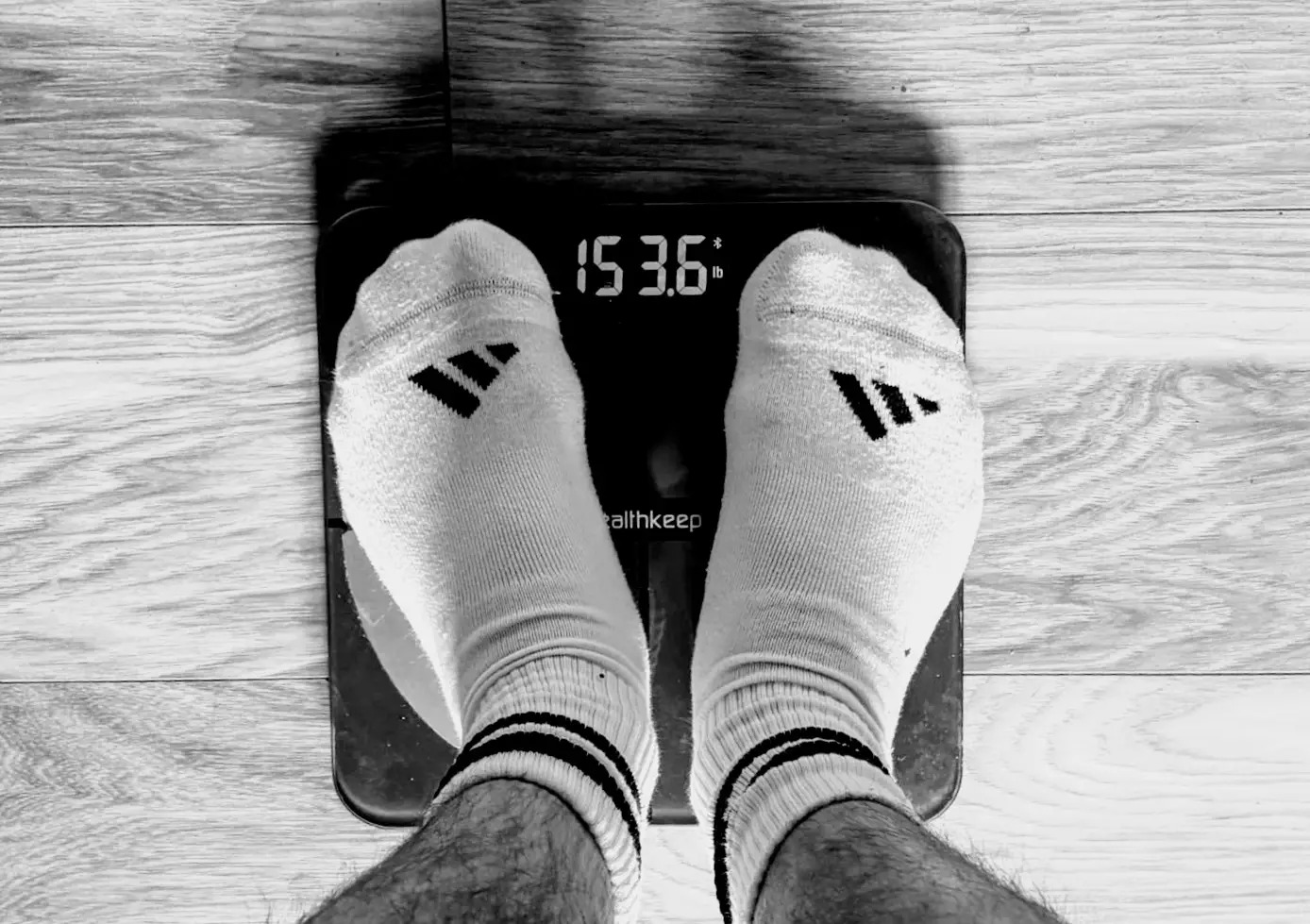
Success. (Lewis Watson, Yahoo Sports)
I let out a huge sigh of relief.
“Now what?” I thought.
24 hours after weigh-in
-
YMCA bench press test: 37 (40 kilograms/88 pounds)
-
5-kilometer run: 26 minutes, 1 second
-
Punches in 3 minutes: 140
It shouldn’t have come as a surprise that I felt a little hollow in the moments after stepping off the scales.
Physically, of course. But emotionally too.
Weight-making is usually a means to an end. The scales are simply an obstacle en route to the thing these dedicated and disciplined athletes actually care about doing: Fighting. Competing. Winning.
Twenty four hours after weighing in, when comparing to, A, at the start of the training camp, and, B, halfway through training camp, my five-kilometer run time had slowed by 1 minute, 39 seconds and 1 minute, 58 seconds, respectively. My strength endurance (using the rhythmic YMCA bench press test) had decreased by five reps and nines reps, respectively. My punch output over a three-minute round on a punch bag had decreased by 21 punches and 16 punches, respectively. In other words, my body was far from peaking.
I felt weaker and fragile. My stomach was sculpted — to a degree — and I found myself digging my fingers into my abs and ribs out of curiosity at what was a fairly stark change.
Running was a drag. I’ve never been one that thrives off pavement pounding, but the kilometers ticked by noticeably slower on this final run, and my breathing needed to go a lot deeper to power my body.
Bench presses were fine, I guess. But the biggest difference I noticed was the complete absence of that final 5-10% that was needed to complete a final rep. You know, when the bar is hovering midway and you somehow summon the strength to straighten your arms one last time.
I felt uncomfortable. And pretty useless. But, importantly, I wasn’t about to get punched in the head for 36 minutes.
I’d refueled sensibly after weighing in — scrambled eggs, avocado and sourdough toast, followed later by a bowl of chicken ramen, all accompanied by electrolytes and plenty of water — but my body seemed caught off guard by the sudden abundance.
After days of restriction, even moderation felt excessive.
My stomach churned away in quiet protest, struggling to make sense of nutrients and fluids that had been deliberately withheld for the best part of a week.
And as I sit here approaching the 9,000-word mark of this article — one that has, at times, been surprisingly difficult to write — a less physical kind of fulfillment begins to reveal itself.
Not because I now understand what it feels like to be a professional boxer. I don’t. Not at all. But because I understand a little more than I did six weeks ago. And to me, that’s important.
Read the full article here