





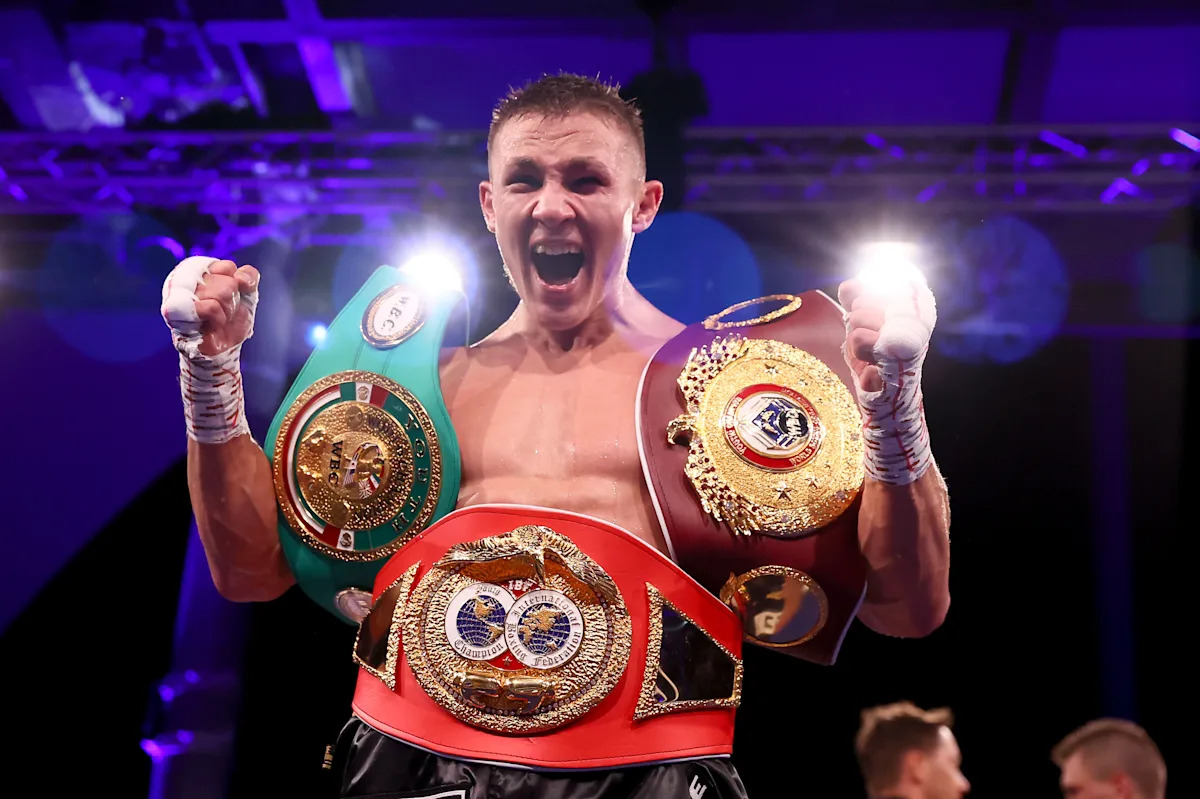
Michael Eifert has spent more than three years waiting for a phone call that many believed would never come.
The little-known German upset the odds when he outpointed former world champion Jean Pascal in their March 2023 IBF final eliminator. The win was supposed to earn Eifert a shot at a world title, but instead it has led to three years of inactivity, frustration and boxing’s dreaded waiting game.
Advertisement
Eifert, 28, has fought just once since beating Pascal, a six-round warm-up bout in August 2024. He’s been sidelined for 21 straight months since.
Now, Eifert is not completely innocent in his struggles. He did accept a pair of step-aside packages to allow both fights between Dmitry Bivol and Artur Beterbiev to proceed in late 2024 and early 2025. But the real question is: How much of a choice did he really have?
If Eifert at any point had decided to say no to stepping aside in 2024, Beterbiev would’ve likely just vacated the belt and allowed Eifert to face Conor Wallace in one of the smallest-scale world title fights in boxing to establish a beltholder who would not be considered by anybody to be a top light heavyweight.
There was no value to doing that.
Advertisement
So Eifert decided to sit on the sidelines collecting step-aside checks while Beterbiev and Bivol battled it out for the undisputed crown in back-to-back fights over four months. What the German contender couldn’t have predicted, though, is that his wait would then be extended a further 12 months because of Bivol’s injury, and that an ordered interim title bout with Wallace would not come to fruition.
Michael Eifert (right) has been waiting for Saturday’s opportunity for a long time.
(Martin Rose via Getty Images)
Simply put, Eifert is a product — and victim — of the IBF’s unpopular mandatory system. It’s a similar story to Bakhram Murtazaliev, who was IBF mandatory for Jermell Charlo for more than four years, and stepped aside on multiple occasions to allow Charlo to take part in three back-to-back unifications. After years of waiting, Murtazaliev eventually got — and won — his world title fight, and also had millions in his bank account for agreeing to postpone the opportunity time and again.
The Murtazaliev blueprint is one that future unheralded mandatories may be forced to follow in divisions dominated by big-money fighters, as it is unlikely that champions will share the ring with them if bigger fights are available elsewhere.
Advertisement
It perhaps comes as a surprise to Eifert as much as anybody that he is finally getting the chance to perform on the big stage against a truly elite fighter. Many in boxing expected Bivol to vacate his IBF belt and fight either Beterbiev again or take on David Benavidez, but fresh off injury, Eifert suddenly represents the perfect warm-up opponent.
If the the unheralded challenger were to win on Saturday, it would be one of the biggest shocks in a boxing ring in recent years. Some bookmakers have Eifert as much as a 10-to-1 underdog.
Outside of his victory over then-top 10 light heavyweight Pascal, who was stopped in four rounds by Michael Cieslak this past June, Eifert doesn’t have another name of note on his record. So, how did Eifert become IBF mandatory?
In 2022, the IBF went through the rankings in search of its next No. 1 contender. The sanctioning body asked Joshua Buatsi, Anthony Yarde and Gilberto “Zurdo” Ramirez whether they were interested in the final eliminator, with all three eventually turning down the opportunity. Pascal, however, accepted the chance, as did Eifert, who was next in line because he held one of the IBF’s trinket titles at this time.
Advertisement
Eifert’s story began in Bautzen, Germany, in 1997. He moved to the Kaufbeuren region, where he first took up boxing at the age of 10. Eifert had more than 100 amateur bouts, which included winning the German U21 championships. In 2018, at age 20, he called time on his decade-long stint in the unpaid ranks and switched over to the pro game.
Eifert managed to amass a 6-0 record against journeyman opposition before losing in his first step-up fight against Tom Dzemski in August 2020. That loss was avenged the following year. In the rematch, Eifert claimed two youth titles, which paved the way for him to face more of Germany’s top 175-pounders. Wins over Nils Schmidt and Adriano Sperandio swiftly lead to his questionable IBF ranking.
Advertisement
There is nothing overly impressive about what Eifert does inside the ring. He is a basic European-style boxer with a high guard who stands upright, has a little bounce, and throws mostly straight punches. Eifert’s best asset is his engine. He will be throwing punches consistently for 12 rounds. There is little risk of him slowing down and tiring out.
The German shouldn’t represent much of a threat for Bivol and is the ideal opponent for the champ to ease back into things after recovering from injury.
Eifert has, however, worked hard and waited long for his shot at a title, which finally arrives on Saturday.
The problem for him is that it comes against one of the sport’s most formidable talents.
Read the full article here