





Dinners should not be where revelations take place.
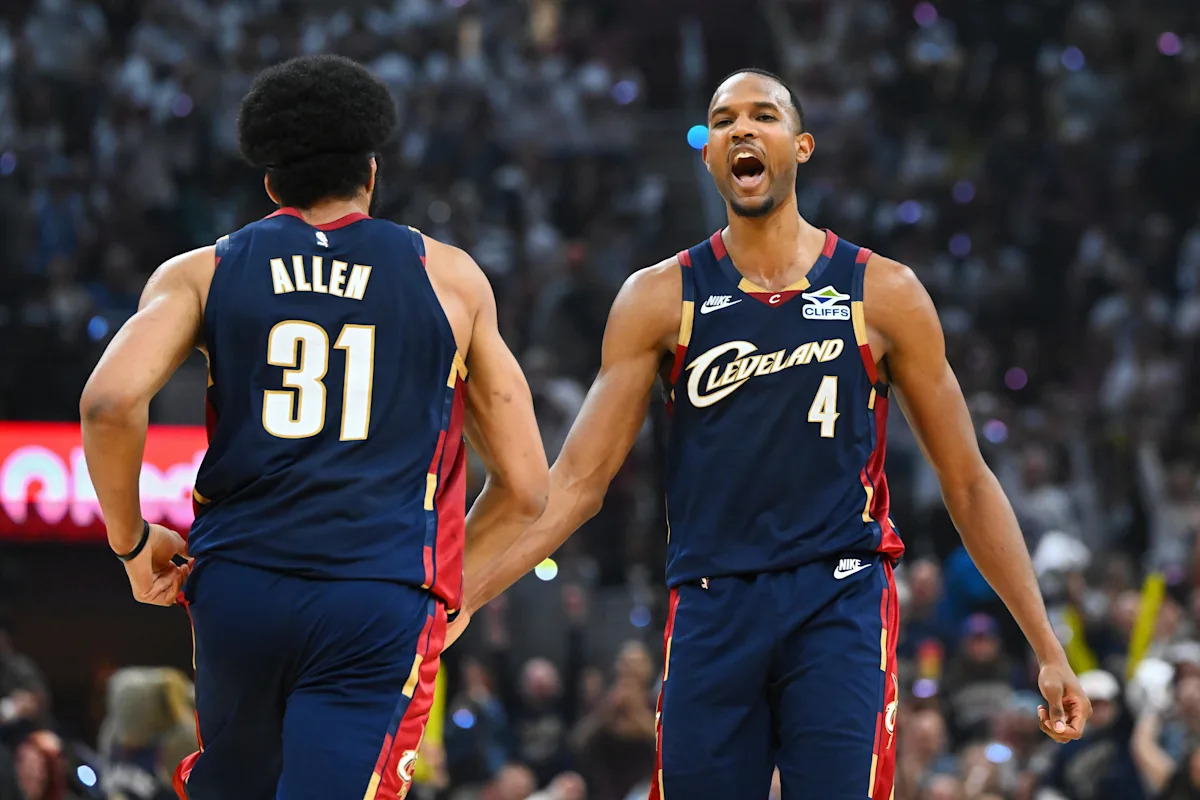
After a Saturday night meal, Cleveland Cavaliers owner Dan Gilbert told head coach Kenny Atkinson that Jarrett Allen was the team’s spark. Atkinson has since credited that conversation as a turning point. And while Gilbert was right, it’s a “no s***” observation. Frankly, the fact that it took a dinner with the owner to shift Atkinson’s worldview is the most concerning detail of Cleveland’s postseason run so far.
Advertisement
Because the evidence was already there. Repeatedly. In plain sight.
Game 7 against the Toronto Raptors was a blueprint. Allen’s presence was stamped all over the 114-102 win. Allen was physical, assertive, and finished at the rim. Donovan Mitchell, who was nowhere near his best that night, operated as a facilitator rather than a hero. The offense flowed. Cleveland advanced.
Then the series shifted to Detroit, and almost like the coaching staff hadn’t been in the building for Game 7, the focus reverted back to the star backcourt. Allen played just 18 minutes in Game 1, which is unacceptable even though he was dealing with foul trouble. He and Evan Mobley combined for only 11 points. Cleveland lost 101-111. The team spent the next several games trying to find Mitchell’s groove rather than building on what had just worked.
Games 2 through 6 against Detroit told the same story in rotating chapters. When Allen and Mobley were connected and involved, the offense had a logic to it. When Cleveland fell back into “let’s see if Mitchell has it” mode, and more often than not in this postseason, he didn’t, the offense siloed. James Harden became the primary facilitator by default. Mitchell forced. The life drained out of the building, and it seemed like the Cavaliers blew their chance at the Eastern Conference Finals.
Advertisement
The pattern was never subtle. Mitchell playing hero-ball, chucking up contested looks, is electric when they’re falling. When they don’t, it is the most aggravating form of basketball to watch, and it visibly drags him and everyone around him down with it.
Game 7 against Detroit confirmed what Game 7 against Toronto had already shown. From the opening possession, the bigs were going to be involved. Allen was set up immediately and converted. Mitchell ran the offense as a distributor, getting Mobley and Allen engaged early and keeping them there. The result was an offense that played with a coherence Cleveland rarely sustained for more than a few minutes at a stretch across either series; it produced a 125-94 blowout on the road.
When Mitchell drives and draws defensive bodies, it opens a dump-off lane for Allen or Mobley. Either they finish inside, or they kick out to Sam Merrill, Max Strus, or Harden for open looks. Allen and Mobley are too gifted offensively to exist solely as pick-and-roll partners. The offense becomes genuinely difficult to guard when they’re true options, not afterthoughts.
The Cavaliers have now won two Game 7s this postseason running this offense. They’ve also dropped winnable games in both series when they abandoned it.
Advertisement
Cleveland opens against the New York Knicks on Tuesday as significant underdogs, and they are heading into a road series against a deeper, well-coached team. The margin for error is thin. Reverting to Mitchell-first basketball when it isn’t working; burning possessions, flattening the offense, waiting for a hot streak that may not come, is a luxury they cannot afford.
The blueprint has been written twice now. Allen and Mobley at the forefront. Mitchell as the engine who makes everyone better, not the lottery ticket the team cashes in and hopes for the best. When this Cavaliers offense is a collective effort rather than an individual one, it is as good as anything left in these playoffs.
Atkinson shouldn’t need another dinner to figure that out.
Read the full article here