





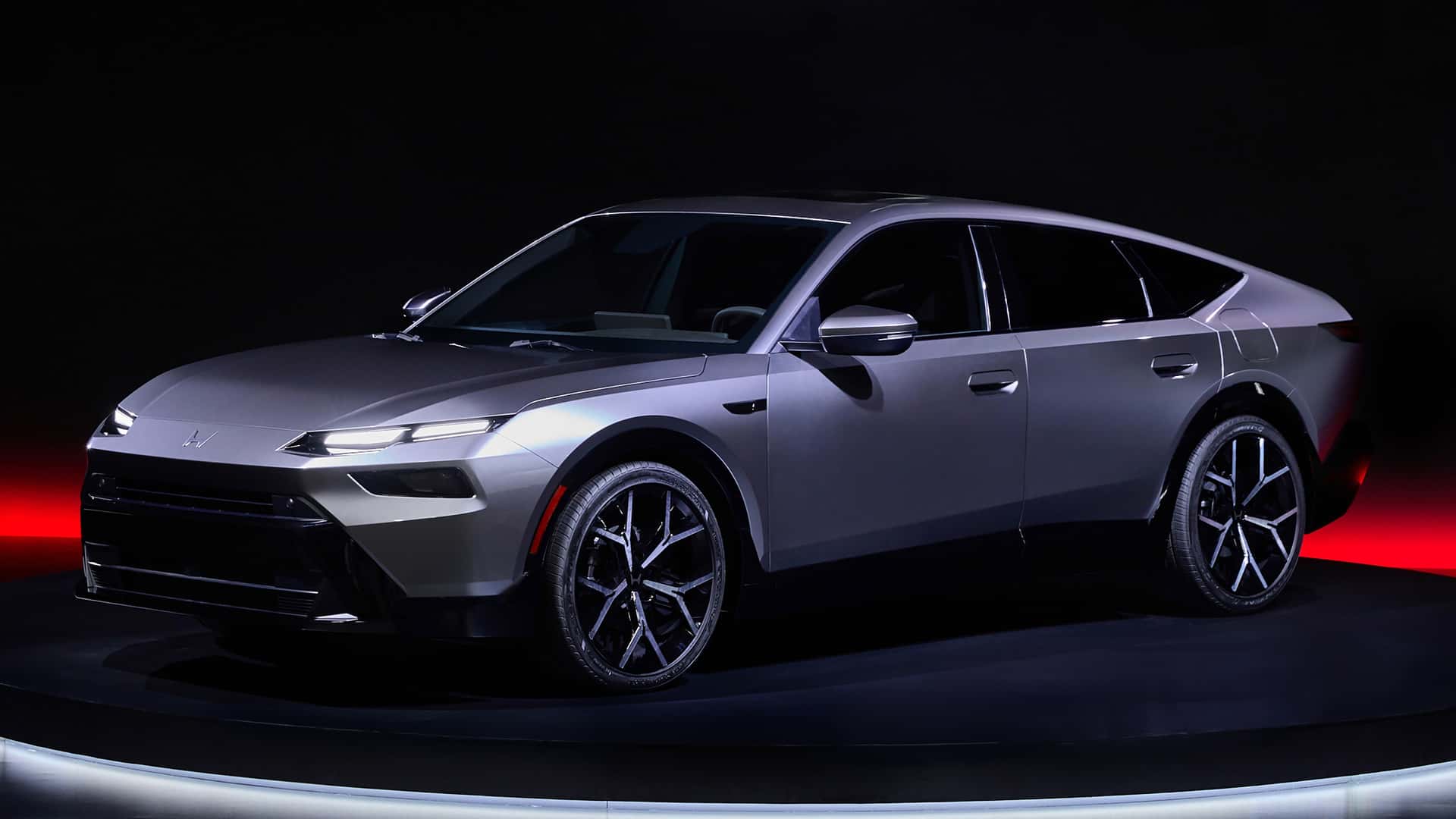
- The Honda sedan and Acura SUV will go on sale within the next two years.
- Both will feature a next-generation hybrid powertrain and a new platform.
- Fuel efficiency is projected to increase by 10 percent compared to the current hybrid setup.
It’s safe to say that Honda’s belated electric push isn’t going as planned. Over the past few months, multiple EVs have been canceled. The 0 Sedan, 0 SUV, and Acura RSX are no longer happening, and the same goes for the two Afeela models from the joint venture with Sony. The company is now shifting its focus to hybrids featuring improved combustion engines and electric motors.
During a business briefing earlier today, two upcoming models were brought on stage to signal what lies ahead. Described as prototypes rather than concepts, the Honda sedan and Acura SUV are scheduled to go on sale within the next two years. While details remain slim, we do know the cars feature the company’s next-generation hybrid powertrain. The models are also headed to the United States as part of a broader push in North America. The orange side markers are a telltale sign we’ll be seeing these models in the U.S.
Honda aims to launch 15 models with its new hybrid powertrain by March 2030, with the U.S. getting the lion’s share. The sedan’s wedge-shaped design and heavily sloped roofline bear some resemblance to the now-canceled 0 Sedan, while the Acura has hints of the aborted RSX. Both look nearly production-ready, but they won’t reach dealers until 2028.
Photo by: Acura
Honda Will Make The “World’s Most Efficient Powertrain”
The duo will use Honda’s new hybrid powertrain, which is designed to improve efficiency by more than 10 percent over the current technology introduced back in 2023. Given the U.S. focus, it comes as no surprise that most of the new models will be SUVs, with all-wheel drive enabled by the electric motor.
A new platform is currently in development, and engineers are working to reduce weight to improve fuel economy further. At the same time, costs are expected to drop by more than 30 percent. Honda goes as far as to say that future hybrids launching from 2027 onward will benefit from the “world’s most efficient powertrain.” Getting there will require spending 4.4 trillion yen (nearly $28 billion at current exchange rates) on upcoming gas and hybrid models within the next three years.
During the same timeframe, Honda hopes to recover the losses incurred from canceling multiple EV models through a new wave of models across its two brands. Investments in purely electric cars will continue, albeit in a more measured way, with the company setting aside around 0.8 trillion yen (about $5 billion) to fund the development of future EVs.

Photo by: Honda
Motor1’s Take: Honda is using money originally earmarked for EVs to fund the development of its next-generation hybrids. It’s too early to say whether the strategy will pay off because, while demand for electric cars is slowing in the United States, EV adoption continues to grow globally.
That’s not to say Honda is throwing in the towel on EVs altogether. The company will continue selling electric vehicles in other regions, including its home market of Japan and the broader Asian region, while closely monitoring the U.S. market.
Read the full article here