





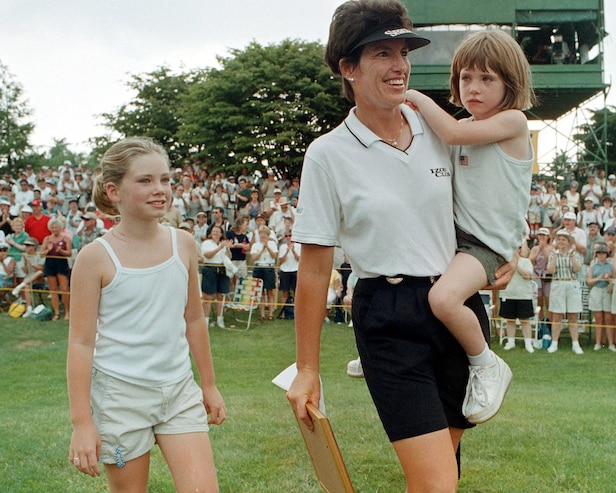
Judy Rankin was at an LPGA Tour event in the mid-1970s. But instead of focusing all of her energy on preparing for the competition, the Hall of Famer was hustling on the phone. She needed a babysitter, and not just anyone. Rankin’s son had come down with the chicken pox, so it had to be somebody who’d already had the virus. Finally, she tracked down a teenage boy. Rankin, however, had never used a male babysitter before. He happened to be great, and her son had a fun week despite all the itching and scratching. Rankin laughs about it now, but she admits that moments like that can make a mom question whether or not she should be out there playing on tour and trying to make it all work.
Times have changed, and it’s different being a tour mom compared to 50 years ago. The prize money is greater, making it both more affordable and lucrative to compete as a parent. The tour has a daycare and policies around maternity leave have made returning to competition a more tenable proposition.
Advertisement
Still, many of the fundamental challenges remain. The decision of whether or not to play after having a child is never easy. And always personal. What works for one player, won’t work for another. And it’s about more than the question of being logistically able to do it: Can I get to each tournament with my child? Do I have a place to stay that works with young children? Am I set from a childcare perspective?
Moreover, there’s another, more nuanced question that many moms returning to all fields of work have felt: Can I do both the way that I want to?
More From Golf Digest
Chevron Championship As Stacy Lewis bids farewell at home in Texas, her life becomes a whole new ball game
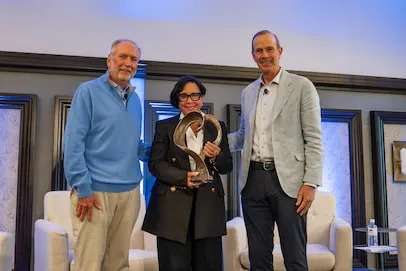
LPGA Dinah Award recipient Sheila Johnson has a clear message: ‘Make room for golf’
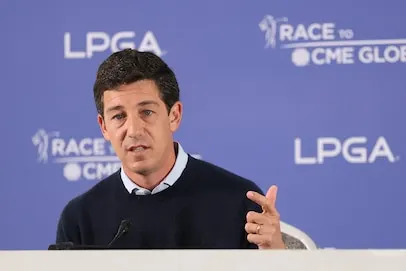
LPGA Tour Nearing first-year anniversary, LPGA commissioner has impressed his players and sponsors, with much work still to do
Advertisement
In 2026, there are 15 moms competing on tour, nine of them already having played tournaments this season. The number is interesting when you consider that in 2006, there were 28 moms with LPGA status but in 2016, there were just seven.
For some moms, it means coming back full-time. For others, it’s playing a truncated schedule. The number of moms on tour changes with the personal preferences of the players who are having children.
According to the U.S. Bureau of Labor Statistics, 74 percent of all mothers with children younger than 18 years old were working in 2025 or looking for work. One main difference is, however, that remote work has played a role in keeping mothers in the workforce. Being an LPGA Tour player is about as far from remote work as you can get. Playing full-time on the tour means traveling to Asia two separate times during the year, going to Hawaii, Europe and all four corners of the United States. The current schedule covers much more of the globe than the schedules of the first LPGA moms.
/content/dam/images/golfdigest/fullset/2026/5/jessica-korda-pregnant-on-course-reporter.jpg
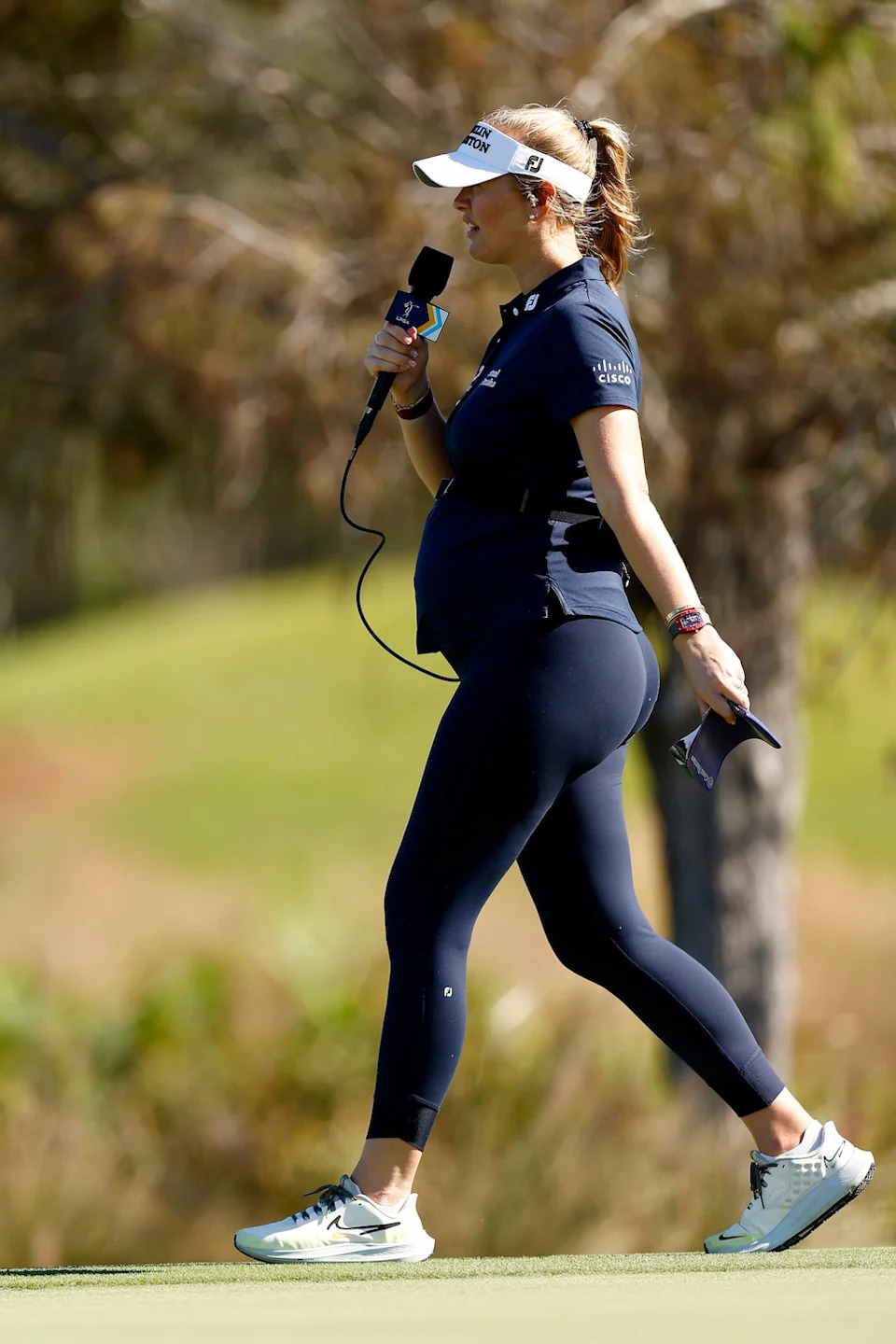
Jessica Korda spent time as an on-course reporter during her pregnancy. She has begun playing events again but is now expecting a second child later this year. (Photo by Getty Images)
Advertisement
Working in the favor of today’s tour moms is the fact that purses on tour are much more lucrative than even a decade ago, helping cover costs of living on the road. More than $130 million is up for grabs during the 2026 season.
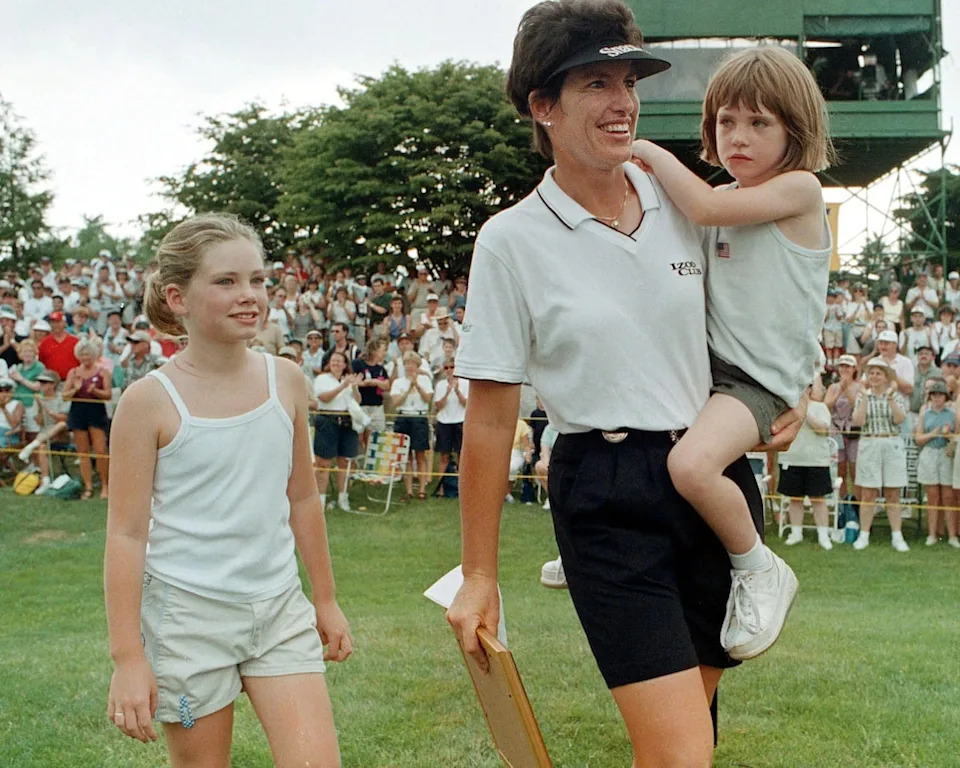
For the first moms on tour, small purses meant no nannies and sharing a hotel room with your baby. Juli Inkster has talked about how she’d create makeshift rooms for her young kids in hotel-room closets. Players’ family members would help while the moms competed.
Rankin says it’s been years in the making. “When the women’s liberation movement hit in the early ’70s, I think it took a lot of years for it to take hold, but the point was, you ought to have the opportunity to be able to do everything,” Rankin said. “You didn’t have to give up a family and a home and all those things, to do what you did well or to try to move forward with whatever your career was.”
“I think it’s taken a lot of years for that to completely blow up and take hold, but there is no doubt that today’s young woman thinks they can try to have everything. Financially, in the game of golf, it’s become much easier to try to do that. There wasn’t enough for a lot of years.”
Advertisement
In 2000, the No. 50 player on the LPGA money list made $203,639. No. 50 on the money list in 2025 made $746,012. Financially, it’s certainly more worth it to keep playing than it was in recent history.
Yet, while making it work financially might be a bit easier, the complication of loving two things at once persists: Pursuing a career in a sport that demands so much of your body and mind, while trying to be a good parent—a pursuit that also demands so much of your body and mind. That’s why, for women to feel comfortable trying to have both a golf career and a family simultaneously, there needs to be support in place.
51614735
Juli Inkster shares the walk up to the 18th green with her daughters Hayley (left) and Cori as get ready to accept the trophy for win in the 1999 LPGA Championship.
Advertisement
HEATHER HALL
When it comes to childcare, the LPGA Tour is a pioneer. In 1993, the tour was the first professional sport to open a traveling daycare. To this day, players can still enroll their children at each U.S. tour stop in daycare, which is set up in a designated location each week with the same childcare professionals traveling with the tour.
Some players use the daycare, while others opt to have their own childcare.
Jessica Korda had no plans to return to golf after she had her son in 2024. She’d been playing with injuries for years, and thought that when she left the tour, she wouldn’t be back. But last December, she played in the Grant Thornton Invitational and has played in two LPGA events in 2026. Her mom watched her son while she competed.
Advertisement
“Grant Thornton, after the first day, Greyson decided to not sleep so I didn’t sleep from midnight to 5 a.m. It adds another variable to golf, to preparation,” Korda said in a press conference at the LPGA Tour’s Ford Championship earlier this year. “Hopefully he sleeps this week. My mom already took away the monitor, so I’m officially banished from that.”
Korda recently revealed that she and her husband are expecting their second child later this year.
While the LPGA’s daycare has been around for a long time, there’s a newer policy that helps players pursue competitive golf after having children. In 2019, the LPGA Tour updated its maternity leave policy, allowing mothers to return to play up to two years after giving birth. When a player comes back, she keeps the same status she had when she left the tour for maternity leave and retains that status for the first 12 months after returning.
The policy extends to the majors, as well. If a player qualifies for a major but cannot compete in that major because she has left the tour for maternity leave, she will be exempt for the following year’s major. That’s how Michelle Wie West is competing in this year’s U.S. Women’s Open at Riviera. She won the U.S. Women’s Open in 2014 and received a 10-year exemption, but has two years added because she has had two children during that time. Though Wie West thought she had retired at Pebble Beach in 2023, Wie West appears to be in the midst of a comeback. She’s also signed on for the Women’s TGL and is playing this week in an LPGA event she hosts, the Mizuho Americas Open.
Advertisement
“Teeing it up after three years away feels different this time,” Wie West wrote on Instagram ahead of the Mizuho. “Especially with getting to share it with my kids and letting them see what it means to try, to work hard, and to go after something that matters to you.”
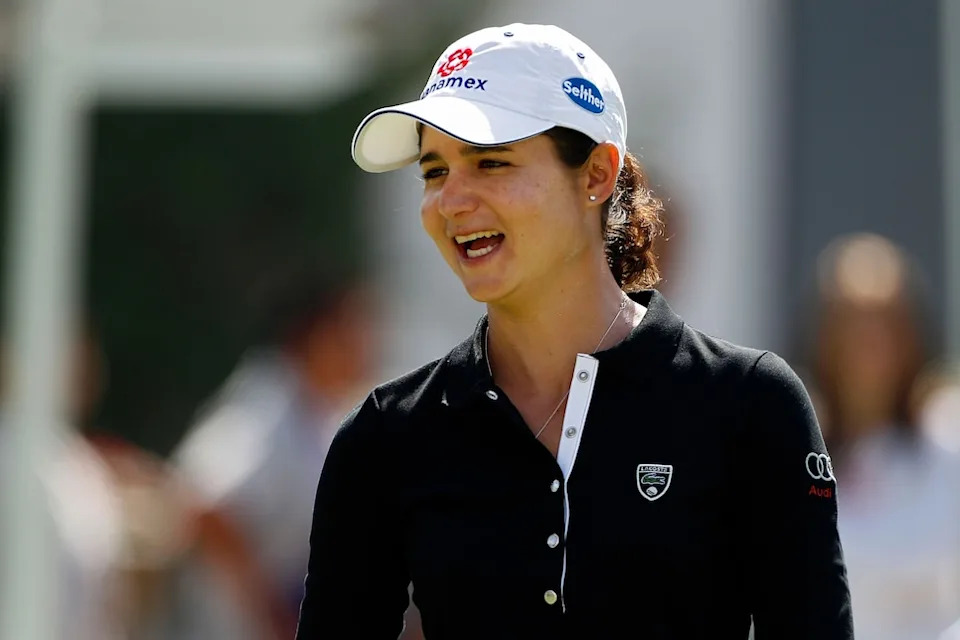
Lorena Ochoa was at the peak of her career when retired in 2010 as a 28-year-old. The then World No. 1 cited wanting to start a family as a main reason for her departure from the tour.
“I never saw myself playing and having children at the same time,” Ochoa said in a 2021 Golf Digest interview. “The idea of coming back on tour with a kid, and maybe not being able to compete at 100 percent, not being able to win, maybe be in the top 20, I was not comfortable with that. That’s why I gave it my all, and now I’m enjoying this other part of my life.”
lorena-ochoa-2010-smile.jpg
Lorena Ochoa chose to stop playing on the LPGA Tour when she decided to start a family, noting she wasn’t comfortable with returning if she couldn’t give 100 percent to her game.
Advertisement
Michael Cohen
Ochoa’s referenced a reality of playing golf on tour as a mom, while traveling with children: Having success on the course is incredibly difficult. The demands of motherhood make it impossible to replicate the same sort of preparation a player would have become accustomed to before having children. Ochoa was concerned she wouldn’t be able to compete at the same level, which is a fair worry. And again, a personal one.
Players have been victorious after having children, like Catriona Matthew winning the 2009 AIG Women’s British Open just 11 weeks after giving birth to her daughter. Stacy Lewis won the 2020 Ladies Scottish Open two years after having her first child. And Suzann Pettersen sunk the winning putt at the 2019 Solheim Cup as a mom. There are more examples, proving players can certainly compete at the highest level after having children. But it’s unavoidable that a player’s training and tournament preparation change after they have children.
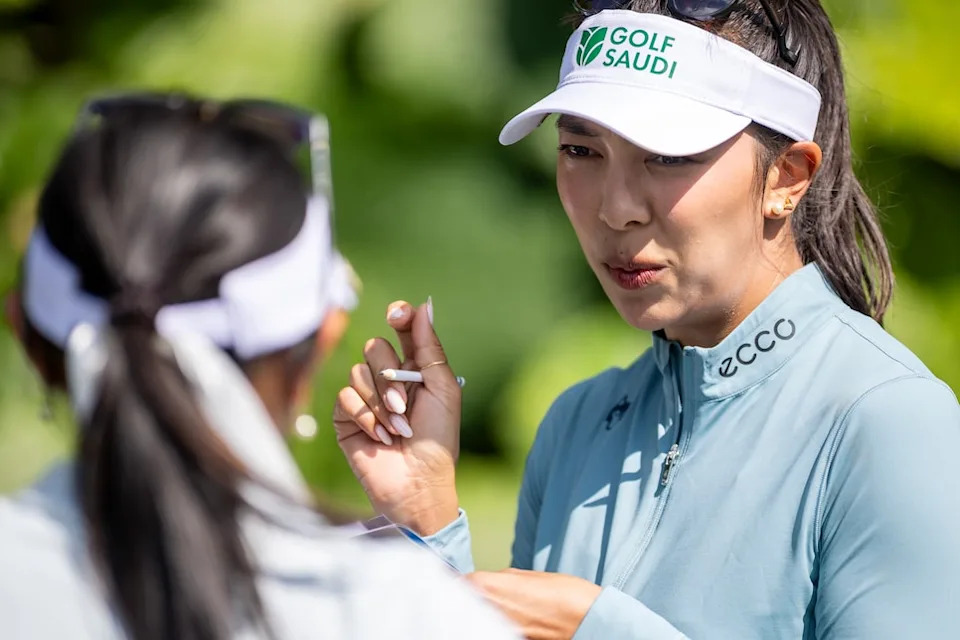
When Alison Lee came back to the tour after giving birth to her son in April 2025, via emergency C-section, she realized the effects sleep had on her ability to train and practice.
Advertisement
“How he sleeps at night directly correlates to how I perform,” Lee said in April’s JM Eagle L.A. Championship. “When he doesn’t sleep, it’s so much harder to train and focus when I’m practicing, and sometimes I feel like when he doesn’t sleep great, and especially when I don’t sleep great, I feel like there is no point. What’s the point in hitting range balls or trying to lift heavy at 6 a.m. when you’re low on energy levels? So there have been days where I’m like, I need a break. Over the last month I’ve had a cough for a month straight.”
2244892467
Alison Lee is still learning how to maximize her time since returning to competiton in 2025 after the birth of her first child.
Eurasia Sport Images
Advertisement
The only person’s sleep Lee had to concern herself with before having her son, was her own. The preparation gets even more complicated when mom guilt settles in. Before having a child, Lee would practice and train because she loved it and it was her job. After having her son, something as simple as going to the range started to feel a lot more convoluted.
“There were a lot of days where I would be hitting range balls and just crying, like the whole time I’m on the range,” Lee said at last year’s NW Arkansas Championship, her first event back. “You have so many different emotions. You question yourself when you have a bad day of practice. What am I doing here? I could be spending time with my son. And then there are moments where I want to do this so bad. The hardest thing to do is leaving the house. I mean, you’re so tired, sleep deprived, and you see a cute little baby there. The last thing I want to do is leave and go do something hard.”
Lee’s question is one that mothers trying to return to all types of work wrestle with. The mental and emotional strain of being pulled in two opposing directions compounds with physical exhaustion and sleep deprivation, and that question can feel impossible to answer. Can I do both the way that I want to? No two days are the same. It’s a balancing act that requires constant adjustments. But the hard work is rewarded, sometimes with unexpected upsides.
“I made better use of my time,” Rankin said. She enjoyed the newfound efficiency and focus she had for golf after having children. She gained a better perspective, too. And was able to move on from bad rounds more quickly than before she had children.
Advertisement
“Even if you had a rotten day, you went home to something happy,” Rankin said. “A little child doesn’t care what you shot, and they won’t let you ruminate on it.”
Moms have been playing on the LPGA Tour for decades. And while purses and policies change for the better, trying to be an elite athlete and mother at the same time will always be difficult. But for the players doing it, it’s also absolutely worth it.
“It’s just been so much fun,” Lee said in LA of her first year of motherhood and returning to the tour. “I just feel really blessed with life this past year. I have no complaints.”
Read the full article here