





Sometimes you need a clickbaity title for fun, and sometimes the extreme title is actually justified. This might be one of those times.
In the early going, there aren’t a tremendous amount of statistics that mean much of anything, or at least that mean enough to re-evaluate what we think about a player.
As an example, here are the statistical leaders by various metrics:
Advertisement
-
wRC+: Danny Serretti (200)
-
OBP: Kayson Cunningham (.533)
-
Line Drive Percentage: Jose Alpuria (58.3%)
With the exception of Alpuria (who has 30 plate appearances) none of these players have reached 50 plate appearances yet, and it takes at least 60 plate appearances for any of the available stats at lower levels to mean anything. So hats off to Cunningham, getting on base more than half of the time, but it’s probably unsustainable.
Only four hitters (all at Reno, of course) have reached the requisite 60 plate appearances for their stats to mean anything, and it isn’t all of their stats.
The first stat that means anything is bat speed, for the simple reason that bat speed has nothing to do with results or luck. Unfortunately, we don’t have bat speeds for hitters in AAA. The next stat to becoming meaningful is hard hit rate and exit velocity, and by the time 60 plate appearances are reached, strikeout rate becomes meaningful. BABIP, when combined with the exit velocities and hard hit rates, has a meaning, but the meaning lies in the interpretation, as BABIP is a stat which varies widely from year to year and really tells us nothing other than how lucky or unlucky a player has been.
There’s two more stats that are ancillary to these, one of which is fairly well known and the other of which is not as well known. Launch angle is the average angle at which the ball leaves the bat; ground balls have negative launch angles, statcast defines line drives as batted balls with a launch angle between 10 and 25 degrees, but an ideal launch angle is probably in the 15-35 degree range, depending on exit velocity. Too high a launch angle and the batted ball is a harmless fly out or pop up; too low a launch angle and there’s no chance at a home run.

Not as well known are various permutations of exit velocity. Tom Tango (the brain power behind a lot of Baseball Savant) views average exit velocity as a useless stat, for the simple reason that it is measuring a lot of useless data. Baseball Savant provides a stat called “adjusted exit velocity” which measures batted balls in relation to a cutoff point of 88 MPH, below which velocity means practically nothing. Tango prefers EV50, an average of the 50% hardest hit balls. That’s what I have here (only easily available on prospectsavant.com) but keep in mind as well that batted balls below 88 MPH are regarded as valueless in terms of exit velocity. It will be important later
Advertisement
As mentioned above, four players have reached 60 plate appearances and some preliminary conclusions can be drawn. I’ll cover them without names at first, because our opinions of these players certainly cloud our perceptions.
|
OPS |
K% |
Hard Hit % |
EV50 |
BABIP |
|
|
Player A |
.825 |
26.1 |
26.8 |
84.9 |
.429 |
|
Player B |
.974 |
29.6 |
33.3 |
89.6 |
.447 |
|
Player C |
.810 |
26.7 |
48.6 |
94.4 |
.303 |
|
Player D |
.893 |
12 |
30.9 |
88.7 |
.400 |
Before going further, please quickly vote on which of these players is having the best season so far.
Now to provide a little bit of context for these stats. Players A-C have all been top-100 prospects at one time or another, but their history on the one stat that means something and can be compared throughout their career is quite different. Player A has carried a strikeout rate of just under 20% through his career prior to this season. Player B has been even lower, at about 15%. Player C, on the other hand, had a sky high 30% strikeout rate prior to this season. And Player D, the lone player among these who has never been a top-100 prospect, posted a 13.5% strikeout rate prior to this season.
Unfortunately, we do not have the numbers for hard hit rates or exit velocity at previous levels, nor do we have bat speed numbers at any level.
Advertisement
Player A is Tommy Troy. He’s got a slash of .317/.408/.417, which are some good numbers, but not eye-popping for Reno. He’s only hitting the ball hard a quarter of the time, and his EV50 is below the cutoff point for value of 88 MPH, and not by a little bit. Despite that, he’s managed to post a BABIP of .429, which is partially attributable to his speed, but is mostly a function of luck.
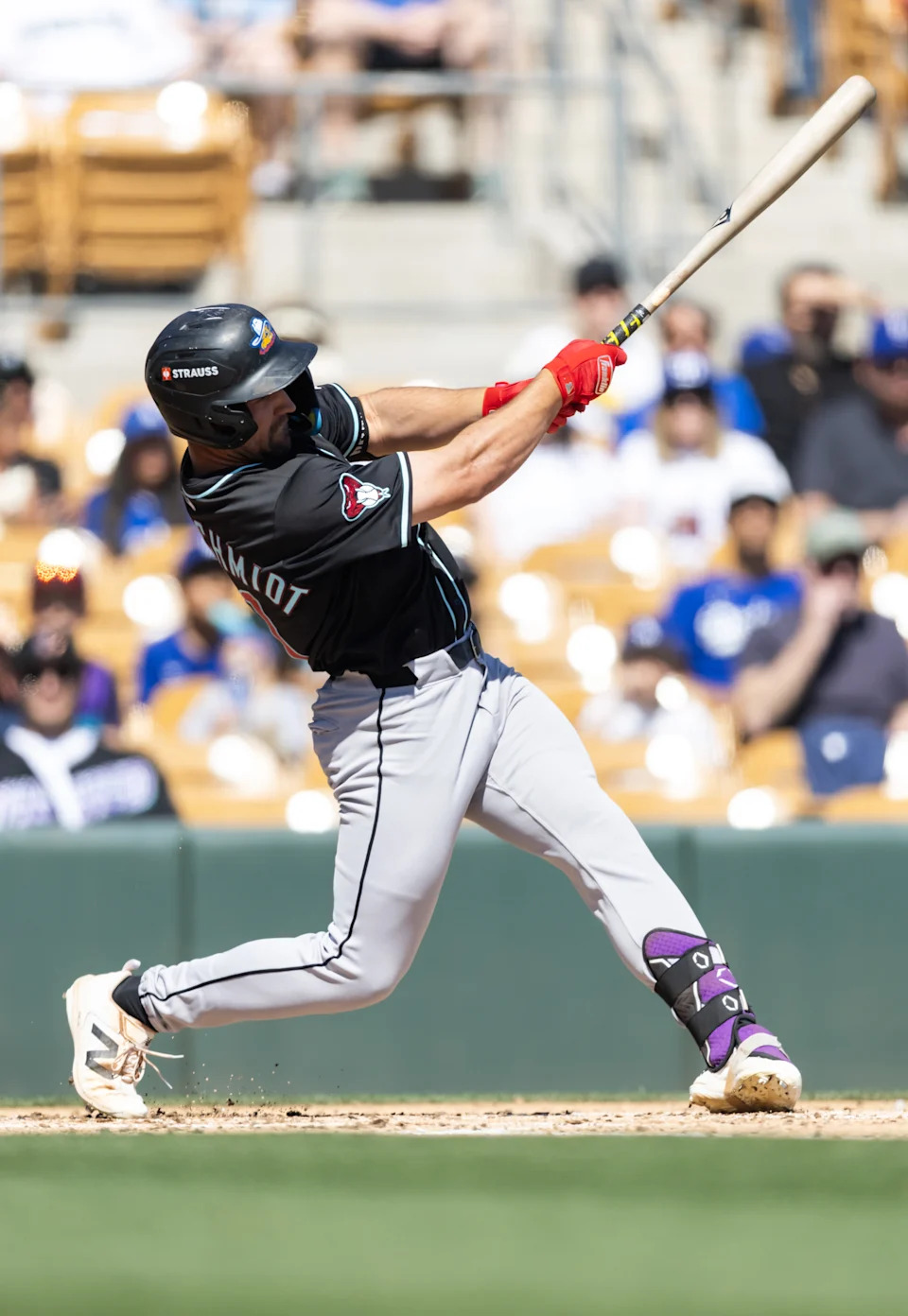
Player B is Ryan Waldschmidt. That incredible .311/.417/.557 slash line is being upheld by high BABIP despite three problems. His strikeout rate is close to 30%, which is basically double what he’s done in his career previously. His average launch angle is 24 degrees, and while the average is a good number, having that high of an average indicates a lot of high fly balls or pop-ups. And his EV50 is in the bottom half of minor leaguers with Statcast data. In order for the top 50% of his batted balls to average out to 89.6 MPH, he has to hit a lot of balls below the dreaded 88 MPH. Note that I am not saying that he’s not playing well; he’s having a great season in many ways. I am saying that a player who is expected to be a key part of the franchise for years to come does not need to be called up to the major leagues when experiencing struggles he’s never dealt with before, regardless of how gaudy the numbers are. He’s going to figure it out and be fine, but people really need to pump the brakes on calling for his promotion.
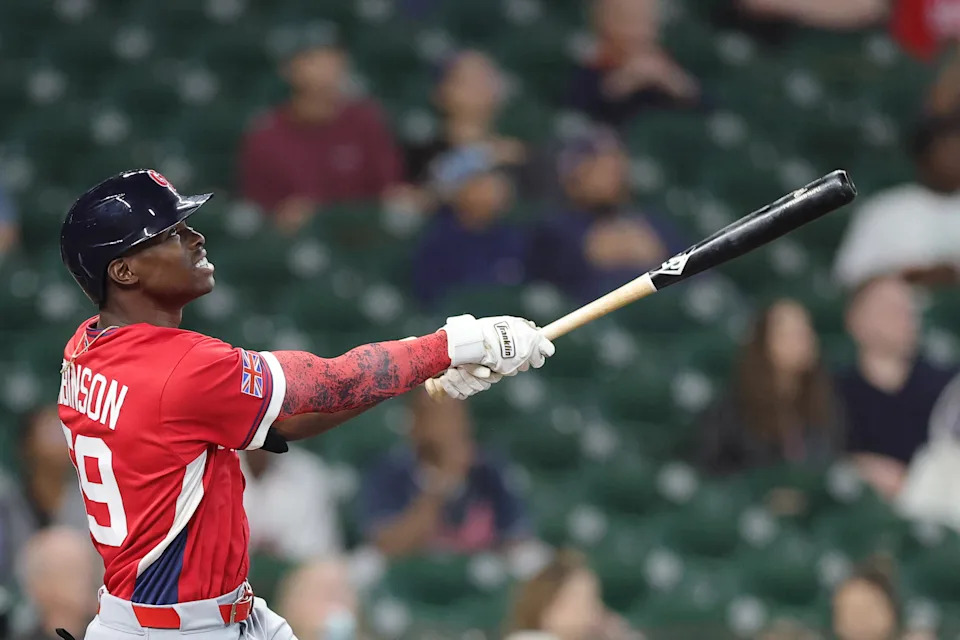
Player C, and the most surprising for me, was Kristian Robinson. His slash of .240/.350/.460 doesn’t look like much, but remember his BABIP is 100 points lower than any of the other three. He still strikes out too much, but it’s at least come down to respectability (and he’s striking out less often than Waldschmidt, something I never thought I’d type in a million years) and walking more than any of the other three, although walk rate isn’t really predictive at this point. He’s the only player in this group who would be expected (based on his quality of contact) to post better numbers than he is posting. He’s smashing line drives the other way, and despite concerns about his speed diminishing, he’s still got quality wheels. While his EV50 is in the 88th percentile, that is either among all batters or all qualified batters; among players with at least 50 plate appearances, he has the fourth best adjusted exit velocity.
Advertisement
Player D is LuJames Groover. His .359/.440/.453 slash may be more sustainable than other hitters with his underlying numbers simply because of the type of hitter he is, but given his lack of speed (sprint speed is not available at AAA, but his Fangraphs speed score is catcher level) he needs to hit for more power. But he makes a ton of contact and isn’t striking out. But he’s also not hitting the ball hard, and it’s been shown time and again that the best predictor of a successful big league career is how hard a player hits the ball.
It’s hard (or perhaps impossible) to have much faith in Robinson at this point. But it would be proper to note that his stint in AAA last season saw a similar reduction in strikeout rate (it actually started in Amarillo) but that was combined with lower exit velocities. He still swings and misses a ton. Still, according to the statistics that mean something at this early point, he’s the hitter in Reno who looks the most big league ready, with Groover close behind.
Hopefully the Diamondbacks will not need any position players called up in the near future, especially with Lourdes Gurriel Jr. nearing a return. But if they do, I believe that they would be better served calling up Robinson at the moment (depending on positional needs, of course) than they would be breaking the glass on Waldschmidt.
One final note: this was written prior to the games on Wednesday, and I’m not going to update all the numbers, although they have changed somewhat. Waldschmidt walked twice, while Robinson struck out twice, meaning that Waldschmidt’s strikeout rate has dropped below Robinson’s. But Robinson also hit two balls over 105 MPH, both for singles, and given that he hit no other balls, his EV50 has increased even further and his hard hit rate likely reached 50%. Groover and Troy both failed to pick up a hit.
Read the full article here