





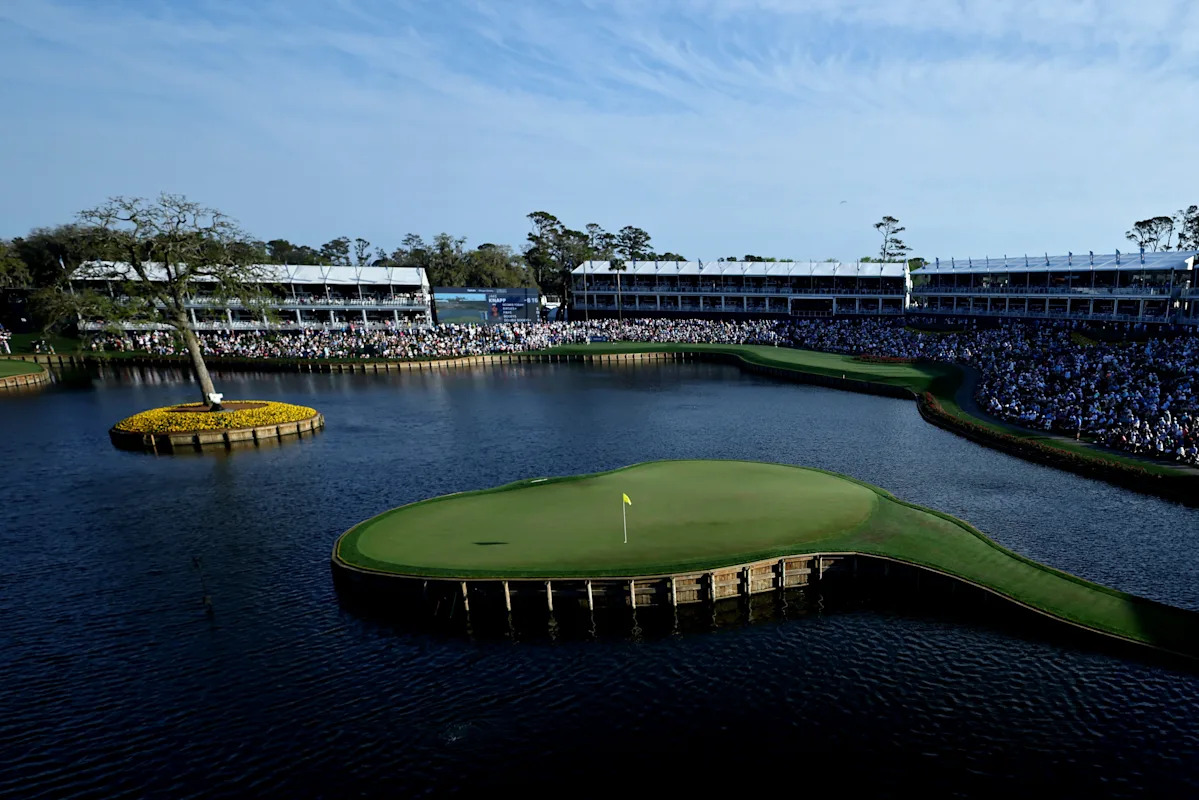
The Players Championship has evolved into its own entity within the world of men’s professional golf.
In many ways, it’s golf’s “fifth major” without officially wearing that label. That’s largely by design.
Advertisement
The tournament was birthed by, and still operated by, the PGA Tour. Tour leadership, from Deane Beman to Jay Monahan, has spared no cost or effort to elevate The Players since its 1974 debut, and particularly since its 1982 arrival at the Tour-owned Stadium Course in Ponte Vedra Beach.
The winner receives $4.5 million from the staggering purse of $25 million, but also receives a five-year PGA Tour exemption and a three-year exemption to golf’s four traditional majors (a “regular” Tour stop offers a two-year Tour exemption and a one-time exemption for the next Masters and PGA Championship).
The 17th green at TPC Sawgrass is what you might call major symbolism.
The Players remains just outside the vaulted major status largely because that status was carved in stone 14 years before it became a tournament.
Advertisement
In golf’s earliest international era, the great amateur Bobby Jones won a Grand Slam consisting of the two national Opens and amateur championships of the U.S. and Great Britain.
In 1960, 30 years after Jones’ slam, Arnold Palmer won the Masters in April and the U.S. Open in June. Over the Atlantic Ocean, en route to the British Open, he and Pittsburgh Press golf writer Bob Drum mused over the possibility of Arnie winning the next two “big” tournaments of the year — the upcoming British Open and, in August, the PGA.
The modern Grand Slam, and therefore a major pecking order, was basically established, even though Arnie fell short in both the Open and PGA. At least a couple of contenders were left out of the major discussion, while another had disappeared eight years earlier.
Yes, before The Players, there were other big golf tournaments worthy of that “fifth major” chatter, either in real time or in hindsight.
Advertisement
The Western Open
The Western Open debuted so long ago, its home base in Illinois was still considered by many as the American West.
This one started in 1899. Only the two major Opens — the British (1860) and U.S. (1895) — were older. The PGA of America, and its annual championship, strictly for professionals, wouldn’t arrive for another 17 years.
It wasn’t a “major” in the current use of the word, because there weren’t enough professional tournaments around to designate a pecking order of any sort, much less set aside four above the pack. In North America, in 1899, there were just the U.S. and Western Opens, so they were definitely major in their own way.
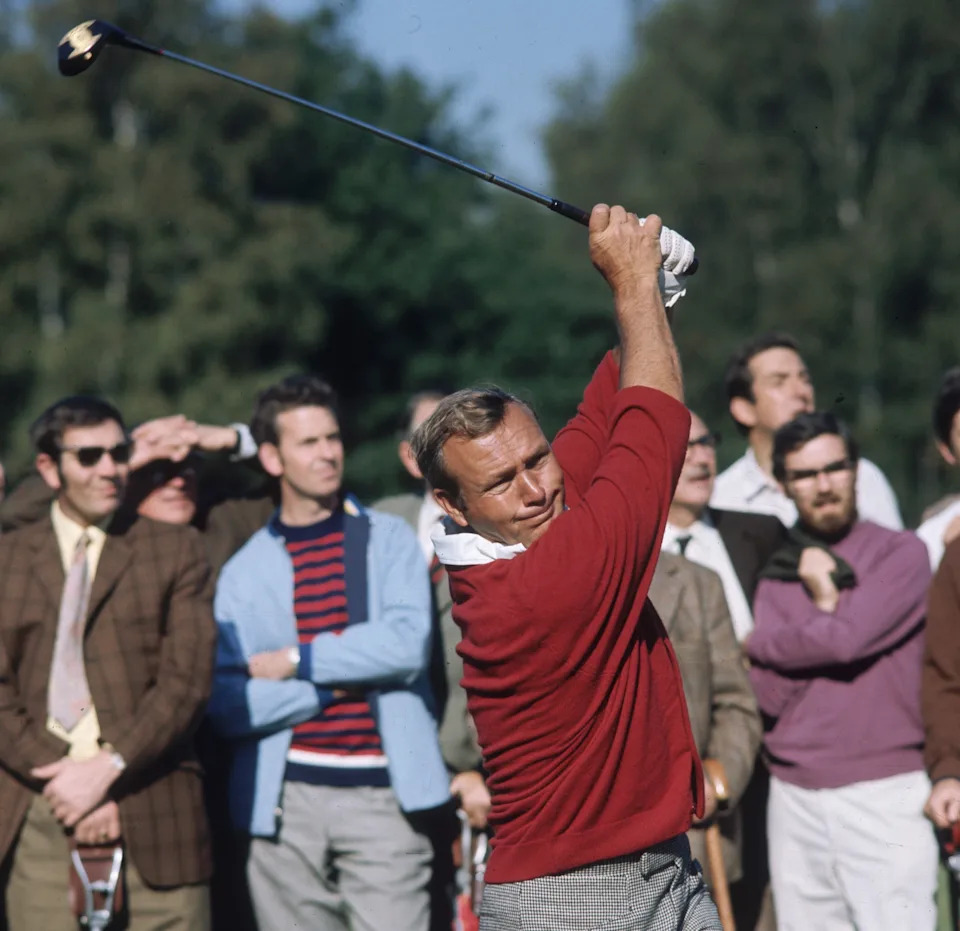
Arnold Palmer put a stamp on golf’s major pecking order in 1960.
After the PGA of America was formed and a national tournament schedule evolved, the Western Open remained as the second or third biggest event on the yearly schedule, depending on whether you deemed it above or below the PGA Championship.
Advertisement
The list of winners, through mid-century and into the 2000s, reads like a Hall of Fame roll call — Ben Hogan and Sam Snead to Arnold Palmer and Jack Nicklaus to Tom Watson and Tiger Woods.
Over the decades, the Western didn’t necessarily lose its footing. It just got overtaken. The Masters, with its Bobby Jones affiliation and the media attention that followed with it, teed off in 1934 with a tailwind and quickly became a marquee tournament.
The PGA Championship, with leverage from the professional ruling body, gained additional momentum when it changed from match-play to stroke-play in 1958.
The British Open, once the game’s only professional championship, would lose luster among Americans because of the travel hassle and a low prize purse. That changed when Arnie — the game’s biggest star by miles — made it a point to not only play it, but win it in 1961 and ’62.
Advertisement
For all its history, the Western Open still became just another PGA Tour event. In 2007, the Western Open became the BMW Open and became part of the Tour’s season-ending FedEx Cup playoffs. It remained in Illinois for a few years but has since been played at a variety of courses nationwide.
The North and South Open
This one is unique among the once-upon-a-time majors. It didn’t just lose luster, it lost financial backing among its directors.
When the North and South began in 1903, it was on a very short list of professional tournaments, and it also had the advantage of being hosted by the new shrine of American golf, Pinehurst.
Advertisement
That Pinehurst connection made the North-South a big event before the PGA of America began a nationwide tour, but kept it as a big-time event for years afterward. The charm and warmth of the nearby village added to the vibe.
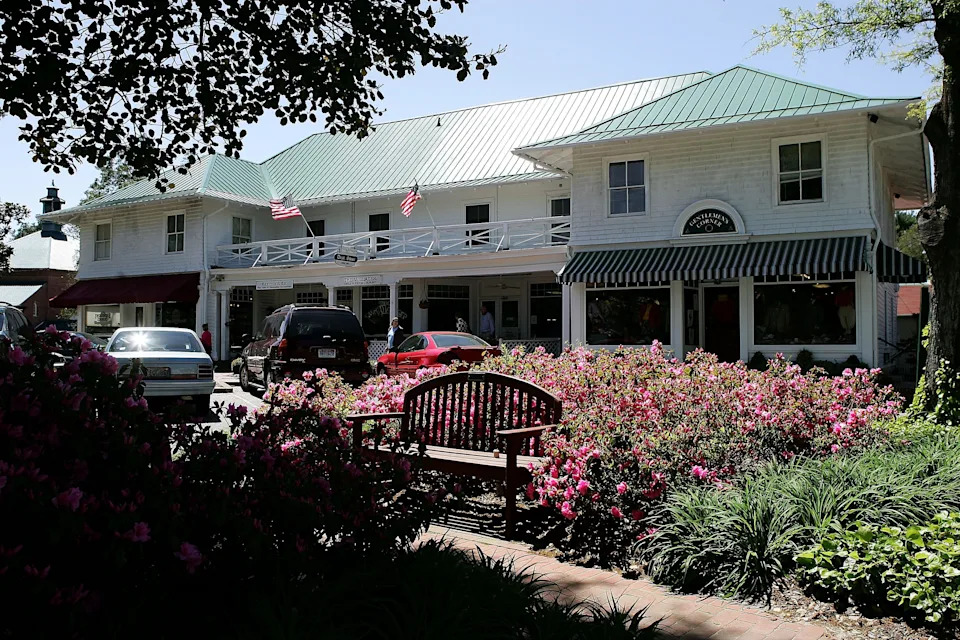
The famed Pinehurst village and resort elevated the southern part of the North and South Open.
“The North and South had an immediate atmosphere of class and elegance,” Dan Jenkins wrote in a 1990 Golf Digest article. “Dress for dinner, veranda stuff. In fact, the North and South was the Masters before there was a Masters and for many years before the Masters finally out-Southerned the North and South.”
One of the more overlooked Scottish golfing studs who came to America in the early 1900s, Alec Ross, gained some fame by winning the 1907 U.S. Open. But he built more fame by winning six of the first 14 North and Souths played in the early 1900s.
Advertisement
Walter Hagen and Bobby Cruickshank won it three times each. Ben Hogan’s first professional win was the 1940 North-South. He’d win three overall, as did Sam Snead.
Problem was, the North and South didn’t pay much, even by the standards of mid-century tour golf. Professional golfers of the day might’ve loved the lure of Pinehurst, but they had bills to pay.
It all came to a head in 1951. Pinehurst was host to that year’s Ryder Cup, just one week before the North and South. The tournament offered a modest purse of $7,500, with $1,500 to the winner. That was comfortably below the era’s norm, and only five of the nine U.S. Ryder Cup players bothered to stick around for the tournament.
Richard Tufts, third-generation owner-manager of Pinehurst, basically said to hell with it. He and others weren’t fond of all the fanfare attached to a pro tournament of the day. They liked their golfing niche, and they bowed to it.
Advertisement
If the Tufts family had stuck it out, where would the North and South have fit in?
Best guess: Something similar to today’s Heritage Classic in Hilton Head, though at the earliest shrine of American golf.
Canadian Open
For a chunk of its history, the Canadian Open was known as the one big-time PGA Tour tournament Jack Nicklaus simply couldn’t win.
Not that he didn’t try. The Golden Bear was runner-up there seven times in 24 starts.
Long before we hung the official “major” label on any golf tournament, the Canadian Open was one of the major golfing events on the North American calendar. It debuted in 1904 — a year after the North and South, five years after the Western and nine years after the U.S. Open.
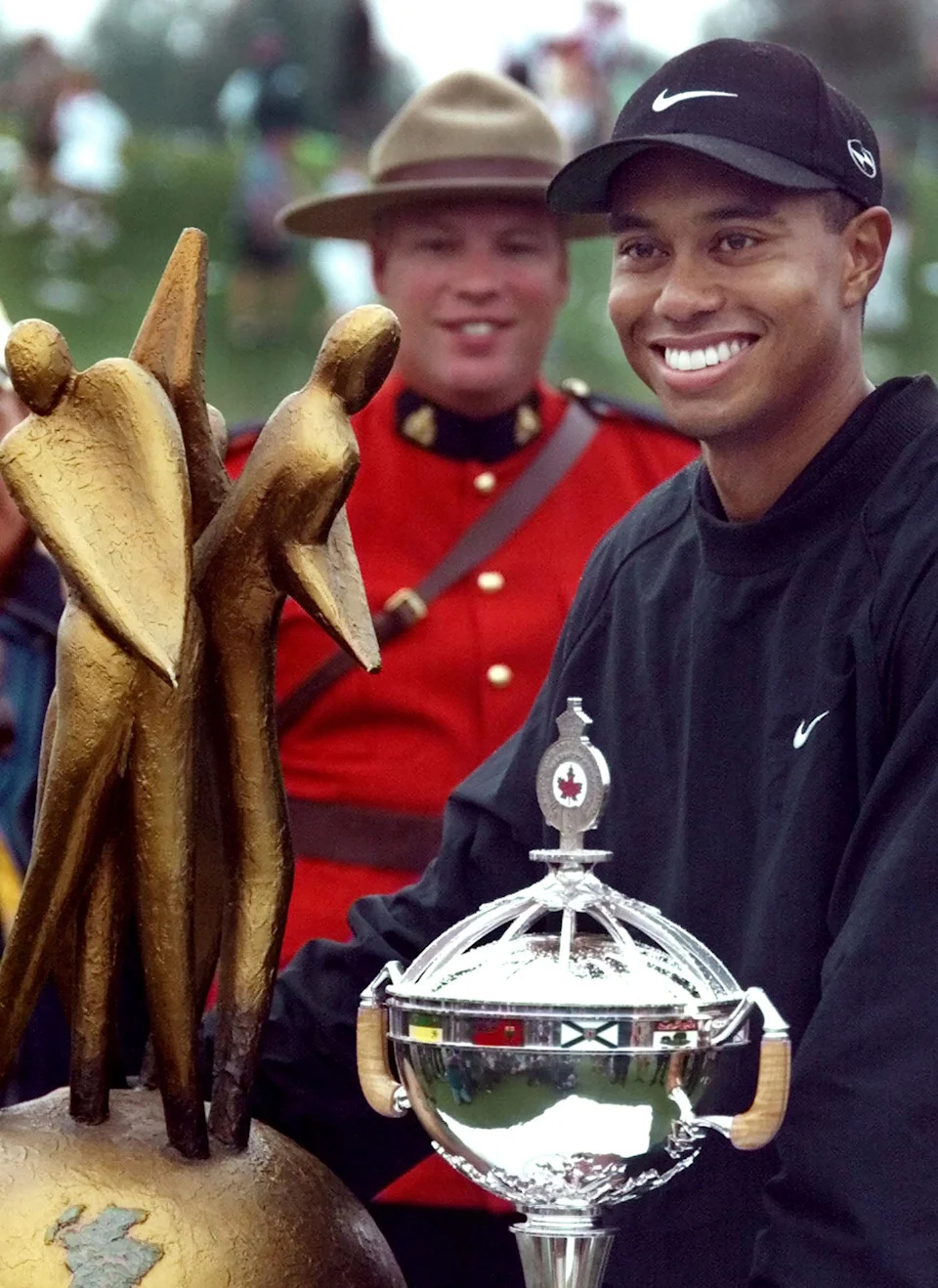
Under the watch of a member of the Royal Canadian Mounted Police, Tiger Woods won the 2000 Canadian Open. He joined Lee Trevino as the only golfers to sweep the three national championships (U.S., British and Canadian) in the same year.
It had the cachet of being a national open. Lee Trevino reminded everyone of that in 1971 when he won the first of three Canadian Opens he’d win in that decade. When he beat Art Wall in a playoff in ’71, he became the first golfer to win the three big national championships in the same year — he’d earlier won the 1971 U.S. and British Opens.
Advertisement
Tiger Woods matched Trevino’s trifecta during his amazing 2000 season.
The Canadian Open’s second-tier status was seemingly cemented in 1960 when Palmer and Drum deemed that the modern “grand slam” consisted of the Masters, PGA Championship and the two other national Opens (U.S. and British).
Also, as the PGA Tour grew and eventually became its own entity after breaking from the PGA of America in the 1960s, the tournament schedule continued to grow in numbers and prize purses. The Canadian Open slowly blended into the yearly offering of well-run and good-paying Tour events.
In June, the Canadian Open will tee off for the 114th time since 1904. Only world wars and a worldwide pandemic interrupted things along the way.
Advertisement
It’s the PGA Tour’s longest-running tournament. That’s a major accomplishment, with or without a major label.
— Email Ken Willis at [email protected]
This article originally appeared on The Daytona Beach News-Journal: Fifth major? The Players isn’t first PGA Tour event to wear the label
Read the full article here