





We finally get to the end of the positions on the hitting side of the equation. Keep in mind, we are trying to include all of the relevant candidates to be on the opening day roster. Fans and analysts alike sometimes forget the dimension of time. In other words, what the roster looks like on March 26th will not be what it looks like on June 26th and August 26th. It is a fair expectation that every profiled player will get a crack at the big league level at some point in 2026.
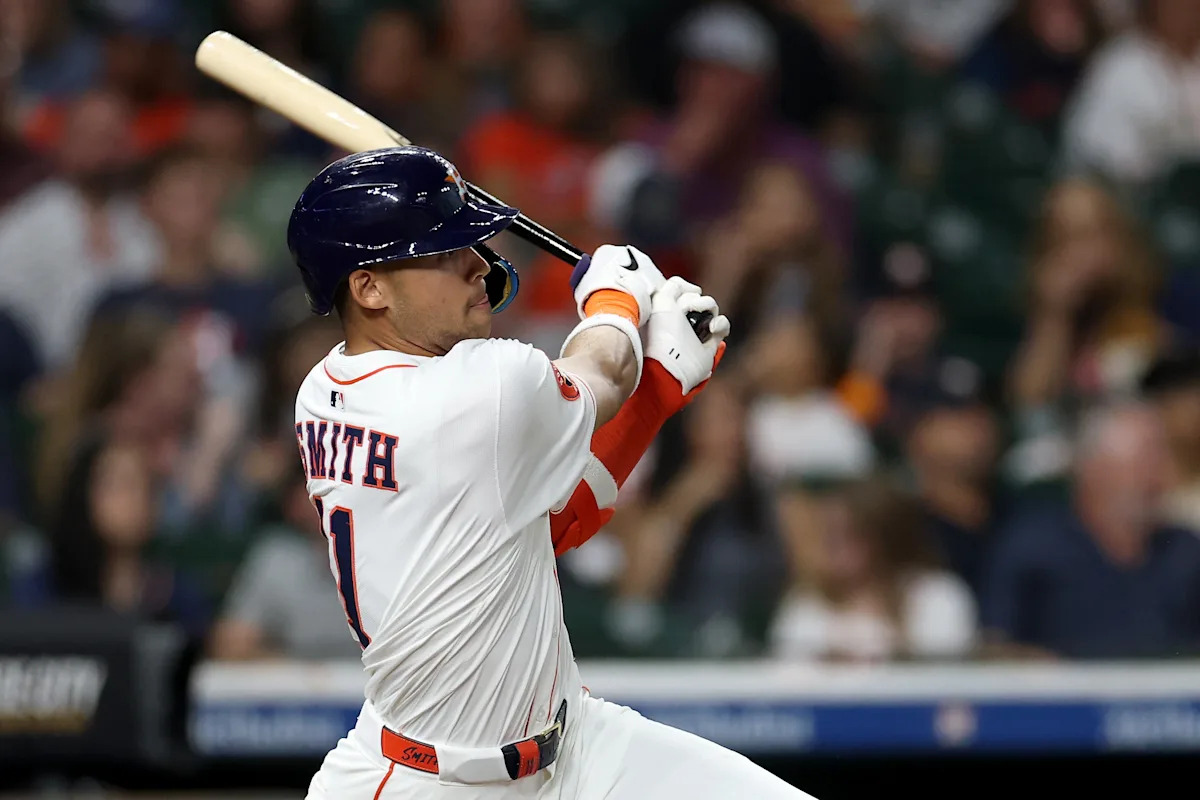
For our purposes, we will profile only two right fielders even though multiple players can fit in right field at some point. It would be inaccurate to call right field the most important position on the diamond for the Astros, but it may come with more question marks than any other position. Cam Smith got off to a promising start last start but faded horribly down the stretch. Maybe the peripheral numbers can give us a clue as to who the real Cam Smith is.
Advertisement
The Astros gambled a bit when they dealt Jesus Sanchez for Joey Loperfido. Loperfido has looked good in short bursts on the big league level, but has yet to play an entire season in the big leagues. He has an option left, so he still might spend time in Sugar Land. We are using the same numbers we have used for the other articles and we will use the same for pitchers as well.
-
Chase rate: This is the percentage of balls a player swings at outside of the zone. The league average normally lives around 30 percent, but we will be looking at three year intervals and we should notice trends more than where a player is in relationship to the league average.
-
Hard hit percentage: This is simply the percentage of balls that a player hits hard. Hard hit balls become hits and extra base hits more often than softer contact. Typically 35 percent is around the league average in this category.
-
BABIP: This is batting average on balls in play. Home runs are obviously excluded since they are not in play. The league average tends to hover around .300 but it will largely depend on hard hit percentages and breakdowns between groundballs, flyballs, and line drives.
-
Contact percentage: This is the percentage of swings that turn into contact. Typically 75 percent is around league average.
-
HR/FB percentage: This is the percentage of flyballs that result in home runs. Ten percent is typically around the league average.
Cam Smith
|
Chase |
Hardhit |
BABIP |
Contact |
HR/FB |
|
|
2023 |
College |
College |
College |
College |
College |
|
2024 |
—— |
—— |
.337 |
78.5 |
21.9 |
|
2025 |
29.0 |
40.8 |
.320 |
73.8 |
9.6 |
|
Aggregate |
29.0 |
40.8 |
.329 |
76.2 |
15.7 |
If we take the 2025 numbers at face value then we would surmise that Smith should be pretty close to a league average hitter because he is essentially average in almost every indicator. He is slightly above average in hard contact and slightly below in contact. Everything else is drop dead average. He produced a 90 wRC+ last season and that is a similar stat to OPS+. but it includes a base running element. So, I would expect growth even if there is no improvement in the underlying numbers.
The question is how much growth. He demonstrated more power and more contact in the minors, so maybe he finds his way to the aggregate numbers. If that is the case then he would be an above average hitter. We would be looking at gains in contact rates and power production. That might bump him up to .250/.325/.400. Couple that with his strong defensive potential and you are looking at maybe a three win player in 2026.
Advertisement
If there is one player that could be a huge growth candidate it is Smith. He was a first round pick, so he showed impressive skills at some point and with the limited exposure in the minors, he never had the opportunity to develop those tools. So, we might be looking at those tools develop at the big league level, so he is the hardest player to predict.
Joey Loperfido
|
Chase |
Hardhit |
BABIP |
Contact |
HR/FB |
|
|
2023 |
33.3 |
41.3 |
.338 |
74.6 |
24.8 |
|
2024 |
33.7 |
34.7 |
.331 |
67.6 |
8.2 |
|
2025 |
31.0 |
38.6 |
.329 |
76.9 |
9.1 |
|
Aggregate |
32.7 |
38.2 |
.333 |
73.0 |
14.0 |
I know it is tempting to get excited over potential. I remember watching Loperfido in Spring Training of 2024 and thinking I liked the cut of gib. As an analyst I have to look at the total information available and make a dispassionate assessment. Most of these numbers are at the minor league level. They are virtually average across the board with some a little higher or little lower. Yet, all of them are pretty close to average.
When you are average across the board in all of the indicators then you are likely average overall. There is nothing wrong with average. Some of my favorite Astros were historically mediocre. Loperfido could end up being one of those guys. He can play a multitude of positions and that will help him stick at the big league level eventually.
Advertisement
Over at Battle Red Blog I write a feature called “The Value of Things.” The general idea is that every player has an appropriate value. Loperfido is probably best cast as a fourth outfielder and occasional first baseman. If you have a fourth outfielder that can play all three spots and produce a 100 OPS+ you are probably going to be pretty happy. If that is one of your starting corner outfielders you probably won’t be happy. So, the key to enjoying Loperfido is understanding who he is and who he is likely to be. Expect a star and you will be disappointed. Expect a useful bench guy and you will probably be pretty happy.
Read the full article here