





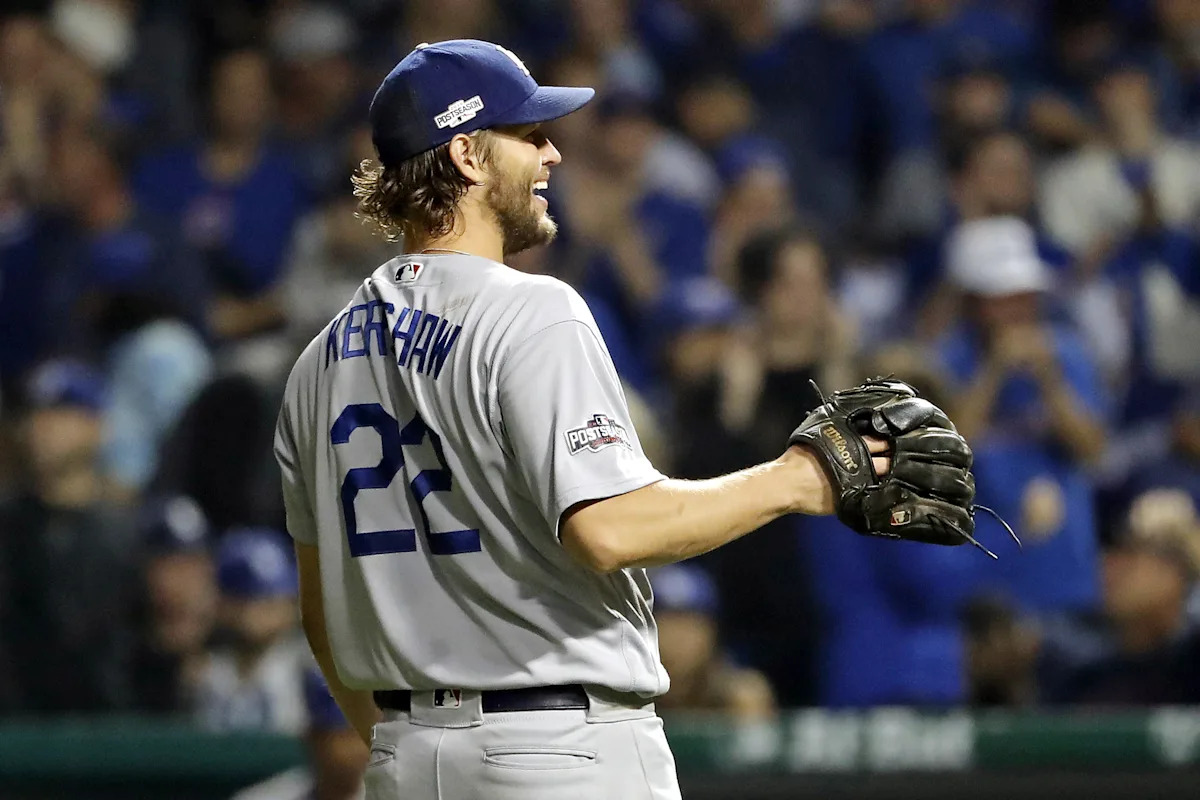
The Dodgers have grown in strength gradually since the early days of Dave Roberts in charge — before becoming this current powerhouse, essentially the favorite against whichever National League opponent came their way in the postseason — the Dodgers played the role of spoilers against the team of destiny, and for a little bit, in great part due to Clayton Kershaw’s magnificent work, they looked set to fulfill that task.
Back in 2016, the Chicago Cubs were a moderate version of what the Dodgers should be: this absolute juggernaut filled with talent and a well-oiled machine ready to compete not only in that but across multiple seasons. This in itself created quite the challenge, but further increasing scrutiny and public interest in this team, the Cubs carried the best odds this organization had to break a curse that dated back to 1908, a type of storyline that transcended baseball itself.
Advertisement
After a heroic effort against the Washington Nationals, one that saw Kershaw pitch in three of the five games of the series, including earning a save on one day of rest to close out Game 5, finally getting his revenge on Daniel Murphy, the Dodgers found themselves as the only things standing in the way of a World Series ticket to the Cubs.
Because of his NLDS efforts, Kershaw wasn’t available to go in Game 1 of the NLCS, and unlike in previous campaigns, that 2016 team didn’t have a 1B in Zack Greinke to take the hill. A valiant effort by Kenta Maeda and the bullpen was for naught as Joe Blanton allowed a tie-breaking grand slam to Miguel Montero, and with their backs against the wall, the Dodgers relied on their ace in Game 2 at Wrigley Field.
Facing a lineup that had led baseball with a team 115 wRC+ against southpaws, a mark even more impressive accounting for the fact it came before pitchers stopped hitting, Kershaw had his work cut out for him, facing the likes of Kris Bryant, Anthony Rizzo, Ben Zobrist, and company. Further increasing the need for a strong outing from Kershaw, the Dodgers had just overworked two of their more trusted relievers in Pedro Báez and Blanton.
Pitching his first NLCS matchup since that forgetful evening in St. Louis back in 2013, Kershaw looked every bit his most dominant self. Commonly, we hear about the freedom of pitching with a lead, particularly a large one, as it allows a pitcher to more freely attack the zone and take the game to the opposing hitters. This was anything but that.
Advertisement
While Kershaw did pitch the majority of the game with the advantage, he did so in the most stressful of circumstances, as an Adrian González solo shot in the second was the only scoring this game saw. Facing the best team in the big leagues, on the road, Kershaw shut it all down in an incredibly efficient manner, needing just 84 pitches to complete seven scoreless frames before turning it over to Kenley Jansen for a two-inning save.
One of the purposes of this series is to highlight how things could’ve easily been different for Kershaw with a few breaks here and there; on the flip side, even in the most dominant of performances, one can point to a couple of potential turning point moments. After not allowing a baserunner through the first four innings, Kershaw ran into some problems in the fifth, but the right man at the right time helped him get out of it.
With two on and two out after back-to-back singles from Javier Báez and Willson Contreras, manager Joe Maddon had the wrong man up to do the damage against Kershaw. The Cubs’ biggest offseason signing ahead of that season, Jason Heyward, had been absolutely atrocious with the bat in 2016, and even worse against the lefties—although he tried his best to make up for it with elite defensive work. Thanks to his outstanding defensive talents, the fifth inning was early enough even in a one-run game for Maddon not to pinch-hit a Jorge Soler or some other right-handed batter for Heyward, and Kershaw retired him without any problem, dropping his arm angle on a fastball, something the left-hander really got into doing once in a while during that period.
View Link
Advertisement
A couple of innings later, the big threat came around as the first two reached, and a run of three right-handed hitters was due up, following an error that gave Chicago first and second. Kershaw struck out Ben Zobrist and retired Addison Russell. The only thing standing in the way of six scoreless innings was Javier Báez.
With a 1-0 count, Kershaw threw Báez a fastball up in the zone, one that he was ready for, connecting pretty well straight to center, but it had just enough air on it for it to be caught by Joc Pederson in center.
View Link
That was the last pitch Kershaw threw, one that, in different circumstances completely beyond the control of the pitcher or batter, might’ve had another outcome.
Advertisement
This series, ultimately, isn’t one looked back on fondly by Dodger fans, as the team collapsed after taking a 2-1 lead, including a completely different Kershaw outing in Wrigley in Game 6. Still, that one particular game is one of my favorites for all that it represented: a time the Dodgers succeeded, even if briefly, without the weight of expectations currently associated with this team.
View Link
You did not see this every day.
Read the full article here